Notícia
Blue Archive’s Third Anniversary Shanghai Concert Sparks Debate
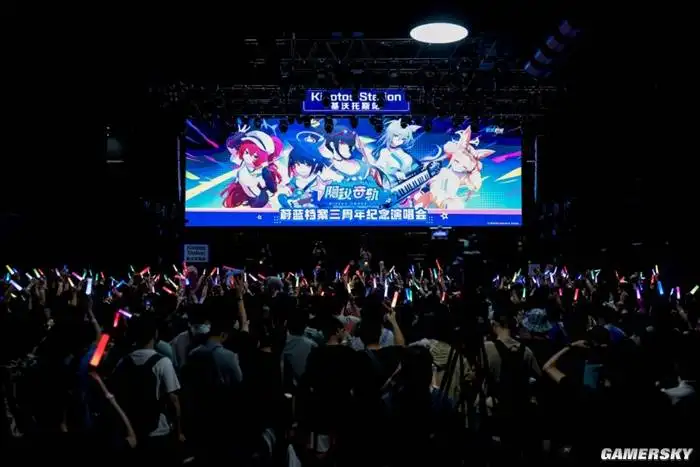
Blue Archive’s China server marked its 3rd anniversary with the “Hidden Track” concert in Shanghai,
















To be honest, what moves me about concert tech is often not the specs, but that feeling of being “a little closer to the character.” Like an old friend you’ve only seen through a screen for a long time, and now, finally, there’s a moment when even body warmth seems able to come through. NTT Docomo’s recent Feel Tech gives off exactly that kind of vibe.
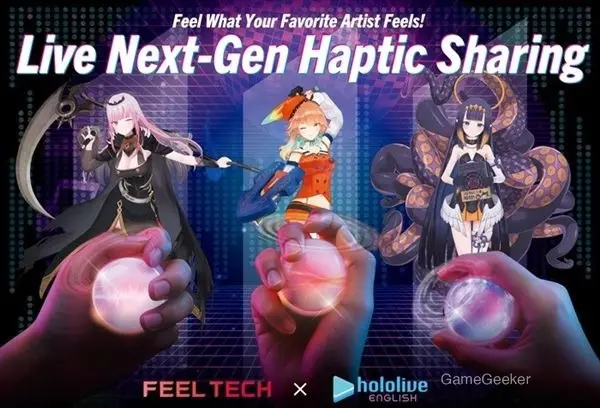
Docomo recently unveiled this new haptic device system, centered around their in-house “Feel Tech” technology, and it has already been publicly demonstrated at the SXSW innovation conference in Austin, Texas, USA. Their on-site partner was hololive, and the direction was very clear: not just watching VTubers sing and dance, but turning the emotions and movements in the performance into feedback you can actually feel in your hand.
Specifically, Feel Tech uses a spherical handheld device to digitally process haptic cues from audiovisual content. During the experience, users first choose one of three idol members to connect with, then watch a prerecorded performance video while holding both a glow stick and a synchronized spherical device linked to that member. According to feedback from attendees and Reddit users, the sphere responds in real time to the idol’s movements, lights up in the corresponding support color, and also delivers vibrations, pulses, and even a sense of motion.

What left the strongest impression on me was that some participants described it as feeling like “synchronizing across a distance,” even to the point of sensing something like the idol’s heartbeat. That description really captures its appeal. For many people who support VTubers or follow idols, it’s not about the amount of information—it’s about companionship, about connection, about that confirmation that “her emotions really reached me.”
When it comes to characters, I actually think the greatest potential of this kind of technology goes beyond concerts alone. The company also mentioned that Feel Tech is intended to further enrich Japan’s increasingly popular “oshi-katsu culture,” and the original analysis also pointed out that it could expand into anime and video games. I find that extension very easy to imagine: if, during a confession scene in an anime, you felt a faint pulse in your palm; if, in a game, a character’s attacks, damage taken, or even near-death state could be matched with feedback aligned to the emotional tone of the story, that sense of immersion would feel far more complete than it does now.
But what pulls me out of the experience is when technology is reduced to nothing but a gimmick. Haptic feedback is not better just because it is stronger, nor more advanced simply because it vibrates more. It has to serve the character and serve the emotion—like a perfectly timed pause in a conversation, not something forcibly shoved into your hand just to make its presence known. Otherwise, it ends up becoming just another expensive piece of merch.
From a broader trend perspective, Docomo’s move feels more like a test of a new form of entertainment consumption: shifting from “watching characters” to “being touched by characters.” If it can later be integrated with in-game combat or key story moments, it may offer far more room for imagination than a single demonstration. For players who value emotional immersion, I’ll be watching with interest; for people already deeply engaged in oshi-katsu, this kind of device will probably be highly tempting. It may not change the industry overnight, but at the very least, it has already put an important question on the table—can we still get a little closer to virtual characters?


Comentários 0
Queremos saber sua opinião
Boas-vindas! Conte o que achou deste jogo — quem chega primeiro pode ter uma surpresa.
Ainda não há comentários. Seja o primeiro.