






The Top 3 in 30 Seconds: Potionomics is the strongest all-rounder when brewing, shop presentation, relationships, and negotiation need to reinforce one another. Recettear: An Item Shop's Tale is the focused classic for pricing goods, arranging a store, and choosing between market stock and dungeon finds. Winkeltje: The Little Shop is the broadest simulator, with construction, farming, crafting, staffing, and seasonal demand.
Why These Made the List #
The best fantasy shopkeeping games make the store a source of decisions rather than a menu between more exciting activities. You should have a reason to care where goods come from, what they cost to produce, who wants them, and what the next upgrade changes.
This ranking weighs shop management and trading depth, the connection between crafting and sales, the distinctiveness of each setting and customer system, and how well the business loop supports the wider game. Some picks focus almost entirely on retail; others make the shop fund dungeon runs, family life, combat, exploration, or investment.
Top Picks #
1. Potionomics #
 SteamHK$ 109.00查看價格 →
A debt inherited with a potion shop gives every sale immediate weight. Sylvia brews potions, improves the store, manages inventory quality, and then faces customers through card-based negotiations built around stress and learned haggling strategies.
It earns the top spot because its systems point in the same direction. Ingredients affect taste and aroma, shop decor can improve prices and potion quality, and relationship-building gives negotiations more options. Selling feels less like confirming a transaction than managing a difficult conversation, which makes the production work matter when the customer finally arrives.
| Aspect | Explanation |
|---|---|
| Why It's Ranked Here | Potionomics connects potion crafting, shop presentation, relationships, and tense selling decisions more tightly than any other pick. |
| Who It's For | Choose it when shopkeeping should feel like a strategic conversation as well as a production problem. |
| Key Selling Points | Ingredients affect potion taste and aroma, while shop decor can improve prices and potion quality. |
2. Recettear: An Item Shop's Tale #
 SteamHK$ 119.00查看價格 →
When Recette needs to repay her father's loan, the practical question is where the next batch of stock will come from. Town markets provide one route; dungeon runs with adventuring partners provide another. From there, pricing, inventory, and interior layout turn each shop day into a clear operating problem.
That buy-or-explore choice gives the game its identity. Randomized dungeons keep supply moving, while different adventurers change how you approach those expeditions. The loop is direct and readable: find goods, decide their value, and arrange the store so customers can buy them.
| Aspect | Explanation |
|---|---|
| Why It's Ranked Here | Recettear: An Item Shop's Tale makes sourcing, pricing, stocking, and layout the center of a focused fantasy shop loop. |
| Who It's For | It suits players who want inventory and pricing management with dungeon expeditions alongside it. |
| Key Selling Points | Randomized dungeons provide changing sources of goods, and multiple adventurers offer different approaches to finding stock. |
3. Winkeltje: The Little Shop #

 GOGHK$19.95-66%Steam HK$19.95查看價格 →
Build the shop badly and every later decision becomes harder; build it well and the whole operation has room to grow. You construct and decorate an old-world fantasy store, gather resources, grow crops, craft goods, hire employees, and respond to seasonal demand.
The appeal is control over both supply and presentation. Floor plan, production stations, staffing, and shelf space all become part of the same optimization problem. It ranks above Potion Craft: Alchemist Simulator because production is only one layer of a much larger operation.
| Aspect | Explanation |
|---|---|
| Why It's Ranked Here | Winkeltje: The Little Shop offers the most complete toolkit for layout, production, staffing, resources, and seasonal inventory. |
| Who It's For | Pick it for open-ended optimization of a store whose structure and operation are both under your control. |
| Key Selling Points | Furniture and shop expansions can attract customers and improve sales, while tailoring, forging, and alchemy stations broaden production. |
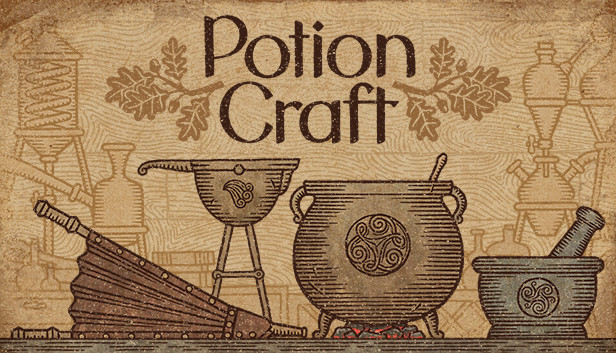
4. Potion Craft: Alchemist Simulator #

 EnebaHK$33.83Steam HK$33.83查看價格 →
A recipe begins with physical work: grinding, mixing, heating, boiling, and stirring ingredients. The Alchemy Map then turns discovery into route planning as you search for paths toward different potion effects. Customers arrive daily, and ingredients can be bought or grown.
That makes the act of brewing the main puzzle. You invent recipes through experimentation, then customize bottles, labels, colors, names, and shop furniture around the result. The shop gives the discoveries a purpose, but the pleasure comes from learning how ingredients behave and finding a workable path across the map.
| Aspect | Explanation |
|---|---|
| Why It's Ranked Here | Potion Craft: Alchemist Simulator makes creating a potion the central challenge instead of hiding production behind menus. |
| Who It's For | It is a strong fit for players who prefer experimental brewing, recipe discovery, customer orders, and a customizable alchemy shop. |
| Key Selling Points | The Alchemy Map turns recipe invention into route planning, while bottles, labels, colors, names, and furniture can all be customized. |
5. Moonlighter #
 Steam免費查看價格 →
Before reaching the counter, Will has to decide which dungeon loot is worth carrying home. Limited inventory space makes that choice matter, while the shop turns resources, weapons, armor, and artifacts into money for upgrades, crafting, and the next expedition.
This is a clean risk-and-reward cycle. Dungeon runs supply the store, and the store funds further progression, so neither side feels detachable. Assistants, shop upgrades, pricing, crafting, and enchanting add management decisions around the action RPG foundation.
| Aspect | Explanation |
|---|---|
| Why It's Ranked Here | Moonlighter ties inventory to expeditions, limited space, pricing, assistants, upgrades, crafting, and enchanting. |
| Who It's For | Choose it when action RPG combat should directly supply a shop and fund its progression. |
| Key Selling Points | Limited inventory space forces choices about dungeon loot, while crafting and enchanting create equipment for later progress. |
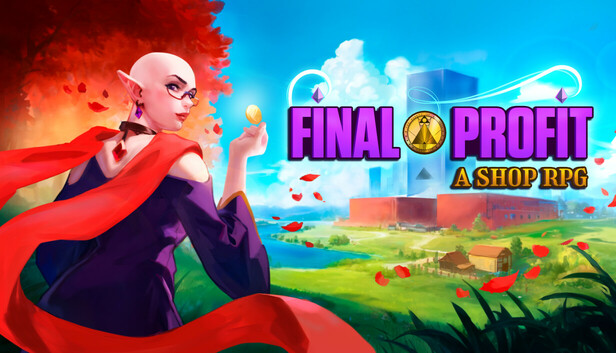
6. Final Profit: A Shop RPG #
 SteamHK$ 47.50HK$ 95.00-50%查看價格 →
An exiled Fae queen building a business against the Bureau of Business gives this shop RPG a clear dramatic frame. You gather products, find customers, invest profits, and expand through stocks, commodities, real estate, and purchasable buildings.
The important shift is scale. The store becomes part of a wider economic network, where one profitable decision can open another route for growth. Investment, automation, property, and branching business choices matter more here than production craftsmanship, making it the best pick for players who want commercial systems to keep widening.
| Aspect | Explanation |
|---|---|
| Why It's Ranked Here | Final Profit: A Shop RPG expands shopkeeping into investments, property, automation, and branching business choices. |
| Who It's For | It suits players who want a systems-heavy shop RPG about expansion, investment, and long-term planning. |
| Key Selling Points | Choices can alter shop systems, customer behavior, and product interactions, while connected upgrades can eventually automate parts of the business. |
7. Kynseed #
 GOGHK$107.99Steam HK$107.99查看價格 →
Running a business in Kynseed is one commitment within a larger life. Farming, relationships, crafting, combat, exploration, and family life all continue around businesses such as a blacksmith, apothecary, or goods store. Gathered materials can become items, weapons, or cures.
That wider context is the reason to choose it, even though shop management is not its entire focus. Aging lets the family legacy continue through children, and the village gives business ownership a place in an ongoing life rather than isolating it as a standalone simulation.
| Aspect | Explanation |
|---|---|
| Why It's Ranked Here | Kynseed places several businesses inside a fantasy life simulation with family, village, crafting, combat, and exploration systems. |
| Who It's For | Choose it when businesses should sit alongside relationships, family life, exploration, and an evolving world. |
| Key Selling Points | Aging lets the family continue through its children, and the Tavern Update adds stock management, staff, and entertainers to tavern play. |
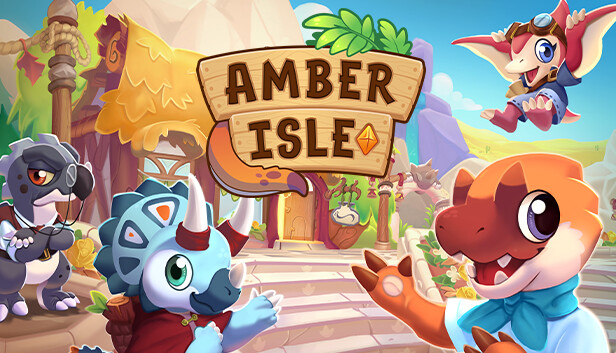
8. Amber Isle #
 EnebaHK$12.09Steam HK$12.09查看價格 →
The only shop in a village of prehistoric islanders has a clear social responsibility: the goods on the shelves need to match the people asking for them. Gathered and crafted items meet different customer needs, behaviors, and preferences, while profits expand the store and help rebuild the island.
Sales therefore have a community consequence. Haggling, pawning, and counter-offers shape individual transactions, while friendships unlock upgrades and recipes. The store is less about abstract optimization than learning what this particular group wants and using that knowledge to restore its home.
| Aspect | Explanation |
|---|---|
| Why It's Ranked Here | Amber Isle combines haggling, crafting, friendship, shop layout, and island restoration into an approachable business loop. |
| Who It's For | It is a good choice for players who want shop management with relationships and a distinctive community setting. |
| Key Selling Points | Customers can haggle, pawn, and counter-offer, while friendships unlock new upgrades and recipes. |
9. Weapon Shop Fantasy #
 EnebaHK$9.03Steam HK$9.03查看價格 →
A weapon is only as useful as the chain of decisions behind it. Materials must be collected, staff assigned and trained, weapons crafted and enchanted, and equipment sold. Staff can also be sent on adventures for more materials, while crafted weapons gain attributes and skill bindings.
Its center of gravity is production and RPG progression rather than conventional retail. The strongest choices concern staff assignments, material acquisition, weapon properties, and skill combinations. Combat and missions support the workshop, giving the manufacturing cycle somewhere to go.
| Aspect | Explanation |
|---|---|
| Why It's Ranked Here | Weapon Shop Fantasy makes staff training, material acquisition, weapon creation, enchanting, and RPG progression reinforce one another. |
| Who It's For | It suits players who enjoy optimizing workers, materials, weapon properties, and skill combinations. |
| Key Selling Points | Staff can take auto-battle journeys for materials, and the game combines shop simulation with missions, enemy battles, and equipment skills. |
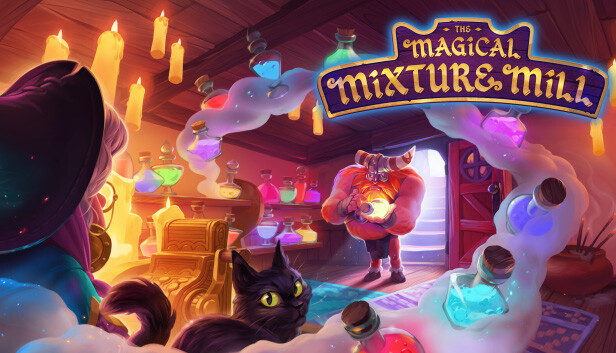
10. The Magical Mixture Mill #

 CDKeysHK$68.80-64%Steam HK$68.80查看價格 →
The challenge here is keeping an alchemical operation supplied as adventurers demand stronger mixtures. You gather exotic ingredients from different biomes, research them, and connect multiple workstations into automated production lines.
That makes the experience closer to planning a supply chain than serving customers one by one. Ratios, potency, ingredients, flavors, and bottles all need balancing, while returning customers create pressure for more advanced mixtures. It is the right choice when production logistics matter more than direct retail.
| Aspect | Explanation |
|---|---|
| Why It's Ranked Here | The Magical Mixture Mill gives crafting enthusiasts deep production systems, with logistics taking priority over direct retail. |
| Who It's For | Choose it for automated alchemical lines, ingredient research, and recurring demands from adventurers. |
| Key Selling Points | Different biomes supply ingredients to research and gather, while returning customers ask for stronger and more advanced mixtures. |
Comparison Table #
| Game | Genre | Why It's Ranked | Play Structure |
|---|---|---|---|
| Potionomics | Narrative shop simulator with RPG, strategy, and deck-building elements | Crafting, presentation, relationships, and negotiation form one connected loop. | Story-driven solo shop-management play |
| Recettear: An Item Shop's Tale | Fantasy item-shop RPG | Market buying, dungeon supply, pricing, and layout give trading a clear identity. | Story campaign with Survival Mode and Endless Mode |
| Winkeltje: The Little Shop | Fantasy shop-management simulation | Store construction, production, farming, staffing, and seasons create a complete business sandbox. | Open-ended solo management play at the player's pace |
| Potion Craft: Alchemist Simulator | Alchemy shop simulation | Physical brewing and recipe discovery make production unusually tactile. | Sandbox-style solo brewing and shop management |
| Moonlighter | Action RPG with rogue-lite shopkeeping | Dungeon loot directly supplies a shop and funds further progression. | Solo action RPG runs alternating with shop management |
| Final Profit: A Shop RPG | Story-driven shop-sim RPG | Investments, property, automation, and business choices broaden the shop economy. | Story-driven solo management RPG with an alternate shopkeeping mode |
| Kynseed | Fantasy life-sim RPG with business management | Businesses add commercial goals to a wider life, family, and village simulation. | Open-ended solo life-sim RPG across generations |
| Amber Isle | Prehistoric fantasy shop-management social sim | Customer preferences, haggling, friendships, and island rebuilding support the store. | Story-driven solo shop and social-simulation play |
| Weapon Shop Fantasy | Weapon-shop RPG and management simulation | Staff, materials, weapon creation, and RPG progression are tightly linked. | Solo shop management, crafting, and RPG progression |
| The Magical Mixture Mill | Fantasy production and shop simulation | Automated alchemy lines and supply chains take priority over direct sales. | Solo exploration, brewing, and automated production play |
How to Pick the Right One #
| Preference | Recommended Games |
|---|---|
| Choose tactile potion brewing and recipe experimentation → | Potion Craft: Alchemist Simulator, Potionomics, and The Magical Mixture Mill |
| Choose broad store building, staffing, and inventory management → | Winkeltje: The Little Shop, Amber Isle, and Recettear: An Item Shop's Tale |
| Choose a wider RPG or life-sim built around business ownership → | Moonlighter, Final Profit: A Shop RPG, Kynseed, and Weapon Shop Fantasy |
FAQ #
Which game gives crafting the strongest role in shopkeeping? #
Potion Craft: Alchemist Simulator gives crafting the most direct role through physical ingredient preparation and recipe discovery. Weapon Shop Fantasy is the stronger choice for material gathering, weapon crafting, enchanting, and staff training. The Magical Mixture Mill is aimed at automated alchemical production lines and supply-chain planning.
Which games focus on trading without requiring crafting? #
Recettear: An Item Shop's Tale lets players obtain stock through town markets or dungeon expeditions. Final Profit: A Shop RPG focuses on gathering products, finding customers, investments, and business expansion. Moonlighter ties inventory and sales to loot gathered during dungeon runs.
Which game is broader than a shop simulator? #
Kynseed combines businesses with farming, relationships, crafting, combat, family life, and exploration. Moonlighter combines shopkeeping with action RPG dungeon runs. Final Profit: A Shop RPG combines shop management with a story-driven RPG and investment systems.






留言 0
歡迎發表遊戲評價
歡迎參與討論,分享對這款遊戲的評價。
暫無留言,歡迎發表評價。