





















Opening
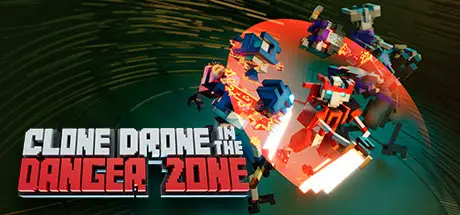
Clone Drone in the Danger Zone is a robot gladiator brawler where every hit lands on a body part, and that’s the whole trick it nails; yes, it’s worth it if you want your combat to actually think back at you. You don’t just “do damage” here. You take the sword arm off, and suddenly that enemy’s a problem with fewer problems. That’s the hook, and it still works because the game makes every swing feel like a decision, not just a button press.
And honestly, that’s what separates it from the usual gore-splatters. This isn’t just about watching limbs fly for laughs, even though it absolutely does that too. The fun is in how the damage changes the fight.
Chop the wrong arm, and you’ve helped yourself. Chop the right one, and you’ve basically won. That gives the combat a nasty little brain under the chaos.
It helps that the upgrade tree actually gives you reasons to keep coming back. Jetpacks, laser-sword deflection, clones, flame weapons — you can push runs in different directions instead of just repeating the same slashy routine. And the game’s got the kind of long tail that matters: Endless Mode, 86 level variants, Steam Workshop, five multiplayer modes, and even a Twitch mode where viewers can bet on you or throw enemies into the fight.
The catch is simple: don’t come in expecting pretty. The voxel look is plain, the story is thin, and the physics can get goofy when the arena gets crowded. But if you want a fast, messy, tactical melee game that can eat hours without asking for a giant commitment, this one’s got a lot more going on than it first lets on.
Story | 6.5/10
劇情: 6.5/10A Robot Gladiator Story That Knows It’s A Joke

The story here is funny, but it’s not trying to be deep, and that’s the whole tradeoff. Clone Drone in the Danger Zone drops you into a black-comedy setup where human consciousness gets downloaded into disposable robot gladiators so a machine empire can keep exterminating humanity in style. That’s a great premise. It gives the violence a nasty little punchline, and the two announcer bots keep leaning into that tone by heckling every kill like they’re hosting the world’s silliest sports broadcast. So the narrative isn’t just “here’s why you fight.” It’s more like a running joke that follows you from arena to arena.
But if you’re coming in for a real story campaign, the game is pretty thin. The main path is only five chapters, and the whole thing is over in a few hours — around four if you just push through the main route. That means the story mode doesn’t really have room to breathe. It plays more like an extended tutorial for Endless Mode than a fully built campaign.
You do get a clear ramp in the structure, though. Chapter 1 is basically a straight-line onboarding run, Chapter 3 starts tossing in business robots and more character switching, Chapter 4 adds consciousness transfer and spears, and Chapter 5 suddenly escalates into a battlecruiser 3D space fight, which is a wild left turn. So yeah, it does keep remixing itself, but mostly by throwing new toys into the sandbox, not by building a richer plot.
Short Campaign, Loud Characters, Light Consequences

My main read is simple: the story is serviceable, but the game cares way more about combat systems than narrative payoff. There’s no real branching structure here to sink into, and there isn’t much in the way of meaningful side content either. That’s fine if you want a clean, fast march through the premise, but it also means the campaign never feels like it’s driving anywhere emotionally. The path is linear, the stakes are broad, and the whole thing is mostly there to feed you into the next fight. It’s not the kind of game where choices bend the story around your actions. It’s the kind where the story exists to justify the next way you can get your limbs chopped off.
That’s why the comparison to something like Hades matters. Hades uses its upgrade structure and repeated runs to make the narrative feel alive, character-driven, and constantly reacting to you. Clone Drone doesn’t play that game. Its upgrade tree is doing the heavy lifting for replayability, not the writing. Jetpacks, laser-sword deflection, clones, flame weapons — that’s where the build variety lives. The story just tags along behind it. So if you want a campaign with thick character arcs, this is going to feel light. If you want a quick, funny setup that gets out of the way and lets the action take over, it does the job. The two announcer bots help a lot here, because without them the whole thing would feel much drier. They turn the violence into a comedy act, and honestly, they’re the closest thing the game has to real narrative personality.
Bare-Bones Plot, Better As A Gameplay Ramp

What saves the mode is that each chapter at least escalates in a way that keeps the campaign from feeling identical start to finish. The early stuff is basic on purpose, almost aggressively so, but by the time you reach the later chapters the game is willing to get weird. The jump from a simple arena setup to multi-role chaos, then to spears and consciousness swapping, and finally to a full-on battlecruiser space sequence, gives the story mode a sense of escalation even if the writing itself stays pretty light. That’s the key thing: it’s not a rich plot, it’s a sequence of increasingly absurd combat set pieces.
Still, the game’s priorities are obvious. Story Mode is there to introduce you to the world, the bots, and the rules of dismemberment, not to deliver a heavy narrative meal. And that’s where the game’s personality lands best: in the contrast between the goofy, funny machine empire setup and the brutally tactical combat underneath it. The announcers keep the tone playful, the premise keeps it dark, and the short length keeps it moving. I wouldn’t call the writing memorable on its own, but it’s effective at framing the action. For a game that lives and dies on chopping off the right arm at the right time, that’s probably enough.
Audio | 8.5/10
音效: 8.5/10Two robot announcers, one cruel little comedy routine

The sound design gets a huge amount of mileage out of those two announcer bots. They’ve got that synthy, mechanical voice that lands somewhere between a dry Portal-style deadpan and a sadistic turret cheering from the sidelines, and it makes every fight feel like it’s being judged by something that’s half referee, half bully. That matters a lot here, because Clone Drone in the Danger Zone can be a pretty simple-looking arena game on the surface. The voices are what keep it from feeling sterile. They’re not just there to narrate the action — they react to it.
And that reaction is the real trick. When you’re on a run and things are going your way, they lean into the smug, needling sarcasm. When you get shredded, they don’t go quiet or generic. They get weirdly excited, which is exactly the right kind of mean for this game. It turns failure into part of the show instead of a pause between attempts. That’s especially important in Endless Mode, where you’re fighting the same enemy types over and over across all those 86 level variants. Without those voices, the loop could start to feel mechanical fast. With them, the arena stays alive, nasty, and funny.
What I like most is how the commentary feels tied to the rhythm of the match, not bolted on after the fact. The game isn’t telling jokes in a separate layer. It’s baking the jokes into the combat feed itself. That’s why the humor works even when you’re deep into the grind. It keeps watching you, mocking you, and occasionally celebrating your chaos right when it happens.
Metal hits, laser hums, and robot bodies falling apart

This game sounds sharp. Literally. The metal-on-metal clashes have real bite, the laser sword has that bright, angry buzz, and the moment a robot starts coming apart, the collapse sound sells the whole limb-by-limb fantasy. That’s the key thing here: the audio is doing tactical work. When you slice off the sword arm, you don’t just see the enemy lose a limb — you hear the fight change. The sound tells you that you’ve taken away a threat, not just landed some random damage. That makes every hit feel more deliberate than your average brawler.
The action also benefits from how cleanly the game separates all those little sound layers. The clang of a blocked blade, the snap of a limb dropping, the thud of a bot collapsing, the whine of energy weapons — it all stacks without turning into mush. That matters because Clone Drone in the Danger Zone can get hectic fast, and the busiest waves are exactly where a lot of games fall apart sonically. Here, even when the physics get a little goofy, the sound keeps the scene readable. You still understand what just happened, which is half the battle in a game this scrappy.
It helps that the music and effects don’t fight each other. The soundtrack stays in the lane of high-energy arena combat, while the announcers keep threading the moment together like a live broadcast. That combination is what gives the game its personality. On platforms like Switch, that simpler voxel presentation and its audio scale down cleanly because the sound isn’t leaning on flashy realism. It’s depending on timing, punch, and attitude, and those all land.
Visuals | 6.0/10
畫面: 6/10Voxels That Make Every Cut Read Clean

The art in Clone Drone in the Danger Zone is plain on purpose, and that’s exactly why it works. This isn’t trying to flex with hyper-detailed armor scratches or fancy lighting tricks. It’s built out of chunky voxel shapes, bright colors, and cartoon-clean silhouettes, so when someone loses an arm, a leg, or the hand holding a sword, you instantly see what happened. That matters because the whole combat system lives and dies on readable dismemberment. If you slice off the sword arm, that enemy doesn’t just play a hit reaction — they literally can’t swing anymore. The visuals aren’t decoration here. They’re the rules of the fight.
That simple look also gives the arena a weirdly strong identity. The game throws bright, almost toy-like visuals at you, then pairs them with brutal limb-shearing violence and two announcer bots who basically roast the carnage as it happens. That contrast is doing a lot of work. The violence lands harder because it’s so cleanly legible, and the comedy lands because the game refuses to dress itself up like some grim, serious bloodbath. It’s absurd in a good way. You’re watching blocky robots get broken apart in a space that looks almost cheerful, and the whole thing turns into this slapstick death show.
The biggest limitation is that this style is functional, not flashy. If you want scene detail, big-budget texture work, or the kind of graphical density you’d get from a more expensive action game, this is going to feel bare. The environments do the job, but they’re not here to wow you with visual noise. They’re there to make the fighting easy to read, and that’s the deal. For the right player, that’s a win. For anyone chasing AAA polish, it’s just going to look modest.
Same Clean Look, Even When the Physics Get Weird

What’s impressive is how well that voxel art holds together across platforms. Built in Unity, the game keeps its visual identity intact whether you’re on PC, PS4, Xbox, or Switch. Even on the Switch’s smaller screen, the blocky style doesn’t fall apart or turn into a blurry mess. That matters more than people think. Because the shapes are so bold and the colors so clear, the game doesn’t need a ton of visual horsepower to stay readable. The art direction is doing the heavy lifting, not brute-force rendering. So if you bounce between platforms, you’re not really getting a different-looking game. You’re getting the same compact visual idea, just running in a different place.
That consistency helps the UI too. The game has to juggle upgrades, run-based choices, and a bunch of fight-state chaos, so clarity is a big deal. And the whole presentation mostly stays on the right side of usable. You’re never squinting to figure out what limb got chopped or what’s happening in the middle of a wave. The interface fits the same philosophy as the art: keep it simple, keep it readable, don’t get cute. It’s not glamorous, but in a game where one clean hit can decide the whole exchange, that restraint makes sense.
The catch is the physics. Every once in a while, the game’s movement system gets a little drunk. Momentum lingers when it shouldn’t, gravity does something silly, and in the busiest waves that can be genuinely annoying. It’s not constant, but when it happens, you feel it. Still, even that weirdness kind of fits the game’s overall tone: this is a scrappy, low-key technical package that gets the important stuff right and occasionally trips over its own feet. That’s why I’d call the graphics a 6 out of 10. The style is smart, the readability is excellent, and the platform consistency is solid — but it’s never trying to be more than it is.
Combat | 9.0/10
玩法: 9/10Every cut changes the fight
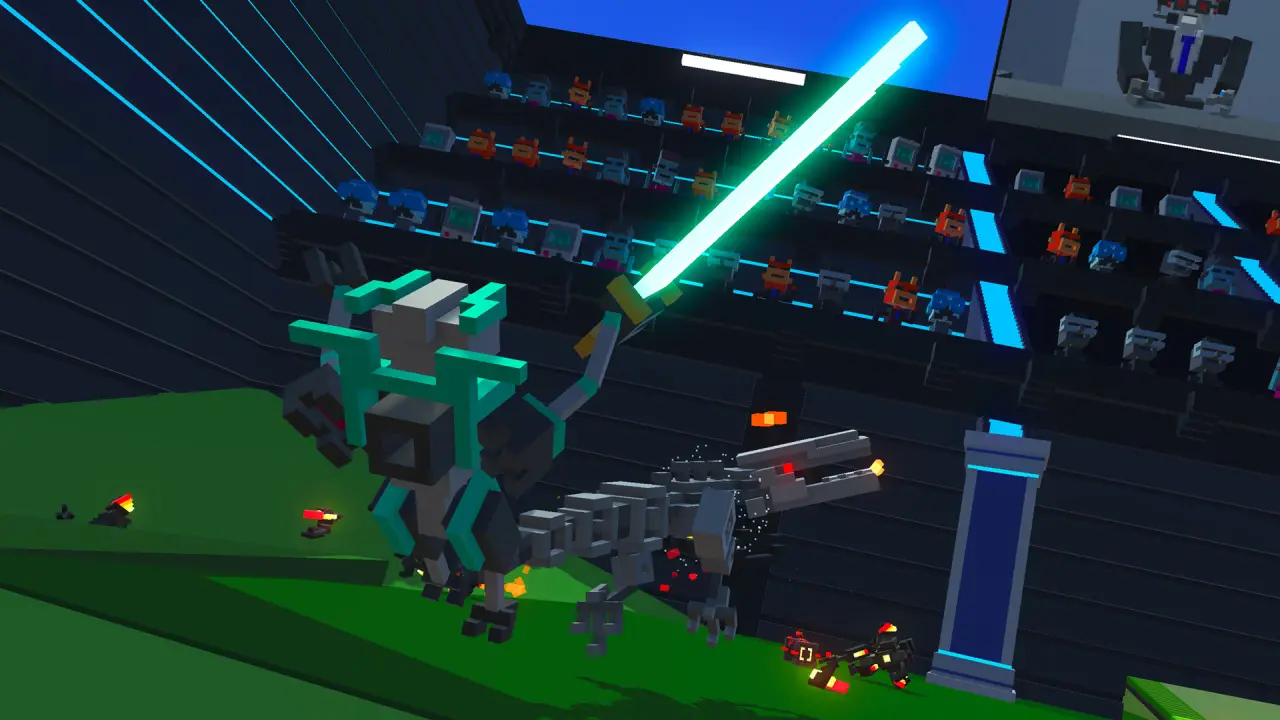
Clone Drone in the Danger Zone is the rare melee game where dismemberment isn’t just gore, it’s the whole decision-making loop. You’re not just hacking at health bars. You’re carving off a sword arm and suddenly that enemy can’t swing anymore. Take the legs and they’re not some dramatic corpse tumble either — they’re a crawling problem. That’s the hook, and it’s why the combat stays sharp long after the first few rounds. Every strike is doing tactical work, so the game keeps asking the same blunt question: what part do I cut first?
The best part is how simple it feels in your hands. Vertical slash, horizontal slash, dash. That’s basically the language of the whole game, and it’s enough. You can learn it in a minute, which is exactly why the depth lands. The skill isn’t in memorizing a giant moveset. It’s in reading spacing, timing your approach, and deciding whether to commit to a clean arm cut or go low and turn the enemy into a crawling mess. That makes the fighting feel clear instead of fussy. You always know why you died, and you usually know what you should’ve cut.
The progression system keeps that combat from going stale. Between runs, you’re unlocking jetpacks, bows, kicks, laser-sword deflection, clones, armor, flame weapons — the kind of upgrades that actually change how you play, not just how big your numbers look. One run can feel like a mobility build, the next like a ranged-leaning scrapper, and another like a flame-spewing chaos machine. That matters because the game isn’t just about surviving one arena. It’s about building a fighting style that clicks with the way you want to slice your way through the robot crowd.
A tiny tutorial that opens into a long grind

This is one of those games that looks like a simple arcade brawler until you spend time with it and realize the real loop has a lot of legs. Story Mode only runs five chapters and wraps in a few hours, so no, this is not the game you boot up for a deep, emotional campaign. Honestly, it feels more like a guided tour of the systems than a full narrative meal. But that’s not really a flaw if you’re here for the action. It gets you moving fast, teaches the rules fast, and then hands you the real sandbox: Endless Mode.
That’s where the run structure starts to shine. The wave-based setup works like a roguelite, and the clone extra-life mechanic gives it that extra bit of tension. It’s got a similar energy to Risk of Rain 2 in the sense that you’re stacking power and trying to survive escalating nonsense, but this is much more about close-quarters chaos than build synergy at range. The clone system gives each run more bite, because death isn’t always the end — it’s a reset with one more shot, and that keeps you pushing into riskier fights.
And there’s a lot of long-tail content here for a game that isn’t trying to wow you with cinematic scale. Endless Mode has 86 level variants, plus Steam Workshop support, so if the base arenas start to feel familiar, the game has room to keep mutating. That’s a big deal for a game at this price point, because it means the replay value doesn’t depend on a huge campaign. It’s built on repetition, variation, and the simple pleasure of getting better at the fight. Add in years of Overwhelmingly Positive Steam reviews — 35,099 of them at 96% — and you can see the pattern. People stick around because the loop works.
Why Gorn runs out of steam and this one doesn’t

If you want the cleanest comparison, look at Gorn. That game’s all about pure VR slash-and-splatter satisfaction, and sure, that can be a blast. But it’s mostly chasing the instant hit of swinging around and tearing things apart. Clone Drone in the Danger Zone does the same bloodless-but-brutal melee fantasy with way more structure behind it. The dismemberment here isn’t just for laughs or spectacle — it feeds into the actual tactics, and then the upgrade tree keeps pulling you into new builds. That’s the difference. One is a snack; the other keeps refilling the plate.
The multiplayer side pushes that even further. You get five modes: Endless Co-op, Last Bot Standing, Team Deathmatch, Private Duel, and Co-op Challenge. That’s already more variety than a lot of games in this lane bother with, but the Twitch mode is the real “wait, this was in there?” feature. Viewers can bet on you and even spawn enemies, which is a ridiculous amount of stream interaction for a game like this. It feels ahead of its time in a way that still lands now, because it turns the audience into part of the chaos instead of just passive spectators.
The catch is that the game stays honest about its limits. The voxel art is plain and cartoonish, and if you’re here for AAA gloss or rich environmental detail, you’re going to bounce off it fast. Physics can also get weird, especially when the waves are packed and everything starts colliding, sliding, or hanging onto momentum a little too long. But even that doesn’t erase what the game does well. It’s a melee roguelite with real mechanical teeth, a strong sense of long-term progression, and enough modes to keep it alive far beyond its first impression. That’s why it punches above the simple look.
Content | 8.5/10
內容: 8.5/10Four Hours for the Story, Twenty-Five for the Obsession

If you just want the main ride, Clone Drone in the Danger Zone doesn’t waste your time. The Story Mode is roughly four hours long, and that’s honestly the right call for a game like this. It gets in, teaches you the rules, throws you into the arena, and gets out before the whole thing starts feeling padded. The catch is that this is not a big, sprawling campaign with a ton of narrative meat on its bones. It’s more like a sharp, compact intro that gives you enough structure to understand why the combat loop works so well.
But here’s where it gets better: the game doesn’t pretend the story is the whole meal. If you’re the kind of player who likes to keep grinding after the credits, a full clear can stretch to around 25 hours, and that extra time comes from actually mastering the combat, chasing tougher challenges, and squeezing more out of the systems.
That’s the real rhythm here. You can finish the story fast, sure, but the game keeps handing you reasons to stay. It doesn’t try to dazzle you with some endless cutscene machine. It bets everything on the fact that hitting, blocking, and dismembering robots is fun enough to carry the rest.
And it does. The pacing works because the game never asks for a huge commitment up front. You can learn it in a minute, then sink dozens of hours into it if the loop clicks. That’s a big part of why it lands so well with players who want immediate action without needing a 3A-sized investment or a heavy story hanging over every fight.
Endless Mode, Workshop Chaos, and No Paid DLC Nonsense

The smartest thing Clone Drone in the Danger Zone does is refuse to stop at the campaign. Endless Mode alone gives hardcore players 86 level variants, and that’s not just busywork — it’s the kind of structure that keeps the game alive long after the first clear. If you’re chasing high scores, refining movement, or trying to survive one more ridiculous wave, that mode is basically built to eat your free time. It’s the difference between a one-and-done brawler and a game that keeps revealing new pressure points the more you play.
Then you add the rest of the ecosystem, and the value gets even sillier. There’s a level editor, Steam Workshop support, and a community that can keep building custom maps and challenges long after the official content runs thin. That matters because the base game already launched with a lot of flexibility: five multiplayer modes, co-op, and even a Twitch mode where viewers can bet on you and spawn enemies. That’s a pretty wild package to just hand out with the main game. There’s no paid DLC wall slicing the content into chunks, either. Multiplayer, Twitch support, and the Workshop tools all come with the game, so the value proposition stays clean instead of getting nickel-and-dimed.
And the long-tail appeal isn’t an accident. It started in Early Access back in 2017, then hit 1.0 in 2021 after four years of updates. That matters because the game didn’t just show up finished and disappear. It spent years growing chapter by chapter, which is why it has that “low price, huge replay value” energy instead of feeling like a one-week curiosity. Add in the fact that it’s sitting at 96% positive from 35,099 Steam reviews, and you can see the pattern pretty clearly: people didn’t just like it once, they kept coming back.





留言 0
歡迎發表遊戲評價
歡迎參與討論,分享對這款遊戲的評價。
暫無留言,歡迎分享對本篇評測的看法。