























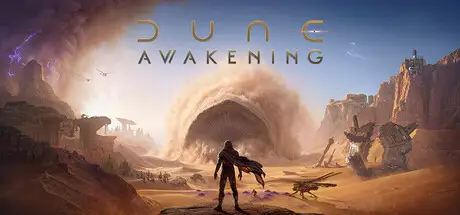



Opening
Plenty of games tell you water matters. Dune: Awakening makes you drain it from a corpse. Arrakis is not a backdrop here; it is an antagonist that never clocks off — the sun wicks the moisture out of you, a storm can smear your vision to a wall of yellow in seconds, and the moment you take a few too many steps across open sand, the ground begins to thrum. The worm has heard you.
Funcom, the studio behind Conan Exiles, did not simply reskin a survival template and call it Dune. They built a planet that runs on Frank Herbert's logic: scarce water, scarce shade, scarce safety, and none of that scarcity is decorative. It is the engine that drives every decision you make. A million copies sold in two weeks — the fastest-selling game in the studio's history — and a peak of 189,000 concurrent players within six days are the numbers underneath a stranger truth: a lot of people willingly signed up to be tormented by a desert.
It is not flawless, and the cracks run in a clear direction. Combat never catches up to the survival and exploration around it. The late-game grind wears solo players down. And the launch endgame, built around forced PvP, drove off a huge slice of the people who only wanted to dig in and build.
So this is a review about the tug-of-war between a ceiling for immersion and a willingness to be kind to ordinary players — and we are going to lay out the harsh next to the brilliant.
Story | 8.0/10
劇情: 8/10A parallel timeline that lets even book readers explore Arrakis like strangers again

The boldest decision Dune: Awakening makes is to throw out the film plot everyone already knows and split off a parallel universe instead. In this branch Paul Atreides is never born. Following the orders of the Bene Gesserit, Lady Jessica gives birth to a daughter — Ariste — so the sisterhood's breeding program toward the Kwisatz Haderach can keep moving. Because Jessica is a trained truthsayer loyal to the order, Dr. Yueh's treachery is exposed before he can act, and House Atreides survives the Harkonnen and Sardaukar ambush it never saw coming in the source material.
The cleverness cuts both ways. The game never has to argue with the story you watched on screen, yet it still hands longtime readers an Arrakis they have never seen. Exploration, then, carries a charge of genuine discovery: you are not retracing Paul's steps, you are redrawing the map of a Dune that was rewritten before you arrived. The biggest hook is that the Fremen — the people meant to rule this desert — have vanished without a trace, and a Reverend Mother sends you to find out where they went.
That quest line threads a string of trials together, and you grow stronger with every one you solve. Story and progression move in lockstep rather than alternating between a cutscene and a grind, which is rarer than it sounds in this genre. Most survival games bolt their narrative onto the outside of the systems, perfectly ignorable. Here, if you want to know what happened to the Fremen, you have to walk into the sand, ration your water, and survive the trials yourself. The plot is something you tread out with your own feet.
The tension this rewrite creates is worth sitting with. Book readers know what Arrakis is supposed to hold and what is supposed to happen, but in this altered timeline the familiar pieces have been scattered and rearranged, so you go back in carrying a quiet curiosity — will it be different this time? Bracing the familiar against the strange is the slyest and most effective trick in the game's narrative toolkit, and it is what keeps even a veteran of the novels leaning forward instead of coasting on recognition. The mystery of the missing Fremen is not just lore dressing; it is the thread that pulls you deeper into the desert and gives the survival systems a reason to exist beyond their own mechanics.
Class backstories carry the characters, where the studio's own predecessor only wrapped survival in a savage skin

Much of the game's characterization lives inside the five starting classes. The Swordmaster comes out of the Ginaz School, framed as the pinnacle of fighting prowess in the Known Universe, specializing in defeating Holtzman Shields. The Mentat is a human computer with extraordinary data-processing power. The Bene Gesserit deal in manipulation and subterfuge. You are not picking a loadout; you are picking a heritage that colors how the world reads you and how you read its rules.
Set it beside the rest of the franchise and the angle sharpens. Dune: Spice Wars, also flying the Dune banner, is a strategy game that puts you above the planet as a commander. Dune: Awakening pins you to the ground and makes you live the thirst, the chase, and the long walk across the sand in first person. IGN's 8 captures the state of the writing well — book fans rejoice, flaws and all — which is to say the ambition and the fidelity are not in question; the rough edges are about pacing, not about whether the thing it wants to tell is worth telling.
Against the studio's own Conan Exiles, the leap is obvious. That game dropped survival into a savage fantasy world where the setting was mostly scenery, a backdrop you could ignore while you crafted and farmed. This time the Dune fiction burrows into the motive behind every quest and every sip of water, and the narrative stops being a skin stretched over the survival loop. You are not surviving in spite of the story; you are surviving because of it, and that single shift is what lifts the writing above the genre's usual indifference.
Audio | 7.0/10
音效: 7/10Sound warns you of danger before your eyes do

On this planet your ears tend to register trouble before your eyes can. Long before a storm smudges the horizon yellow, its rising howl is already nagging you toward cover; the low, gut-level rumble of an approaching worm climbing up through your boots is enough to break a sweat on its own. The smartest thing Dune: Awakening does with sound is wire the ambient layer straight into the survival rules. You are not soaking in atmosphere — you are using your ears to judge whether you can afford one more minute out on open sand.
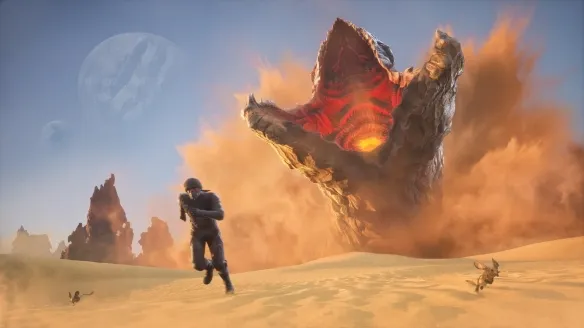
The worm is the clearest case. When it shifts into hunting mode the soundscape changes in a defined way, and that change is the audible warning attached to the harshest death penalty in the game: hear it, and you know that if you do not sprint for rock right now, your pack, your gear, and the vehicle under you all go with it. Plenty of survival games use audio to set a mood. Here the audio is there to save your life, and that gap matters. Put another way, the design turns listening into a real skill — veterans stop watching the screen and read the rhythm of the tremors and the direction of the wind to decide which way to bolt. Sound is not a garnish; it is a survival gauge you watch as closely as your water meter.
The everyday layer is solid, but nothing sticks in your head

Pull the lens back from the danger to the daily grind and the ambient bed holds up just as well. The lift and drop of ornithopter engines, the feedback of weapons firing and tools striking ore, the difference between a footstep on sand and one on rock — stack those details together and they build the conviction that you are genuinely scraping out a living on a planet. It never shouts, but it is always present.
In all honesty, the music itself is not this game's strong suit. It is restrained to the point of near-invisibility, which is a virtue in a survival context — no jarring swell ever yanks you out of the tension — but it also means there is no theme you walk away humming. The reviews make this plain: critics praise the atmosphere and the worldbuilding on a loop, yet almost none of them single out the score. Next to the instant-recognition hooks of a Valheim, Dune: Awakening's music is a competent servant rather than a calling card. That is why this dimension lands at a 7 — nothing is done wrong, but you are never given a reason you simply have to remember it. For a game built on immersion and survival pressure, that restraint reads as a deliberate trade: it would rather let the wind, the tremor, and the engine fill your ears than pull you out of the dread with a flourish. You can call that the safe choice or call it a small failure of ambition, but it never drags the overall experience down, and on a planet this committed to making you afraid, a score that refused to know its place might have done more harm than good.
Visuals | 9.0/10
畫面: 9/10Arrakis is made to feel genuinely alive

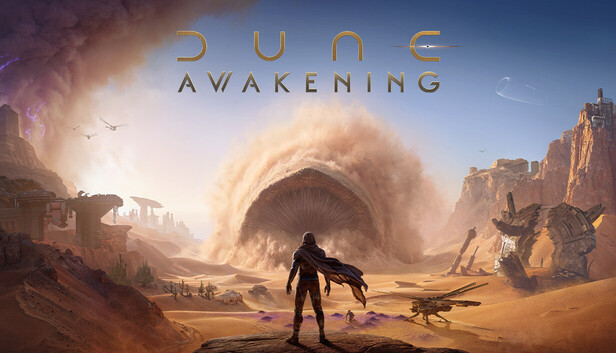
If one dimension here draws no argument, it is the visuals. The Arrakis built in Unreal Engine 5 is not a pretty postcard; it is a planet with weight. Heat warps the air in the distance, the curve of a dune shifts through layers as the light moves, and when a storm whips up, the whole world tips from crisp clarity into a churning orange murk in the span of a few seconds. GamingTrend's review headline simply called it Arrakis come beautifully to life, and that is not hyperbole — standing on a dune crest and looking out, you really do feel the way the books frame a human against this place: small as dust.
That visual conviction is not there to show off. It serves the play directly. Precisely because the sea of sand is built this real and this vast, you actually fear it, and you actually sit down before leaving to work out whether your water holds and whether your route gives the worms a wide enough berth. Here, graphics are the bedrock of immersion, which is the core reason this is the highest score on the card at 9. What makes it sing is the way light and weather move. The same dune wears a completely different mood across a day — cold blue at dawn, a blinding white at noon, a wash of orange-red at dusk — and when a sandstorm hits, visibility collapses fast enough to strip away your sense of direction. A visual system that constantly shifts, and whose shifts decide whether you live, makes the look more than pretty: it becomes information you must read on the fly. You are not watching scenery; you are watching for your life.
Strong landmarks, with console versions still on the way

What is rarer still is that this seemingly endless desert does not turn monotonous. Hagga Basin, the Deep Desert, the Shieldwall — each region carries its own visual personality, some a relatively safe oasis-style foothold, others high-resource, high-risk killing grounds. Landmarks read clearly enough that after a few runs you navigate by silhouette rather than getting lost among identical dunes. That knack for difference within repetition matters enormously for a game built on open sand — the desert's great enemy is sameness, and it answers with rock formations, canyons, and man-made ruins of varied texture that hand you scale and orientation at once. Funcom has published a figure: players have collectively explored 25.5 million square kilometers of desert, and behind that absurd number is a map that is both huge and able to hold up to repeated looking.
Detail density deserves a line of its own. Footprints, tire tracks, and the scars of a fight linger on the sand, then a storm passes and smooths the terrain flat again; those small dynamics pile up into the sense that the planet is alive and responds to you. The landmark design is restrained, too — it never reaches for gaudy spectacle to manufacture awe, but lets the sheer scale of the terrain and the play of light carry the impact instead. That confidence of taste is, fittingly, where it most resembles the source novels: Herbert's Arrakis was never about flash, it was about a hostile vastness that dwarfs everything human, and the game understands that down to its restraint.
The honest caveat is the platform situation. The game launched on PC via Steam only, with PS5 and Xbox Series versions still in planning, so console-side fidelity, frame rate, and optimization cannot be judged yet. For PC players this is a visually convincing planet; console players will have to wait, and hope the port keeps this standard intact — a great deal of the immersion rides on the image, and if the console build cuts corners on resolution or frame rate, the experience may well shrink with it. It is the kind of game where a steady frame rate and a clean draw distance are not luxuries but load-bearing parts of the fantasy, because the moment the desert stops looking convincing, the fear it depends on starts to leak away. For now, on PC, none of that is in doubt, and the planet holds its grip from the first vista to the last.
Combat | 8.0/10
玩法: 8/10Survival's bedrock: water costs more than your life

The bedrock of Dune: Awakening is water. On Arrakis it is the most precious thing there is, and the sun and the storms keep wicking it out of you, forcing you to top up without pause. How brutal does the mechanic get? When there is genuinely no water to draw nearby, you extract blood from the corpses of your enemies to stay alive. That is not a shock-value gimmick; it is the gamified version of the Fremen ethic from the books, where even a dead body's water is reclaimed. From the first hour it drops you into a situation where staying alive is itself a thing you have to calculate. Because the foundation is wound this tight, every system above it stands up. Every decision — whether to head out, which route to take, how much water to carry, when to turn back — gets interrogated by that scarcity again and again. This is also where it parts ways with the many games that treat survival as a tutorial you graduate from: thirst stays with you dozens of hours in.
A build loop that hooks, and progression you can grow two ways

What carries the long haul is a build loop that interlocks tightly: you explore to earn new blueprints, the blueprints let you craft better gear, and better gear feeds you back out to farther, riskier ground. That feedback ring is genuinely addictive, and several outlets put its survival depth right alongside Valheim, while a blueprint-copy convenience spares you from rebuilding from scratch every time.
Progression has bite too. The five starting classes — Swordmaster, Mentat, Bene Gesserit, Trooper, Planetologist — feed a non-linear skill tree, and the class is only a starting point; later you mix freely across trees, and dedicated trainer NPCs scattered across the world teach you new skills. The upshot is that two players who picked the same class can play wildly different characters dozens of hours on. A design where your origin is merely a start and the rest is yours to shape keeps progression from collapsing into one correct answer, and it gives re-rolling a fresh save a real reason — you will always wonder what another path turns you into.
Combat is the weak link, and you move on foot and by thopter

The cold water has to be poured on combat. It plainly lags behind survival and exploration: early fights mostly exist so you can harvest blood packs off corpses, with no real thrill to them. Further in you meet enemies with shield generators, who need a parry plus a charged hit to stagger before a slow blade finishes them; that adds a sliver of layering, but the overall depth still cannot carry combat into being a source of fun on its own — it plays more like an obstacle to clear on the way through survival.
Movement is another design that will lose people: there is no free fast travel, so getting anywhere relies on your legs and on vehicles like the ornithopter, and the cost of moving is steep. The upside is that it turns distance into a real burden and makes the sea of sand feel vast, every long trip demanding you plan supplies and routes in advance; the downside is that solo players bleed huge amounts of time onto traversal, and a storm or a worm can undo the whole journey. Funcom reports players have collectively built over 500,000 ornithopters, a measure of how much everyone leans on this set of legs and a sign that movement is an unavoidable core loop here. Against the studio's own Conan Exiles, the biggest leap is right here: in the older game survival mechanics and worldbuilding were two separate skins, the setting mostly backdrop; this time water, movement, and building are all genuinely lashed to the Dune fiction, and every system can find its reason to exist inside the source material's logic. That is the root of why the gameplay still hooks despite its flaws: the loop is anchored to a fiction strong enough to forgive the rough combat and the punishing traversal, and few survival games can claim a foundation this coherent.
Content | 6.0/10
內容: 6/10Three ways to play, and a hundred hours in them

On sheer volume, Dune: Awakening is generous. It hands you three fairly different ways to live: you can go lone wolf, slowly farming and exploring on your own; you can pull in friends for co-op survival, storming strongholds together; or you can dive into faction PvP and the cutthroat extraction loop. GamerSky's review clocks the playtime past 100 hours, with quest lines, uncharted exploration, combat, the skill tree, technology and building all meshing together into a genuinely thick spread of content. For players willing to settle in, this is a world you move into rather than a path you finish and leave. The map itself nudges you to keep churning, too: Hagga Basin's resources are unevenly spread, pushing you to relocate your base again and again to gather what you need, while shipwreck sites and other points of interest are scattered around to give your travel concrete goals. That design — resources force you to move, movement yields discovery — keeps the vast desert from feeling empty, and turns basing from a build-it-and-forget-it task into a running decision that shifts with your progress. You are not slowly hoarding in one fixed outpost; you migrate across the planet chasing resources and dodging threats.
The endgame stepped on a mine, but the studio was willing to operate

The biggest controversy in this dimension piles entirely onto the endgame. At launch in June 2025, the game tied top-tier progression to a high-resource region called the Deep Desert — and that region was forced PvP. You wanted the best materials, you went in, and going in meant you could be robbed and killed by other players. The result was that a huge swath of players who only wanted to quietly farm got pushed into a mode they had no interest in. Funcom later confirmed the misread with data: over 80% of lifetime players only play PvE and barely touch forced PvP. That is the main reason this dimension lands at a 6 — not a shortage of content, but the fact that it once locked its most valuable part behind a door most people would not walk through.
The saving grace is that the studio was willing to admit it and operate. Nearly a year on, patch 1.3.20.0 (launched April 28, 2026) made a structural overhaul: the Deep Desert was split into separate PvE and PvP instances, so players who want to avoid the fight can finally farm top resources in peace; the PvP instance swaps coercion for incentive, raising resource yields inside its zones to 2.5x; and Hagga Basin became entirely PvE across the board. The creative director even published a post explaining the shift. It is a curve worth respecting: the launch endgame really did step on a mine, but the studio listened to the data, changed the structure, and turned PvP from mandatory back into optional.
The grind is another hurdle

The other shortfall to name honestly is the late-game grind. The further you go, the more tedious resource gathering becomes, especially for solo players — even the materials needed to craft the most ordinary items balloon noticeably, and the repetitive labor stacks higher and higher until a once-tense survival loop turns into mechanical hauling and waiting. Grouped players can spread the load with division of labor and efficiency, but lone wolves burn through their patience here, which is the real reason a fair number of solo players drop off midway. Set against peers in the genre, ARK: Survival Evolved and Rust both stumbled into similar potholes on grind and endgame structure — parking the most valuable rewards behind the most grueling stretch is practically a genre disease. Dune: Awakening's launch endgame was simply more conspicuous and drew more eyes. The difference is that it did not leave the problem to fester; it spent the better part of a year tearing it down, reworking it, patching it — and that is exactly what decides whether the content is worth your long-term stay. A team willing to rebuild structure for live service is rarer than content that shipped perfect, and that willingness is the strongest argument for trusting the game with your long-term time.


留言 0
期待聽到你的聲音
歡迎來到評論區!說說你對這款遊戲的看法,第一個發言說不定有驚喜~
還沒有留言,來聊聊你對這篇評測的看法吧!