























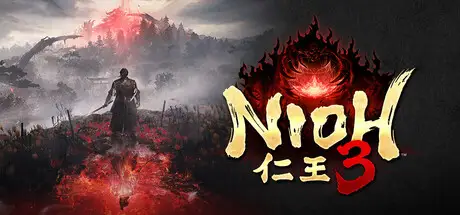
Opening
For the first time in the series' decade-long history, Team Ninja has earned the right to be measured against FromSoftware rather than chasing its shadow. That sentence used to be a fan's wishful boast. With Nioh 3, it reads like a sober statement of fact, and the numbers back it up: the game crossed one million copies inside two weeks, the fastest sales pace Team Ninja has ever recorded, and pushed the Nioh franchise past the ten-million lifetime milestone.
The reception curve tells its own story. Steam sentiment opened at "Mixed" on launch day and climbed to "Mostly Positive" within a fortnight, while the peak concurrent player count on Steam topped seventy thousand, a single-game high for the studio. The Metacritic picture is unusual too: an 86 critic average sitting just below an 8.1 user score, the rare arrangement that signals a game you only fully appreciate once you are deep inside it rather than skimming a trailer.
But sales and aggregate scores are not the question this review exists to answer. Nioh has always been the strongest counterpoint to FromSoftware's soulslike template, equally precise and equally demanding, but framed through samurai and yokai instead of Western fantasy and gothic ruin. The problem is that the previous two entries grew increasingly static; Game Informer bluntly labelled the formula "generally great but increasingly stagnant." So the real question is whether the series can finally break out of the reskin-sequel trap.
The answer is an emphatic yes, and it rests on two genuine innovations: a dual-form combat system that splits the samurai and ninja into distinct playstyles, plus an open-area design philosophy that prizes density over sprawl. The six dimensions below unpack it in turn: story, audio, graphics, gameplay, content, and the overall verdict, including how PC and PS5 stack up against each other.
Story | 7.5/10
劇情: 7.5/10Story is an upper-middle dimension for Nioh 3. Narrative has never been the studio's calling card, yet the "temporal thread" structure here is a measurable step up from anything the series attempted before.

Game Informer described the campaign as a "time-hopping adventure," and that phrase captures the architecture precisely. The protagonist moves across distinct historical periods to carry out the series' quests, a framing that feels far more ambitious than the William Adams biography of the original or the create-a-character Sengoku tale of the sequel. It also runs straight into the studio's oldest limitation: writing has never been where Team Ninja spends its best energy.
The Temporal Thread: A Campaign That Crosses Eras
The traditional Nioh narrative mode is a blend of Sengoku and Azuchi-Momoyama historical figures stitched together with yokai mythology. Nioh 3 does not abandon that frame, but it threads it through time-hopping, letting you cross between the Edo, Heian, and Sengoku periods, each with its own main quests and boss encounters. The structure gives every confrontation context; instead of asking "why am I fighting this foe," you now arrive with a reason rooted in the era you have stepped into.
There is a clear lineage to the studio's own Final Fantasy origins project, which also leaned on a "traveling through historical timelines" framework. The distinction is that Nioh 3 drops that frame into a hardcore soulslike loop. Crossing time is not a cutscene transition; you carry the gear earned in one era forward into the next and keep fighting. That "equipment persists across time" design gives players an emotional through-line, partially offsetting the fragmentation that an anthology structure usually invites. It is a small but genuinely clever load-bearing idea, and it is the single biggest reason the campaign reads as more coherent than its predecessors managed.
Characterisation: Weak Hero, Strong Adversaries
The series tradition is a thin protagonist; your character is more a vessel for hardcore swordplay than a fully drawn person. Nioh 3 inherits this wholesale and, unlike Elden Ring, does not lean on environmental storytelling to flesh the hero out. This is a deliberate authorial choice, not a failure of craft, and it is worth naming as such before the criticism lands.
Flip the lens, though, and the adversary writing is genuinely substantial. The community has whole threads dedicated to the "series-best bosses," and several encounters here are rated the finest the franchise has produced, not merely for difficulty but for design depth. Many bosses demand fluid switching between the samurai and ninja styles; commit to a single style and you will wall against them. That "the boss forces you to use the entire system" philosophy is the studio's signature, and the narrative carries it: some foes are historical figures such as Oda Nobunaga, Toyotomi Hideyoshi, and Ashikaga Yoshimitsu, while others are traditional yokai like Shuten-doji, the nine-tailed fox, and the kappa. Fighting them is not "running a dungeon"; it is confronting iconic figures of Japanese culture, a narrative weight Western action RPGs struggle to replicate.
The Cost of Crossing Time, and the Cultural Bedrock Beneath It
The price of time-hopping is narrative fragmentation. Each era tells its own self-contained story, but the connective tissue between periods is loosely tied. Players report finishing one region and barely recalling the previous region's plot thread, the textbook symptom of narrative density being diluted by combat depth. Set against Elden Ring, which embraces fragmentation as a deliberate "environmental storytelling plus player imagination" choice, Nioh 3 wants both a complete plot and time-hopping, and ends up not fully nailing either.
That "good enough" positioning actually aligns with the studio's philosophy, mirroring Wo Long and Rise of the Ronin, where the plot exists to justify the fighting. If you want a narrative-driven action RPG, look toward Final Fantasy 16 or The Last of Us Part 2 instead. Where Nioh 3 quietly excels is cultural grounding: the samurai armour styles are supervised by a historical research team referencing museum-held o-yoroi and tosei gusoku forms; the yokai draw on the Konjaku Monogatarishu and Hyakki Yagyo scrolls; and shrine architecture down to torii, shimenawa, lanterns, and roof tiles is researched to a real-world standard. This is culture as bedrock rather than decoration, and it is the hidden bonus that pulls the story dimension up to a respectable 7.5.
Audio | 8.0/10
音效: 8/10Audio is a solid, dependable dimension for Nioh 3, a benchmark for sound design in Japanese action RPGs, even if it is not the studio's signature strength.

A Score Built From Wagakki and Synths
The soundtrack continues the series tradition of Japanese orchestration fused with wa-style electronica. Themes layer traditional instruments, shakuhachi, taiko, shamisen, and nohkan, over modern synthesizers, with battle music running fast and exploration music staying slow and restrained. The work is led by the studio's internal music team alongside external traditional-instrument performers, extending the "modernised Japanese" path the sequel established rather than producing a purely archaic pastiche.
Critically, the score lands above the genre average but below the "soundtrack famous in its own right" tier of Bloodborne or NieR: Automata. The community verdict is telling: "you will not forget the main theme, but pulled out on its own it feels a little flat," the classic profile of a functional score. That ceiling is set by budget and team scale, not by a flawed creative decision. Compared with FromSoftware commissioning independent composers for a Bloodborne theme, Nioh 3 runs a mid-size "internal team plus external collaborators" operation, which reliably delivers "solid and sufficient" without easily reaching "hummed by everyone." Representative track types span a grand main theme of orchestration over taiko rhythm, quiet shakuhachi-and-shamisen exploration beds, fast low-end-heavy battle music, choir-and-heavy-orchestra boss themes that push tension to its peak, and solo wagakki interludes that hold space for narrative pacing.
Combat Audio, Voice Work, and Platform Differences
Combat sound is where Nioh 3 genuinely excels. Samurai stance changes, armour-breaking strikes, ninja dashes, and ninjutsu casts each carry their own discrete audio layer, and the two styles feel acoustically distinct: the samurai leans on weighty "metal clash plus armour friction," the ninja on nimble "short wind cuts plus sliding footfalls." Hit feedback is a studio hallmark, with the layering of blade-on-foe, armour breaks, and finishers staying crisp and readable. Veterans on the forums single out the improved "wetness" of impacts over the sequel as proof of the team's relentless polish. Even the yokai transformation stacks a low roar with high-frequency electrical crackle to manufacture an "this should not be coming from a human" unease.
The Chinese localisation shows real care: the protagonist and major NPCs are fully voiced, while select Japanese terms such as "bushi," "shinobi," "ki," and the names for Arts Proficiency and Transcendent Heart keep their original pronunciation to preserve series flavour. Subtitle sync is lag-free, and the localisation depth sits near the front of the action-RPG pack, well ahead of Elden Ring's English-only approach or The Witcher 3's seven-years-late dub.
On platform audio, the PS5 version leans on the Tempest 3D engine for spatialised positioning, sharpening directional cues for enemy locations and ninja ranged-weapon trajectories. The PC version lacks Tempest but supports Dolby Atmos and 7.1 surround, getting close with good headphones. The one real shortfall is the BGM mix: multiple regions share a similar "wa-electronic" base, and players report the score wearing thin after roughly thirty hours. That is a variety problem rather than a quality problem, and it is the single factor keeping this dimension at 8.0 rather than climbing toward 9.0 in a future entry.
Visuals | 8.5/10
畫面: 8.5/10Graphics land in the upper-mid tier for Nioh 3. The PS5 build uses console hardware to raise the visual bar, though it stops short of the Elden Ring or Senua's Saga: Hellblade 2 ceiling.

A Japanese Aesthetic, Industrialised
Nioh 3 keeps the series' aesthetic roots intact: samurai armour, shrine architecture, wa-style landscapes, and yokai design. The hard genetic core is "medieval Japan plus yokai," cleanly distinct from the gothic of Elden Ring or the frontier dust of Red Dead Redemption 2. Armour patterns follow authentic samurai forms across multiple styles; weapon designs reference museum holdings, with katana, tachi, spears, and naginata all historically researched; shrine details render torii, lanterns, and roof tiles to a real-object standard; and yokai blend traditional creatures such as the kappa, Shuten-doji, and nine-tailed fox with original designs. Region ambience runs through day, dusk, night, and rain lighting shifts that read clearly on PS5. Long-form community posts argue that the studio bakes Japanese culture into the "underlying DNA" rather than treating it as decoration, and the comparison line against Assassin's Creed Shadows lands firmly in Nioh 3's favour, since that title drew widespread criticism for an Americanised reading of Japanese culture. You can see the care in every pixel: the weave of a haori, the wear pattern on a lacquered helmet, the precise curve of a temple eave. It is the sort of detail density that rewards players who slow down and look, and it gives the world a tactile authenticity that pure spectacle cannot buy.
Engine and Rendering Technology
Nioh 3 runs on an upgraded build of Team Ninja's proprietary engine, iterated from Wo Long and Rise of the Ronin. The PS5 build supports a 4K, 60fps performance mode, a 4K, 30fps ray-traced fidelity mode, dynamic resolution with temporal anti-aliasing, Tempest 3D audio integration, and DualSense adaptive trigger feedback. The PC build pushes further with 4K plus DLSS 3 frame generation on RTX 40-series cards, AMD FSR 2.1 for Radeon compatibility, ultra settings well beyond console, 144Hz and 240Hz high-refresh support, and ultrawide 21:9 and 32:9 output.
The engine sits below the top-tier rendering of FromSoftware's Elden Ring or Naughty Dog's The Last of Us Part 2, yet places upstream within the action-RPG bracket, ahead of Stellar Blade and Final Fantasy 16 from the same window. What is notable is that this engine evolution does not chase "do everything." It prioritises stable frame rates and hit-detection precision inside combat scenes. Boss-fight camera close-ups, the particle density of skill bursts, and the physical feedback of armour breaks are the points the engine team polished repeatedly. Distant rendering in the open areas is not best-in-class, but the visual information density inside the combat envelope is extremely high, a "clear priority" trade-off that reflects the team's grasp of what an action RPG is actually for.
The PC ceiling is something PS5 simply cannot reach: at ultra settings, texture precision, shadow resolution, and ray-tracing coverage all clearly lead the console. The cost is the hardware bar; running 4K plus DLSS 3 at a stable 60fps wants an RTX 4070 or better. The community consensus is that the PC build is "high ceiling, high barrier," and that mainstream players find the PS5 version the less fussy choice.
Open-Area Density and the PC Optimisation Shortfall
Open-area design raised the art burden sharply; level-based design could craft exquisite small scenes, but open areas demand large-scale visual consistency. Team Ninja's solution is to give each region its own art identity: vermilion torii, cherry blossom, and temple clusters for the Kyoto area; muddy battlefields, ruined villages, and snowy peaks for the Sengoku highlands; timber-framed market streets and lantern-lit riverside docks for Edo; aristocratic palaces and moonlit gardens for Heian-kyo; and warped colour with non-Euclidean geometry for the yokai realm. Each region carries its own weather system and day-night cycle, and the visual style shifts visibly at region transitions, dodging the "thirty hours of one biome" fatigue. The studio reuses level-design "small-scene polishing" technique throughout, so you will not see repeated bushes or textures after ten minutes of walking.
PC optimisation is the dimension's biggest weakness. Launch-week Windows 10 users widely reported stutter, frame-rate swings, and scene flicker, while Windows 11 users fared clearly better; the studio explicitly recommends Windows 11 on the store page, because Windows 11's DirectStorage compatibility reproduces the PS5 SSD advantage that Windows 10 cannot. This is the studio's first simultaneous PC and PS5 launch, and the optimisation pressure shows. Patches landed quickly after the first two weeks, but the safe call remains "wait two months for the PC build, or jump straight to PS5."
Combat | 9.5/10
玩法: 9.5/10Gameplay is the core dimension of Nioh 3 and its highest score. The samurai-plus-ninja dual styles, joined by Transcendent Heart switching, set a new milestone for action-RPG design.

Samurai Style: The Precise Rhythm of Three Stances
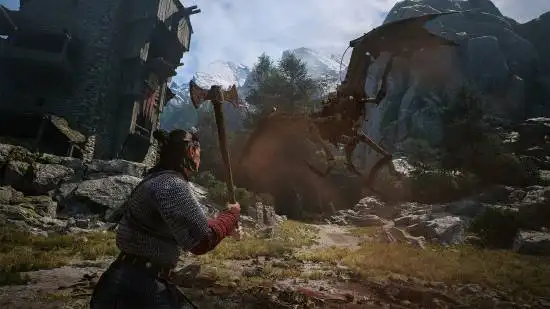
The samurai style preserves the heart of the prior two entries: each weapon carries low, mid, and high stances, mapping to different combo strings and ki costs. The high stance hits hardest but drains ki fast for slow, heavy blows; the low stance is weaker but cheap, ideal for evasion and quick pokes; the mid stance balances the two and stays the default for most players. The samurai arsenal spans katana, tachi, dual swords, spear, axe, kusarigama, and tonfa, each with stance-specific combo strings plus a super heavy strike once the Arts Proficiency gauge fills.
The newly added Arts Proficiency gauge is a meaningful patch to action-RPG design. The previous "build and burst" loop was the yokai transformation; now there is a second, non-transformation burst option. Players can choose between "bank the transformation for bosses" or "bank Arts to clear trash mobs," a choice that visibly deepens the strategic layering of every encounter. It rewards the precise, hardcore read-the-foe rhythm the studio spent a decade refining, and it asks you to commit to a plan a beat before the opening rather than reacting on instinct. The result is a samurai layer that feels both familiar to veterans and meaningfully deeper, because the Arts choice forces a resource question into every fight: do you spend now for safety, or bank for the decisive blow.
Ninja Style and Transcendent Heart: The Real Innovation
The ninja style is Nioh 3's genuine breakthrough, an inverted design philosophy. It drops weapon-stance depth in exchange for multi-jumps, aerial repositioning, and wall-running mobility that far outpaces the samurai, ranged attacks via shuriken, kunai, crossbow, and powder kegs, and three ninjutsu gauges holding substitution, smoke cover, teleport, and poison blades. Every ninja weapon has only a single moveset, but the ninjutsu variety lets players assemble personal "ninja builds." Game Informer specifically praised it for adding "a fresh Ninja Gaiden-inspired twist to Nioh's action," a nod to the studio's own Ninja Gaiden lineage. Where the samurai demands you read the foe's rhythm to win cleanly, the ninja encourages you to manufacture attack windows through sheer mobility; both philosophies coexisting in one game is rare in the genre.
Transcendent Heart is the most groundbreaking design of all: instant, cooldown-free switching between the samurai and ninja styles mid-combat. This is the fundamental break from Devil May Cry 5's three-character swaps or Final Fantasy 14's job switching; the switch is instantaneous and uncapped, encouraging high-frequency swapping inside a single fight. Meet a large boss and you dig in with high-stance samurai; face a crowd of foes and you harass with ninja mobility; reach a finisher window and you close with a high-stance burst; need to disengage and you smoke out as a ninja. The community calls it smoother than Devil May Cry 5's swaps, which require an animation, whereas Transcendent Heart is a button-press instant. 3DM described it as an "action-RPG milestone," and the comparison holds: Final Fantasy 7 Rebirth's character swaps carry a cooldown, Devil May Cry 5's are pre-set by segment, and only Transcendent Heart is a true cooldown-free real-time switch. It is the rare mechanic-level innovation rather than a numbers or presentation tweak.
Open Areas and Series-Best Bosses
The open-area design is an evolution of the studio's own Rise of the Ronin. Team Ninja publicly stated "density over area," so the regions are not large, but the content per square kilometre is extremely high. Each region offers open exploration with free ordering, level-style transitions between regions to preserve the hardcore cadence, and its own boss, hidden elements, and spirit-stone upgrades. Crucially, there is no mount system; you traverse on foot and free-run, and with the ninja's multi-jumps and wall-runs, exploration itself becomes part of the action system. The vertical depth of each region is deliberately "ninja-friendly," encouraging mobility to bypass standard routes. The community rates this the studio's biggest non-combat advance in a decade, finally opening exploration freedom while retaining level-grade density.
Boss fights are rated series-best. Many bosses run multiple phases, each favouring a different style, and certain special moves can only be broken by switching styles, so encounters test not just execution precision but switching decisions. The difficulty curve is steep, with early bosses serving as teaching tools that force you to learn both styles separately, mid-game bosses requiring Transcendent Heart switching, and late-game and Nightmare-difficulty bosses demanding the full system. Against Elden Ring's "patience plus timing" bosses, Nioh 3 tests "system switching plus decision speed"; you are not waiting out a clock, you are making a tactical call every second.
Content | 9.0/10
內容: 9/10Content is a high-mid dimension for Nioh 3. The combination of open areas, a deep boss roster, and dual-style builds stretches a single save toward ninety hours and beyond.

Length: Fifty Hours Main, Ninety Hours Complete
HowLongToBeat data puts the main story near fifty hours, mains plus major sides around seventy, and full completion north of ninety. That is upper-mid for the genre, longer than Stellar Blade's twenty-five-hour main or NieR: Automata's thirty-five, and shorter than Elden Ring's fifty-seven. But the Nioh "complete experience" runs well past a single completionist pass. The existence of two styles makes replay saves the norm: a first run leaning samurai, a second pivoting to ninja, a third challenging a single-style clear, and a fourth-and-beyond into Nightmare difficulty with build experimentation. Hardcore community data shows average cumulative playtime of 150 to 250 hours, a high mark for a single action RPG.
Worth stressing: this length is not padded with repeated tasks or filler. The fifty-hour main has almost no "fetch-and-walk" quests; every region carries its own boss and plot progression. This "density-type length" is scarce in the genre, and against open-world games where "sixty of the hundred hours are travel," Nioh 3's per-hour worth is clearly higher. The replay loop is not a chore bolted on for padding either; switching your dominant style genuinely rewires how encounters feel, so a second run plays less like a victory lap and more like a different game built on the same skeleton.
Bosses and Exploration Rewards
Nioh 3 holds roughly 25 to 30 named bosses plus hundreds of trash-mob fights. The boss design depth is rated series-best: bosses commonly run two to three phases with some hitting four, several force fluid switching between samurai and ninja styles, Nightmare-difficulty bosses provide endgame challenge, and hidden bosses can be triggered through exploration. Against Elden Ring's boss count, including minor bosses around a hundred-plus, Nioh 3 is fewer in number, but each boss extracts more from the system; where many Elden Ring bosses fall to the same ash-of-war approach, Nioh 3's bosses force you to wield the full toolkit to win cleanly. The studio's hallmark is "movesets that can be read but demand precise reactions," with each attack carrying clear visual wind-up and audio cues, so observe long enough and you will find the answer, avoiding both luck-based and unsolvable design.
The "temporal anomaly events" are a new exploration-reward mechanic. At specific locations you trigger a short "past battlefield recreation," and defeating the recreated yokai yields rare drops. The design folds the series' narrative elements into exploration, so even the act of traversal has room for the action system to breathe. The studio carefully tuned reward distribution density: rare-drop points are sensibly spaced, and chests and shrines sit neither too close nor too far apart. The community consensus is that the reward curve is "just satisfying enough," never so dense that rewards feel cheap, never so sparse that the drive to explore evaporates.
Build Depth and Per-Hour Worth
The gear system inherits the prior entries' "item level plus affixes plus set effects" tradition while trimming some of the tedium. Weapons and armour carry levels, rarity, and affixes; set effects encourage specific build pairings; the spirit-stone system replaces the sequel's soul stones to simplify upgrade materials; the samurai and ninja each get their own skill tree; and Transcendent Heart lets you temporarily switch builds mid-fight. Build experimentation is a series tradition, and Nioh 3 both simplifies it to lower the barrier and deepens it through dual-style combinations. The affix system, the core of the hardcore "loot grind," has been streamlined to remove the sequel's redundant low-efficiency affixes, sharpening the goal of farming. The community verdict is "less loot-grind flavour, but more build depth," a clear sign of the studio's design trade-offs.
On per-hour worth, the standard edition lists at 69.99 dollars. Across a ninety-hour completion, that is roughly 0.78 dollars per hour, sitting at the genre's mid-to-low cost level: clearly better than Stellar Blade's 2.3, slightly behind Elden Ring's 0.46. For hardcore players running multiple playthroughs of 150 to 250 hours, the per-hour figure drops below 0.30, which makes the deep dual-style endgame the strongest argument for the 9.0 score this dimension earns. The studio's long history of generous post-launch support, three story expansions apiece for the previous two entries, suggests that ceiling will only rise once the inevitable Nioh 3 expansions land their own maps, bosses, and gear.





留言 0
期待聽到你的聲音
歡迎來到評論區!說說你對這款遊戲的看法,第一個發言說不定有驚喜~
還沒有留言,來聊聊你對這篇評測的看法吧!