

























Opening
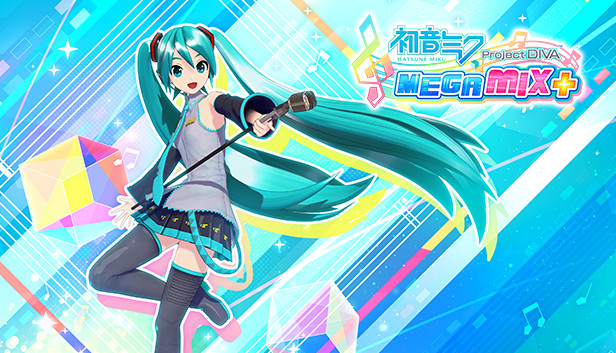
The lights snap up, the intro phrase rolls in, and Hatsune Miku blinks at center stage before lifting the mic. Down at the bottom of the screen, the judgment line starts pulsing as if it shares your heartbeat. In that first beat I understood the deal Project DIVA Mega Mix+ is offering. The best part of this game is not hitting notes with surgical accuracy. The best part is how good it looks and how much the music rewards your attention while you do.
This is plainly not a rhythm game that earns its reputation by reinventing its own systems. It is old-school. It is direct. It is, if we are honest, a little stubborn about staying that way. Yet the moment the camera cuts to a side angle and the character animation, the stage lighting, the mood of the song and the input under your fingers all bite down on the same beat, you stop minding the stubbornness. It feels like a well-arranged pop album that does not chase the trendiest production tricks because the melodies are simply strong enough to stand on their own.
The flip side is just as obvious. If you want a rhythm title that keeps surprising you with new modes, new interactions and fresh expression in how it plays, this one will probably cool your enthusiasm rather than feed it. But if what you actually want is a rhythm experience built around virtual singers, a deep catalog and stage spectacle, it has a steady, re-listenable, grind-friendly charm that holds up. The release is no longer young, and viewed today its refusal to feel dated comes from content and showmanship far more than from any design that was ever ahead of its time.
So this review is less about whether the game is good in the abstract and more about whether it is good for you. Across the dimensions below I will keep returning to one question: what did you come here for, the setlist and the stage, or the next big idea in rhythm design? Your answer decides almost everything.
Story | 5.5/10
劇情: 5.5/10Do not come here expecting a story. Really, do not. Project DIVA Mega Mix+ is not a game that drags you forward with narrative, and the sooner you accept that, the happier you will be with what it actually offers. There is no campaign spine, no escalating plot, no cast of characters working through an arc you are meant to invest in emotionally over many hours. What exists instead is a frame: this is a vocaloid-themed music pack and performance collection, and every "story" beat it has is really a song, a stage, or a moment of character charisma.

That framing is not a failure. It is a choice, and a coherent one. The trouble only starts if you walk in wanting the kind of music game that uses a narrative to string its tracks into a single emotional arc. Measured against that wish, Mega Mix+ will disappoint, because it simply does not try. Measured on its own terms, it delivers exactly what it promises and almost nothing it does not.
The catalog is the campaign
When a game has no traditional story, the question becomes what carries its sense of progression, and here the answer is the song catalog itself. The setlist is broad enough that moving through it feels like working through a curated playlist rather than a track list someone bolted together. The highlighted headline song in the select screen, the leap from a gentle ballad to a frantic high-tempo number, the slow accumulation of tracks you can clear at higher difficulty, these supply the forward motion that a plot would supply elsewhere.
This is why I keep describing the game as a collection rather than an adventure. Your memory of a session is built from which songs you played and how well, not from which scene moved you. That is a real ceiling on how much the story dimension can ever score, and I am not going to pretend otherwise. But it also means the catalog is doing honest narrative work, even if it never uses a single line of dialogue to do it. The sequencing of the setlist, the contrast between a tender song and a manic one, the way a difficulty spike makes a familiar track feel new again, these are the structural beats that stand in for chapters. You feel progress, just not the kind a screenwriter would recognize. For a game that openly declines to tell a story, that is a surprisingly satisfying substitute, and it is the main reason the dimension does not bottom out entirely.
Character charisma instead of arcs
The emotional payload that a story would normally deliver is here carried almost entirely by character presence and stage performance. Miku and the rest of the vocaloid lineup do not grow or change, but they perform, and the performance is expressive enough that you feel something anyway. The choreography, the costume choices through the Module system, the way a character's animation sells the mood of a track, all of it stands in for an arc.
If you already feel a connection to vocaloid culture, this substitution works beautifully and you will barely notice the absence of plot. If you do not, the whole emotional layer thins out, and the game starts to feel like a very pretty interface wrapped around a song list. That is the honest split: the charisma either carries you or it does not, and there is not much middle ground. What makes the substitution credible is consistency. The characters are presented the same way every time, with the same care, so the persona you attach to Miku in one song carries cleanly into the next. Over many sessions that accumulated familiarity does something a single narrative arc cannot: it makes the cast feel less like avatars and more like performers you keep coming back to see, which is exactly the relationship a vocaloid fan already has with them outside the game.
Continuity with the series, by design
It helps to place this within the lineage. Compared with series predecessor Project DIVA F, the story-light stance is not a regression but a continuation. The franchise has never been about narrative, and Mega Mix+ keeps that promise rather than awkwardly grafting on a campaign it does not need. There is a quiet confidence in that decision, even if it is also the easy decision.
It is a quiet, sensible choice. The good news is that the game never lets thin storytelling slow it down. There is no overlong cutscene pacing, no dialogue you have to skip to get back to the music. The simplicity keeps the rhythm of a session clean. The bad news, and it is the same news from a different angle, is that this simplicity can read as thinness if you wanted more. Whether that thinness is a flaw or a feature depends entirely on why you bought it, and for most of the people this game is actually aimed at, it is closer to a feature than a flaw.
Audio | 8.5/10
音效: 8.5/10The strongest card this game holds is the music, and it is not close. This is the dimension everything else exists to serve, and it is where Mega Mix+ earns its highest marks without much argument from me. The point is not that there are so many tracks that something good is bound to surface by accident. The point is that the stylistic coverage is genuinely broad, the songs are lively and catchy, and they are welded tightly to the stage performance rather than playing in the background.

You can feel the curation the moment a headline track like Tell Your World gets highlighted in the song-select screen. This is not a playlist someone threw together to pad a count. It is a performance collection that knows exactly where its appeal lies and leans into it. That self-awareness is half of why the audio works as well as it does.
Rhythm as a unified moment, not just notes
What I love most is how the game treats the feeling of rhythm. It does not simply throw notes at your face and call that a beatmap. The genuinely addictive sensation comes from the vocaloid vocals, the arrangement's forward push, and the on-stage motion all landing on the same beat at the same instant. That alignment feels less like a video game and more like watching a tightly edited live music clip where every cut hits the downbeat.
Put gently, that synchronization makes you want to play one more song. Put bluntly, it is exactly how "I'll just try a couple of rounds" quietly becomes a whole evening on loop. The loop is the product. The music is the engine of that loop, and the engine runs clean. When a chart is well authored, the moment your input snaps onto the same beat as the vocal phrase produces a small, repeatable jolt of satisfaction that keeps pulling you back into the catalog. And because the arrangement, the visuals and the input are all locked together, that jolt is not purely mechanical. It feels musical, as though you are not just passing a chart but actually performing the song, which is a far rarer sensation than the genre usually delivers and the clearest reason the audio dimension scores as high as it does.
The one honest caveat
There is a condition attached to all of this, and it would be dishonest to bury it. The entire audio advantage assumes you actually enjoy this style of music and respond to virtual singers. If vocaloid does nothing for you, the whole package gets discounted immediately. The effect is not small.
But it is also not fatal, and the reason matters. Even for a listener who is lukewarm on the genre, the game at least nails thematic unity. Nothing here feels mismatched or thrown together. The setlist, the staging, the vocal performances all point in the same direction, so even a skeptic can recognize that the thing is well made, whether or not it is for them. That coherence is why the audio dimension carries the whole experience.
Stack that against the external consensus and the picture holds. The music is the headline strength critics keep returning to, and it is the single most defensible reason to spend time here. If you came for the songs and the stage, this is where the game pays you back the most generously, over and over, for as long as you keep hitting play.
Visuals | 7.8/10
畫面: 7.8/10The visual selling point of Mega Mix+ is not technical bragging. It is performance. That distinction matters more here than in almost any other game I can think of, because the moment you judge these visuals on raw fidelity you will undervalue them, and the moment you judge them on showmanship you will see exactly what the developers were going for.

When Miku completes a full song on a dazzling stage, the camera, the choreography, the character's expression and the UI judgment line do not fight each other for your attention. They behave like a well-rehearsed idol stage recording that has been run through many times. That cohesion is the whole trick, and it is a harder trick than it looks.
Designed spectacle, not wallpaper
In a lot of rhythm games the visuals are just a backdrop. They are busy, they are loud, and after a while they feel empty because nothing about them was actually composed. Here the performance has the feel of something deliberately staged. The character's charm is amplified rather than buried, because the presentation was built to showcase it instead of merely surrounding it.
I completely understand why coverage of this game keeps reaching for the word spectacle. It does not get there through material precision or any fashionable new rendering term. It gets there through color, motion and stage direction, all working to push the atmosphere up. Take the moment where Miku throws a heart to the audience: the screen floods with pink effects, and it is honestly pretty direct, almost unashamed about how sweet it is. But in the context of an idol stage that directness lands. It is like a dessert that is very high in sugar and entirely clear about its purpose. You are not meant to find it subtle. You are meant to enjoy it.
Where the costumes do visual work
The Module costume and customization system feeds straight back into the visual identity. Swapping outfits and presenting a different look for a character is not a cosmetic afterthought here; it is part of how the stage reads. A fresh costume changes the silhouette, the color story and the personality the performance projects, which keeps the presentation feeling owned by the player rather than fixed.
This is also where the long-term visual value lives. Because you are choosing how the stage looks, the spectacle never settles into a single static image in your memory. You build your own version of the show, and that small authorship keeps the visuals feeling alive across dozens of sessions even though the underlying tech never changes. It is a clever piece of design, because it offloads some of the work of staying visually fresh onto the player. The game does not have to keep generating new spectacle when it lets you keep reconfiguring the existing one. A costume you unlock and pair with a particular song can change how that whole performance reads, turning a track you have cleared a dozen times into something that looks new again. That is real graphical value, even though no pixel-pushing technology is doing the heavy lifting.
Completeness over revolution
Here is the honest ceiling. The game's most striking quality is the completeness of its performance, not a visual revolution. The impact on your experience is straightforward: you will find it good-looking, pleasant to watch, and a perfect fit for the idol-stage theme, but you may not remember it for years specifically because of how it looked. That is a real limit, and for this kind of game it is not remotely fatal.
What you get instead is durability. The presentation is stable, it flatters the music, and it ages gracefully because it was never chasing a graphical frontier that could date it. A game built on raw fidelity from this era would look tired by now. A game built on color, choreography and stage direction still reads as a clean, confident show, which is exactly why the visuals hold their value over time.
So I would rate this dimension as strong but specific. If your idea of great graphics is a technical showcase, Mega Mix+ will not move you. If your idea of great graphics is a stage that knows how to perform, this delivers a polished, cohesive, repeatedly enjoyable show that earns its place as the second pillar holding the whole experience up, right behind the music.
Combat | 6.8/10
玩法: 6.8/10The core of how this plays is very easy to understand. It is also, frankly, a little old. Timed taps and holds prompted by falling notes make up the bulk of its rhythm input logic, and the low barrier to entry is a genuine strength. You can sit down and start clearing songs almost immediately. But play long enough and you will also notice that its sense of modernity is not strong, and the gap is most visible when you set it beside more recent peers whose system expression feels more direct and more streamlined.

It is not that the game is hard to play. It is that you rarely feel anything new coming from the rules themselves. The pleasure has to come from execution and music, not from mechanical novelty, and that is a meaningful distinction for anyone who buys rhythm games specifically to be surprised by their systems.
Why standard mode earns the respect
I completely understand why the standard button mode is the more respected way to play. At minimum it makes the loop of reading the chart, providing input, and receiving feedback clear and legible. There is no ambiguity about what you did or why it registered the way it did. When you stare at the judgment line and play through an entire song, the rhythm and the feel gradually grind out a precise, every-input-matters kind of satisfaction.
That precision is the heart of the experience for expert players. Climbing into the Extra Extreme high-difficulty charts rewards exactly this discipline, giving you reasons to attempt the same track again and again in pursuit of a cleaner run and a higher combo. The depth ceiling is real, even if the underlying inputs are simple. The game gives expert hands plenty of room to keep improving, and that room is where its longevity for serious players actually lives. The simplicity of the input vocabulary is, in this light, a feature rather than a flaw. Because there are only a handful of actions to master, the challenge shifts entirely onto timing and reading, and that is the most honest kind of rhythm-game difficulty. You are never fighting an obscure mechanic; you are fighting your own reaction window. For players who value that purity, the standard mode is where the game quietly justifies its whole existence, one tightened combo at a time.
Mix Mode and the frustration problem
The real trouble shows up in the motion-based Mix Mode. Coverage broadly mentions that it skews frustrating, and the awkward part of that complaint is its nature. It is not simply that the mode is difficult. It is that it tends to blur the attribution of your mistakes. You are left unsure whether you reacted too slowly or whether the interaction itself was not smooth enough to register what you intended.
The experiential effect is direct: frustration tends to arrive before any sense of conquest does. When you cannot tell whether the failure was yours or the system's, the satisfying feedback loop that makes the standard mode sing simply breaks down. That uncertainty is the single biggest knock against the gameplay dimension, and it is a fair one. A rhythm game lives or dies on trust. You need to believe that a clean input will always register and that a missed note was genuinely your mistake, because that trust is what turns failure into motivation. The moment the interaction introduces doubt, the loop that should make you say "again" instead makes you put the controller down. Mix Mode never fully earns that trust, and so even when it works it carries a faint anxiety that the standard inputs simply do not. That is why so much of the criticism around the game clusters here rather than anywhere else.
A flaw, not a collapse
The saving grace is that Mix Mode is not the only way to play. Standard mode steadies the whole thing, which is why this issue is annoying rather than ruinous. You can largely sidestep the friction by staying with the input scheme that works, and most players will. The game does not force you to live in its weakest mode.
So the honest verdict on gameplay is conditional, like so much of this game. If you are mainly here to listen, to watch the performance, and to chase scores on the side, the core loop holds up fine and the standard mode gives you a clean, precise place to do it. If you are chasing fresh excitement at the level of rhythm mechanics, this one plays it conservative, and that conservatism is exactly why it lands lower than the music and the spectacle around it. It is worth being precise about what conservatism means here, because it is not the same as being bad. The standard inputs are well tuned, the difficulty curve is fair, and an experienced player will find plenty to chew on at the top end. The gameplay simply does not push the form forward, and in a genre where newer competitors keep experimenting, standing still reads as a small retreat. You will enjoy playing it. You will rarely be astonished by it. For this dimension, that gap between enjoyable and astonishing is the whole story.
Content | 7.6/10
內容: 7.6/10If you treat this as a one-and-done game you clear once and shelf, you have misread it. It behaves far more like a music cabinet you keep opening than a product you finish. That single reframing changes how you should weigh everything in this dimension, because the value here is not stored in a linear path.

The song catalog has real heft, and the high-difficulty charts give you standing reasons to come back for repeated challenge. Its play value does not lean on a campaign at all. Today you might only feel like clearing a song or two you already love. Tomorrow you start eyeing your scores, your combos, and the next difficulty tier, and you get serious about them.
A retention model that is old but effective
Over time, the thing that actually pushes your hours upward is not story progression. It is the quiet pull of one more attempt, this time a little cleaner. That kind of retention is an old design, but it works, and it works specifically because the music and the scoring are good enough to make the repetition feel like practice rather than grind.
When the roster and customization screen lays the lineup and the options out in front of you, the collect-and-replay flavor gets even stronger. The Module costumes, the character choices, the sense that you are assembling your own version of the show, all of it deepens the loop. You are not just chasing numbers; you are curating a presentation you want to keep returning to, and that ownership is a quietly powerful retention hook. The clever part is how these two motivations reinforce each other. The score chase gives you a reason to replay a track, and the customization gives you a reason to care how that replay looks. One feeds the head, the other feeds the eye, and together they keep a single song worth revisiting long after you have technically mastered it. That is how a finite catalog generates effectively unlimited play time, without the developers ever needing to ship a new mechanic.
The supporting features earn their keep
The extra features round things out more than they dazzle. Playlists, record viewing, and a gallery are not flashy, but they are well targeted. They function the way a record collector seriously organizes their setlist: not necessarily surprising, but frequently used. These are the unglamorous systems you stop noticing precisely because you rely on them so often, and their presence is a big part of why the game stays open on your machine long after the novelty fades.
On top of the base catalog, the MEGA39's+ additions in the form of extra song packs and costumes push the content envelope further out. More tracks mean more reasons to keep the cabinet open, and more costumes mean more ways to keep the presentation feeling fresh. It is straightforward content expansion, but it lands cleanly because it feeds the two loops the game is already best at. There is no clumsy attempt to bolt on a feature that does not fit; the additions simply pour more fuel into the exact engines that were already running well. For a returning player, that is the most welcome kind of expansion, because it deepens what you already love rather than asking you to learn something new. It is a low-risk, high-comfort way to grow the package, and it suits a game whose entire appeal is built on coming back to the same familiar pleasures.
Where the imagination runs short
The honest limitation is mode variety and the multiplayer party feel. Set beside peers like the Taiko drumming series or Groove Coaster, this game's imagination on mode variation and shared, party-style fun is simply not as strong. The practical effect is real and worth naming: you can play it for a very long time, but you will not always be playing it in a way that feels new.
That is not a major wound. It sits squarely in the "enough but not extra" category. The content keeps you busy for dozens of hours through depth and repetition rather than through constantly novel formats. If you want a rhythm game that keeps inventing new ways to play together, this is not that game. If you want a deep catalog you will keep opening for the pleasure of getting better at it, the content holds up for a long time, and that durability is exactly what earns this dimension its solid, unflashy score. The shortfall is really one of breadth rather than depth. There is an enormous amount to do here if your idea of fun is mastering charts and curating performances, and very little if your idea of fun is a rotating carousel of party modes and social formats. Knowing which kind of player you are tells you almost everything about how the content will land, and for the player this game is built for, the depth easily outweighs the missing breadth.

留言 0
期待聽到你的聲音
歡迎來到評論區!說說你對這款遊戲的看法,第一個發言說不定有驚喜~
還沒有留言,來聊聊你對這篇評測的看法吧!