 光與影:33號遠征隊Fetching price~ HK$ 308.00
熱門編輯推薦查看全部
123456789101112
12 Best Mystery Games on PC (2026)
12 Best Space Sim Games on Steam (2026)
12 Best Story-Rich Games to Play (2026)
12 Best Turn-Based Tactics Games on Steam (2026)
12 Best Puzzle Games on Steam (2026)
12 Best Games to Play with Friends on PC (2026)
12 Best JRPGs on Steam (2026)
12 Best City Builder Games on Steam (2026)
12 Best Zombie Games on Steam (2026)
12 Best Free Indie Games on Steam (2026)
12 Best Short Indie Games to Try (2026) — Done in One Evening
12 Best Cozy Games on Steam (2026)
熱門相似遊戲查看全部
Games Like PowerWash Simulator - 12 Best Relaxing Cleaning and Restoration PicksGames Like ARC Raiders - 12 Best Extraction and Co-op Survival ShootersGames Like PEAK - 12 Best Co-op Climbing and Survival PicksGames Like R.E.P.O. - 12 Best Co-op Horror PicksGames Like Clair Obscur: Expedition 33 - 12 Best Turn-Based RPG PicksGames Like Path of Exile 2 - 12 Best Action RPG and Loot PicksGames Like Road to Vostok - 12 Best Hardcore Survival Shooter PicksGames Like Mina the Hollower - 12 Best Top-Down Action and Zelda-Like PicksGames Like Slay the Spire 2 - 12 Best Roguelike Deckbuilders to Play NextGames Like Resident Evil Requiem - 12 Best Survival Horror PicksGames Like Baldur's Gate 3 - 12 Best CRPGs and Turn-Based RPGsGames Like Monster Hunter Wilds - 12 Best Co-op Hunting and Action RPG PicksGames Like Hollow Knight: Silksong - 12 Best Metroidvania Picks (2026)Games Like Dead by Daylight - 12 Best Asymmetric & Co-op Horror PicksGames Like Final Fantasy VII Rebirth - 12 Best Action RPG & JRPG PicksGames Like Forza Horizon 6 - 12 Best Open-World Racing & Driving Picks (2026)Games Like Solarpunk - 12 Best Cozy Survival and Crafting GamesGames Like 007 First Light - 12 Best Stealth and Spy GamesGames Like Subnautica 2 - 12 Best Underwater and Alien-World Survival GamesGames Like Hell Let Loose - 12 Best Tactical Milsim Shooters
熱門評測查看全部

Hades II — 遊戲評測

Clair Obscur: Expedition 33 — 遊戲評測

Katana ZERO — 遊戲評測

The Long Dark — 遊戲評測

Shift At Midnight — 遊戲評測

Middle-earth™: Shadow of Mordor™ — 遊戲評測

The Mermaid Mask — 遊戲評測

Killing Floor 2 — 遊戲評測

The Outlast Trials — 遊戲評測

American Truck Simulator — 遊戲評測

Voidling Bound — 遊戲評測

Go-Go Town! — 遊戲評測

Desktop Explorer — 遊戲評測

Dead as Disco — 遊戲評測

Crushed In Time — 遊戲評測

Beastro — 遊戲評測
Why Expedition 33 Has Players Walking Away From Assembly-Line AAA Games
Why Players Are Turning Away From Bloated AAA Games
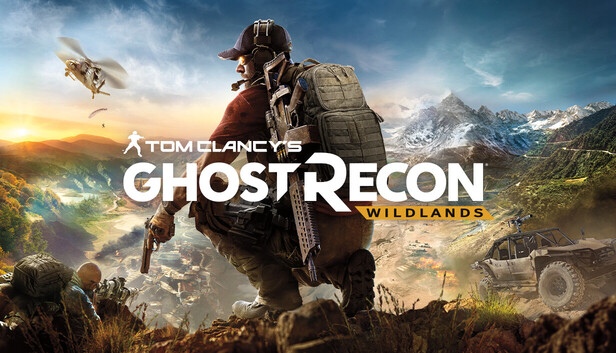
On August 15, Reddit’s r/gaming community asked which games had rekindled the enthusiasm of players suffering from burnout. Ubisoft’s Tom Clancy’s Ghost Recon Wildlands, a large sandbox shooter built around solo and cooperative missions, emerged as a rare modern AAA exception. Clair Obscur: Expedition 33, Monster Train, Vampire Survivors, and Blue Prince appeared far more often, while traditional blockbuster releases were notably scarce.
The discussion is less a rejection of games than a rejection of how many modern AAA games consume players’ time. Players still want to explore. They simply do not want to trek across maps packed with question marks, camps, repetitive side quests, and constant interruptions. One commenter said they were “tired of the constant open worlds and the need to fill out side quests every five minutes.” That complaint captures much of the current fatigue.

Players’ frustration with industrialized AAA design generally comes down to two problems. First, many games try to become interactive movies, using long stretches of cutscenes that break up the act of playing. Second, they stretch their campaigns toward 100 hours or more with similar side quests, map traversal, collectibles, and repeated activities.
Exploration should reward observation, strategy, and unexpected discoveries. In too many modern games, it becomes a checklist that must be cleared. The result is not a richer adventure, but the feeling of working through a second job during one’s limited free time.
There is also a straightforward economic explanation. In a 2025 interview with Player Driven, former Sony Interactive Entertainment executive Shawn Layden discussed how AAA development costs rose from roughly $20 million during the PS3 era to approximately $200 million.
God of War Ragnarök is cited as a $200 million example, while Marvel’s Spider-Man 2 reached $300 million. At that scale, a game may need to sell more than 10 million copies merely to break even. Publishers therefore have stronger incentives to rely on market-tested open worlds, familiar gameplay systems, and standardized narratives.
That pressure creates a predictable cycle. Costs rise, financial risk increases, and developers repeat structures that have already performed well. Open-world maps, traversal objectives, similar mission types, and template-driven stories become safer choices. Games grow more alike, innovation becomes harder to justify, and players grow increasingly fatigued by the sameness.
The problem becomes more pronounced as players grow older and face the competing demands of work and family. Layden’s point is not that older players stop liking games. Rather, long modern campaigns filled with padding become less attractive when leisure time is limited. A game that asks for dozens of hours should make those hours feel meaningful.
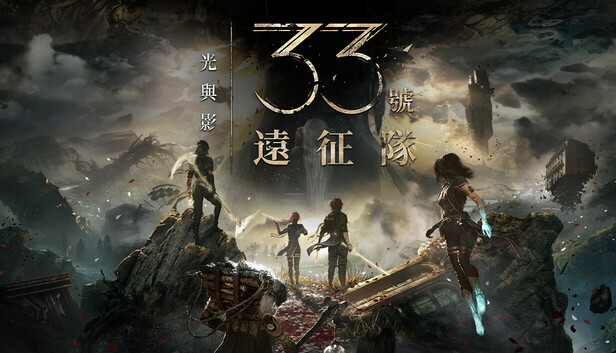
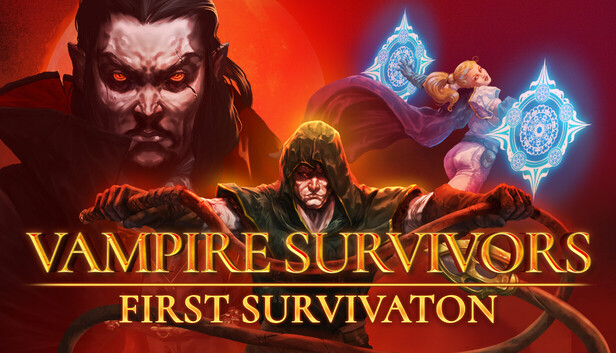
This explains why independent games appeared so frequently in the Reddit discussion. Because they cost less to make, indie games can take more risks with genre, structure, and mechanics. Monster Train, Vampire Survivors, and Blue Prince offer more focused ways to play than another map designed to consume 100 hours. Clair Obscur: Expedition 33 was among the most frequently mentioned games in the comments, praised for its restrained storytelling and striking audiovisual presentation.
Its achievement is not simply that it looks beautiful. The game carries its developers’ artistic vision through its gameplay, writing, visuals, and music, instead of spreading that effort across an enormous volume of interchangeable content.

Tom Clancy’s Ghost Recon Wildlands stood out as a different kind of exception. Its sandbox is large, but it supports several distinct preferences at once: solo play, multiplayer, stealth, sniping, and direct combat. Players can approach problems in their own way rather than being pulled through the same side-quest loop. Its scale supports player choice instead of existing mainly to provide more map markers and objectives.

For players exhausted by open-world checklists, the practical recommendation is clear: prioritize more concentrated indie games or linear single-player experiences with sharper mechanics. Monster Train, Vampire Survivors, and Blue Prince are all more likely to restore a sense of momentum than another hundred-hour map.
Developers should reduce repetitive tasks, improve narrative flow, and put more sincerity into each piece of content. They should also design systems that encourage players to begin another playthrough voluntarily, rather than padding the first one with more chores.
Players have not lost their passion for games. They are tired of industrialized, interchangeable AAA products. The next ambitious blockbuster will need to make room for observation, strategy, exploration, and unexpected discovery. Most of all, it will need to feel worth making time for.
光與影:33號遠征隊Fetching price~ HK$ 308.00 促銷中怪物列車Fetching price~ €20.99-87%
 促銷中吸血鬼倖存者Fetching price~ HK$ 29.00-25%
 《火線獵殺:野境》Fetching price~ HK$ 365.00
 《波斯王子:失落王冠》Fetching price~ HK$ 218.00





留言 0
期待聽到你的聲音
歡迎來到評論區!說說你對這款遊戲的看法,第一個發言說不定有驚喜~
還沒有留言,來搶頭香吧!