
資訊
Grab two free PC games before Epic's clock runs out, while Undertale and Divinity: Original Sin 2 are 75% off
Astral Ascent and LUFTRAUSERS are free to keep today, while two of PC gaming's most celebrated RPGs cost less than $14 c
















Back when I first stepped into The Elder Scrolls V: Skyrim, that sense of vastness—being able to see snow-capped mountains the moment you left the village—felt a lot like the old wuxia line, “open the door and behold the jianghu.” It may not be exquisite in every corner, but it always has a way of making people lose countless hours in it. And precisely because of that, whenever I see players calling for a “full remake,” I completely understand that obsession.

Recently, according to Playground, former Bethesda Game Studios artist Nate Purkeypile brought up a very practical issue: for BGS RPGs like The Elder Scrolls V: Skyrim and the Fallout series, even if they were remade, it would be hard to reach the same level as Capcom’s Resident Evil remakes.
It stings to hear, but on calmer reflection, it’s actually not hard to understand. The essence of Resident Evil’s remake approach in recent years has been rebuilding from the ground up—preserving the spirit of the original while completely overhauling the visuals, presentation, and systems. But Bethesda’s real strength has never been a tightly guided, linear experience. Instead, it lies in the way countless mechanics, quest scripts, and world interactions interlock with one another, layered like a city of intricate mechanisms.
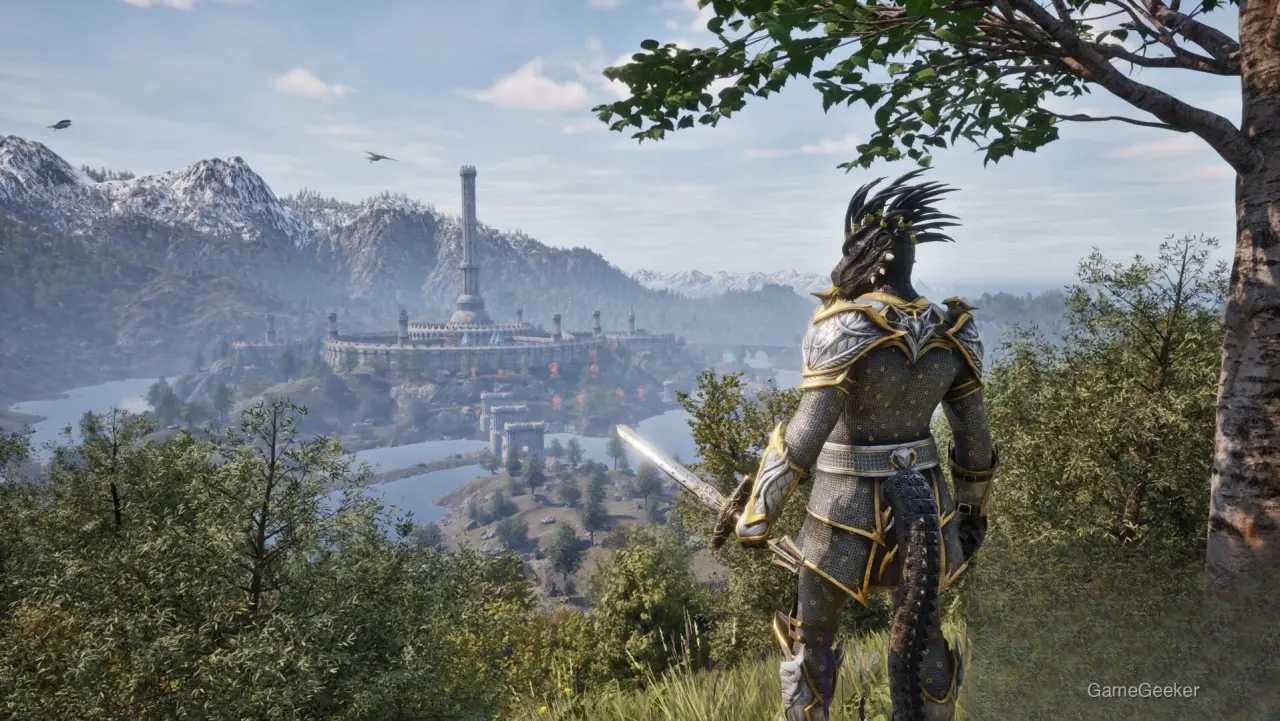
Nate’s point was very clear: if you really wanted to rebuild everything from scratch while still preserving the original gameplay logic more or less intact, the workload would be absurdly high—so high that even he wouldn’t want anyone taking on that job. Looking back at the games themselves, titles like Skyrim and Fallout 4 aren’t just large in map size; every corner of the world can potentially affect quests, AI, physics, items, and story triggers. Change one thing, and somewhere else could collapse like a row of dominoes.
That’s why he believes a more realistic solution would be to follow the path of The Elder Scrolls IV: Oblivion Remastered: focus on upgrading the visuals, bring it in line with modern platform standards, and preserve the core gameplay as much as possible. Fundamentally, that’s a completely different approach from the near-total rebuild seen in Resident Evil.

Beyond nostalgia, this statement also points to another reality: Bethesda is already slow when it comes to making new games, and the long development cycle of The Elder Scrolls VI makes that clear enough. Resources are limited. Asking the studio to work through new projects while also giving its old RPGs a complete overhaul really is like asking one martial arts sect to master two supreme secret manuals at the same time—the risk of things going badly off the rails is just too high.
My own view is that this isn’t an excuse for technical limitations; it’s a reminder that players shouldn’t measure every game with the same ruler. Linear action-horror games are well suited to “cinematic-grade remakes,” while Bethesda-style sandbox RPGs are better served by “restoring the old while preserving its soul.” If a new version of Skyrim ever does come, I’d actually rather see it first improve the visuals, UI, compatibility, and controls, while also taking proper care of the community Mod ecosystem. That would be the most practical blessing for longtime players.
There are always people in the player community hoping for a “once-and-for-all, god-tier remake,” and I understand that feeling. But players in China have learned this over the years: the bigger the project, the more dangerous it is to want too much at once. Sometimes, doing a good job of fixing what needs fixing and preserving what should be preserved shows more real skill than shouting the loudest slogan of all.





留言 0
歡迎發表遊戲評價
歡迎參與討論,分享對這款遊戲的評價。
暫無留言,歡迎發表評價。