
資訊
Grab two free PC games before Epic's clock runs out, while Undertale and Divinity: Original Sin 2 are 75% off
Astral Ascent and LUFTRAUSERS are free to keep today, while two of PC gaming's most celebrated RPGs cost less than $14 c
















Explosive stuff! Just hearing about this is enough to send a chill down the spine of the indie game scene. Lucas Pope, the creator of Papers, Please, recently laid it all out on a podcast: these days, he no longer feels as comfortable as before sharing the development progress of new projects early on. The reason is very straightforward—not because he suddenly turned aloof, but because he worries that his ideas will be vacuumed up by AI at scale, then repackaged by someone else and served back up with a different coat of paint. That kind of pressure is very real.

It’s worth noting that Lucas Pope didn’t use to be like this. Back when he was making Papers, Please, he loved regularly sharing the development process on forums and in communities. He would also keep adding content and expanding the scope based on feedback from playtesters, letting a single idea snowball into something much bigger. It felt a bit like a livestream where people jump in and help revise the plan on the spot—one comment from the audience, and the developer makes a call right away. The creative atmosphere was lively, and, more importantly, sincere.
But the environment has changed, and here’s the key point: not just a little, either. He said it himself—he actually enjoys talking about the projects he’s working on. It’s just that today’s internet is full of AI systems and algorithms that scrape massive amounts of human-created content as raw material. The moment a creator puts an idea out there, it may already have been logged by the system. Even more frustrating, the article points out that cases of indie game ideas being stolen and then wrapped up with AI-generated packaging are no longer just hypothetical. That has understandably made a lot of developers much more guarded.
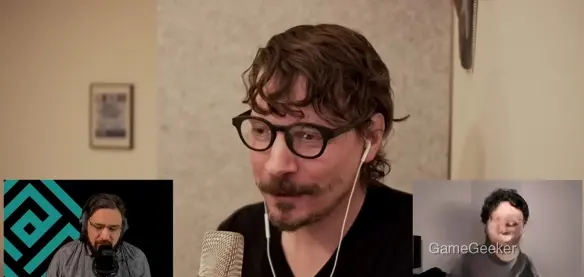
I think what Lucas Pope really hit on here isn’t just the question of whether developers should publicly share devlogs—it’s that the entire model of community interaction is changing its rules. In the past, indie developers were willing to show unfinished work because player discussion could feed back into the game, and the community felt like an open training ground. Now, the moment you open the door, it’s not just players coming in—there may also be automated scraping tools and people chasing trends, ready to copy whatever they see. It’s like you’re still picking your hero, and the other side has already snapped a photo of your strategy board and walked off with it. Who could put up with that?
What makes this even more interesting is that Lucas Pope’s approach to making games was never purely commercial to begin with. He said he cares more about the sense of accomplishment that comes from finishing a work. Usually, he starts making something because he’s genuinely interested in it, and only starts thinking about whether it can sell once the game is close to taking shape. But he’s also very candid: quite a few of his ideas are “like they’re cursed,” and it’s not easy to stick with them all the way to completion. For creators who are driven by inspiration and work at their own pace, once the outside environment turns sharing into a risk, a big part of the joy of creating really does get cut away.
It’s also easy to see why the player community has broadly resonated with this. People have already seen that AI isn’t just capable of writing some copy or sketching a few drafts anymore—it can now rapidly piece together art, code, and design content as well. The technology itself is not the original sin, but when an original creator’s trial-and-error process, half-finished ideas, and even creative seedlings that haven’t fully grown yet can all be harvested for free, the first people to get hurt are often the most distinctive and most willing to take risks: indie creators.
So the most important thing to watch in this story isn’t whether Lucas Pope alone is afraid—it’s how the entire industry will strike a balance going forward. New technology will certainly keep charging ahead, but protections for original creation have to keep pace. Otherwise, what we may end up seeing is more and more works that look similar on the surface but feel hollow underneath. To put it plainly, what players really want has never been an AI-made platter sampler, but games like Papers, Please—the kind you can pick up and immediately tell, “this creator really has something special going on in their head.”





留言 0
歡迎發表遊戲評價
歡迎參與討論,分享對這款遊戲的評價。
暫無留言,歡迎發表評價。