
資訊
Grab two free PC games before Epic's clock runs out, while Undertale and Divinity: Original Sin 2 are 75% off
Astral Ascent and LUFTRAUSERS are free to keep today, while two of PC gaming's most celebrated RPGs cost less than $14 c
















The other day, while scrolling through tournament news, I felt like I’d found a fork at the edge of the map that was supposed to connect back to the main road—the more I looked, the more off it felt. Xiao Hai won the EWC Street Fighter 6 championship two years in a row, yet when the direct invite list for 2026 was announced, his name wasn’t on it. As soon as the news broke, China’s fighting game community instantly exploded. A lot of people’s first reaction wasn’t disappointment, but confusion: how could the defending champion be shut out?
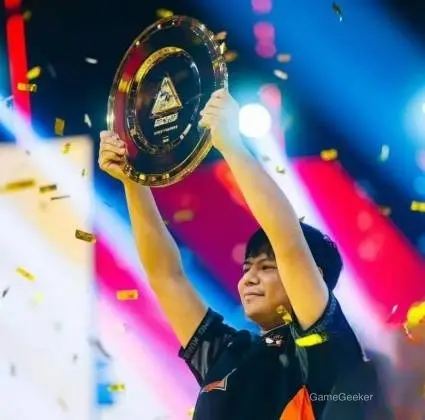
First, let’s look at the timeline. Last weekend, the Street Fighter 6 Capcom Cup 2026 had just wrapped up, with 48 of the world’s top players competing for the $1 million championship prize. On the first day of group play, Xiao Hai ran into 17-year-old Chilean prodigy Blaz. The two battled all the way to the very last point, the very last pixel, and Xiao Hai narrowly lost. Then in the elimination bracket, he lost again to JUICYJOE and was knocked out early. Right after that, once SFL ended, EWC officially announced the 2026 Street Fighter 6 direct invite list: 32 slots in total, 16 of which had already been handed out, while the other 16 will have to be fought for through upcoming events like EVO US and EVO Japan.
And this is where the issue lies: Xiao Hai is clearly a two-time EWC Street Fighter 6 champion, yet he did not receive a defending champion direct invite.

If you follow this line and look into the rules, you’ll find the controversy is far from baseless. In February 2026, EWC introduced a new “defending champion direct invite” rule. The core idea is very clear: if you want to claim a direct invite based on last year’s title, you must still be on the same team you represented when you won it. Xiao Hai transferred from Kuaishou Esports KSG to Falcons in mid-October last year, so he no longer met the condition, and the invite was gone on the spot.
From an event operations perspective, EWC emphasizes the “Club Championship.” Results across different titles also contribute points to a club’s overall standings and can earn extra prize money. In other words, they care more about how the club landscape expands than just how high any individual player can fly. In team-based games, that logic is at least somewhat defensible, because in 5-player, 4-player, or even 2-player events, keeping part of the original roster can still reasonably count as the same team.
But the problem beyond the map is here too: fighting games are fundamentally a solo discipline. Teams can provide resources, training, and exposure, but the person actually sitting on stage and playing each round is still the player alone. Applying the same rule set used for team games to Street Fighter 6 is like taking navigation meant for a road race and dropping it straight onto a mountain trail—it may look standardized, but in practice it feels awkward all the way through.

What makes it even more frustrating is that this doesn’t really look like a case of Xiao Hai “voluntarily switching teams for better benefits.” Reports indicate that KSG, the team he was on last year, had already basically abandoned its fighting game division due to strategic adjustments, and there were hardly any signed fighting game players left on the roster. In other words, this transfer had a clear passive element to it. And the team he now plays for, Falcons, is itself a Saudi-backed organization, which makes the whole situation feel even more twisted.
As of publication, EWC still has not changed its stance, so Xiao Hai can only fight through the remaining qualifiers. He is already preparing to head out at the end of March for DreamHack Birmingham to continue competing for an EWC spot. The problem is that right now he isn’t just playing on one front—he also has to juggle tournament circuits in Street Fighter, Fatal Fury, and The King of Fighters at the same time. That kind of schedule pressure is like trying to clear three huge regions full of question marks at once in an open-world game; the margin for error gets squeezed extremely thin.

My view is simple: if EWC really wants to preserve its club-based system, then it should design separate rules for fighting games instead of lazily applying a one-size-fits-all approach. The community’s anger is not really about speaking up for one specific person—it’s because everyone can see that this line has been drawn in a way that simply isn’t reasonable enough. What’s most worth watching next is not just whether Xiao Hai can fight his way back through EVO and DreamHack, but whether EWC will revise this rule map in response to the backlash. Otherwise, future champions won’t first be thinking about how to win—they’ll be thinking about making sure their contracts don’t change, and that would fundamentally alter the feel of the competition.





留言 0
歡迎發表遊戲評價
歡迎參與討論,分享對這款遊戲的評價。
暫無留言,歡迎發表評價。