資訊
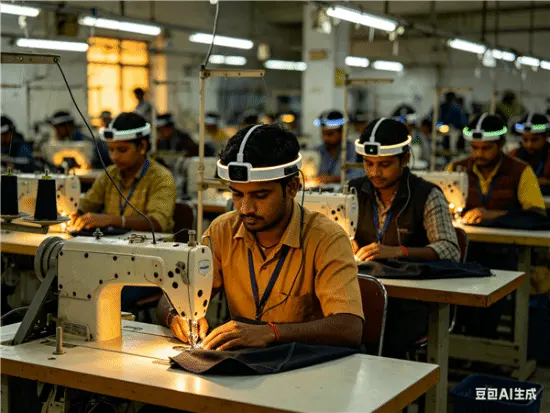
Has *Shapez* Become Reality? Indian Workers Wear Cameras to Feed AI
Indian garment factories require workers to wear camera rings to train AI, sparking privacy controve















I’ve always felt that truly great experience design is like suddenly discovering an unmarked path at the edge of a map. You were just following the main route forward, and then after turning a corner, the whole world suddenly lit up. Recently, a teacher in Spain named Verónica Duque went viral, and that’s exactly the feeling she gave me. Instead of keeping students trapped in flat textbooks and charts, she quite literally wore the “map” on her body.
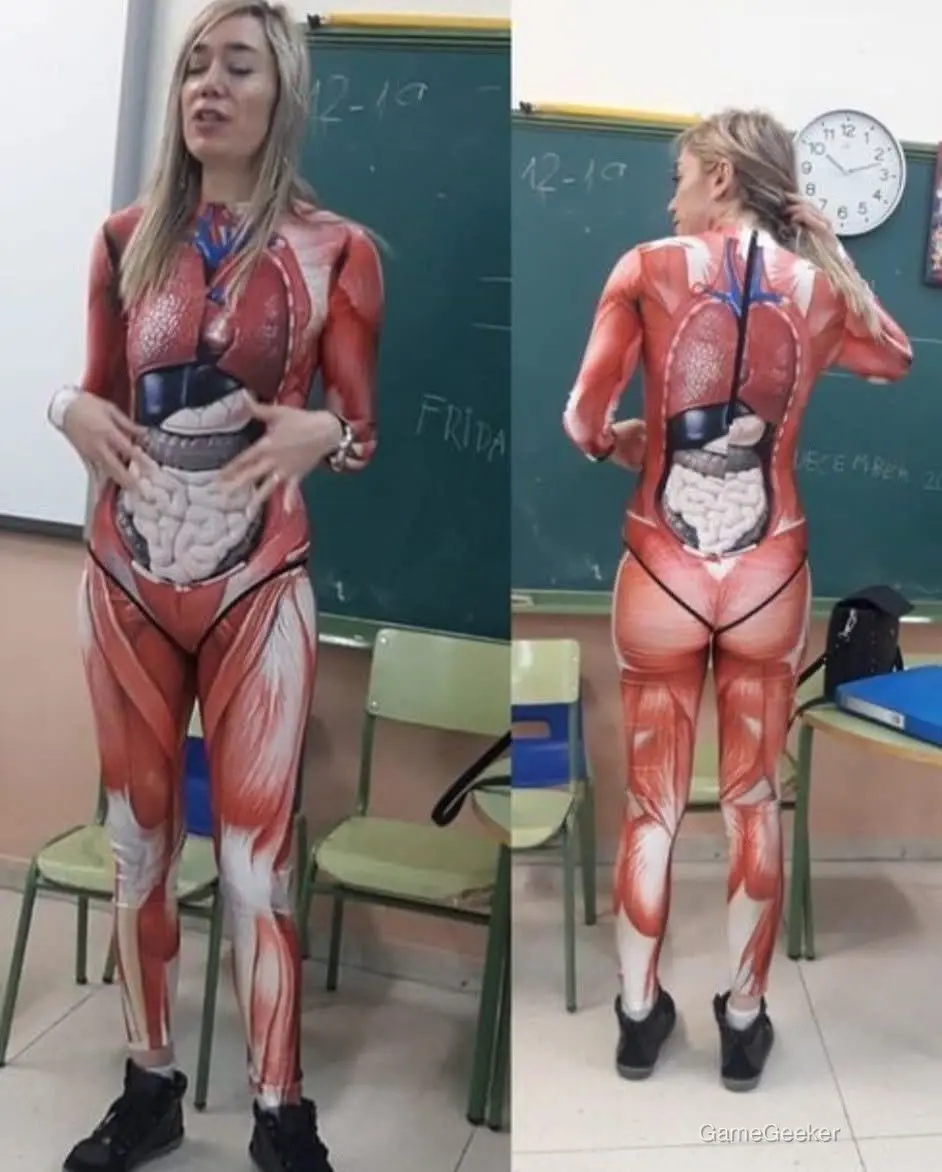
This happened in Spain, and the main figure is Verónica Duque. To help her students truly understand human anatomy, she walked into the classroom wearing a full-body anatomical suit printed with muscles, organs, veins, and bones. The act itself doesn’t seem especially complicated, but it was like a brilliantly designed landmark in an open-world game: you don’t need the system to keep throwing prompts at you, because players will naturally be drawn to it—and students are no different.
Seen from that angle, what’s most moving isn’t that “the outfit is unusual,” but that the entire atmosphere of the classroom was completely transformed. The report mentioned that the students stopped losing focus. Instead, they kept their eyes on the teacher, leaned forward, and even raised their hands to ask questions on their own. The classroom was still quiet, but it wasn’t the dull silence of a stalled sequence; it was the breath-held curiosity of discovering a new area. More importantly, they didn’t just understand it in the moment—they still remembered the content days later, which shows the information really made it into their minds.
I’ve always been irritated by linear, one-way experiences, because they pin people onto a narrow path and tell you there’s only one way forward. But this lesson from Verónica Duque happens to prove something else: good teaching, like good sandbox design, doesn’t necessarily depend on a big budget, nor does it require piling on expensive equipment. The report emphasized that the core of this result wasn’t flashy technology, but the teacher’s creativity and passion. Put simply, someone was willing to turn abstract knowledge into something visible, tangible, and memorable.
If you zoom out a little, it becomes obvious why this story spread around the world. After the news got out, many educators on Twitter called her an “inspiring teacher,” and some said that “every child deserves a teacher like this.” The reason these reactions resonated is that everyone is far too familiar with classrooms that have structure but no real experience. The moment someone teaches knowledge with a sense of terrain and space, people naturally realize that education doesn’t have to be a copy-pasted map.
But beyond the map itself, what’s even more worth discussing is a broader trend: the teachers who will truly be competitive in the future may not be the ones best at reciting from the textbook, but the ones best at creating “immersive guidance.” It may not be expensive, but it must be thoughtful; it may not be complicated, but it must be precise. Seen in the broader context of education, what Verónica Duque offers is not a template that can be mechanically replicated, but a reminder—that students’ attention has never been won by commands, only by design.
If you ask me why this story is worth talking about, I’d say it’s like a handcrafted side quest suddenly appearing on a repetitive map. It’s not large in scale, but it instantly shows people what truly worthwhile content looks like. A good classroom, like a good open world, is never really about “having more stuff.” What matters is whether you still want to keep moving forward—and whether you believe there’s something new waiting ahead.


留言 0
期待聽到你的聲音
歡迎來到評論區!說說你對這款遊戲的看法,第一個發言說不定有驚喜~
還沒有留言,來搶頭香吧!