 007 初露鋒芒Fetching price~ HK$ 468.00
熱門編輯推薦查看全部
123456789101112
12 Best Mystery Games on PC (2026)
12 Best Space Sim Games on Steam (2026)
12 Best Story-Rich Games to Play (2026)
12 Best Turn-Based Tactics Games on Steam (2026)
12 Best Puzzle Games on Steam (2026)
12 Best Games to Play with Friends on PC (2026)
12 Best JRPGs on Steam (2026)
12 Best City Builder Games on Steam (2026)
12 Best Zombie Games on Steam (2026)
12 Best Free Indie Games on Steam (2026)
12 Best Short Indie Games to Try (2026) — Done in One Evening
12 Best Cozy Games on Steam (2026)
熱門相似遊戲查看全部
Games Like PowerWash Simulator - 12 Best Relaxing Cleaning and Restoration PicksGames Like ARC Raiders - 12 Best Extraction and Co-op Survival ShootersGames Like PEAK - 12 Best Co-op Climbing and Survival PicksGames Like R.E.P.O. - 12 Best Co-op Horror PicksGames Like Clair Obscur: Expedition 33 - 12 Best Turn-Based RPG PicksGames Like Path of Exile 2 - 12 Best Action RPG and Loot PicksGames Like Road to Vostok - 12 Best Hardcore Survival Shooter PicksGames Like Mina the Hollower - 12 Best Top-Down Action and Zelda-Like PicksGames Like Slay the Spire 2 - 12 Best Roguelike Deckbuilders to Play NextGames Like Resident Evil Requiem - 12 Best Survival Horror PicksGames Like Baldur's Gate 3 - 12 Best CRPGs and Turn-Based RPGsGames Like Monster Hunter Wilds - 12 Best Co-op Hunting and Action RPG PicksGames Like Hollow Knight: Silksong - 12 Best Metroidvania Picks (2026)Games Like Dead by Daylight - 12 Best Asymmetric & Co-op Horror PicksGames Like Final Fantasy VII Rebirth - 12 Best Action RPG & JRPG PicksGames Like Forza Horizon 6 - 12 Best Open-World Racing & Driving Picks (2026)Games Like Solarpunk - 12 Best Cozy Survival and Crafting GamesGames Like 007 First Light - 12 Best Stealth and Spy GamesGames Like Subnautica 2 - 12 Best Underwater and Alien-World Survival GamesGames Like Hell Let Loose - 12 Best Tactical Milsim Shooters
熱門評測查看全部

Hades II — 遊戲評測

Clair Obscur: Expedition 33 — 遊戲評測

Katana ZERO — 遊戲評測

The Long Dark — 遊戲評測

Shift At Midnight — 遊戲評測

Middle-earth™: Shadow of Mordor™ — 遊戲評測

The Mermaid Mask — 遊戲評測

Killing Floor 2 — 遊戲評測

The Outlast Trials — 遊戲評測

American Truck Simulator — 遊戲評測

Voidling Bound — 遊戲評測

Go-Go Town! — 遊戲評測

Desktop Explorer — 遊戲評測

Dead as Disco — 遊戲評測

Crushed In Time — 遊戲評測

Beastro — 遊戲評測
RTX 5080 first benchmark: 007 hits 313fps 4K with DLSS 4.5
IO Interactive's 007 First Light has landed on PC, and the numbers tell a clear story: NVIDIA's DLSS 4.5 is a game-changer. In our benchmarking run with Zotac's entire RTX 50 series lineup, the new multi-frame generation tech delivered up to 6x the efficiency of the previous DLSS 4 generation. The flagship RTX 5080 hit 313 frames per second at 4K in 007 First Light with DLSS 4.5's 6X mode enabled—up from a native 61 fps. That's not a spec sheet dream; that's what you actually get.
The secret sauce is the second-generation Transformer neural network architecture powering DLSS 4.5. Where traditional upscaling simply reconstructs missing pixels, the Transformer model predicts motion patterns across multiple frames, creating smoother visual output with less GPU overhead. The result: every card in the RTX 50 lineup got meaningful lifts, from the enthusiast-tier 5080 down to the entry-level RTX 5050.
RTX 5080: 4K Mastery
At native 4K, the RTX 5080 pushed 61 fps—that's playable, but not what you'd call smooth for a cinematic stealth game. Switch to DLSS 4.5's 6X multi-frame generation, and that jumps to 313 fps. Drop to 1440p, and the numbers climb further: 109 fps native becomes 391 fps with DLSS engaged. For players who want to crank every visual setting and still maintain fluid frame rates, the 5080 makes no compromises.
RTX 5070 Ti and RTX 5070: The Sweet Spot
The RTX 5070 Ti landed at 52 fps native at 4K—respectable, but DLSS 4.5's 2X mode pushed it to 112 fps, a 115% gain. At 6X settings, the card hit 264 fps. That's a 407% improvement over native performance. At 1440p, the 5070 Ti went from 92 fps to 300 fps with the 5X mode engaged.
The RTX 5070 (12GB VRAM) told a similar story: 38 fps native at 4K ballooned to 205 fps with DLSS 4.5 enabled. Even at 2X multi-frame generation, the card hit 87 fps—128% above native.
RTX 5060 Ti and RTX 5060: Budget, But Not Compromised
The RTX 5060 Ti targets the mainstream market, and it performs accordingly. At 1440p native, the card managed 54 fps; DLSS 4.5's 6X mode pushed it to 190 fps. At 1080p, the numbers were even more dramatic: 83 fps native became 160 fps with 3X multi-frame generation engaged, nearly doubling the framerate.
The standard RTX 5060—featuring what Zotac calls a "Chinese aesthetic" design—hit 76 fps native at 1080p. With DLSS 4.5 enabled, that climbed to a peak of 205 fps, representing a 169% improvement.
RTX 5050: Entry-Level Empowerment
At the bottom of the stack, the RTX 5050 (8GB VRAM) produced 51 fps native at 1080p with 1% low frames hitting 45 fps. Not ideal for unassisted gaming, but DLSS 4.5's 6X mode dragged that to 147 fps. For players on a tight budget who still want to experience Bond's world without grinding for upgrades, this is a viable entry point.
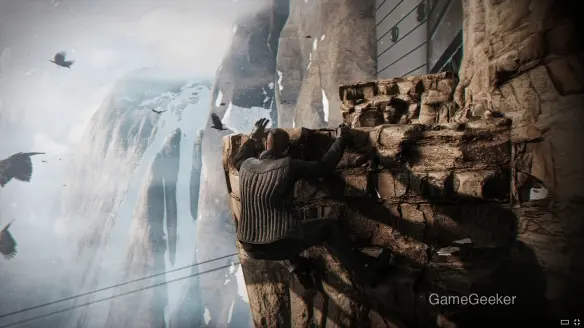
Test Platform
All benchmarks ran on an Intel Core Ultra 9 285K processor paired with a Z890 motherboard and 32GB of DDR5-6800 memory. The RTX 5080 and 5070 Ti carried 16GB of VRAM, the RTX 5070 had 12GB, and the remaining cards shipped with 8GB. This setup handled 007 First Light's photorealistic environments—neon-lit streets, castle estates, island bases—with ease.
The Verdict
If you're chasing maximum visual fidelity at 4K, the RTX 5080 is the obvious pick. That 313 fps figure isn't a tease; it's the real-world output of DLSS 4.5 pushing the card well beyond its native capabilities.
For budget-conscious players, the RTX 5060 Ti delivers 190 fps at 1440p—plenty of headroom to stop mid-mission, adjust your camera angle, and capture the perfect shot of Bond slipping through a shadow.
Wherever you land on the stack, DLSS 4.5 has reshuffled the rules. The question isn't whether to use it; it's which multiplier mode your specific card can handle without artifacts.

007 初露鋒芒Fetching price~ HK$ 468.00





留言 0
歡迎發表遊戲評價
歡迎參與討論,分享對這款遊戲的評價。
暫無留言,歡迎發表評價。