
News
Grab two free PC games before Epic's clock runs out, while Undertale and Divinity: Original Sin 2 are 75% off
Astral Ascent and LUFTRAUSERS are free to keep today, while two of PC gaming's most celebrated RPGs cost less than $14 c
















Every time I reach the edge of the map in an open-world game, what excites me most isn’t how far the main story has progressed, but finally seeing the outline of that patch of fog in the distance that hasn’t been revealed yet. Deep-space exploration feels much the same to me. After more than 50 years, humanity has once again sent a crewed spacecraft onto a lunar flyby trajectory, which in itself feels like discovering a new road on Google Maps that no one has traveled for half a century. And yet, the route was completed, the milestone was set, but the most basic life-support system was the first to go wrong. The contrast is simply too stark.
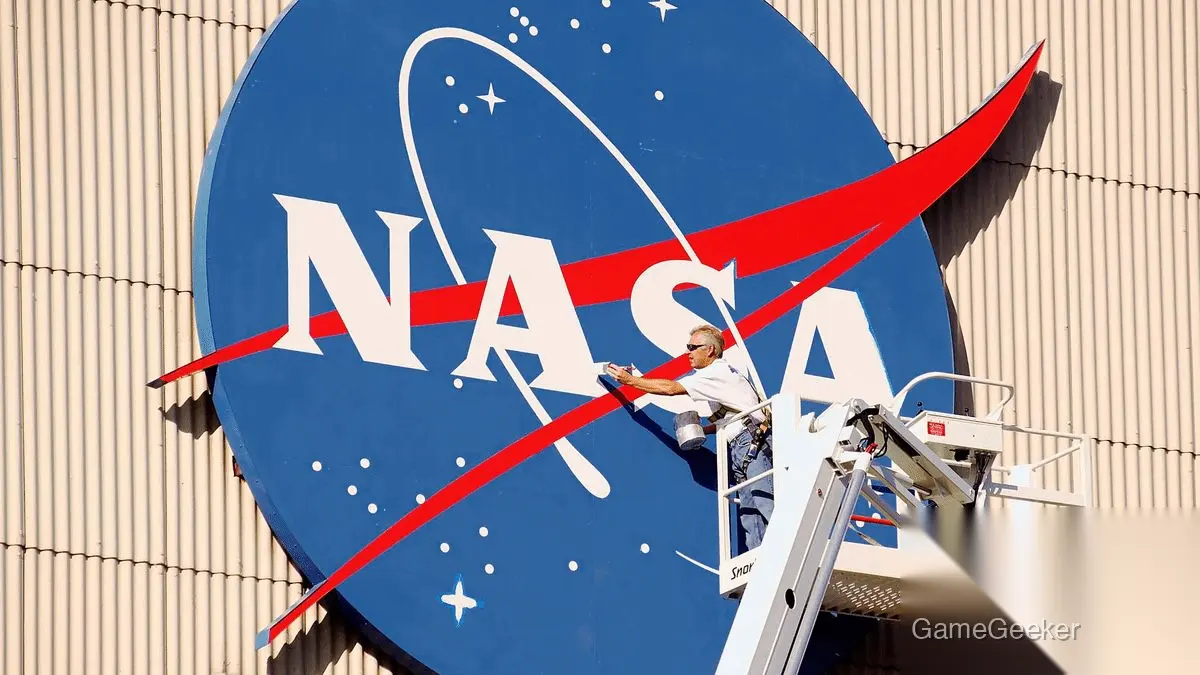
This month, NASA sent 4 astronauts aboard the Lockheed Martin-developed Orion spacecraft to carry out the Artemis 2 lunar flyby mission. According to data from around 13:57 Eastern Time on April 6, the spacecraft reached its farthest point from Earth at 406778 kilometers, breaking the record held by Apollo 13 for more than half a century. More importantly, this was also “humanity’s first crewed lunar flyby in more than 50 years.” That phrase alone is enough to earn a place in spaceflight history.
But if you keep looking in that direction, you’ll find that the truly striking part isn’t the record, but the experience. The Orion spacecraft carried a $23 million Universal Waste Management System, or UWMS. The official concept was highly advanced: 65% smaller in volume than the old solution, 40% lighter, and supposedly designed for deep-space missions. It sounded like a high-detail map that had finally filled in the unfinished edges. Unfortunately, it didn’t hold up in real operation. The toilet system failed completely during the mission, and the 4 astronauts had to wear diaper-like emergency collection devices for the remainder of the journey.
What makes this especially frustrating is that it exposes an old rule of deep-space exploration: you can set a new record for distance, but as long as the most basic survival systems are unstable, the entire experience can instantly fall back into the previous era. Former NASA astronaut Don Pettit later explained that the spacecraft was equipped with an emergency urine collection device, the CCU, which was used as a backup when the toilet broke down. In the original wording, the device “is essentially an open container that uses capillary forces to control the urine-air interface,” and it can even discharge urine directly into space. It sounds hardcore, but the problem is also very straightforward: once a $23 million new system fails, humanity still has to fall back on a primitive backup solution not far removed from the Apollo era.
If you put this into the context of the gaming community, the verdict would probably be fairly unanimous: the worldbuilding is huge, the tech demo is impressive, but the basic interactions cannot afford to break down. It’s like a sandbox game—no matter how beautiful the distant scenery is, if opening the inventory causes the game to freeze, what players usually remember isn’t how magnificent the mountains beyond were, but why they couldn’t even perform the most basic actions smoothly. Artemis 2 is still, of course, an important step. It proved that NASA and the Orion spacecraft really have brought humanity back to the edge of deep space. But beyond the map, the hardest part of deep-space missions to truly complete is not “going farther,” but “living more reliably.”
Step back a little farther and you’ll see that this incident is also a very clear signal of a broader trend. In future missions returning to the Moon, or even longer-duration deep-space stays, propulsion systems and orbital capability are certainly important, but modules that seem less romantic—toilets, recovery, recycling, emergency response—may actually determine whether exploration can evolve from a singular feat into something routine. For those who have long followed spaceflight, this news is both exciting and cautionary: the record has already been broken, but the world truly worth exploring cannot rely on heroism alone. It also depends on every inconspicuous system not going offline at a critical moment.





Kommentare 0
Wir freuen uns auf deine Meinung
Beteilige dich an der Diskussion und teile deine Bewertung des Spiels.
Noch keine Kommentare. Teile deine Bewertung.