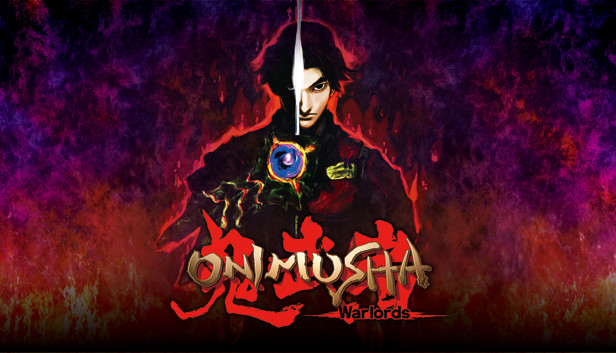
 Onimusha: WarlordsFetching price~ $19.99
Beliebte TippsAlle ansehen
123456789101112
12 Best Mystery Games on PC (2026)
12 Best Space Sim Games on Steam (2026)
12 Best Story-Rich Games to Play (2026)
12 Best Turn-Based Tactics Games on Steam (2026)
12 Best Puzzle Games on Steam (2026)
12 Best Games to Play with Friends on PC (2026)
12 Best JRPGs on Steam (2026)
12 Best City Builder Games on Steam (2026)
12 Best Zombie Games on Steam (2026)
12 Best Free Indie Games on Steam (2026)
12 Best Short Indie Games to Try (2026) — Done in One Evening
12 Best Cozy Games on Steam (2026)
Beliebte ähnliche SpieleAlle ansehen
Games Like PowerWash Simulator - 12 Best Relaxing Cleaning and Restoration PicksGames Like ARC Raiders - 12 Best Extraction and Co-op Survival ShootersGames Like PEAK - 12 Best Co-op Climbing and Survival PicksGames Like R.E.P.O. - 12 Best Co-op Horror PicksGames Like Clair Obscur: Expedition 33 - 12 Best Turn-Based RPG PicksGames Like Path of Exile 2 - 12 Best Action RPG and Loot PicksGames Like Road to Vostok - 12 Best Hardcore Survival Shooter PicksGames Like Mina the Hollower - 12 Best Top-Down Action and Zelda-Like PicksGames Like Slay the Spire 2 - 12 Best Roguelike Deckbuilders to Play NextGames Like Resident Evil Requiem - 12 Best Survival Horror PicksGames Like Baldur's Gate 3 - 12 Best CRPGs and Turn-Based RPGsGames Like Monster Hunter Wilds - 12 Best Co-op Hunting and Action RPG PicksGames Like Hollow Knight: Silksong - 12 Best Metroidvania Picks (2026)Games Like Dead by Daylight - 12 Best Asymmetric & Co-op Horror PicksGames Like Final Fantasy VII Rebirth - 12 Best Action RPG & JRPG PicksGames Like Forza Horizon 6 - 12 Best Open-World Racing & Driving Picks (2026)Games Like Solarpunk - 12 Best Cozy Survival and Crafting GamesGames Like 007 First Light - 12 Best Stealth and Spy GamesGames Like Subnautica 2 - 12 Best Underwater and Alien-World Survival GamesGames Like Hell Let Loose - 12 Best Tactical Milsim Shooters
Beliebte TestsAlle ansehen

Hades II — Test

Clair Obscur: Expedition 33 — Test

Katana ZERO — Test

The Long Dark — Test

Shift At Midnight — Test

Middle-earth™: Shadow of Mordor™ — Test

The Mermaid Mask — Test

Killing Floor 2 — Test

The Outlast Trials — Test

American Truck Simulator — Test

Voidling Bound — Test

Go-Go Town! — Test

Desktop Explorer — Test

Dead as Disco — Test

Crushed In Time — Test

Beastro — Test
Onimusha Way of the Sword Gameplay Revealed Has It Finally Nailed Side Quests
Famitsu has published a new gameplay demo for Onimusha: Way of the Sword, and producer Koichi Shibata used a post-event interview to outline the game's real priorities: side quests in broad linear areas, dynamic emergent events, and the return of the classic Oni Mirror system. More than the footage itself, that's the real takeaway. Rather than stretching toward an open world, the team is using wider linear spaces to support denser exploration, better-paced encounters, and a more deliberate atmosphere.
That feels like the right call for Onimusha. This series was never defined by map size. Its strengths have always been combat rhythm, tightly packed exploration, and carefully staged environments. Shibata also said those side quests are entirely optional, so players can ignore them and push straight through the main path. That matters more than simply saying the game has "more content," because it suggests the team is not padding out the core campaign by force.

The demo opens at Rokudo Chinno-ji, a real temple in Kyoto, which gives the setting more weight than simply borrowing a famous place name. In the interview, Koichi Shibata explained that completing side quests rewards players not only with tangible rewards, but also with eerie supernatural stories rooted in local Kyoto folklore. That implies these quests are doing more than handing out experience and materials. If the game delivers, those quests could become small story threads spread across the map, covering corners of the setting the main story may not have time to explore.

The most interesting part of the demo is how the quest Okuni's Kabuki Dance ties into a dynamic event. On the way to meet Okuni, protagonist Musashi can run into villagers being attacked by Genma. If the player hesitates, those villagers actually die. That's a clean use of consequences: it turns a routine detour into a system that forces players to make a snap priority call under time pressure. For that to work, the game needs to meaningfully track quest progress, NPC survival, and the aftermath. Otherwise, this kind of reactive setup can quickly start to feel unfinished.

Later, Musashi heads to a stage corrupted by Genma miasma and purifies it, so the objective is not just killing enemies, but actively cleansing part of the environment. The footage also confirms the return of the classic Oni Mirror, now handling teleportation, ability enhancement, and difficulty adjustment. That's a sensible update. It pulls several common functions into one familiar interface, which should cut down on menu hopping. Veteran players will recognize the symbol immediately, and new players should have an easier time understanding how it fits into the game's flow.

The other notable addition is movement. The video shows Foot Awakening being used for wall-running and other traversal actions. That sounds minor on paper, but it has wider implications for how levels are laid out, how enemy sightlines are arranged, where shortcuts are placed, and even how side-quest pacing is structured. Plenty of action games add a new move that amounts to little more than an extra input. If this one really changes how players read space, then it is affecting the game at a systems level rather than just adding flair.
For longtime Onimusha fans, the key question after this demo is not visual fidelity. It is whether Onimusha: Way of the Sword can connect the series' traditional linear intensity with a more modern level structure. The broader strategy is obvious: optional side content, dynamic events, and a classic system return are all meant to appeal to two audiences at once. Existing fans get familiarity; new players get a more contemporary experience. Right now, it looks like this direction is safer and smarter than forcing the series into an open world. If the side quests hold up and do not feel diluted, Onimusha: Way of the Sword has a real chance to make this revival of an old series work.
Onimusha: WarlordsFetching price~ $19.99





Kommentare 0
Wir freuen uns auf deine Meinung
Beteilige dich an der Diskussion und teile deine Bewertung des Spiels.
Noch keine Kommentare. Teile deine Bewertung.