 Im AngebotOnimusha: Way of the Sword
Beliebte TippsAlle ansehen
123456789101112
12 Best Mystery Games on PC (2026)
12 Best Space Sim Games on Steam (2026)
12 Best Story-Rich Games to Play (2026)
12 Best Turn-Based Tactics Games on Steam (2026)
12 Best Puzzle Games on Steam (2026)
12 Best Games to Play with Friends on PC (2026)
12 Best JRPGs on Steam (2026)
12 Best City Builder Games on Steam (2026)
12 Best Zombie Games on Steam (2026)
12 Best Free Indie Games on Steam (2026)
12 Best Short Indie Games to Try (2026) — Done in One Evening
12 Best Cozy Games on Steam (2026)
Beliebte ähnliche SpieleAlle ansehen
Games Like PowerWash Simulator - 12 Best Relaxing Cleaning and Restoration PicksGames Like ARC Raiders - 12 Best Extraction and Co-op Survival ShootersGames Like PEAK - 12 Best Co-op Climbing and Survival PicksGames Like R.E.P.O. - 12 Best Co-op Horror PicksGames Like Clair Obscur: Expedition 33 - 12 Best Turn-Based RPG PicksGames Like Path of Exile 2 - 12 Best Action RPG and Loot PicksGames Like Road to Vostok - 12 Best Hardcore Survival Shooter PicksGames Like Mina the Hollower - 12 Best Top-Down Action and Zelda-Like PicksGames Like Slay the Spire 2 - 12 Best Roguelike Deckbuilders to Play NextGames Like Resident Evil Requiem - 12 Best Survival Horror PicksGames Like Baldur's Gate 3 - 12 Best CRPGs and Turn-Based RPGsGames Like Monster Hunter Wilds - 12 Best Co-op Hunting and Action RPG PicksGames Like Hollow Knight: Silksong - 12 Best Metroidvania Picks (2026)Games Like Dead by Daylight - 12 Best Asymmetric & Co-op Horror PicksGames Like Final Fantasy VII Rebirth - 12 Best Action RPG & JRPG PicksGames Like Forza Horizon 6 - 12 Best Open-World Racing & Driving Picks (2026)Games Like Solarpunk - 12 Best Cozy Survival and Crafting GamesGames Like 007 First Light - 12 Best Stealth and Spy GamesGames Like Subnautica 2 - 12 Best Underwater and Alien-World Survival GamesGames Like Hell Let Loose - 12 Best Tactical Milsim Shooters
Beliebte TestsAlle ansehen

Hades II — Test

Clair Obscur: Expedition 33 — Test

Katana ZERO — Test

The Long Dark — Test

Shift At Midnight — Test

Middle-earth™: Shadow of Mordor™ — Test

The Mermaid Mask — Test

Killing Floor 2 — Test

The Outlast Trials — Test

American Truck Simulator — Test

Voidling Bound — Test

Go-Go Town! — Test

Desktop Explorer — Test

Dead as Disco — Test

Crushed In Time — Test

Beastro — Test
How Tough Are Onimusha: Way of the Sword’s Boss Fights?
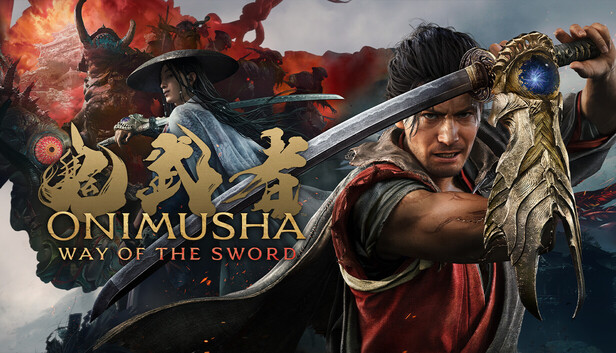
IGN has published its final hands-on preview of Onimusha: Way of the Sword, based on nearly three hours of gameplay, and the outlet came away impressed. The preview focuses on three boss fights: Sasaki Ganryu, Daitara, and Rashogan, and uses them to draw a sharp line between flashy regular fights and much harsher boss encounters.
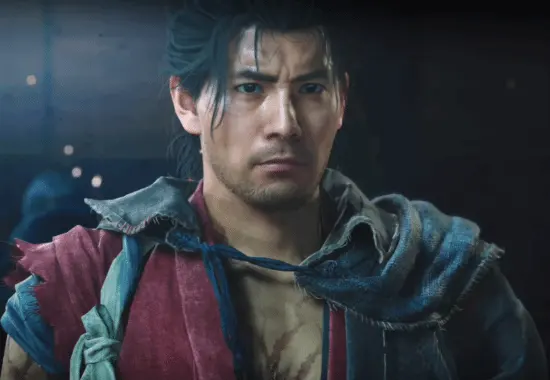
At Kiyomizu-dera, Sasaki Ganryu is not presented as a damage sponge meant to wear the player down. He is Miyamoto Musashi's rival, the historical Sasaki Kojiro, and like Musashi he carries an Oni Gauntlet. That shared source of power gives the duel an immediate mirror-match quality: protagonist and rival, on opposite sides of the duel, powered by the same kind of force.

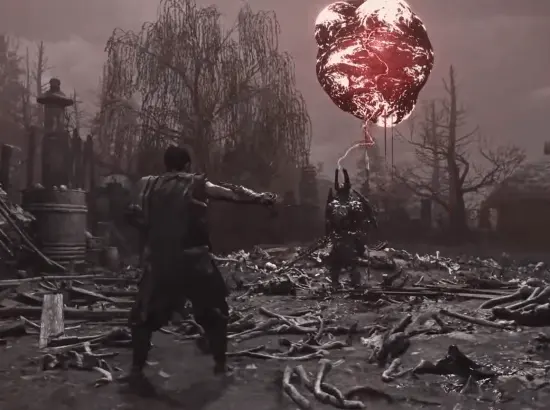
The fight is built around parrying his attacks to empty the Force Gauge, then finding the right opening for a powerful Breaking Issen. Unlike standard enemies, Sasaki Ganryu does not seem designed to be steamrolled by cinematic combo strings. The fight asks the player to manage spacing, tempo, and judgment instead. In that sense, he is doing more than serving as the demo's final boss. He turns the rivalry with Musashi into a set of combat rules the player has to read and answer.
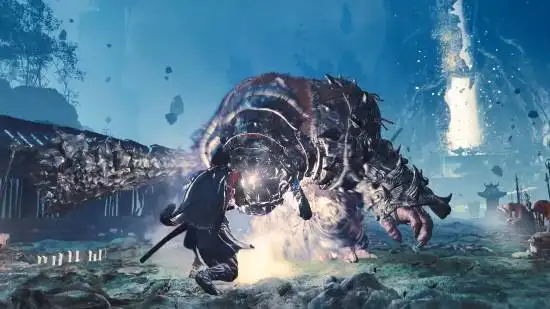
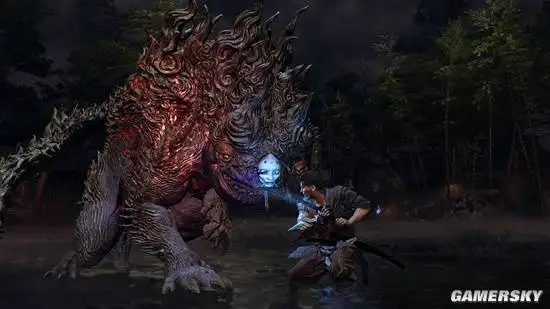
The boss at the end of the Oni clan hideaway, Daitara, is a more direct callback to the original Onimusha. In that first game, he was known as Osric. Here, he appears as a massive Genma monster, swinging an enormous weapon and showing an unusually obsessive appetite. IGN's description makes him sound like more than a named returning monster. It gives him a rough, blunt horror, closer to an old-school creature feature than a neatly designed action-game obstacle.

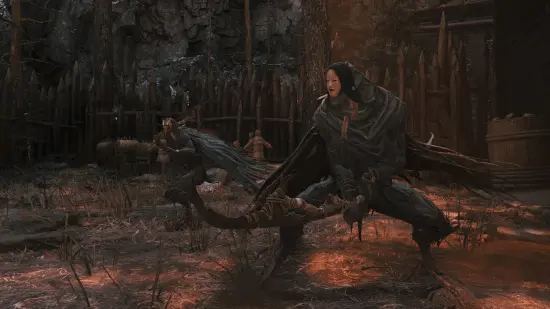
Rashogan, by contrast, is threatening because of how it moves, and what it is made of. Formed from numerous hands, it moves more nimbly than Daitara, throws small balls of light, and can lunge forward to grab the player. Its second phase adds a pair of giant scissors. The danger comes from the way its slow and fast attacks alternate, forcing the player to reassess when it is actually safe to strike. Openings that look like easy combo starters may be the bait.

What makes Onimusha: Way of the Sword interesting at this stage is that it does not appear to commit to only one kind of action game. Against regular enemies, players can lean into smooth, stylish, cinematic combos. Once a boss fight begins, the game shows a more hardcore and punishing side, with stricter timing and punishment closer to a Soulslike. Many action games end up choosing between the pleasure of looking powerful and the pressure of being punished. This one seems to be trying to let both exist in the same combat system.

For now, that leaves a fairly clear read on who should be paying attention. If you want a samurai action game built around clearing groups of enemies with strong, readable impact, IGN's hands-on impressions suggest the regular battles are not being neglected. If you care more about whether the bosses demand real learning and adaptation, the designs of Sasaki Ganryu and Rashogan are worth watching closely. The caveat is obvious: nearly three hours of preview time is not enough to prove these mechanics will hold across the full game. Based on the combat shown so far, though, Onimusha: Way of the Sword has already found a rhythm of its own.
Im AngebotOnimusha: Way of the Sword Im AngebotOnimusha: Warlords
Kommentare 0
Wir freuen uns auf deine Meinung
Willkommen! Teile deine Meinung zu diesem Spiel – wer zuerst schreibt, wird vielleicht überrascht.
Noch keine Kommentare. Sei der Erste!