
News
Grab two free PC games before Epic's clock runs out, while Undertale and Divinity: Original Sin 2 are 75% off
Astral Ascent and LUFTRAUSERS are free to keep today, while two of PC gaming's most celebrated RPGs cost less than $14 c
















At the core of this wave of discussion around Resident Evil 9: Requiem, there is really only one question: if players paid for a legitimate copy, why might the most comfortable experience actually come after Denuvo is removed? A foreign content creator recently pointed out that after the game’s Denuvo protection was removed, not only could it be played offline normally, but overall performance also improved slightly, with VRAM usage dropping by about 1GB. That level of change does not qualify as a “complete optimization overhaul,” but in today’s environment, where PC players are extremely sensitive to smoothness, it is already more than enough to fully ignite the controversy.

What is even more interesting is that Tom's Hardware’s related report pushed the matter one step further. The report mentioned that the Denuvo in Resident Evil: Requiem has already been fully cracked, and the relevant bypass tool can be used directly; compared with the original version, the cracked version runs faster, looks smoother, and uses less VRAM and system memory. What truly stings players here is not the phrase “the cracked version is better” itself, but a very real issue: legitimate users should be standing at the top of the experience pyramid, yet now they seem to be forced down an unnecessary trap-filled detour.

Of course, the foreign content creator also admitted that they cannot clearly explain the technical details of how Denuvo specifically affects VRAM. So at this stage, the more prudent view is to accept that “measurable differences have appeared in testing,” rather than rushing to make absolute technical conclusions. But another thing is already quite clear: Denuvo requires periodic online verification and also restricts offline play for single-player content, which is exactly the root of many players’ lasting dislike for it. For a horror game that emphasizes immersion and pacing, online verification is like a solid wall suddenly jutting out in the middle of a puzzle section—it may not block the way every time, but it always leaves people uneasy.
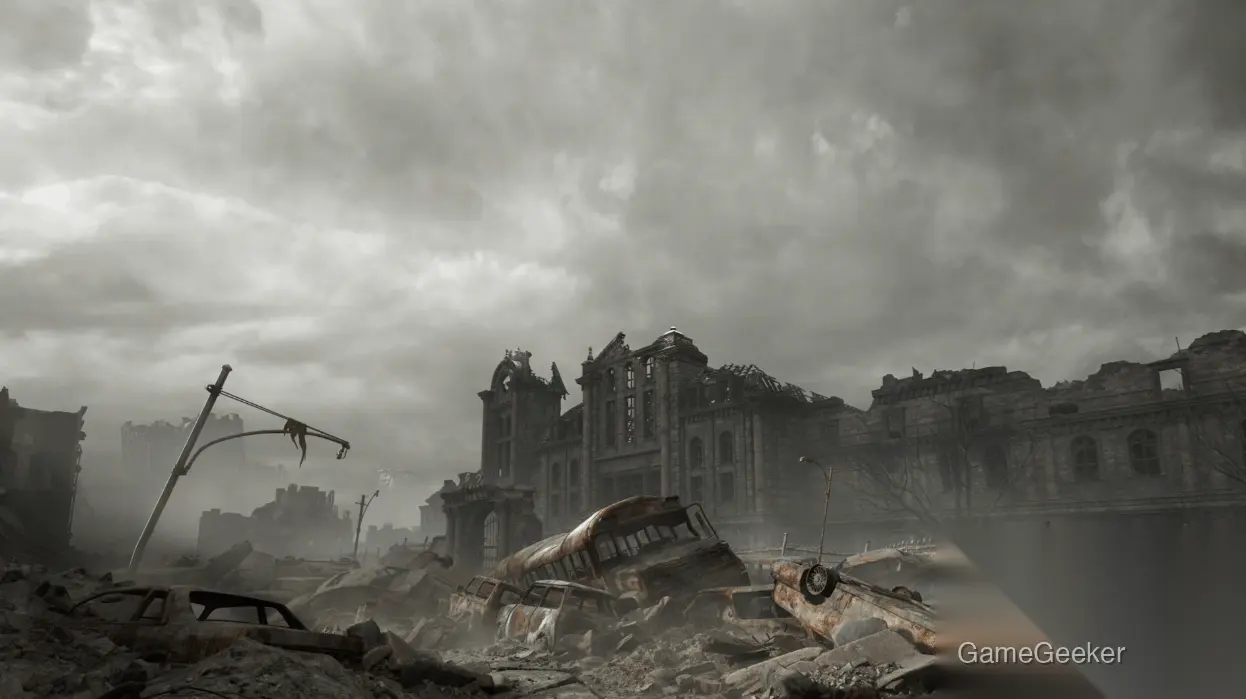
If you are still a player on the fence, my advice is straightforward: wait and see whether the developers continue optimizing the game through patches before deciding whether to buy it at launch. Because this controversy is no longer just about Resident Evil 9: Requiem alone; it feels more like a stress test for the entire PC single-player market. What players care about more and more now is not just whether the frame rate numbers look good, but whether “what I bought is the complete version, the unrestricted version, and the best version.” As long as that question remains, every time Denuvo appears, the community will replay the same box-pushing-style debate: publishers want to protect launch sales, while players simply want their most basic offline access and smooth performance back.

Judging from the direction of public opinion, incidents like this will only become more frequent in the future. That is because the player community is no longer satisfied with merely “being able to play,” and has started asking, “why can’t it play better?” When cracked versions are brought into direct comparison with legitimate copies in terms of smoothness, memory usage, and VRAM usage, what publishers face is no longer just an anti-piracy issue, but also the cost of trust. If the official side does not provide a sufficiently convincing optimization response afterward, then this discussion around Resident Evil 9 will likely become a recurring riddle before the launch of many more future 3A titles.





Kommentare 0
Wir freuen uns auf deine Meinung
Beteilige dich an der Diskussion und teile deine Bewertung des Spiels.
Noch keine Kommentare. Teile deine Bewertung.