

Quick Answer: The genre's reputation for cruelty scares off more players than it should. The three best places to start are Elden Ring, Another Crab's Treasure, and Lies of P — an open world that lets you walk away from any wall, a soulslike with a full assist mode, and a tightly forgiving FromSoftware-style adventure, in that order of accessibility.
Why These Made the List #
"Soulslike" has become shorthand for "punishing," but accessibility is really about how a game lets you get unstuck. So we ranked these for beginners on three things: escape valves (can you out-level, summon help, dodge a boss, or tune the difficulty?), clarity of feedback (does a death teach you something, or just frustrate?), and payoff for sticking with it (is the reward worth the climb?).
Every pick here gives a new player a real way through a hard moment — co-op, an assist mode, generous checkpoints, an open map, or AI allies — without stripping out the satisfying tension that makes the genre special. We left off games that assume genre fluency from the first major boss; this is a list built to get you in, not to prove a point. The GameGeeker editors ordered it from gentlest to most demanding, so the further down you go, the more the training wheels come off.
Top Picks #
1. Elden Ring #
 GAMIVOHK$345.05Steam HK$345.05Ver precio →
Counterintuitively, FromSoftware's hardest-sounding game is its most beginner-friendly. The open world means a wall is never a dead end — you can ride off, level up, find a better weapon, or summon a spirit ally, then come back. That freedom turns the usual soulslike brick wall into a detour.
- Why It's Ranked Here: the open structure gives newcomers more escape valves than any other FromSoftware title
- Who It's For: first-timers who want the full genre experience with room to breathe
- Key Selling Points: explore-around-bosses freedom, spirit summons, deep build variety, enormous content
2. Another Crab's Treasure #

If any soulslike was designed as a front door, it is this one. Beneath the bright underwater world and shell-swapping combat sits a fully customizable assist mode that lets you tweak individual difficulty options on the fly — without ever feeling like you switched the game off.
- Why It's Ranked Here: the most flexible accessibility options in the genre, wrapped in a genuinely charming world
- Who It's For: players who want soulslike depth but a safety net they control
- Key Selling Points: granular assist mode, shell-as-armor combat, inventive bosses, lighter tone
3. Lies of P #

Lies of P is the rare third-party soulslike that nails the FromSoftware feel while quietly smoothing the rough edges. Forgiving parry windows, frequent checkpoints, and a clear upgrade path make its dark Belle Epoque world far more approachable than its inspirations.
- Why It's Ranked Here: FromSoftware-grade combat with friendlier checkpoints and parry timing
- Who It's For: players ready for a "real" soulslike but wanting a fairer learning curve
- Key Selling Points: tight parry combat, weapon assembly system, striking setting, steady checkpoints
4. Black Myth: Wukong #

Game Science's Journey to the West epic borrows soulslike boss design but softens the parts that usually bounce newcomers: the death penalty is gentle, the spectacle is constant, and the action leans more aggressive than defensive. It is a soulslike-adjacent action RPG that rewards momentum.
- Why It's Ranked Here: blockbuster presentation and a forgiving death penalty lower the entry barrier
- Who It's For: players drawn in by spectacle who want challenge without harsh punishment
- Key Selling Points: jaw-dropping boss fights, light death penalty, aggressive combat, mythic setting
5. Star Wars Jedi: Fallen Order #

For many players this was the gateway drug. Fallen Order takes soulslike bones — rest points that respawn enemies, stamina-gated dueling — and pairs them with selectable difficulty and a guided story, so you get the rhythm of the genre inside a familiar Star Wars adventure.
- Why It's Ranked Here: difficulty options and a linear story make it an ideal first taste of soulslike combat
- Who It's For: action and Star Wars fans easing into the genre
- Key Selling Points: difficulty slider, lightsaber dueling, guided campaign, approachable structure
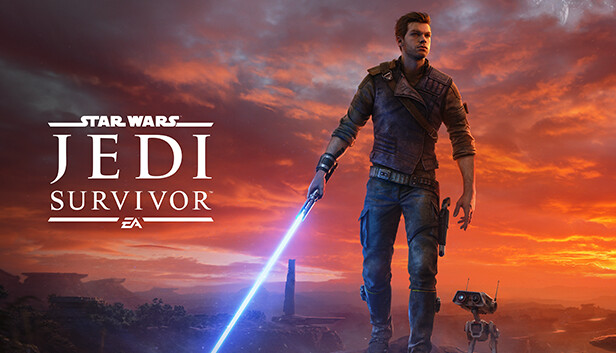
6. Star Wars Jedi: Survivor #

 SteamHK$ 70.35HK$ 469.00-85%Ver precio →
The bigger, more open sequel keeps the difficulty options and adds five lightsaber stances, semi-open hubs, and far more build flexibility. It is the natural step up from Fallen Order — still story-led and adjustable, but with deeper combat to grow into.
- Why It's Ranked Here: scales the accessible Jedi formula up with more options and combat depth
- Who It's For: players who finished Fallen Order and want more room and tools
- Key Selling Points: five combat stances, semi-open zones, difficulty options, strong narrative
7. Remnant II #

Remnant II answers the genre's hardest beginner question — "can I bring a friend?" — with a yes. It is a soulslike built around gunplay and three-player co-op, where shared fights and procedurally varied worlds make the tough moments feel like teamwork rather than a solo wall.
- Why It's Ranked Here: three-player co-op makes hard bosses social instead of soul-crushing
- Who It's For: players who'd rather learn the genre alongside friends
- Key Selling Points: 3-player co-op, gunplay focus, procedural worlds, deep archetype builds
8. Code Vein #

Code Vein's secret weapon for newcomers is its AI companion: a partner fights alongside you in almost every area, can revive you, and genuinely shares the load on tough bosses. Wrap that in an anime art style and flexible "blood code" classes and you get one of the most forgiving solo soulslikes around.
- Why It's Ranked Here: a capable AI ally effectively halves the difficulty of most encounters
- Who It's For: solo players who want backup without needing online friends
- Key Selling Points: AI partner, swappable blood-code classes, anime aesthetic, generous respawns
9. Thymesia #

Thymesia is short, sharp, and a great way to test whether the genre clicks without a huge time sink. Its aggressive claw-and-saber combat and compact length make it a low-commitment proving ground — you can see most of it in an afternoon or two.
- Why It's Ranked Here: a brief, focused runtime makes it a low-risk way to learn the rhythm
- Who It's For: players who want a quick, contained soulslike before a bigger one
- Key Selling Points: fast aggressive combat, short campaign, claw-steal mechanic, budget scope
10. Mortal Shell #

Mortal Shell is the most "classic FromSoftware" feel on this list, but its compact size and forgiving Harden ability — you can turn to stone to absorb a hit mid-combo — give newcomers a built-in panic button. It is the bridge between training wheels and the deep end.
- Why It's Ranked Here: the Harden mechanic offers a defensive crutch while teaching real soulslike timing
- Who It's For: players ready to graduate toward a stricter, traditional challenge
- Key Selling Points: Harden defense, swappable shells, tight world, classic souls atmosphere
Comparison Table #
| Game | Why It's Ranked Here | Who It's For | Key Selling Points |
|---|---|---|---|
| Elden Ring | Open world = most escape valves | First-timers wanting the full genre | Explore around bosses, summons |
| Another Crab's Treasure | Best assist mode | Players wanting a safety net | Granular assist, shell combat |
| Lies of P | FromSoft feel, friendlier | Ready for a "real" soulslike | Parry combat, steady checkpoints |
| Black Myth: Wukong | Forgiving death penalty | Spectacle seekers | Boss fights, aggressive combat |
| Star Wars Jedi: Fallen Order | Difficulty options + story | Star Wars and action fans | Difficulty slider, guided story |
| Star Wars Jedi: Survivor | Same formula, more depth | Fallen Order graduates | Combat stances, semi-open zones |
| Remnant II | 3-player co-op | Players who learn with friends | Co-op, gunplay, procedural worlds |
| Code Vein | AI ally shares the load | Solo players wanting backup | AI partner, blood-code classes |
| Thymesia | Short, low-risk entry | Quick-test players | Fast combat, short campaign |
| Mortal Shell | Harden as a panic button | Graduating toward stricter souls | Harden defense, classic feel |
Filters #
- Gentlest entry points: Another Crab's Treasure, Star Wars Jedi: Fallen Order, Elden Ring
- Learn with friends (co-op): Remnant II
- Solo with a safety net: Code Vein, Another Crab's Treasure
- Short time commitment: Thymesia, Mortal Shell
- Ready to graduate: Lies of P, Mortal Shell, Star Wars Jedi: Survivor
FAQ #
What is the single best soulslike for an absolute beginner? #
Another Crab's Treasure for its full assist mode, or Elden Ring if you want the complete experience — its open world lets you avoid any boss that's giving you trouble and come back stronger.
Are there beginner soulslikes I can play with friends? #
Yes. Remnant II is built around three-player co-op, and even solo-focused Code Vein gives you a capable AI partner so you're never fighting alone.
Do any of these let me lower the difficulty? #
Another Crab's Treasure has a granular assist mode, and both Star Wars Jedi: Fallen Order and Star Wars Jedi: Survivor offer selectable difficulty without removing the soulslike rhythm.
Which soulslike is the shortest if I just want to try the genre? #
Thymesia and Mortal Shell are both compact and can be finished quickly, making them low-commitment ways to see whether soulslike combat is for you.
Should beginners avoid Sekiro or Nioh to start? #
Generally yes — games that demand mastery from the first major boss, like Sekiro, assume genre fluency and have a near-vertical learning curve. Start with something like Lies of P or Elden Ring and work up to them.





Comentarios 0
Nos interesa tu opinión
Participa en la conversación y comparte tu opinión sobre este juego.
Aún no hay comentarios. Comparte tu opinión.