



The Seven in 30 Seconds: Start with Dorfromantik if you want the cleanest solo tile-placement puzzle: each terrain match is easy to read, yet planning around quests and future expansion gives good placements lasting importance. Choose Cascadia instead when you want more deliberate trade-offs and multiplayer, because pairing a habitat tile with a wildlife token makes every turn a choice between competing scoring plans. Quilts and Cats of Calico is the right pick for players who enjoy tighter pattern puzzles and changing objectives, with ranked online play adding a competitive edge that the calmer landscape games do not have.
Why These Made the List #
This ranking favors games where placement has an immediate, understandable consequence, but it does not treat every tile system as interchangeable. Dorfromantik leads because its edge-matching rules communicate their value clearly while still supporting planning and progression; Cascadia follows because habitat corridors and wildlife objectives create richer trade-offs without making the rules difficult to learn; and Quilts and Cats of Calico earns third for turning adjacency into a more specialized color-and-pattern challenge.
The remaining choices are useful when one of those priorities is not yours. Pick building influences in TerraScape, layered habitat planning in Preserve, or area claiming in Carcassonne - Tiles & Tactics when you want stronger mechanical friction or direct competition. Pan'orama is a more focused alternative for relaxed landscape building and optional high-score chasing.
Top Picks #
1. Dorfromantik #
 GOG€4.32-32%Steam €4.32Ver precio →
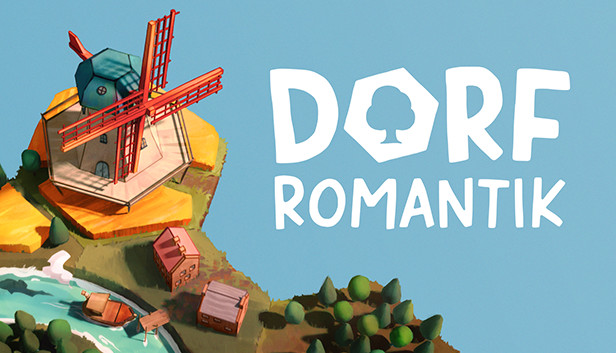
For a calm solo puzzle with consequences you can read immediately, Dorfromantik is the clearest recommendation. Rotate each drawn tile, place it where its edges fit, and watch the score explain the result. Quest objects add concrete targets, such as connecting tracks or expanding a forest, without resource management, trading, combat, or multiplayer.
| Aspect | Explanation |
|---|---|
| Why It's Ranked Here | Dorfromantik ranks first because its edge-matching rules, immediate scoring, and quest feedback make strategic landscape planning unusually readable. It offers meaningful decisions without adding resource management, combat, or trading. |
| Who It's For | Choose it for a calm solo puzzle that still rewards planning and progression. It suits players who want optional quick, hard, monthly, custom, or limitless creative runs rather than multiplayer competition. |
| Key Selling Points | Quests do more than award points: completing objectives such as connecting tracks or surrounding fields yields additional tiles, extending a run and making each placement matter to the landscape's future. |
2. Cascadia #

 Fanatical€14.79Steam €14.79Ver precio →
Each turn in Cascadia begins with four habitat-tile and wildlife-token pairings, so the important choice arrives before placement. Put the habitat beside your environment, then decide where its animal can live. Connected corridors reward one plan, while the wildlife cards may demand another, forcing you to balance landscape shape against species preferences.
| Aspect | Explanation |
|---|---|
| Why It's Ranked Here | Cascadia earns second place by combining approachable habitat placement with a four-choice tile-and-wildlife draft. Its corridor scoring and changing wildlife cards create more varied tradeoffs than straightforward edge matching. |
| Who It's For | Pick it for family-friendly strategy that can grow with the group. Solo players get scenarios and challenges, while online, local pass-and-play, Family Mode, and Daily Trek support different levels of commitment. |
| Key Selling Points | Each pairing forces a meaningful compromise between the habitat you need and the animal that can use it. Nature tokens earned from Keystone tiles can improve later choices or become points. |
3. Quilts and Cats of Calico #

 Kinguin€0.47-98%Steam €0.47Ver precio →
Color and pattern relationships do the scoring work in Quilts and Cats of Calico. Placing a scrap can complete a combination, earn a button, or satisfy a cat's preference, so the best-looking patch is not always the most valuable one. Campaign scenarios and rule variations keep that arrangement problem from settling into one repeated solution.
| Aspect | Explanation |
|---|---|
| Why It's Ranked Here | Quilts and Cats of Calico takes third because color and pattern adjacency create a more intricate puzzle than landscape matching. Cat preferences add another scoring demand, though the theme may matter as much as the optimization. |
| Who It's For | Choose it when you want a cozy pattern puzzle with flexible competition. AI opponents support solo practice, while cross-platform invites and ranked matches suit players seeking structured online games. |
| Key Selling Points | Cat preferences make a good fabric arrangement serve two purposes: it must score through color and pattern combinations while also attracting particular cats, giving familiar quilting rules a distinct objective. |
4. TerraScape #
 GOG€7.82Steam €7.82Ver precio →
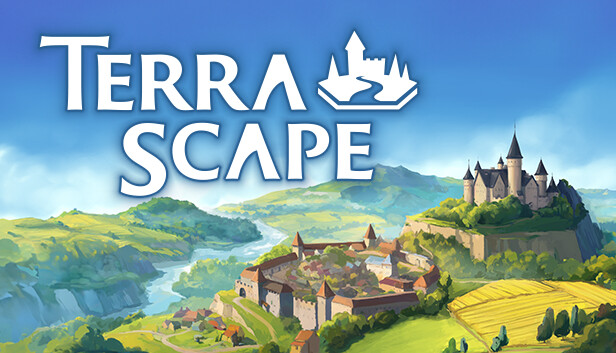
A building in TerraScape is useful only in relation to what surrounds it. You must weigh nearby structures, natural resources, and biome benefits against negative influences, then decide whether the points from that location justify another draw. Strong combinations can unlock buildings, Keep upgrades, and merged complexes, making one placement affect both the present map and future options.
| Aspect | Explanation |
|---|---|
| Why It's Ranked Here | TerraScape places fourth because building influence and deck selection create more layered consequences than simple adjacency. Its complexity is focused on placement rather than resources, citizens, 4X systems, or combat. |
| Who It's For | Select it if you want city-builder flavor without managing an economy. Solo players can pursue scenarios and Puzzle Terra, while groups have co-op and versus options for up to four players. |
| Key Selling Points | Buildings can merge into complexes when arranged in special patterns, turning careful placement into stronger influences, bonus points, extra cards, or special effects instead of merely filling available space. |
5. Preserve #
 Kinguin€2.90Steam €2.90Ver precio →
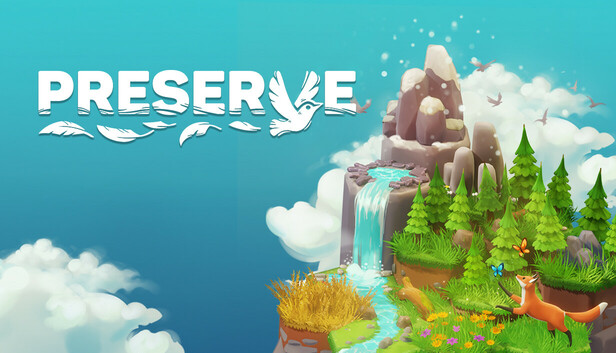
Preserve asks you to build balanced biomes across more than a flat surface. Plants and animals can spread across a landscape that expands outward, while stacked layers create vertically connected habitats. The practical choice is whether to improve the visible arrangement beside you or use the available space above and below it to support a larger ecological structure.
| Aspect | Explanation |
|---|---|
| Why It's Ranked Here | Preserve belongs in the middle because it expands habitat planning vertically as well as horizontally. That extra spatial freedom is distinctive, but players wanting clearer scoring or stronger competition may prefer higher-ranked entries. |
| Who It's For | Choose it for deliberate nature curation and a low-pressure building process. Harmony and puzzle modes provide structure, while creative and photo modes better suit players who value arranging and sharing a finished habitat. |
| Key Selling Points | Stackable layers make the ecosystem three-dimensional: plants and animals can form vertically interconnected habitats, so placement influences more than the immediate neighboring tiles. |
6. Pan'orama #

 Eneba€1.47Steam €1.47Ver precio →
Choose Pan'orama when you want a relaxed tile-placement loop with a clear reason to keep scoring. Quests and newly created biomes unlock structures with different abilities, allowing a forest, ocean, or city to develop according to a chosen direction. Its progression adds purpose, though players seeking highly varied scoring priorities may find the system comparatively narrow.
| Aspect | Explanation |
|---|---|
| Why It's Ranked Here | Pan'orama sits sixth as a gentler alternative to Dorfromantik, with quests and biome creation providing progression. Its appeal is strongest for creativity-first players, while its scoring is less clearly differentiated. |
| Who It's For | Pick it when relaxation and personal landscape design matter more than demanding optimization. Players who still want a score to chase can compete, but those seeking deep multiplayer strategy should look elsewhere. |
| Key Selling Points | Unlockable structures change how landscapes can be developed, giving completed quests a practical consequence beyond points. Their different abilities support visions ranging from forests and oceans to cities. |
7. Carcassonne - Tiles & Tactics #
 GOG€1.48-70%Steam €1.48Ver precio →
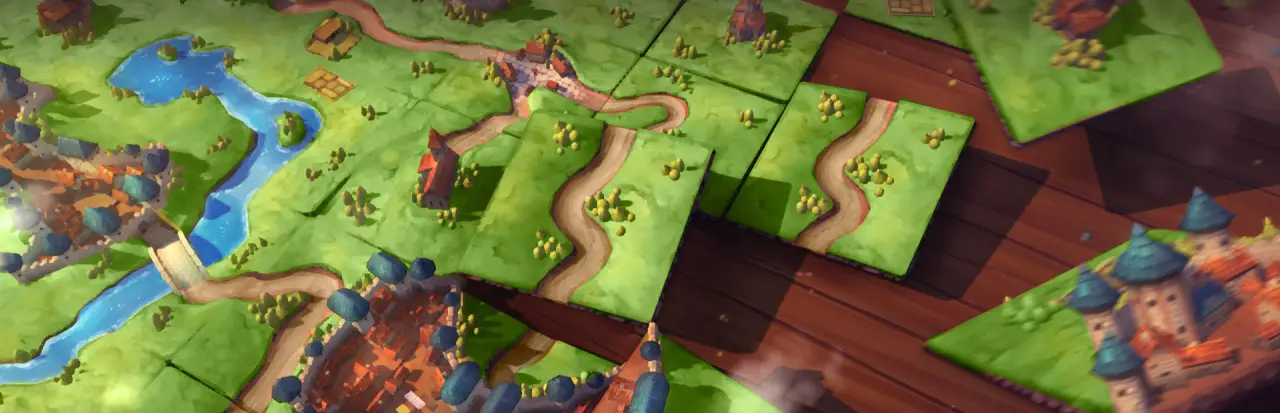
One tile and one optional follower define a turn in Carcassonne - Tiles & Tactics. Matching a city, road, cloister, or field extends the map, but placing your follower determines who can profit when that feature is completed. Spend your last meeple for a promising claim, save it for later, or use the placement to obstruct an opponent.
| Aspect | Explanation |
|---|---|
| Why It's Ranked Here | Carcassonne - Tiles & Tactics ranks seventh because its simple tile placement leads to direct area competition. Followers can complete or contest cities, roads, cloisters, and fields, making opponent timing central to every turn. |
| Who It's For | Choose it for competitive board-game interaction rather than solitary optimization. It works especially well for pairs and groups who want online ranked play, public or private rooms, or local pass-and-play. |
| Key Selling Points | The optional follower turns each tile into a commitment: using one can secure points or interfere with an opponent, but spending the wrong follower may leave later opportunities uncovered. |
Comparison Table #
| Game | Genre | Why It's Ranked | Play Structure |
|---|---|---|---|
| Dorfromantik | Terrain matching puzzle | Readable matching and relaxed progression make it the strongest starting point. | Solo runs use a tile stack with quick, hard, monthly, custom, and creative modes. |
| Cascadia | Habitat and wildlife puzzle | Corridors and changing wildlife objectives create accessible variety. | Solo, online, local pass-and-play, Family Mode, scenarios, challenges, and daily objectives are included. |
| Quilts and Cats of Calico | Pattern placement puzzle | Color and pattern adjacency define the scoring. | Campaign, solo AI, cross-platform play, and ranked matches are available. |
| TerraScape | Building influence puzzle | Influences, decks, and complexes replace simple edge matching. | Kingdom, scenario, Puzzle Terra, weekly, creative, co-op, and versus modes support up to four players. |
| Preserve | Layered habitat builder | Vertical stacking gives nature placement a distinct spatial challenge. | Harmony and puzzle modes sit beside creative and photo modes. |
| Pan'orama | Landscape-building puzzle | Quests support gentle, creativity-focused construction. | Tiles and structures form landscapes with optional high-score goals. |
| Carcassonne - Tiles & Tactics | Area-claiming tile game | Matching tiles becomes a contest over claimed areas. | Solo, pass-and-play, and public, private, and ranked online games are included. |
How to Pick #
| Preference | Recommended Games |
|---|---|
| You want relaxed, ever-growing landscape building → | Dorfromantik, Pan'orama, and Preserve |
| You want habitat-based or pattern-combination scoring → | Cascadia and Quilts and Cats of Calico |
| You want building placement, area claiming, or competitive strategy → | TerraScape and Carcassonne - Tiles & Tactics |
FAQ #
Do all seven games share the same mechanics? #
The seven games do not share the same mechanics. Dorfromantik uses terrain edge matching, TerraScape scores building influences, Carcassonne - Tiles & Tactics centers on follower-based area claiming, Quilts and Cats of Calico uses fabric patterns, and Preserve adds vertical habitat layers. The list depends on those differences.
Which entries offer multiplayer? #
According to the official descriptions, Cascadia supports online play and local pass-and-play; Quilts and Cats of Calico offers cross-platform ranked matches; TerraScape includes co-op and versus modes for up to four players; and Carcassonne - Tiles & Tactics has public, private, and ranked online games plus pass-and-play. Dorfromantik explicitly has no multiplayer.
Should I choose calm landscape building or competitive placement? #
Choose Dorfromantik, Preserve, or Pan'orama for calmer landscape building. Choose Cascadia or Quilts and Cats of Calico when you want multiplayer options with distinct scoring plans, TerraScape for co-op or versus building influence, or Carcassonne - Tiles & Tactics for direct area competition and follower decisions.





Comentarios 0
Nos interesa tu opinión
Participa en la conversación y comparte tu opinión sobre este juego.
Aún no hay comentarios. Comparte tu opinión.