























Opening
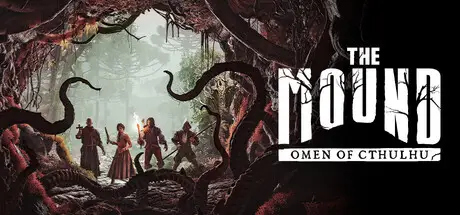
The Mound: Omen of Cthulhu is a first-person co-op horror survival game about dragging treasure out of a cursed jungle, and what it nails is paranoia between friends — if you’ve got a regular squad, yeah, this one’s worth watching closely.
Because the big trick here isn’t just “monster jumps out, everyone screams.” It’s that each player can be seeing a different version of reality. Your teammate might look normal to you, while on their screen you’ve turned into something undead. A horn call in the distance might be your escape route, or it might be bait. That’s the hook. The game doesn’t just scare the player. It poisons the group.
And that matters, because compared to something like Phasmophobia, where the ghost is the threat, The Mound makes your own crew feel unsafe. The jungle is already fighting you — branches blocking paths, noise waking things up, animal calls that may not even be real — but the nastiest part is not knowing if the person next to you is helping, panicking, or leading you straight into teeth.
The catch is, this does not look like a slick solo power fantasy. Combat sounds rough, polish sounds uneven, and if you’re playing alone with AI buddies, you’re probably missing the whole point.
But with four people, voice chat, one-more-crate temptation, fear, and a single cart full of loot between you and the exit? That’s where The Mound gets interesting.
Story | 6.0/10
Historia: 6/10The best story beat is when your own teammate stops looking trustworthy

The setup is classic Lovecraft territory, and I mean that pretty literally. The Mound: Omen of Cthulhu pulls from Lovecraft’s novella The Mound, then reframes it around a conquistador-era expedition pushing into a cursed jungle for treasure. So, yeah, you’ve got explorers, treasure-lust, ruins, monsters, and the slow crawl toward something way bigger and older than your little crew understands.
But the smart part is that the story isn’t really told by stopping you for lore dumps. It’s told by messing with your head. The jungle doesn’t just sit there as a spooky backdrop. It lies to you. It bends around you. It uses sound, distance, and your own team against you. One player might see a teammate warp into something undead. Someone else might hear a horn call that sounds like a rescue signal, follow it, and walk straight into trouble. That’s the hook. The narrative is strongest when it feels like the game is gaslighting the squad in real time.
And honestly, that’s where The Mound has its clearest identity next to something like Phasmophobia. In Phasmophobia, the ghost scares you. Here, the scary part is that your friend might not be your friend anymore, or at least might not look like it from where you’re standing. That’s a fantastic story engine for co-op horror, because it turns basic communication into drama. You’re not just saying, “I saw a monster.” You’re saying, “I saw you become a monster, and I don’t know if I can trust what I saw.”
The catch is, the game doesn’t always build enough actual character work around that idea. Your explorers mostly feel like expedition pieces. They’ve got visual differences, sure, but no unique personal arcs, no special abilities shaping how they react to the horror, and no strong individual storyline pulling you closer to them. So the group paranoia works. The atmosphere works. But the people inside the expedition? They’re thin. You care because they’re your friends on voice chat, not because the game has written them into memorable characters.
Progress is shared, the jungle remembers, but the plot takes its sweet time
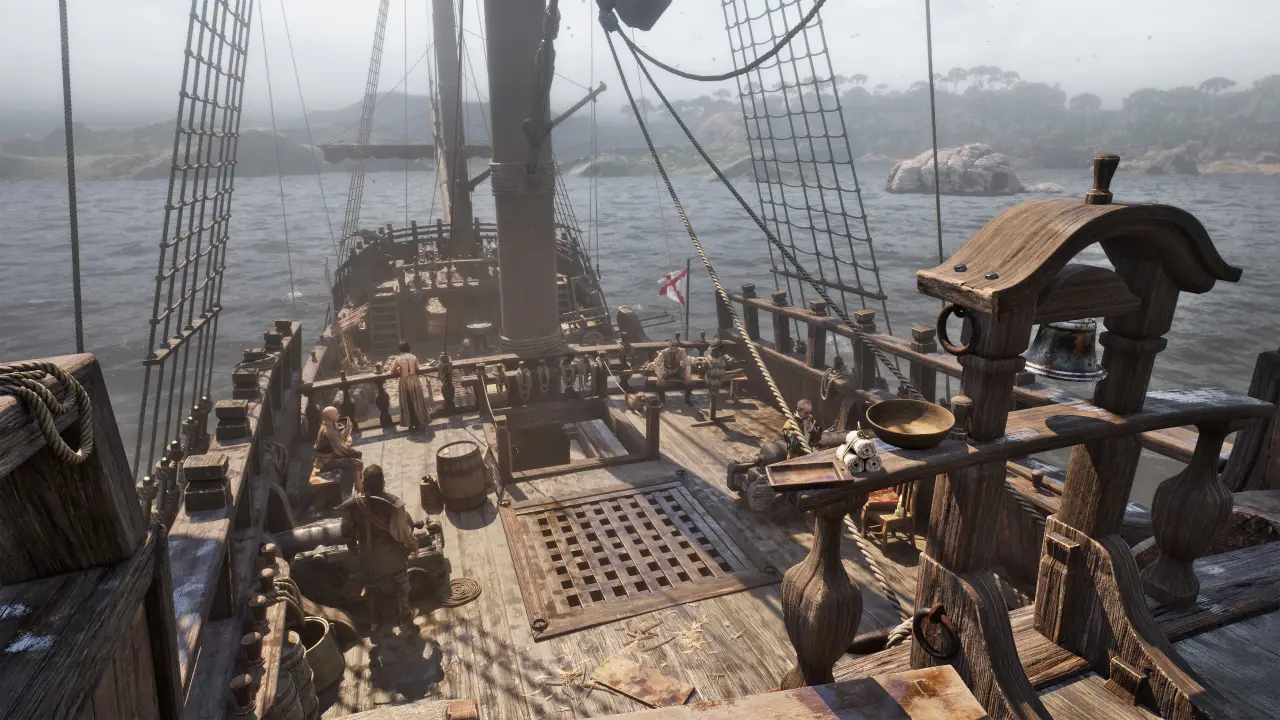
The main story structure is built around repeated expeditions rather than one smooth cinematic campaign. You go in, push your luck, grab what you can, survive if you can, and the crew’s progress moves forward together. Story progression and experience are shared across the team, which makes sense for a co-op horror game that wants the expedition itself to be the main character. It’s not “my questline” or “your questline.” It’s the crew’s slow descent.
That works especially well with the ox-cart base idea. The cart isn’t just a menu with wheels. It’s your lifeline, your storage, and your way back out. It leaves a trail you can actually follow, so your hunger for one more haul becomes a story decision. Do you keep pushing deeper for more treasure, or do you respect the fact that the jungle is getting louder, stranger, and less readable? That’s not a big branching dialogue choice, but it is a meaningful pressure point. The “choice system,” if we’re calling it that, lives in the extraction loop. Stay too long, and the story you get is probably a messy one.
Still, if you’re looking for dense side stories, deep quest chains, or lots of authored little narrative payoffs, this is where the game feels light. The side content is more about atmosphere and incidents than proper subplots. You’ll remember the fake sound in the trees, the blocked path, the moment someone swore they saw a creature where you saw nothing. You probably won’t remember a named side character with a heartbreaking backstory, because that doesn’t seem to be what this thing is built for.
And that’s why, for story, I land around a 6 out of 10. The framework is cool. The shared progress makes sense. The moment-to-moment hallucination storytelling is genuinely the reason to pay attention. But the narrative density is thin, and it leans hard on your group bringing the energy. With a fixed crew, that can be great. Solo, or with quiet randoms, the story loses a lot of its bite.
K'n-yan sounds like the real destination, but the road there needs more meat
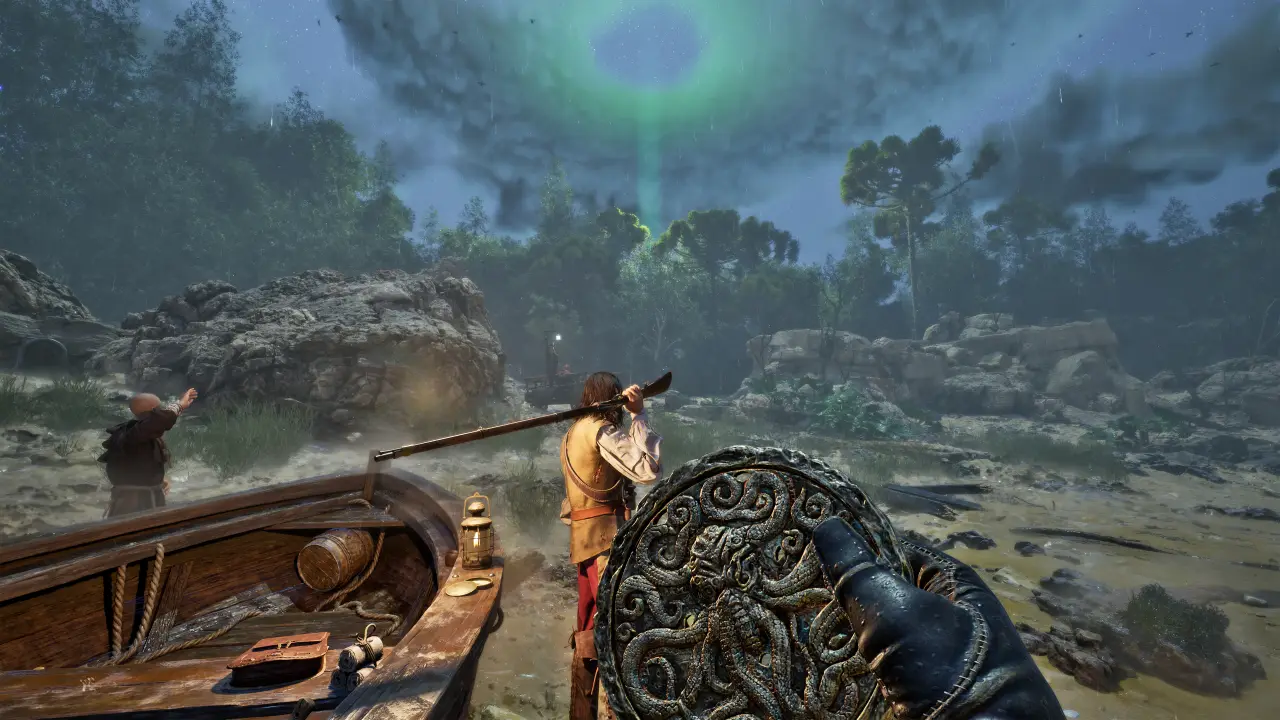
The endgame tease is where The Mound starts pointing at the bigger cosmic horror underneath all the mud and vines. The underground world of K'n-yan is part of the destination, and the cylinder acting as a key to unlock the final level gives the whole thing a raid-like shape. You’re not just doing random jungle runs forever. There’s a sense that these expeditions are building toward a final push into something buried, ancient, and probably very bad for everyone involved.
That’s a strong direction. I like when co-op horror has an actual finish line, because it gives your failures weight. Every run can feel like you’re scraping together knowledge, resources, and nerve for the run that actually matters. The cursed jungle, the hostile wildlife, the impossible sounds, the reality-warping monsters — all of that works better when it feels like you’re being pulled toward a place you shouldn’t open.
But again, the game’s biggest story weakness is that it often suggests more than it delivers. Suggestion is powerful in Lovecraftian horror, sure. You don’t want everything explained with a flashlight under its chin. But there’s a difference between mystery and undercooking. The Mound is better at mood than storytelling. Better at “what did I just see?” than “who are these people, and what does this mean for them?” That matters, because the cosmic stuff needs human stakes to hit harder.
So if you’re coming for a polished solo horror narrative, this probably isn’t the one. The combat is already rough, the AI ally experience makes solo play harder, and the story doesn’t compensate with rich character writing.
But if you’ve got a regular crew, and you care more about paranoia, shared panic, and the feeling that the jungle is actively rewriting reality around you, then the story does have a nasty little spark. It’s just not a full flame yet.
Audio | 8.5/10
Sonido: 8.5/10The best sound in this game is your friend suddenly sounding wrong

The smartest audio choice in The Mound: Omen of Cthulhu is that voice chat isn’t just there for convenience. It’s basically part of the survival kit. This is a first-person co-op horror game built around up to four explorers in a cursed jungle, and the spatial voice does a lot of heavy lifting. If your teammate is far away, they sound far away. If they’re off to your left, you hear that. If they panic behind you, you feel it before you even turn around.
And that matters because this game’s big trick is paranoia inside the group. Each player can be seeing a different version of reality. One person thinks they’re talking to a teammate. Another sees that same teammate warp into something undead. Then you add sound to that, and suddenly the question isn’t just, “Where are you?” It’s, “Is that actually you?” That’s where The Mound gets nasty in a good way.
This is also where it separates itself from Phasmophobia. Phasmophobia also lives and dies on voice, sure. You whisper, you call out evidence, you scream when something touches the door. But the ghost is still the outside threat. In The Mound, your crew becomes part of the threat. Not because your friends are trolling you, but because the game makes their voices, positions, and signals feel unreliable. That’s a much meaner idea.
So yeah, if you’re planning to play this with randoms who never talk, you’re missing the point. Open mic isn’t just funny here. It’s survival. This is built for a fixed squad that wants to argue, second-guess each other, and slowly lose trust in the jungle.
The jungle doesn’t just make noise, it lies to you

The ambient sound design is where I think The Mound earns most of its 8.5 out of 10 for this side of the game. The jungle isn’t background wallpaper. It’s hostile. It rustles, cracks, breathes, and sometimes it tricks you into thinking there’s safety where there absolutely isn’t.
One of the best examples is the fake horn call. You hear something reassuring in the distance, something that feels like a teammate signal or a way back, and then the game uses that sound to pull you into an ambush. That’s the kind of horror audio I like. Not just a loud sting in your ear. Not just a monster screaming because the game needs you to jump. It’s a sound that makes you make a bad decision.
Players have already been pointing out the little environmental details too: bushes shifting nearby, branches snapping, far-off animal calls that may or may not be real. And because noise can wake enemies, every sound has weight. You’re not just listening for danger. You’re scared of becoming the danger signal yourself. Step too loud, move too carelessly, and the jungle answers.
That’s the real theme of the audio here. The music and soundscape don’t feel like they’re chasing “epic adventure.” They’re pushing cursed expedition horror. You’re treasure hunters, yeah, but the game keeps reminding you that wanting more is loud. The ox-cart is your mobile base, your escape trail, your reason to keep pushing deeper, and every scrape and movement feeds that tension. The soundtrack side seems less about giving you a hummable theme and more about making the whole place feel infected.
Don’t come here for slick combat impact, come for panic in the comms
Here’s the catch: the audio sells the fear way better than the combat sells the violence. The actual fighting sounds like it matches the design problem people are worried about: primitive, messy, and sometimes unclear. You’re smacking enemies with whatever you can grab, enemies can parry and disarm you, and boss fights can leave you wondering, “Am I supposed to hit this thing or run?” That uncertainty can be scary, but it can also feel rough.
That’s why the sound has to carry so much of the experience. When the UI feels unfinished, when the cart AI backtracks off the main paths, when performance still needs work, the atmosphere becomes the thing holding the whole expedition together. ACE Team has always been more of an ideas-first studio than a polish-first studio, and you can feel that here. The audio concept is sharper than the general finish.
But I don’t want to undersell how effective that concept is. The “voice performance” in this game isn’t really about celebrity actors or dramatic cutscenes. It’s your squad. It’s the nervous laugh when someone hears a branch snap. It’s the teammate who swears they saw you die, while you’re standing right there. It’s someone following a horn call they thought was safe, then yelling for help from somewhere they should never have gone.
That’s the audience for The Mound. If you want a clean solo horror ride with smooth AI buddies, this probably isn’t your game. Solo play is harder, and AI allies can’t give you that human doubt. But if you’ve got a regular crew, and you care more about atmosphere, mind games, and psychological co-op tension than crunchy combat, this audio design is a serious hook.
Visuals | 8.0/10
Gráficos: 8/10The jungle looks gorgeous because it’s waiting to lie to you
The best thing about The Mound: Omen of Cthulhu visually is that it doesn’t treat graphics like wallpaper. The art direction is part of the trap. It has to make the jungle feel believable first, because the whole horror trick only works once you start doubting what you just saw.
In the demo, the UE5 presentation is doing a lot of heavy lifting. The jungle has that dense, wet, choking look where every branch feels too close, every patch of shadow feels suspicious, and every bit of movement makes you ask, “Was that the game, or did I actually see something?” That matters here more than it would in a straight action game, because this is a co-op horror game where reality can split between players. If the world looked cheap or flat, the hallucination system would fall apart. You wouldn’t question it. You’d just blame the game.
And that’s why the visual design lands so well. One player can see localized blood rain that nobody else sees. A statue that looks completely out of place might not be set dressing at all, but a trap. Teammates can warp into undead-looking things, and the game leans on that split-second panic where you’re not sure if you’re looking at your friend, an enemy, or your own mind turning on you. That’s the secret sauce. Phasmophobia scares you with the ghost. The Mound wants your squad itself to become visually unreliable.
The facial animation also helps more than I expected. The fact that faces can line up with in-game voice gives the group a little more presence, and in a game about mistrust, that’s useful. You’re not just looking at four generic bodies sprinting through foliage. You’re reading people. You’re watching reactions. You’re trying to figure out if someone is confused, lying, panicking, or seeing something you can’t see. For graphics, that’s a win. Not because it’s the cleanest-looking horror game ever made, but because the look actually feeds the design. That’s why I’m comfortable putting this side of the game at an 8.0 out of 10.
The environment isn’t background scenery, it’s the thing trying to kill the run
Here’s where the visuals get really interesting: the jungle doesn’t just sit there looking spooky. It reacts. Vines and thick branches can bend when players push through them, they can choke movement, and they can turn a messy escape into a panic spiral. That makes the environment feel less like a level and more like the main enemy.
That’s a smart choice for this kind of game. The Mound is built around explorers dragging their treasure-lust, fear, and bad decisions through a cursed jungle, and the visuals sell that better when the world pushes back. If branches simply clipped through your character, or if every path felt clean and readable, the whole thing would lose pressure. Instead, the jungle has weight. It gets in your way. It blocks lines of sight. It makes noise feel dangerous. It makes far-off animal calls feel like maybe they’re real, maybe they’re not, and maybe your teammate just got lured by something pretending to be safe.
The ox-cart mobile base also benefits from this. Visually, the cart gives your route a physical identity. It’s not just “go in, loot, leave.” You’ve got this moving anchor, this trail you can trace back, and that makes the extraction loop feel grounded. The graphics help make that pull-to-grab-more readable. The deeper you go, the more the jungle wraps around you, and the more that path back starts to feel fragile. That’s exactly the kind of visual storytelling a co-op horror game needs.
Now, on tech features like ray tracing or DLSS, I’m not going to pretend there’s a confirmed checklist if there isn’t one in front of us. What we can talk about is the actual visible result from the demo buzz: people came away calling it striking, and that matters. UE5 gives ACE Team the room to make the jungle feel dense, reactive, and surreal. The game doesn’t need to win a spec-sheet war to look effective. It needs to make four players argue over whether the thing in front of them is real. On that front, it gets the job done.
The catch is the UI still looks like it got left behind in the jungle
The weak spot, visually, is the UI. Demo players called it out for looking unfinished, and honestly, yeah, that tracks. The world can look tense and immersive, but the second the interface feels temporary, that spell cracks a little.
That’s frustrating because the game’s visual language is otherwise so tied to trust. You need clean feedback. You need to understand what the cart is doing, what your squad is dealing with, and what the game wants you to notice without having the interface shout over the horror. If the UI looks placeholder, rough, or just not fully integrated, it doesn’t just look ugly. It makes the whole experience feel less confident. And in a game where confusion is supposed to be scary, the difference between “I’m confused because reality is breaking” and “I’m confused because the UI is messy” is huge.
To be fair, the developers have acknowledged that the UI is being worked on, so this doesn’t feel like a finished verdict yet. But for a graphics segment, I have to judge what’s visible. ACE Team has always had that ideas-over-polish reputation, and you can see the upside and downside right here. The upside is a horror co-op game with a killer visual identity: fake signals, personal hallucinations, a jungle that feels alive, teammates that stop looking trustworthy. The downside is that some of the supporting presentation still needs tightening.
As for platform differences, the safest thing to say right now is this: the strongest read we have is from the PC-facing demo and Steam Next Fest attention, where the game pulled over 200,000 demo downloads and built serious word of mouth. I’m not going to invent console comparisons or claim one version looks better than another without real evidence. What I can say is that the visual promise is clear, especially for players on Steam looking for a co-op horror game with atmosphere over combat flash. If ACE Team cleans up the UI and keeps performance moving in the right direction, the graphics side could be one of the game’s biggest selling points. Right now, it’s impressive, creepy, and uneven in exactly the way an ACE Team project often is.
Combat | 7.0/10
Jugabilidad: 7/10The best monster here is the teammate you suddenly don’t trust
The smartest thing The Mound does is simple: it stops making horror just about the thing in the trees, and starts making it about the person walking next to you. This is a first-person co-op survival horror game for up to four players, and yeah, on paper that sounds familiar. You take contracts from the captain, head into a cursed jungle, grab gold and artifacts, rescue survivors, hit your quota, and get out. It’s a PvE extraction loop. You go in hungry for loot, you try to stay alive, and you argue about whether one more room is worth it.
But the sanity system is the hook. Each player can be seeing a different version of reality. That’s the part that gives The Mound its own identity. Your teammate might look normal to them, but to you, they’ve warped into some undead thing shambling toward you. So now you’re panicking, you’re swinging, and suddenly you’ve hurt the actual person you were supposed to protect. Or you hear a horn call in the distance, and it sounds like a signal, like something the team should follow. Except maybe it’s fake. Maybe it’s bait. Maybe the jungle just separated you from the group and walked you into an ambush.
That’s where this game earns its 7.0 for me. Not because every system is polished. It really isn’t. It earns it because the central idea works. In Phasmophobia, the ghost messes with you, but the threat is still mostly outside the team. Here, The Mound makes the team itself unstable. It turns voice chat into gameplay. It turns a simple “I’m behind you” into “are you actually behind me, or am I about to get played by the game again?” That’s a nasty, clever trick.
And compared to The Forest, where the fear comes from surviving a hostile wilderness full of external threats, The Mound pushes harder into psychological co-op paranoia. The jungle is dangerous, sure, but the real damage happens when the group stops trusting its own eyes. If you’ve got a regular squad that likes arguing, second-guessing, and freaking each other out, that’s the good stuff.
The ox-cart makes wanting-more physical, and that’s the loop at its strongest
The extraction structure works best when the game forces you to feel the cost of pushing your luck. The ox-cart is a big part of that. It’s basically your mobile base, but it’s not some magic safe room that teleports behind you. It leaves a trail. That means your path into the jungle becomes your path back out, and the deeper you push, the more you’re betting that your crew can actually retreat when things go bad.
That sounds small, but it gives the whole run a better shape. You’re not just hoovering up loot until a timer tells you to leave. You’re thinking about distance. You’re thinking about noise. You’re thinking about whether you should load up on treasure, pull survivors back, or cut your losses before the jungle turns the route home into a nightmare. Branches can bend and block you. Sound can wake enemies. Far-off animal calls might not even be real. The environment isn’t just wallpaper here. It behaves like it hates you.
I also like that the game pressures the team before the scary stuff even starts. You begin with a six-slot backpack, so you can’t just bring every answer with you. Someone needs weapons. Someone needs room for loot. Someone needs to think about the team getting back alive. Then the weather gets involved, and rain can make guns unreliable. That’s a great co-op wrinkle, because suddenly your plan isn’t just “shoot the monster.” Maybe the gun doesn’t fire when you need it. Maybe the person carrying the right tool is the one currently hallucinating and screaming that you’re a corpse.
This is why I think The Mound is aimed at a very specific player. If you’ve got a fixed group, this loop has teeth. It creates stories. It creates blame. It creates that beautiful co-op horror moment where everyone talks over each other and nobody knows who made the bad call. If you’re playing alone, though, or relying on AI allies, you’re not getting the same magic. Solo play is noticeably rougher, because the design is clearly built around human panic, human communication, and human stupidity.
The fighting is where the illusion breaks
Here’s the catch: when The Mound has to be an action game, it gets a lot less interesting. The combat feels primitive. A lot of it comes down to grabbing whatever’s nearby and smacking enemies until they stop moving. That can be tense in a messy survival way, sure, but it doesn’t feel especially satisfying. Enemies can parry you. They can disarm you. And while that sounds cool in theory, in practice it often makes fights feel clumsy instead of scary.
The boss fights are the biggest problem. Too often, the game doesn’t clearly communicate whether you’re supposed to stand your ground, run, bait an opening, or just survive until something changes. Horror can absolutely use confusion. I’m fine with being scared and uncertain. But there’s a difference between “I’m terrified because this creature is unpredictable” and “I don’t know what the game wants from me.” The Mound crosses that line more than it should.
And this is where ACE Team’s usual personality shows through: big ideas, rough edges. The UI still feels unfinished. The ox-cart AI can backtrack off the main paths. Performance still needs work. Those things matter, because a co-op horror game depends on trust. Not just trust in your teammates, but trust that the game is reading your inputs, guiding your decisions, and failing you fairly. When that trust slips, the dread turns into irritation.
Still, I don’t want to undersell what works. The UE5 visuals and spatialised voice help sell the jungle. The hallucinations give the co-op structure a real identity. Cross-play and player-hosted servers are smart choices too, because this doesn’t feel like a game that should be chained to live-service nonsense. And with a $29.99 standard price plus a 20% launch discount, the buy-in is lower than a lot of co-op experiments.
The pre-launch interest also makes sense. Over 800,000 wishlists and more than 200,000 demo downloads during Steam Next Fest isn’t just random hype. People comparing it to Left 4 Dead 2 are picking up on the group chaos angle, even if the moment-to-moment combat is nowhere near as clean. For me, The Mound is not the pick if you want slick solo survival or crunchy fighting. But if your crew wants a creepy extraction game where the scariest thing might be the guy on voice chat saying, “Trust me,” then yeah, this has a real shot.
Content | 5.5/10
Contenido: 5.5/10The best content here is the expedition loop, not the fighting
The Mound works best when it treats a run like a bad idea you all talked yourselves into. You’re explorers, you take a contract, you push into the cursed jungle, you grab what you can, and then you try to get back out before the place chews up the whole squad. That loop has a clean hook. Quick treasure grabs sit on one end, bigger expeditions sit on the other, and the difficulty can stack all the way up toward K’n-yan as the late-game pressure point. That’s the part I actually like. It gives the game a reason to keep pulling you back in.
The pace is built around wanting more than you can safely carry. The ox-cart is your mobile base, your escape route, and basically your guilt trail. The more you push forward, the more you’re betting that you can still find your way back. And because the jungle isn’t just scenery, that return trip isn’t some boring walk home. Branches can block routes, noise can wake enemies, and distant animal calls may or may not be real. When this stuff lines up with spatial voice chat and the UE5 jungle lighting, yeah, it can hit. The game understands that co-op horror isn’t just “monster jumps out, everyone screams.” Sometimes it’s “why did I hear that horn, and why are you saying you didn’t?”
But the catch is, the content is way more convincing as a creepy expedition generator than as an action game. Combat is rough. Not charmingly rough. Just rough. You’re often smacking enemies with whatever you’ve got until something gives, while enemies can parry you, disarm you, and make fights feel weirdly muddy. Boss encounters are even worse about this, because the game doesn’t always communicate whether you’re meant to stand your ground or just bolt in a blind panic. That hurts the content loop, because every expedition eventually has to cash out its tension somewhere. When that payoff is a clumsy brawl, the spell breaks.
So for content, I’m landing around a 5.5 out of 10. There’s a real structure here. Contracts, escalating expeditions, extraction pressure, and a nasty jungle that feels alive. But the moment-to-moment action isn’t strong enough to carry the whole thing, and that matters when so much of the game is about surviving long enough to make the next run feel worth it.
The optional chaos is strongest when your friends stop looking trustworthy
Here’s the reason this game is going to get talked about: every player can be seeing a different version of reality. That’s the thing you can’t just shrug off. Your teammate might look normal to you, but to someone else they might twist into an undead thing. A horn call might sound like a helpful signal, then pull one player straight into an ambush. That idea does more for the game’s optional tension than any checklist of side objectives could. The side content here isn’t really “go collect ten skulls” energy. It’s the extra risk you choose to take because you think you can handle one more room, one more treasure pull, one more contract beat.
And compared to Phasmophobia, that’s the interesting split. In Phasmophobia, the ghost is the thing haunting the group. In The Mound, your group becomes part of the haunting. That’s a huge difference. The fear grows out of voice chat, hesitation, and second-guessing people you normally trust. If you’ve got a regular crew, that’s gold. You’ll get arguments, bad calls, fake confidence, and the kind of panic that only works when everyone knows each other well enough to start blaming each other immediately.
But if you’re playing solo, this whole design loses a lot of its bite. Yes, single player exists. You can play with AI allies. But let’s be honest, that’s not where this thing lives. The game is built for up to four-player co-op, and it’s selling psychological friction between humans. AI teammates don’t give you the same nervous laughter, the same bad radio call, the same “wait, was that actually you?” moment. Solo also sounds noticeably harder, because you don’t get the design bonus of real people creating paranoia for free.
That makes the optional content feel very crew-dependent. With friends, the hallucination system can turn a normal expedition into a story you’ll retell later. Alone, it risks becoming a harder, clunkier survival trek with bots. That’s a big reason the score can’t climb higher. The best content is locked behind the right social setup.
The price helps, but this is not a polished forever-game package
The value pitch is actually pretty reasonable. The standard edition is $29.99, the deluxe edition is $39.99, and the 20% launch discount lowers the “fine, I’ll try it with the group” barrier. That matters for a co-op horror game. You don’t just need to convince one person. You need to convince the whole squad. A lower buy-in makes that conversation easier, especially when the game already had over 800,000 wishlists before launch and more than 200,000 demo downloads during Steam Next Fest. The hype isn’t random. People clearly saw the pitch and went, “Yeah, I want to see my friends lose it in this jungle.”
As for DLC value, I wouldn’t treat this like a giant content platform out of the gate. The facts we have point more toward a contained co-op horror release than some endless live-service treadmill. And honestly, that’s fine. Cross-play is in the picture, player-hosted servers are in the picture, and that means the game isn’t leaning on a live-service leash just to justify existing. That’s a healthier setup for this kind of thing. If the community sticks around, it’ll be because the runs are funny, scary, messy, and shareable, not because a battle pass is poking you in the ribs.
The problem is the usual ACE Team tradeoff: the ideas are louder than the polish. The UI has that unfinished feel, performance still needs work, and the ox-cart AI can apparently backtrack off the main paths. That sounds small until your whole extraction loop depends on that cart being reliable. When the mobile base starts acting glitchy, it doesn’t feel like the jungle outsmarted you. It feels like the game did.
So the long tail is possible, but fragile. Cross-play and player-hosted servers give it a real shot. The co-op mind games give streamers and friend groups something to latch onto. The price makes it easier to recommend as a group experiment. But if the rough combat, AI weirdness, and optimization problems don’t get cleaned up, this could become one of those games people love in clips more than they love in full sessions.
For the right four-player crew, there’s something here. For a lone wolf looking for a smooth, meaty horror adventure, no, I wouldn’t point you here first.






Comentarios 3
Nos interesa tu opinión
Participa en la conversación y comparte tu opinión sobre este juego.
Probably a wait-and-see for me, because a co-op game where everyone sees a different reality could be brilliant or just frustrating depending on balance and post-launch support.
Same here, and that balance will make or break it; the idea that a horn call can be a lie is exactly the kind of paranoia I want from co-op horror.
Making mistrust a real co-op mechanic is such a smart fit for cosmic horror, especially when even the horn call might be a lie.
Se han mostrado todos los comentarios