























Opening
Voidling Bound is a sci-fi third-person shooter where your monster isn’t your sidekick, it’s your weapon, your build, your whole identity — and if you’re the kind of player who loves breeding weird little nightmares into busted loadouts, yeah, this one’s worth your time.
Here’s the hook: the weapon in your hands is basically the least interesting part. The real game is the creature you hatch, evolve, splice, and slowly turn into an arena-wiping freak. Nine base species branch into 62 evolved forms, and DNA Splicing lets you jam three cross-species mutated perks onto one Voidling. That’s where the obsession starts.
And honestly, that’s what separates it from Palworld. Palworld made creatures useful; Voidling Bound makes them personal. You’re not just collecting pets and handing them jobs — you’re building the thing that carries your entire playstyle, then replaying missions because one tiny evolution choice might crack the whole build wide open. The catch is real, though: if you’re here for tight shooting, brutal balance, or a serious endgame wall, don’t get too excited. The action is fine, but the depth lives in the monster lab. With an 80 on OpenCritic and 93% positive on Steam across 1,783 reviews, Hatchery Games clearly landed the part that matters most — even if the rest of the game is still catching up to it.
Story | 7.0/10
Historia: 7/10Your weapon is basically a creature you raised from scratch

Here’s the big thing with Voidling Bound: you’re not just a space shooter pilot with a pet on the side. You’re a space biologist, and the whole setup is built around that brainwave link with your Voidling. You’re synced up with this thing, body and mind, and that changes the vibe completely. The creature isn’t a summon, a support gimmick, or some extra turret you toss out when things get messy. It is the weapon. It is the build. It’s the whole point.
And honestly, that’s where the game’s story lands best. The emotional hook isn’t some huge choice-driven space opera. It’s the relationship between the scientist and the symbiotic creature you’ve shaped yourself. You hatch it, evolve it, splice it, and then you take it into battle like you’re trusting a piece of yourself. That’s a much stronger idea than just collecting a box of cute monsters and calling it a day. Compared to something like Palworld, which leans harder into creatures as tools and firepower, Voidling Bound wants you to feel like you’re actually breeding a living weapon with personality and history.
The downside is that the narrative itself is pretty thin. There’s a premise here, not a lot of drama. The game doesn’t really seem interested in giving you a huge cast, a heavy plot tree, or some big branching story to chew on. It’s more like the systems carry the fantasy, and the story hangs off them. If you’re here for deep character scenes or a lot of plot turns, this is not that game.
The side content feels more like replay fuel than real story
My read on the side content is simple: it exists to keep you tinkering, not to tell you much. That’s not automatically bad, but it does mean the game’s story-side material has limited weight. The mission structure and objectives recycle a lot, so when the game wants to keep you moving, it usually does it by dangling another creature build, another evolution path, or another gene combo to test. You’re not really chasing story revelations so much as chasing a new excuse to see what your Voidling can do next.
That’s why the game feels closer to theorycrafting than storytelling. Nine base species splitting into 62 evolved forms is a wild amount of room to play with, and DNA Splicing lets you graft three cross-species mutated perks onto one creature. That’s the real hook. It makes the “collecting” loop feel less like filling a dex and more like shaping a life. In a Pokémon-style structure, the reward is usually getting the next species. Here, the reward is making your own monster feel more like yours. That’s a smarter emotional loop, even if the writing around it doesn’t go very deep.
So when you ask whether the game has strong branching or meaningful choice, the answer is basically no, not in the story sense. The important decisions are mechanical. Which line do you evolve down? Which genes do you splice? Which element combo do you build around? That’s where the game puts its weight. The plot isn’t branching into a bunch of dramatic outcomes. The build is. And for the right player, that’s enough. For anyone wanting a story with real turns, real consequence, or a proper character arc, it’s going to feel light.
The bond works because the game treats breeding like identity
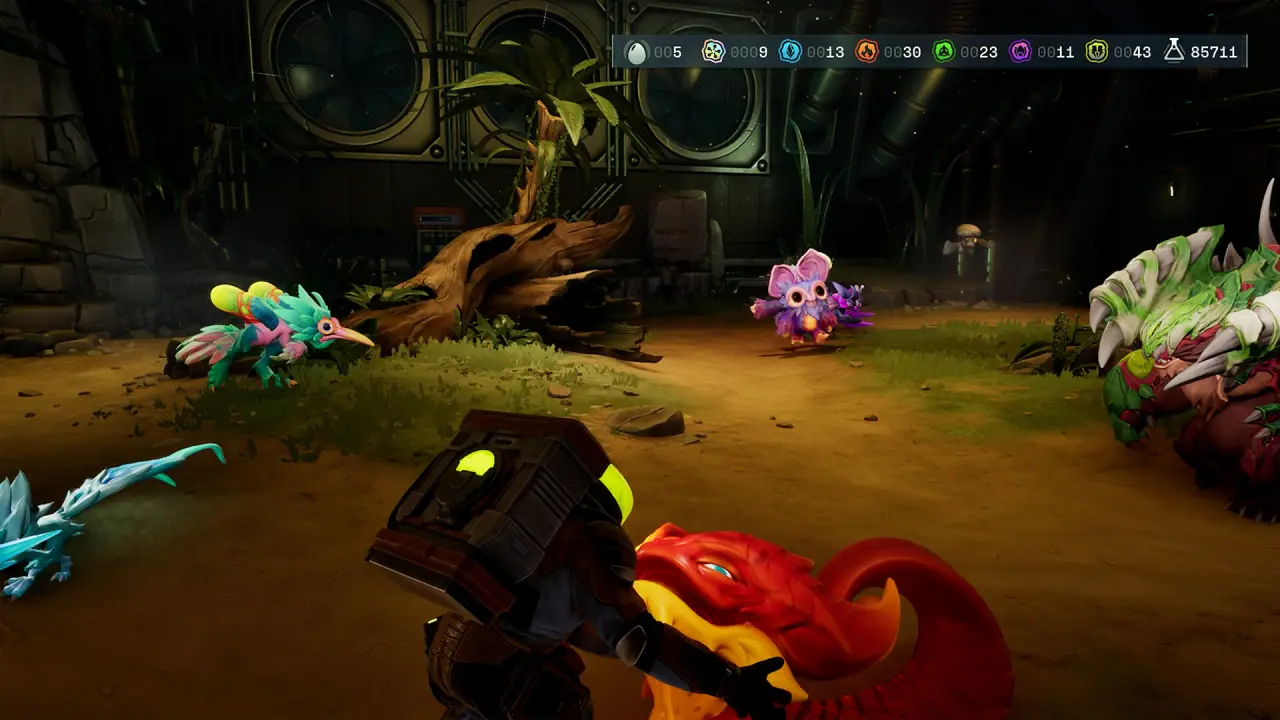
What Voidling Bound does well is make the scientist-and-creature bond feel like the main event, even when the writing itself stays sparse. The key characters aren’t memorable because of sharp dialogue or big scenes. They matter because of what they represent: your relationship with this living thing you’ve built from the ground up. The game understands that the creature design, the evolution paths, and the way you customize its abilities are doing the emotional heavy lifting. That’s the real character work here.
That also means the story stays pretty dependent on the systems. When the creature builds are fresh, the whole thing feels alive. When the missions start repeating and the objectives blur together, the narrative momentum drops fast. There’s not enough pure plot to carry the game on its own, so the loop has to stay engaging through experimentation. And most of the time, that’s exactly what it’s trying to do.
So yeah, I wouldn’t call this a deep story game. I’d call it a strong creature-building fantasy with just enough narrative framing to make the bond matter. If you’re into the idea that your weapon is a living thing you raised, tuned, and basically co-piloted into existence, this lands. If you want a story with real twists and a cast that sticks with you, it doesn’t really get there.
Audio | 6.0/10
Sonido: 6/10The weapons sound sharp, but the creature is the real audio headline

Here’s the honest take: the sound design does the job, and the job is to make your Voidling feel like the actual weapon in the room. Weapon fire has that clean, punchy feedback you want. Melee hits land with enough bite. Even the dodge has a crisp little audio cue that keeps the whole third-person shooting loop readable. It’s not flashy for the sake of it, and that works here, because the game’s real hook is the build you bred yourself, not some hero-shooter loudness contest.
The best sounds in Voidling Bound come when your creature starts turning the battlefield into a chemistry set. Ice plus a slow gene freezing a whole arena, or a Thunder-Pyro setup detonating into area blasts, is exactly the kind of stuff that needs the audio to sell the payoff. And it does. You hear the moment the setup clicks, and that’s what makes the combat feel good even when the underlying shooting itself is pretty straightforward. The audio is there to support the creature systems, not outshine them. That’s the right call.
Sci-fi ambience carries the game; the soundtrack never really steals the spotlight

My bigger issue is the music, because this is where Voidling Bound is just fine, not memorable. It leans into a sci-fi atmosphere the way you’d expect from a Hatchery Games space creature brawler, but nobody’s coming out of this talking about the soundtrack. And honestly, that tracks with the rest of the game’s priorities. This is an indie debut that clearly spent its budget on creature variety and breeding depth, not on loading the whole thing with expensive audio flourishes.
That doesn’t mean the mix is weak. It just means the game isn’t trying to win you over with sound alone. Compared with something like Palworld, audio here isn’t the selling point, and it doesn’t need to be. It doesn’t drag the game down, which matters. The environments still have enough mechanical hum and sci-fi texture to keep missions from feeling dead silent, and the overall presentation stays serviceable while your Voidling does the heavy lifting. The real personality comes from what you hatch, splice, and evolve, not from a booming score or a showy vocal performance.
As for voice work, there’s nothing here that feels like a big showcase, and that’s probably why it fades into the background. No standout performance is carrying the experience, but it also isn’t getting in the way. That’s the pattern with Voidling Bound’s audio across the board: competent, clean, and aimed at supporting the creature-building fantasy instead of trying to become the star of the show.
Visuals | 8.0/10
Gráficos: 8/10The Aliens Are The Real Graphics Setting Here

Voidling Bound is not the game you boot up to stare at pores, ray-traced puddles, or some ridiculous “look at this brick wall” texture test. That’s not where its graphics win. It wins because it has a loud, saturated sci-fi look, and it knows the creatures are the main event. The planets and biomes are colorful enough to give each area its own mood, but they’re mostly a stage. The actual visual hook is the thing running beside you, fighting for you, and slowly turning into something nobody else’s screen is guaranteed to have.
And that matters because this game has nine base species branching into 62 evolved forms, with some lines going up to 31 forms. Every evolution can shift the silhouette, colors, effects, and overall attitude of your Voidling. So when two players hit the same point in the campaign, there’s a good chance their screens look totally different. That’s the magic trick. It’s not “wow, this rock has 4K moss.” It’s “wait, what the hell did your creature turn into?”
You can feel the Spore comparison right away, but Voidling Bound isn’t chasing Spore’s weird toybox energy exactly, and it definitely isn’t chasing AAA polish. It’s betting on quantity, mutation, and personality. Some models are cleaner than others, sure. Some animations look a little indie. But when your Cryo creature starts throwing out slow-heavy effects, or your Thunder-Pyro hybrid lights up a fight with area blasts, the screen has that messy build-craft spectacle that makes you lean in. It’s not pristine. It’s expressive. And for this kind of game, I’ll take expressive.
Hatching Looks Better Than Most Of The Shooting
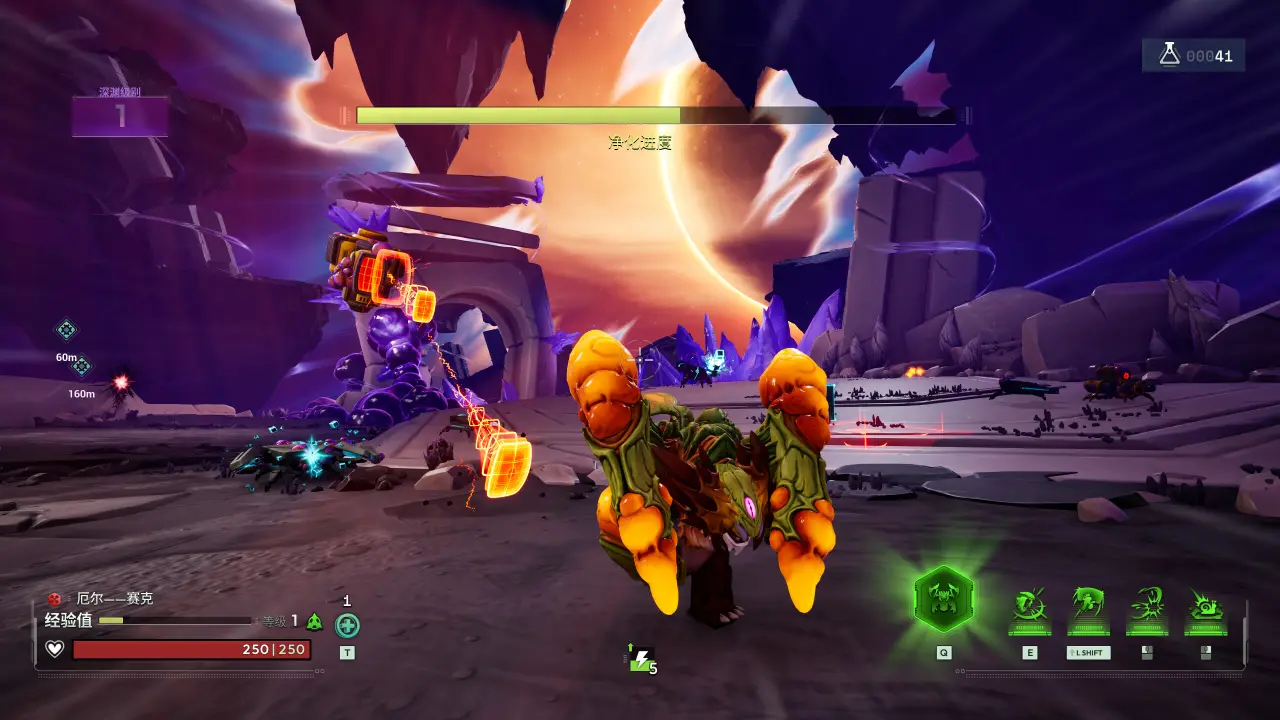
Here’s the blunt part: the third-person shooting looks fine, but it doesn’t look special. The weapons are downstream from the creature system, and visually, you can feel that priority. The combat arenas can get busy, and the elemental effects help sell your build, but the shooting itself isn’t carrying the presentation. The Voidling is. The weapon work is there to frame the creature, not the other way around.
The best visual moment, weirdly enough, is hatching. That egg-opening animation has the kind of physical heft the rest of the game doesn’t always have. It’s chunky. It feels tactile. It gives the creature reveal a little ceremony, which is exactly what you want in a game where breeding, evolving, and splicing are the emotional core. DNA Splicing lets you graft three cross-species mutated perks onto one creature, and while that’s mostly a build system, the presentation keeps reminding you that you’re making a little monster, not just swapping passive bonuses in a menu.
The UI has to do a lot here, because this is a theorycrafter’s game hiding inside a sci-fi shooter. Evolution branches, genes, elemental combos, mutations — that could turn into spreadsheet soup fast. It doesn’t completely avoid clutter, but it does a decent job keeping the creature-building readable enough that you can understand why your monster looks and behaves the way it does. That’s important. If the interface gets between you and the “one more branch, one more test run” loop, the whole thing collapses. Here, it mostly stays out of the way.
Ratchet Energy, Deck-Friendly Vibes, But Not A Tech Showcase

The exploration has a light Ratchet & Clank flavor, and I mean that in the good, breezy way. You’re moving through bright alien spaces, hopping around, poking into routes, and letting the sci-fi color do a lot of the heavy lifting. It’s not as expensive-looking or as densely animated as Ratchet, obviously. Hatchery Games is not pretending this is a giant-budget showpiece. But the movement and platforming give the world a playful look that helps break up the mission repetition.
On the tech side, I wouldn’t frame Voidling Bound as an engine flex. If you’re shopping for ray tracing, DLSS talk, or a hardcore PC graphics benchmark, this is the wrong stop. The art direction is doing the work here, not bleeding-edge rendering. That’s not an insult. It’s just the deal. The game looks best when the color palette, creature effects, and mutation variety are all firing at once. It looks weakest when you strip it down to plain shooting spaces and repeated objectives.
As for platform differences, the big practical win is that it’s Steam Deck playable. That matters for a game built around replaying missions to test another evolution path, because this loop fits handheld sessions really well. You hatch something, tweak something, run a mission, see if the new branch works. Visually, the game’s stylized approach helps it more than a realism-first art style would. You’re not losing the “point” of the graphics on a smaller screen, because the point is silhouette, color, and creature identity. For me, that lands at an 8.0. Not a technical beast, not always polished, but visually smart where it counts.
Combat | 9.0/10
Jugabilidad: 9/10Your Pet Isn’t Support Gear — It’s the Whole Build

The big thing Voidling Bound gets right is that your creature isn’t just following you around, looking cute, and occasionally firing off a cooldown. No. The Voidling you hatch is basically your weapon, your class, your skill tree, and your weird little science project all rolled into one. The shooting is there, sure, but it feels downstream from the creature. You’re not really asking, “What weapon do I equip?” You’re asking, “What nightmare baby did I breed, and how do I make it break the mission?”
That’s why the evolution setup hits so hard. You start from nine base species, and those fan out into 62 evolved forms, with some lines going up to 31 forms by themselves. And because you can lock into elemental branches, you’re not just chasing a bigger number. You’re steering the creature into a role. You want freeze control? You build toward that. You want explosive area damage? You go another way. It makes the evolution tree feel less like a checklist and more like you’re arguing with yourself at 2 a.m. over whether this next branch is genius or a terrible mistake.
And honestly, that’s the fun. The game knows the emotional hook isn’t “collect all the monsters.” It’s “I made this thing.” The hatching has a nice physical weight to it, the creature designs have that Spore-ish charm where some of them look adorable and some look like they crawled out of a forbidden lab, and the light platforming exploration gives the whole thing a little Ratchet & Clank bounce. It’s not the cleanest shooter in the world, but when your custom-built alien gremlin starts carrying a fight exactly the way you planned, yeah, that lands.
DNA Splicing Turns Breeding Into Actual Battlefield Planning

Here’s where Voidling Bound separates itself from the usual creature-collector grind: breeding isn’t just about getting a better version of the same thing. You’ve got Natures, stats, and then DNA Splicing, which lets you graft three cross-species mutated perks onto one creature. That sounds like menu nonsense until you see it click in a fight. Suddenly you’re not just raising a pet. You’re building a problem the enemy has to deal with.
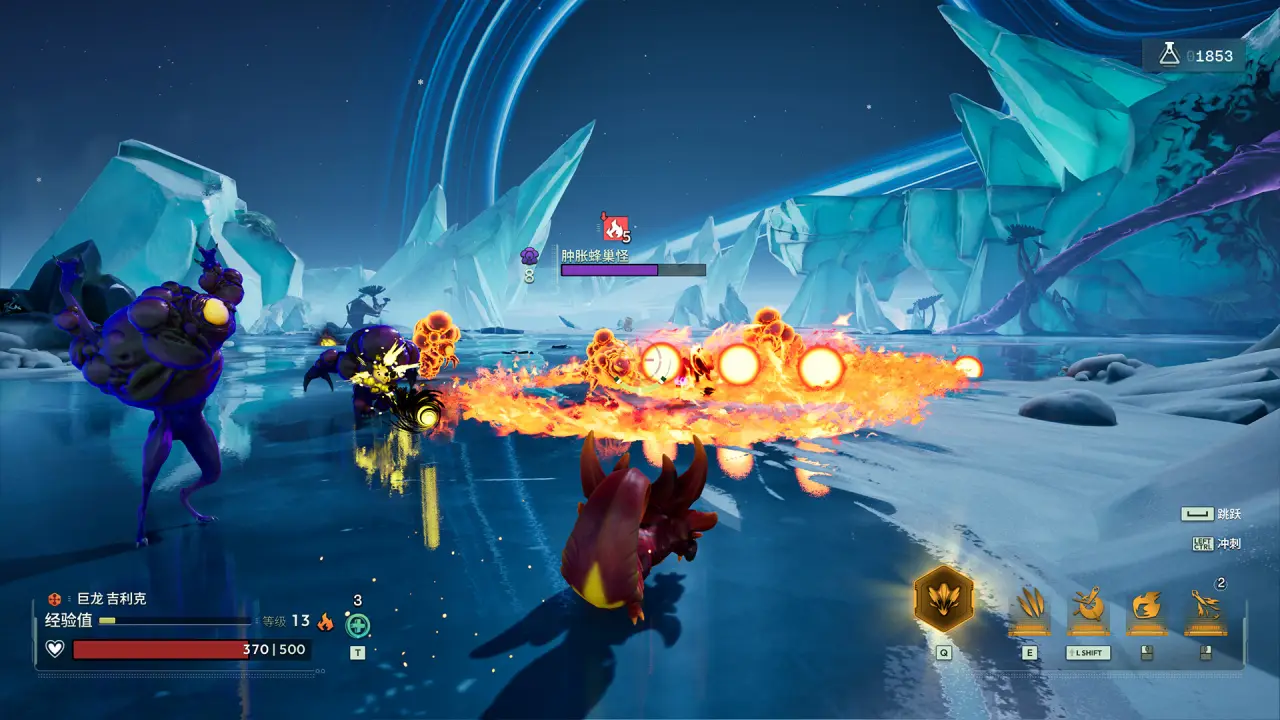
The elemental synergies are the real juice. Cryo plus a slow gene can lock down an entire arena, and when that works, it feels nasty in the best way. A Thunder-Pyro hybrid can trigger area blasts that turn mob packs into fireworks. And because those effects come from decisions you made before the mission, the battlefield starts in the lab. That’s the kind of loop theorycraft players live for. You run a mission, spot a weakness, go back, tweak the creature, test a different branch, splice in something rude, and run it again just to see if your idea was as broken as it sounded in your head.
But let’s be clear: it is broken sometimes. Balance is barely in the room. Some gene-and-element combos don’t just give you an edge, they flatten whole encounters. If you’re the kind of player who wants tight combat tuning and a hard skill check at the end, this is going to annoy you. The Abyss endgame especially loses its teeth once Corrupted DNA Catalyzers let you out-stat the threat. The descent should feel dangerous. Too often, it feels like you brought a spreadsheet to a knife fight and the spreadsheet won.
The Shooting Is Fine, But Don’t Come Here For Pure Combat Feel

As a third-person shooter, Voidling Bound is solid enough. You move, aim, shoot, dodge around arenas, and it all works. I’m not fighting the controls. I’m not screaming at the camera because the reticle betrayed me. But I’m also not sitting here pretending the shooting is secretly incredible. It’s functional. It’s readable. It keeps the action moving. The problem is, once you’ve seen the basic combat loop, you’ve kind of seen it.
That matters because the mission structure leans repetitive. Objectives recycle. Arenas blur together. The game depends hard on the creature systems to keep things fresh, and most of the time, they do. But if you strip away the breeding, the splicing, the evolution branches, and the elemental combo experiments, the shooter underneath isn’t deep enough to carry the whole thing by itself. The depth lives in the Voidling. Not in the trigger pull.
So the difficulty curve is weird. Getting started is pretty friendly because the controls are easy to understand, and the early build choices give you quick wins. But the more you learn, the more you realize the challenge isn’t really “can I survive this fight?” It’s “how badly can I optimize this thing before the game stops pushing back?” For build nerds, that’s delicious. For action-shooter players who want enemies and bosses to demand cleaner execution, it’s a problem.
Palworld Uses Creatures As Firepower; Voidling Bound Makes You Build The Beast

The obvious comparison is Palworld, because yeah, it’s the big name in the “creatures plus weapons” space. But the feel is totally different. Palworld often treats creatures like tools, workers, mounts, and extra firepower. That’s fun in its own chaotic way. Voidling Bound is more focused and more intimate. It wants you to personally breed, splice, evolve, and tune one creature until it feels like your custom-made combat identity.
That’s why this game is going to hit a very specific audience hard. If you’ve always wanted the pet itself to be the build core, not a sidekick, this is your lane. If you love staring at perk interactions, testing branches, and replaying missions just to see whether a new evolution path changes the whole rhythm of a fight, Voidling Bound understands you. The 93% Steam rating across 1669 reviews and an OpenCritic Top Critic score of 80 with a 68.8% recommendation rate suggest it’s not just a niche gimmick either. For an indie debut from Hatchery Games, that’s a genuinely strong launch.
But if you’re coming in for a razor-sharp shooter with hard endgame pressure, temper your expectations. The action is good enough to support the monster-building fantasy, not good enough to replace it. The balance can get silly, the endgame can buckle, and the objectives repeat. Still, for gameplay, I’d land at a 9.0 out of 10, because the central loop is that compelling. Voidling Bound understands the fantasy better than most: don’t give me a pet next to my build. Let me build the pet.
Content | 8.0/10
Contenido: 8/10The first ten hours are basically a build-school

Voidling Bound is slow to reveal its best trick, and I think that’s a strength, not a flaw. The first 10 hours are basically a long onboarding curve where the game keeps adding one more piece at a time: evolution, breeding, DNA Splicing, then the Corrupted DNA Catalyzers that start pushing your creature builds into crazier territory. That sounds like a lot, and it is, but the game earns it because the whole point is that your Voidling isn’t just a pet sitting next to your weapon. It is the weapon. It is the loadout. It’s the thing you’re building around.
That means the middle of the game really hits its groove. You hatch a creature, discover what species you got, lock in an evolution path, then start breeding and splicing until the build turns into something very specific. Cryo plus a slow gene can freeze an arena. A Thunder-Pyro mix can blow up a whole pack. That’s the real loop: test the creature, tweak the creature, then go run missions for more materials so you can do it again. The third-person shooting is fine, but it’s not the reason you keep playing. It’s the bridge between experiments.
The catch is that the mission structure doesn’t evolve as fast as the creatures do. You’re still doing a lot of the same objective patterns while the monster systems keep getting better. So yes, the opening stretch is a proper systems lesson, but by the time you’re fully hooked, you can also see the seams in the mission design.
The endgame is mostly numbers, but the build rabbit hole keeps going

My honest take: the late game works because the build space is absurd, not because the game suddenly becomes razor sharp. The Abyss endgame is this procedural descent mode where Corrupted DNA Catalyzers can push your stats way past sane limits, and that’s where the balance problems stop being a side note and start becoming the thing you feel. Some gene-and-element combos are just busted. They flatten fights. They erase danger. If you’re the kind of player who wants clean tuning and a real challenge at the finish line, this is probably where Voidling Bound loses you.
But if you’re the kind of player who loves theorycrafting, that same looseness is the hook. Nine base species branch out into 62 evolved forms, with as many as 31 off a single line, and DNA Splicing lets you graft three cross-species mutated perks onto one creature. That’s not a cute amount of depth. That’s “I should probably replay the whole mission because I want to see what happens if I swap one gene” depth. The game’s replay value comes from that near-endless combination space, not from a brutally tuned combat ladder.
That also helps explain the broader value here. There’s no paid DLC on the table, but Hatchery Games is already pushing free updates and a roadmap, which makes sense for a game whose long tail lives in systems, not content drops. Steam sitting at 93% positive across 1,783 reviews, plus a demo that drew a pile of overwhelmingly positive feedback, tells you the audience gets it too. People aren’t sticking around because the objectives are endlessly varied. They’re sticking around because breeding one more monster can completely change the way the game plays.






Comentarios 0
Nos interesa tu opinión
Participa en la conversación y comparte tu opinión sobre este juego.
Aún no hay comentarios. Cuéntanos qué te parece este análisis.