
DLCOuter Wilds - Echoes of the Eye~ $14.52~ $12.23-16%→Prix issus de Kinguin
“A 22-minute time-loop sci-fi puzzle adventure where knowledge is progress — a landmark for video games as an artistic medium in the 21st century.”
## Overall
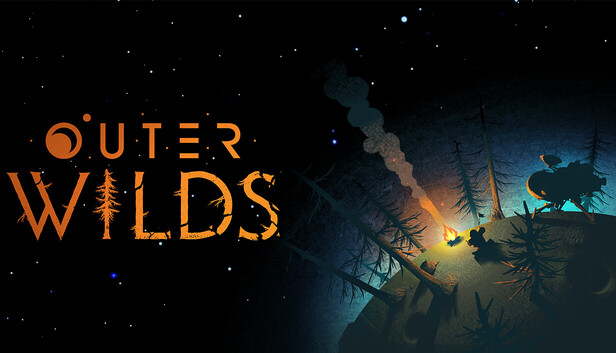
Outer Wilds launched on Epic Games Store and on PS4 and Xbox One consoles on May 30, 2019, with Steam release following on June 18, 2020. Steam user sentiment locked at Very Positive with over 81,000 cumulative reviews and roughly 90% recommendation rate. Mobius Digital hasn't publicly released sales figures, but community estimates put cumulative sales above 2 million units including the expansion. Award recognition is exceptional. The 2020 BAFTA Games Awards delivered three top awards — Best Game, Best Game Design, Best Original Property — the highest indie game recognition that year, beating AAA contenders including Death Stranding and Control. Polygon, Giant Bomb, Eurogamer, and The Guardian — four Western flagship media outlets — all named it 2019 Game of the Year, a four-way unanimous pick that is genuinely rare in the gaming industry. IGN at 8.4, GameSpot at 9.0, Metacritic composite at 85 — the score combination establishes industry recognition at the indie ceiling.
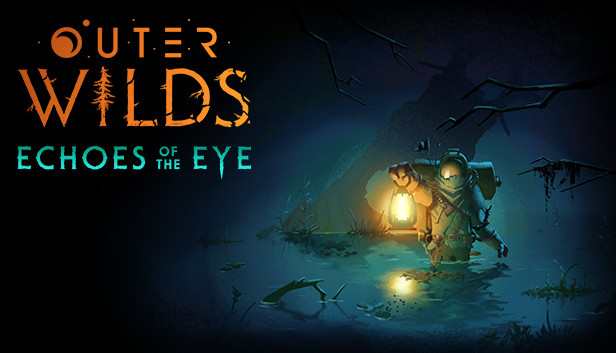
The Echoes of the Eye expansion sustained the high reception trajectory in 2021: Metacritic composite at 82, OpenCritic Mighty rating with 100% positive critic reviews, Steam at 90% recommendation, and a 2021 BAFTA nomination for Best Narrative. This "base-game-and-expansion-both-receiving-industry-top-recognition" achievement is rare in indie publishing history. Chinese coverage tracked nearly identical with Gamersky at 9.0, A9VG with its widely-shared long-form review titled "this may be the best sci-fi puzzle template," and persistent Bilibili and Zhihu discussion across six years.
Target audience: players wanting pure curiosity-driven space exploration, players who can accept no-upgrade no-combat design, science-fiction puzzle enthusiasts. If the "22-minute time loop plus knowledge-equals-progress" design philosophy reads as appealing, if no-quest-list fully-self-directed exploration appeals, if 22-45 hours of repeatedly exploring a solar system that destroys itself every 22 minutes sounds engaging, this is the must-play sci-fi puzzle adventure of 2019-2026. Skip-list audience: players accustomed to traditional RPG upgrade-and-combat loops, players seeking fast-paced action, players impatient with repeated puzzle attempts should avoid this title. The "no-guidance plus no-upgrade plus 22-minute reset" experience is a genuine barrier across the first three hours — you'll feel lost, get disoriented, wonder "what should I be doing." If your core need is "play and feel rewarded immediately," go play Borderlands, SnowRunner, or Cyberpunk 2077 instead; if your need is "experience a sci-fi adventure unlike anything else in the medium," this is the correct lane.
Edition recommendation: base game USD 24.99 plus expansion USD 14.99 = USD 39.98 for the complete set. Steam historical discounts routinely hit 50% or more, with the full set frequently available around USD 20 — exceptional value within the indie space. Chinese player note: the game ships official simplified and traditional Chinese subtitle localization, and the Nomai translation text translates exceptionally well, but no Mandarin voiceover exists across any character dialogue (the original includes Japanese, English, German, and French language tracks).
Strip away commercial numbers and review scores, and what Outer Wilds leaves behind is "the landmark sci-fi puzzle adventure of the 21st century." It brought the 1990s Myst "pure curiosity-driven puzzle" philosophy into modern 3D engine territory, layering in 22-minute time loops, knowledge-equals-progress design, five dynamic planet systems, quantum physics puzzles, and other genuinely innovative gameplay mechanics. Across 2019-2026 sci-fi puzzle adventure releases, virtually every notable title's design DNA traces back to Outer Wilds: Twelve Minutes (2021) inherited the time-loop puzzle approach, Tunic (2022) inherited the knowledge-equals-progress philosophy, Returnal (2021) inherited the space time-loop concept. What's most irreplaceable isn't any single mechanic but the artistic achievement of "letting players experience a mourning-radiant sci-fi adventure through a video game" as such. The Chinese ACG community's collective spoiler protection phenomenon represents a rare instance of community-wide respect for a single work — everyone tacitly agrees this work's narrative experience cannot be stolen by spoilers. Bilibili, Zhihu, and Tieba discussion volume has held steady through six years without notable decline. The overall 9.0 score acknowledges the design philosophy originality (22-minute time loop plus knowledge equals progress), the narrative literary heights (Nomai archaeological narrative plus ending mourning radiance), and the music dimension's canonical status (Prahlow OST plus ending theme's two-tear effect), while honestly recording Unity indie graphics' specification ceiling (6.5 graphics is the relatively weakest dimension) and the absence of traditional replay mechanics as honest shortfalls. It's not 2019's most visually impressive title, and it isn't the highest-selling commercial release of the year, but it is 2019's most memorable video game and one of the 21st century's landmark statements about games as artistic medium.
Commentaires 0
Votre avis nous intéresse
Bienvenue ! Partagez votre avis sur ce jeu — une surprise attend peut-être la première personne à commenter.
Aucun commentaire pour l'instant. Soyez le premier.