Ranking of the Most Influential Representative Casual Games of 14 Titles
Sélection de Delta 赵 · ·listDetail.views: 3,232 Commentaires
Casual games are the easiest to underestimate. Many people think of them as “low barrier, low depth, something to relax with,” but what truly makes this genre remarkable is its ability to create extremely strong feedback loops, stable emotional value, and astonishing replayability with a minimal learning curve. It can take the form of match-3, organizing, building, automation, sandbox creation, or even polish strategy and action until they become accessible to everyone. This time, I’m ranking them by overall influence—not by isolated popularity, but by their place in the popularization of mechanics, the definition of genres, design paradigms, and the followers that came after them.
Casual games are the easiest to underestimate. Many people understand them as “accessible, shallow, and made for relaxation,” but what truly makes this genre remarkable is its ability to create extremely powerful feedback loops, stable emotional rewards, and astonishing replayability with a very low learning cost. It can be match-3, organization, or building; it can also be automation, sandbox creation, or even strategy and action refined to the point where anyone can get into them. This time, I’m ranking them by overall influence—not by one-off popularity, but by their place in mechanic popularization, genre definition, design paradigms, and the legacy they left for later followers.
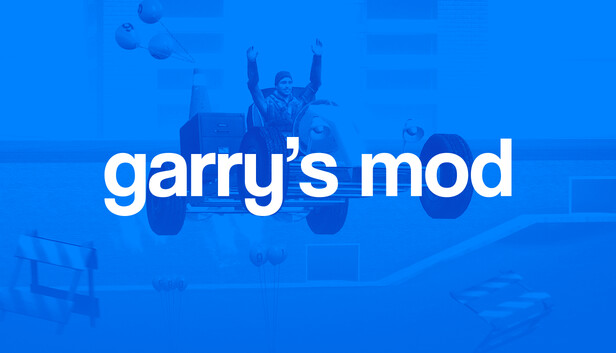
Image: Garry's Mod
Tags: Sandbox, Creation, Simulation
If casual games have anything that could be called a “platform-level work,” Garry's Mod is the most extreme example. It gives players almost no objectives, yet through its physics sandbox, mod ecosystem, and player-driven ways of playing, it turned “toybox-style casual gaming” into a long-term cultural phenomenon on PC. Building scenes, acting out skits, running experiments, messing around in multiplayer—it all works. Its influence on the many creative sandbox and UGC casual products that came later isn’t just blockbuster-level; it’s genre-defining.
Image: Zuma Deluxe
Tags: Elimination, Classic, Arcade
Zuma Deluxe is the foundation of the real-time elimination track. It compresses aiming, path prediction, color management, and chain rewards into rules that are incredibly easy to understand. You can learn it in just a few minutes, but the pressure of its pacing keeps tightening all the way through. The key isn’t just that it’s fun—it clearly demonstrated that “casual can also be intense.” You can see its shadow in how many later light puzzle games handle feedback, pacing, and the pressure of failure.
Image: Bejeweled® 3
Tags: Match-3, Puzzle, Classic
Match-3 wasn’t invented by Bejeweled® 3, but it industrialized the genre to an exceptionally complete degree. Its multi-mode structure, clear objective design, exaggerated yet non-irritating audiovisual feedback, and wonderfully smooth rhythm of play make it more than just a time-killer—it’s a highly polished product. It established the standard template for traditional casual puzzle games: “low barrier to entry, high feedback, long-term playability.” Its industry status is extremely secure.
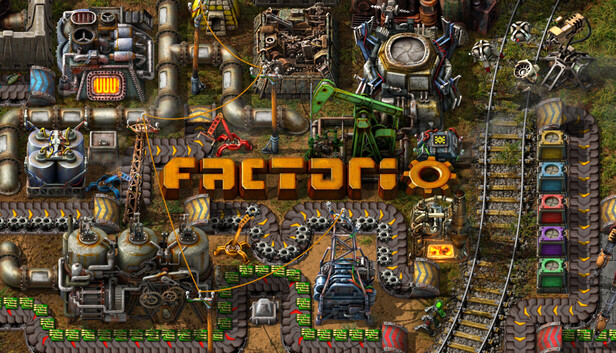
Image: Factorio
Tags: Automation, Building, Systems
Factorio proves that the casual label is not a ceiling on depth, but a matter of how a game presents its entry point. On the surface, it’s an automation-building game about gathering, transporting, and producing; in reality, its core lies in the ongoing pleasure of system coupling, bottleneck solving, and scaling up. It’s not hard to get into, but once you grasp the logic of conveyor belts and production chains, your sense of time gets completely swallowed. It takes “easy to start, deeper the more you play” to the extreme, and stands as one of the peaks of systems-driven casual gaming.
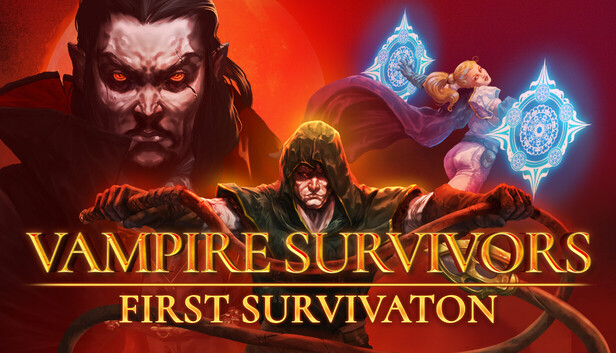
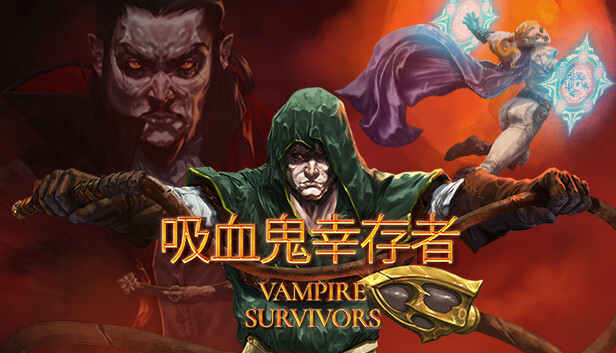
Image: Vampire Survivors - Vampire Survivors
Tags: Horde-Clearing, Action, Roguelike
The value of Vampire Survivors is not just that it became a hit itself, but that it directly sparked an entire wave of a new subgenre. It pushes the control barrier extremely low while pulling growth rewards, stat inflation, and build surprises extremely high, letting players continuously enjoy the thrill of “becoming overpowered and steamrolling everything” with almost no action-skill requirement. Its stage design is simple, but its pacing, weapon evolutions, and late-game screen-filling feedback are incredibly effective. It’s one of the most influential casual action templates of recent years.
Image: Balatro
Tags: Card Game, Strategy, Roguelike
What makes Balatro so fierce is that it takes poker rules that almost everyone vaguely understands and turns them into a build loop that is deep, smooth, and dangerously addictive. You think it’s a light distraction, but in practice you’re dealing with multiplier synergies, resource allocation, and risk management. It redraws the line between casual and strategy: the learning cost is very low, but the ceiling of understanding is extremely high. Being able to package complex decision-making into such a short run structure is exactly what design mastery looks like.
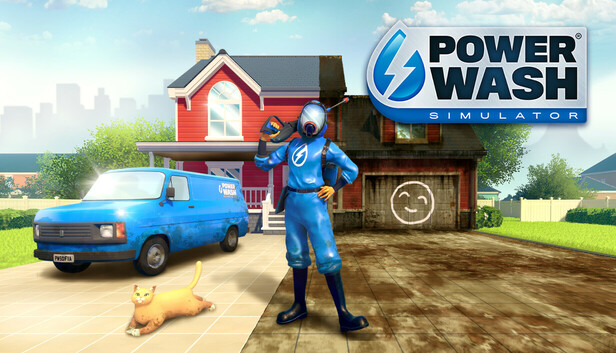
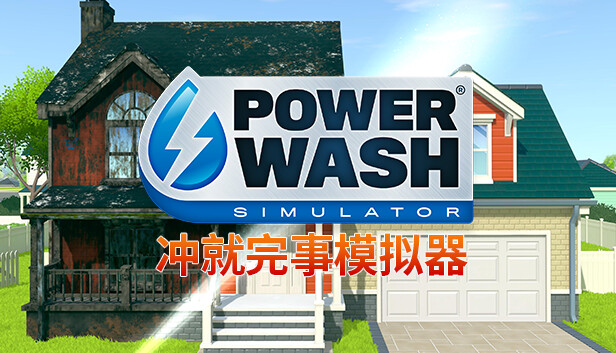
Image: Just Charge Ahead Simulator
Tags: Stress Relief, Simulation, Cleaning
PowerWash Simulator practically turned “stress-relief casual gaming” into a discipline of its own. Its core action is as singular as can be, but the coverage of water flow, the stripping away of grime, and the advancement of visible progress create an exceptionally stable stream of instant rewards. More importantly, it translates repetitive labor from a real-world burden into a controllable, completable, visibly rewarding form of psychological massage. Many games pursue excitement; it proves, conversely, that stability and order are themselves powerful experiences.
Image: Dave the Diver DAVE THE DIVER
Tags: Management, Adventure, Hybrid Gameplay
DAVE THE DIVER represents the content-structuring ability of the modern hybrid casual game. During the day, you dive and catch fish; at night, you run a sushi restaurant; on top of that, it layers progression systems, exploration, side content, and light RPG advancement. In theory, this could easily spiral out of control, but it handles the length, rewards, and transition pacing of each part with remarkable smoothness. It doesn’t become legendary through a single mechanic, but through content orchestration that constantly gives players fresh goals. It’s a rare example of high polish in “mass-appeal genre blending.”
Image: Unpacking
Tags: Organization, Narrative, Healing
What’s most worth talking about in Unpacking is not its soothing quality, but the way it embeds narrative into the quietest possible interaction. The player is simply organizing objects and arranging spaces, yet through changes in those objects and the structure of each room, you can read the character’s stages of life. It has almost no punishment in the traditional sense of failure; the enjoyment comes from creating order and projecting emotion. This kind of “low stimulation, high stickiness” design is very rare, and makes it a representative work of environmental storytelling fused with casual gameplay.
Image: Mini Motorways
Tags: Minimalist, Planning, Strategy
Mini Motorways is a highly polished example of minimalist strategy casual gaming. Through the cleanest possible visuals and interaction, it compresses ideas like road layout, traffic scheduling, and resource allocation—concepts that would normally seem intimidating—into in-run decisions that anyone can understand immediately. Each session is short, but city growth constantly creates new problems, forcing you to choose between efficiency and damage control. What makes it impressive is that the complexity is hidden away, yet the strategic depth remains intact.
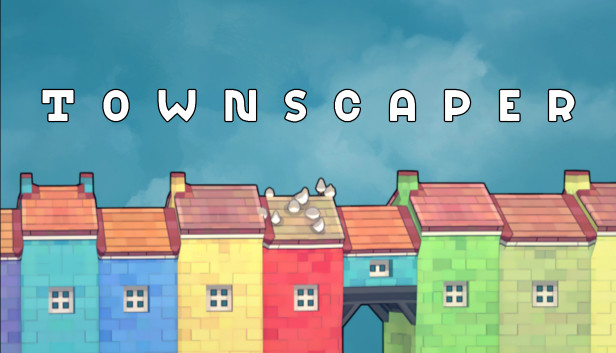
Image: Stacked Towns
Tags: Building, Creation, Healing
Townscaper strips city-building down to the pure pleasure of “place things and they already look good.” There are no resource lines, no management pressure, and no tutorial barrier. Players only need to click a few times, and the system automatically generates rooftops, arches, stairways, and the texture of a seaside town. Its significance lies in freeing creative expression from complicated rules, allowing players who aren’t good at management or planning to still feel the satisfaction of building. It’s an important representative of purely aesthetic casual creation.
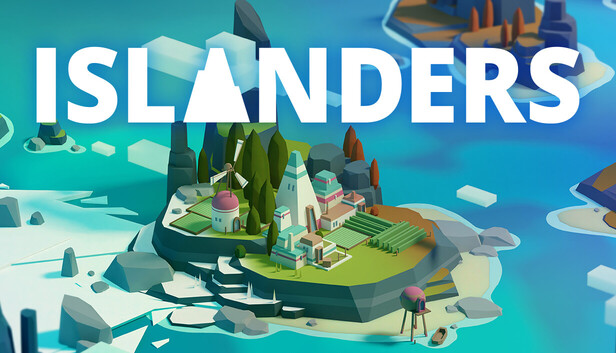
Image: ISLANDERS
Tags: Building, High Score, Light Strategy
ISLANDERS takes a different route: similarly lightweight building, but with its core focused on scoring efficiency and positional relationships. The bonuses between buildings, terrain compatibility, and resource consumption make every move valuable. A single run is short, but the urge to review and replay is strong. Unlike traditional city-builders that win through macro-level management, it creates replayability through high-density decisions, proving that lightweight strategy casual games can still have real bite.
Image: Tiny Glade
Tags: Building, Healing, Creation
Tiny Glade takes casual building into a more three-dimensional, model-like space, further strengthening its handcrafted feel. Players aren’t managing a city—they’re sculpting a miniature landscape whose details automatically beautify themselves: wall corners change naturally, and paths, arches, and vegetation grow organically along the structure. It inherits the strengths of low-barrier creative play while raising visual polish even higher, representing the recent trend in cozy builders moving from “playable” to “admirable.”
Image: Touhou Mystia's Izakaya - Oriental Night Sparrow Eatery
Tags: Management, Chinese, Progression
Touhou Mystia's Izakaya isn’t a large-scale game, but its system stickiness is extremely solid. Ingredient prep, business hours, customer preferences, map-based collection, and character relationships are all compressed into a tight loop, with brisk pacing and consistently relevant resource planning. What’s most valuable is that it doesn’t turn casual management into pure numerical stacking; instead, it keeps giving feedback through flow transitions and character interactions. Among Chinese casual management games, it stands as a work with notably strong polish and playability.
Among the games on this list, the casual titles that truly stand firm all share one thing in common: the rules are easy enough to get into, but their feedback loops, system expansion, or emotional value are always strong enough to support them. They aren’t just “good for relaxing”—within their respective branches, they define what it means to be classic, and what it means to stay fun over time. Casual does not mean shallow; it simply means hiding complexity more intelligently.

 GAMIVO$4.68Steam $4.68Voir le prix →

 Steam$4.99Voir le prix →

 Kinguin$1.71-71%Steam $1.71Voir le prix →
 GOG$19.37Steam $19.37Voir le prix →

 Microsoft Store$9.99-60%Steam $9.99Voir le prix →











Commentaires 0
Votre avis nous intéresse
Participez à la discussion et partagez votre avis sur ce jeu.
Aucun commentaire pour l’instant. Partagez votre avis.