
























Opening
A wet race tells you everything about whether a racing game has real substance. Not the roar off the line, not the firework rush at the finish, but that fragile stretch where you are tucked under the rear wing of the car ahead, easing the wheel through a slick corner, the tyres skating across what feels like a thin film of moving glass. That is the moment Assetto Corsa Competizione stops being just another racer and starts showing you what it is actually made of.
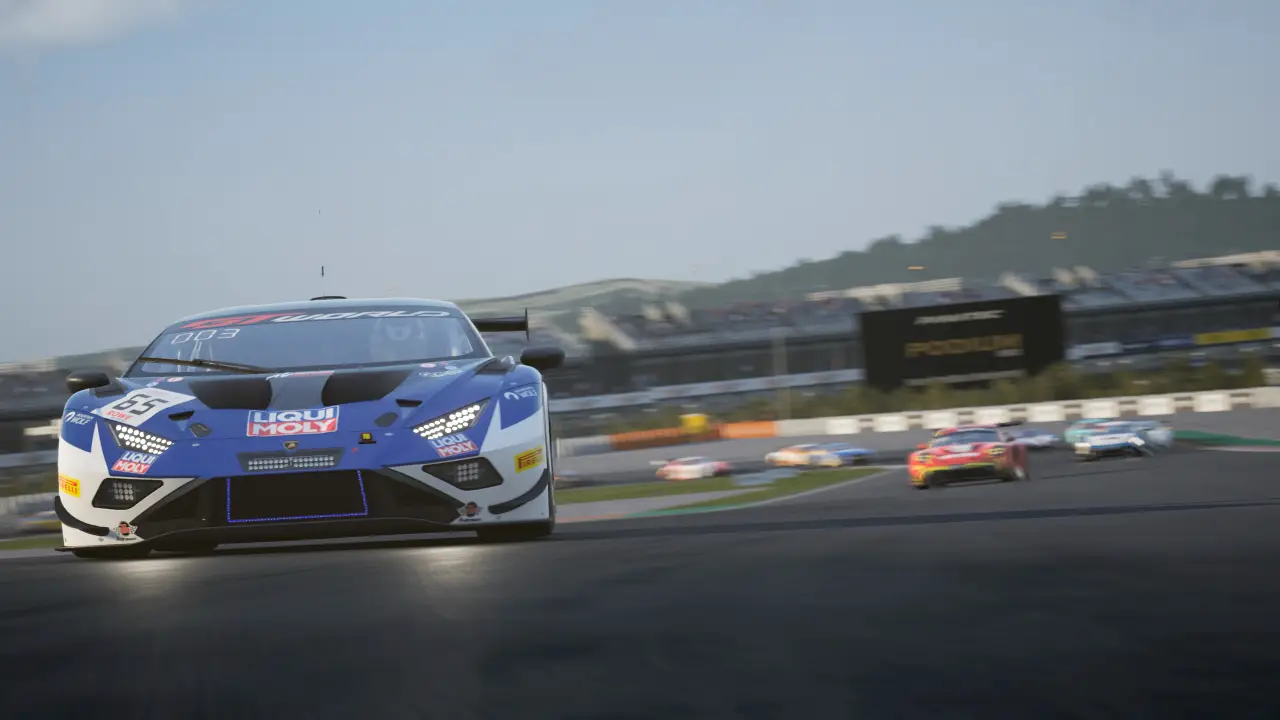
Its greatest strength is not that it has many cars, nor that it offers many modes. It is that it commits to GT3 racing so completely, so single-mindedly, that you start caring about racing lines, tyre temperatures, night stints and pit windows that most racing games wave away in a single sentence. This focus rarely tries to flatter you. It does not usher you gently through the front door the way Gran Turismo 7 does, and it does not hand you a cheap dopamine hit through exaggerated arcade feedback the way more casual titles will.
This is a formal dinner rather than a buffet. The menu is narrow, but every fork and knife sits exactly where it should. The cost is just as plain: the visuals chase realism but performance does not always cooperate, and the content is built on solid bones yet feels tightly bound by its GT3-only ambitions. If you came for serious simulation, it rewards a very long investment. If you wanted something light and instantly gratifying, it may start to tire you out from the very first lap.
Story | 6.0/10
Story: 6/10There are almost no traditional narrative surprises here. The career mode is more a framework for event progression than a story that hooks you through character, conflict and reversal. You will not remember any lines of dialogue, and you would struggle to name who grew or who changed. The game puts its weight on the sense of reality that comes from the genuine GT World Challenge licence rather than on fictional storytelling. Put bluntly, the story is simply the hand that places you on the starting grid.
The career as a structure, not a saga
That is not necessarily a bad thing. For a serious racing simulation, plot is never the main course; at most it is a tidily plated starter. The career exists to give your seasons shape, to string events together and let a record accumulate behind you. You enter a championship, you fight through a calendar, your name climbs or slips on a results sheet. There is a quiet pleasure in watching a season build, in feeling a long-form championship close around you like a structure with weight. The progression is real and legible. It just never tries to present itself as a tale with a beginning, a middle and an emotional end. The closest thing to a character arc is your own improvement, charted not through dialogue but through lap times, finishing positions and the slow expansion of what you can attempt. A season becomes a kind of diary written in results, and for some players that quiet, statistical narrative is genuinely satisfying. It asks you to supply the meaning yourself, to care about a championship because you decided to, rather than because a script told you to. That is a demanding ask, and the game makes no effort to soften it.
Real-event authenticity as the hook
Where this game does tell a kind of story, it tells it through authenticity rather than invention. The licensed GT World Challenge framing means the events you contest, the calendar you follow and the circuits you visit all carry the texture of real motorsport. That grounding does emotional work of its own. There is a particular satisfaction in lining up for a real fixture on a faithfully recreated track, knowing the race weekend you are simulating mirrors something that actually happens in the world. For players who care about the sport, that fidelity is more compelling than any scripted drama could be. The narrative, such as it is, lives in the accumulation of a believable racing résumé. Contesting a recreated round of a championship that runs in the real world lends each event a weight that no invented backstory could match. You are not playing a fantasy of motorsport; you are rehearsing the genuine article, and that grounding quietly shapes how seriously you take every result. For an enthusiast, knowing that the calendar and the cars mirror reality is itself a form of storytelling, one told through fidelity rather than fiction. It is a subtle kind of drama, available only to players already invested in the sport, but for them it runs deep.
A neatly written racing calendar
The problem is that if you were hoping the career mode would give you some continuous emotional momentum, it does not offer much. You are mostly completing events rather than living through a journey with memorable landmarks. There is a sense of completion. There is not much drama. Is that fatal? Not really. Most players who come to a game like this were never here for the story in the first place. But it genuinely affects those players who need to be pushed along by narrative. You drive many races, your skill improves, your record grows, yet the emotional curve stays fairly flat. It is like a very neatly kept racing calendar. Practical, clear, and without much aftertaste.
Set against a more consumer-facing rival like Gran Turismo 7, which wraps its progression in glossy presentation and a museum-like reverence for car culture, this game's reticence is obvious. It trusts that the racing itself is the narrative, and for its target audience that trust is largely justified. For everyone else, the absence of a story to lean on is one more sign that this is a simulation built for drivers, not spectators.
Audio | 8.8/10
Audio: 8.8/10Sound is one of the most addictive parts of this game, and crucially it is not the loud, showy kind of good. It is the believable kind. Engine notes, mechanical clatter, the friction of tyre against tarmac all stack together into something like an industrial band with no melody. Cold. Hard. Strangely intoxicating. The longer you drive, the more you come to lean on these sounds for the information they feed back to you.
An industrial band with no melody
What lifts the audio above mere ambience is how much of it is functional. Every component of the soundscape is telling you something about the state of the car. The pitch of the engine under load, the chatter of the suspension over kerbs, the protest of rubber at the limit of adhesion; none of it is decoration. It is data delivered through your ears. After a few stints you stop consciously listening and start simply knowing, the way an experienced driver feels a slide before the visuals confirm it. That is a rare quality, and it is the difference between sound that impresses on first contact and sound that earns trust over dozens of hours. Most games front-load their audio for the trailer moment, the dramatic engine flare that sells a clip. This one plays a longer game, building a soundscape that only fully reveals its value once you have internalised it. The result is that the audio becomes part of your muscle memory, a layer of feedback you stop noticing consciously precisely because you have come to rely on it so completely.
Every car has its own voice
More importantly, different cars are highly distinct to the ear, which means vehicle personality is not just a line on a spec sheet. Many racing games differentiate their cars the way phone makers reskin a handset: the shell changes, but the underlying logic stays roughly the same. This game is not like that. Swap to a new car and your ears notice before anything else does. That difference feeds directly into your driving rhythm and reshapes how you judge speed and the edge of grip. The sound is not background; it is part of the act of driving, and that authenticity has earned the game lasting respect within the sim racing community. Each engine has been captured with enough care that you can identify a car by ear alone, the way a trackside spectator learns to name machines without seeing them. That distinctiveness pays dividends in close racing, where the note of the car beside you tells you whether it is on the power or backing off, whether it is the same model you are driving or something with a very different power band. It turns the audio into a tactical tool rather than mere flavour, and that is a level of design few racing games even attempt.
A second radar in the dark
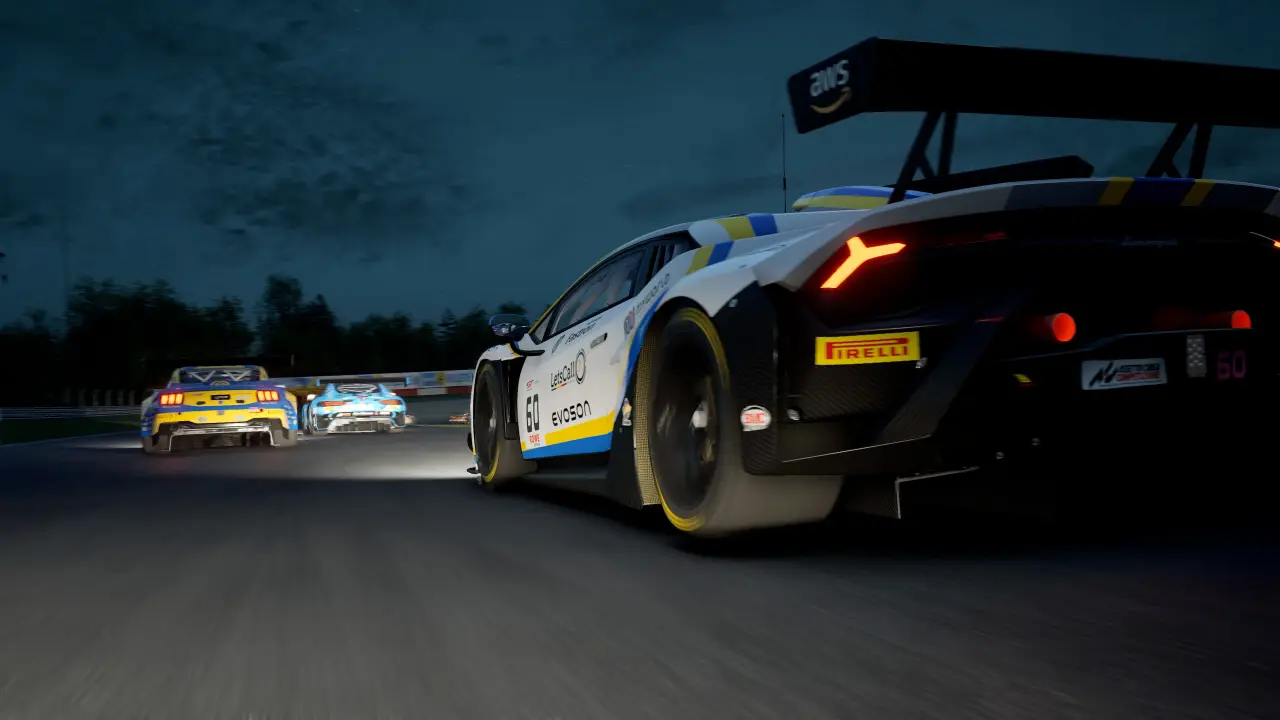
This is also why the audio so dramatically heightens the sense of speed. The visuals occasionally get dragged down by performance issues, but the sound holds the experience up with steady, unwavering hands. In night races and wet battles especially, once your field of view is compressed, hearing becomes something like a second radar. The spray thrown up by the car ahead can mask a great deal of visual information, yet the engine climbing through its range and the squeal of tyres are still telling you the truth. In those moments you drive partly by ear, trusting the soundscape to fill in what your eyes cannot. It is rare. It is also precious, and it is one of the clearest reasons this game lingers in the memory long after the screen goes dark. When the spray is so thick that the car ahead is little more than a red smear of tail lights, your ears keep you honest about closing speed and the moment grip starts to go. That reliability under duress is what separates functional audio from decorative audio. In the worst conditions the game can throw at you, when the visuals are doing their best to drown you, the soundscape remains the one channel you can always trust, and learning to lean on it is one of the quiet skills the game teaches without ever saying a word.
Visuals | 6.8/10
Graphics: 6.8/10The visual side of this game is a little like a film with gorgeous cinematography running through a projector that occasionally stutters. You can tell it is chasing realism, and a great deal of the time it genuinely gets there. The presentation of tracks and cars is never reaching for flashy spectacle; it is in service of the on-the-spot immersion that hardcore simulation demands. A pit lane after rain, the lighting along a circuit at night, the reflections off wet ground under shifting weather, these elements come together and the flavour is right.
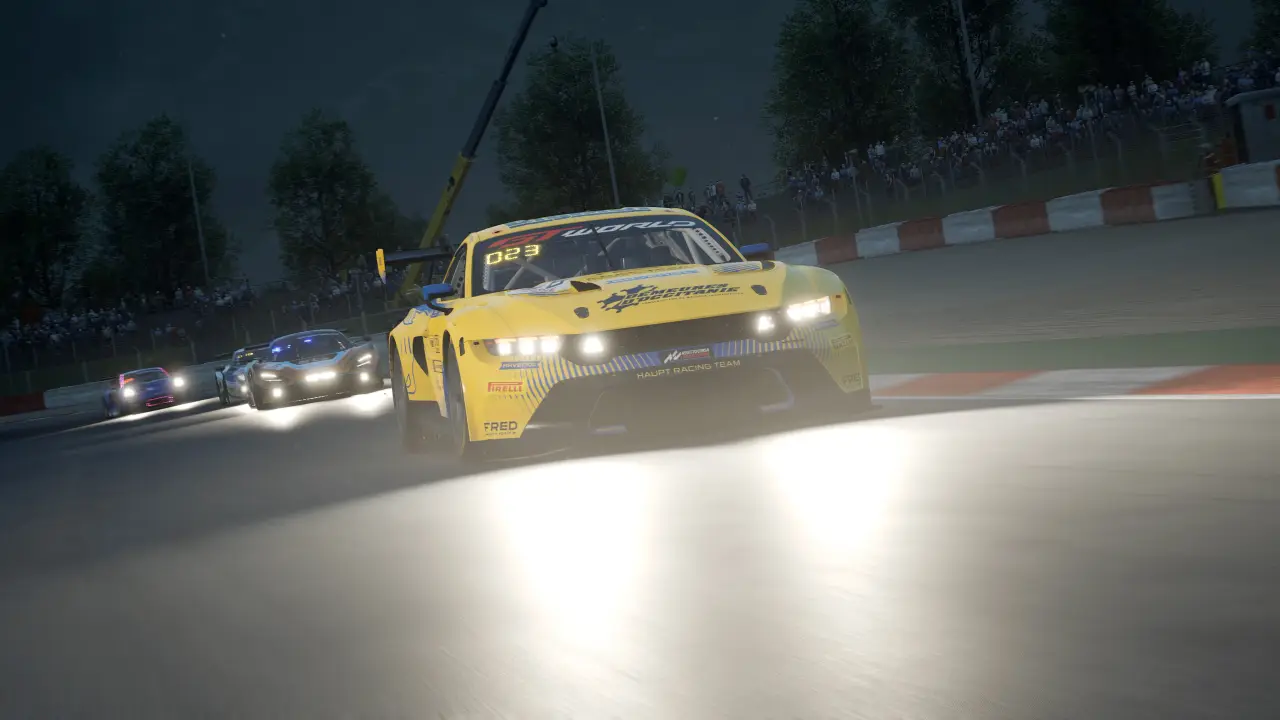
Wet nights and warm tarmac
The layer of damp shine that pools on the ground beneath the pit lights on a rainy night is genuinely arresting. Daytime scenes leave their mark too. Sunlight filtering through the canopy onto a forest circuit makes the track feel less like a museum model and more like a road that has truly been worn by tyres and weather over many years. This is not the kind of eye-catching showpiece image built to dazzle in a screenshot. It is the kind of world where you take an extra glance at the kerb and the texture of the asphalt before committing to a corner, and you think, yes, this place has warmth. That sense of a lived-in, weathered surface is the heart of the game's visual identity, and it is the thing that keeps the presentation memorable even when raw fidelity is not the point. The circuits feel authored by erosion rather than by an artist chasing a glossy hero shot. Rubber laid down on the racing line darkens the ideal path, kerbs show the scuffs of a thousand clipped apexes, and the run-off areas carry the dust and gravel of cars that ran wide before you. It is environmental storytelling told entirely through wear, and it does more to sell the fiction of real motorsport than any cutscene could.
Weather and light as information
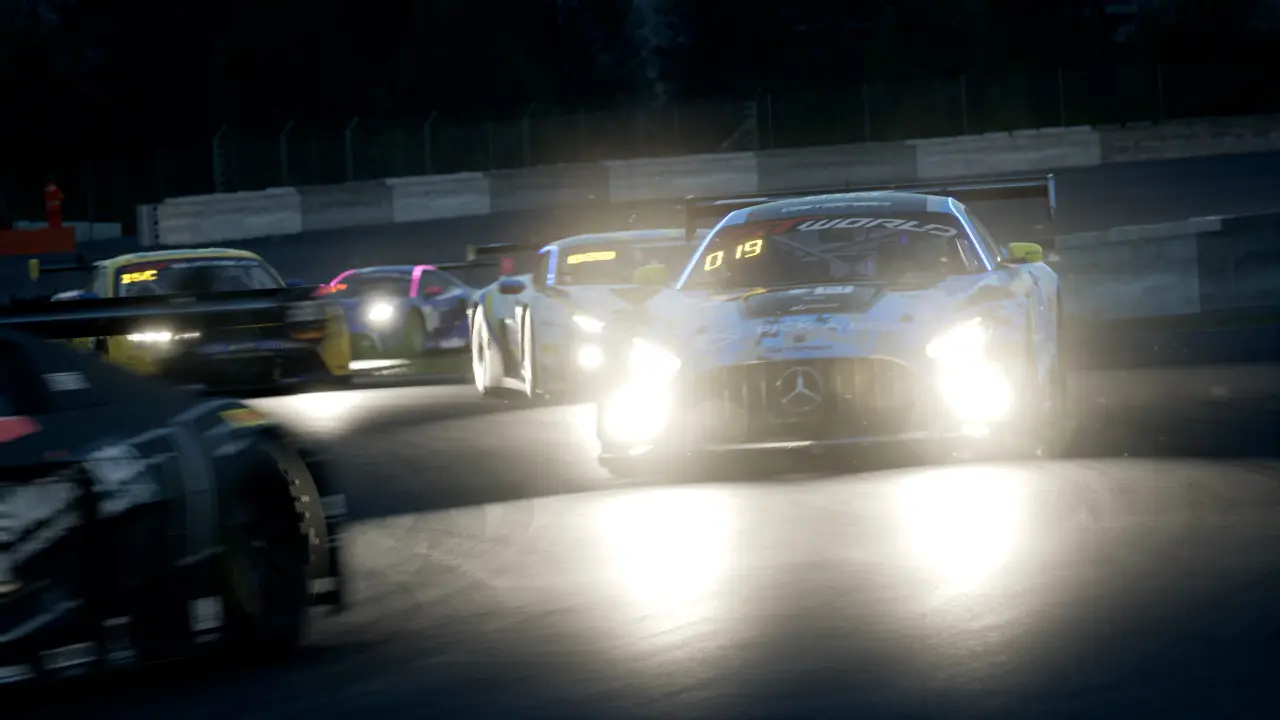
Crucially, the visuals are doing more than looking pretty. Dynamic weather and the lighting that comes with it feed directly into how you read the track. A darkening sky warns of grip about to change; the glare of low sun through a windscreen forces you to brake by feel and memory. Night racing compresses your field of view until the cone of your own headlights becomes the limit of what you know, and the reflective sheen of a wet surface tells you where the dry line is and is not. In a game this committed to simulation, the graphics are a sensor as much as a spectacle, and that dual role is where the art direction earns its keep. The transition from day to dusk to full night is handled with particular conviction, the light bleeding away gradually until your headlights become the only thing standing between you and a blind corner. Rain arrives as a visual event you have to respect, darkening the tarmac, smearing the windscreen, and turning the dry line into a faint memory you chase by feel. Every one of these effects has a gameplay consequence, which is exactly why the visuals feel purposeful rather than ornamental.
When the projector stutters
The problem is just as direct. Console performance is unstable, and frame rate together with overall optimisation will noticeably affect how the game reads. This is not a minor blemish, because racing games are unusually sensitive to smoothness. When you need to make continuous steering corrections and judge shifting grip, any instability gets amplified into pressure. It affects the genuine experience in a way that a slideshow stutter never would in a slower game. The saving grace is that it never gets bad enough to completely break the driving; it only discounts the visual advantage the game has clearly built. Put another way, the graphics have real talent, but the delivery is inconsistent.
Stacked against a more polished and approachable rival such as Gran Turismo 7, the gap in optimisation is hard to ignore. That competitor presents its world with fewer rough edges and a steadier frame, which only sharpens the sense that this game's visuals are punching above their weight while occasionally tripping over their own feet. The raw ingredients are here for something special; the kitchen just does not always plate it cleanly.
Combat | 8.5/10
Gameplay: 8.5/10The first time I tucked in behind another car and ran a full corner sequence through a night race, I understood this game's temperament almost immediately. It does not sell you the fantasy that you can drive sloppily and still look heroic. Every brake, every turn-in, every dab of throttle on corner exit feels like a negotiation with a machine that has moods of its own. Strike a good deal and it is exhilarating. Botch it and the car tells you, instantly and without mercy, exactly who is in charge.
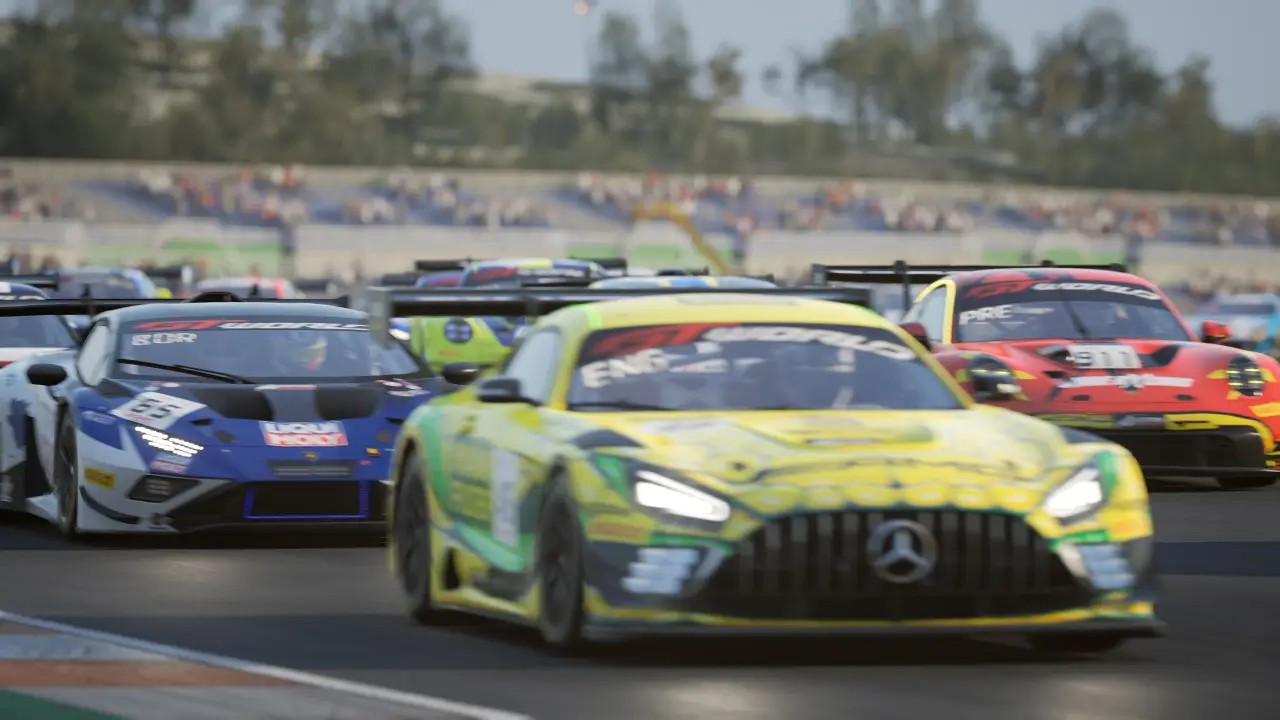
Talking to a car that has moods
What makes the driving so compelling is that the hardcore edge is built as a skill you can genuinely learn rather than a wall designed to humiliate you. For the first few hours you may simply be holding the track, fighting to keep the car pointed where you want it. Only once it clicks do you begin to understand why the handling differences between vehicles become the core pleasure. This is not a simple matter of one car being faster than another. Steering response, mid-corner stability and the personality of the grip edge all differ from one machine to the next. Driving a car here feels like practising an instrument: you nail the intonation first, and only later do you talk about performance. When you finally string a clean line through a corner at dusk, riding the rhythm onto the apex, the satisfaction is clean and entirely earned. That learning curve is steep but never arbitrary, and every plateau you break through feels like a real promotion in competence rather than a number going up. The game respects you enough to let you fail repeatedly, and that respect is exactly what makes the eventual mastery feel like something you own rather than something you were handed.
Tyre temperature and the grip edge
Underneath every duel sits a layer of physical detail that quietly governs everything. Tyre temperature is not a number buried in a menu; it is a living variable you have to manage lap after lap, because grip rises and falls with it. Push too hard early and you cook the rubber, then spend the next sector skating on a surface that no longer answers your inputs the way it did. Dynamic weather complicates this further, shifting the grip envelope under your wheels in real time as a dry line forms or a fresh shower washes it away. Reading the grip edge becomes a constant conversation, and the reward for listening carefully is the confidence to lean on the car exactly as hard as conditions allow, never more. The brilliance is that none of this is presented as a chore. The car communicates everything you need through weight transfer, through the way the rear loosens under trail braking, through the subtle resistance in the wheel as the front tyres approach their limit. You are not reading a telemetry screen; you are feeling the physics in your hands, and over time that feedback loop becomes second nature. It is the kind of depth that turns a single corner into a small puzzle you can solve a little better on every lap.
AI that races by the rules
The AI deserves its own praise. Reviewers consistently note that these opponents are both more civilised and more competitive, and that combination matters enormously. In racing games, AI that is too aggressive feels like a street brawl, while AI that is too timid turns into a row of moving roadblocks. Here it lands much closer to a real contest with rules. You can feel attack and defence, the give and take of racing room, the spatial chess of choosing when to commit and when to hold station. Add to that the unique rhythm of endurance racing, with its long stretches of sustained concentration and its strategic pit windows, and the appeal stops being explosive and becomes a slow build. The game does not grab you in a single dramatic moment; it gets under your skin gradually, race by race, until you realise you have been chasing the perfect lap for hours. It is hard. It is also genuinely, lastingly good.
Compared with a more welcoming rival like Gran Turismo 7, the divide in design philosophy is stark. One holds your hand and rewards you quickly; this one demands patience and pays you back in mastery. That trade is the whole point of the experience, and once you accept it, every clean overtake feels like something you actually deserved.
Content | 6.7/10
Content: 6.7/10If you only scan the mode list, this game is hardly threadbare. Quick championships, long-form championships, a career mode, custom events, and on top of that a multiplayer mode that emphasises a serious competitive environment; the baseline longevity is there. You can feel it trying to lead players down the road of long-term investment rather than handing you a firework show you finish in a single evening.
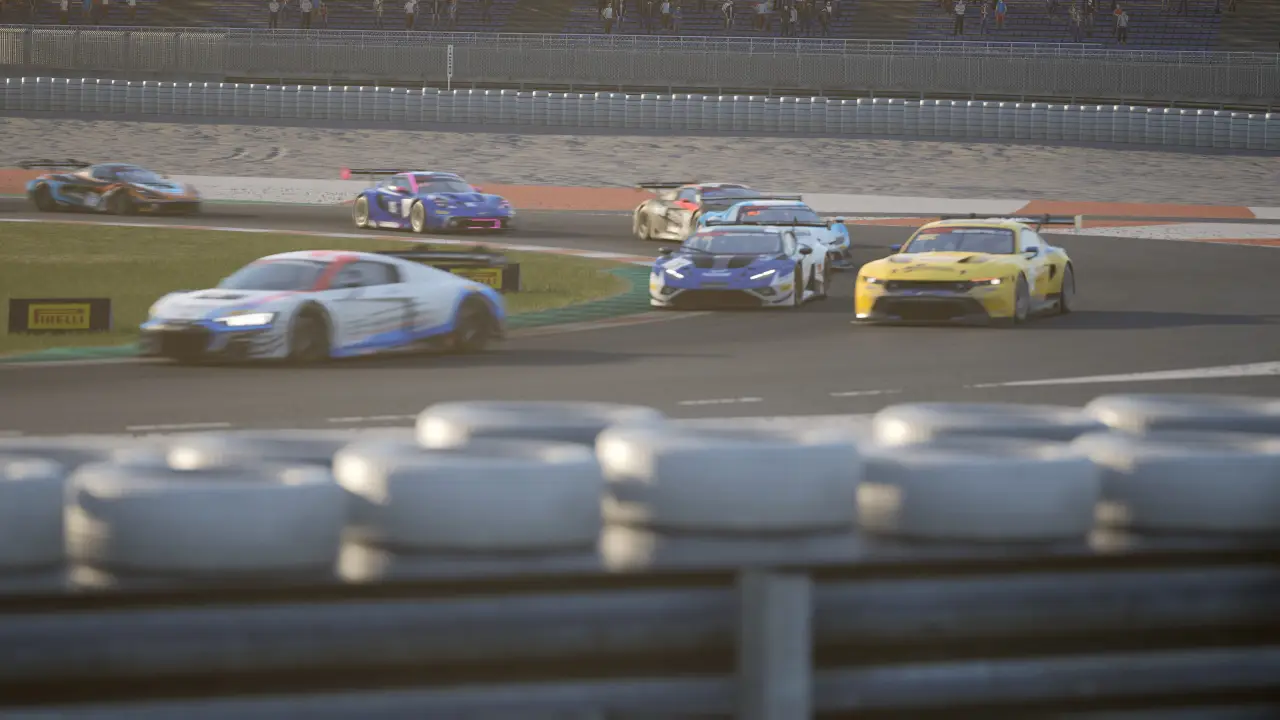
A full race weekend in a box
Pit lane standby, the rhythm of a pit stop, the steady progression of an event, these things keep reminding you what is on sale here: the flavour of a complete race weekend. The career mode and the various championship structures all push the same idea, that the worth of the experience is measured across a season rather than a session. It is a deliberate stance, and for the right player it is deeply satisfying, because every result feeds into something larger than the race in front of you. The custom race weekend in particular lets you build out qualifying, sprint and feature races into a full procedural ritual, which is exactly the kind of depth a sim audience tends to crave. You can dial in the time of day, let the weather shift across a session, set the length of each stint, and decide how aggressive the field of opponents should be. That granularity means no two weekends need feel the same, and it gives committed players a sandbox in which to rehearse the exact conditions they want to master. It is the difference between a game that hands you events and a game that lets you author them.
A club, not a fairground
The multiplayer thinking is admirably clear. The existence of competitive servers and rating thresholds guarantees that it is not a pure game of luck presented as entertainment. The barrier filters players, and it also turns some away; that is the double-edged blade. The racing environment that remains is usually more serious, and the price for that seriousness is that it is naturally less lively. It feels more like a club than a fairground. For players who want clean, consequential racing against opponents who respect the rules, that trade is overwhelmingly worth it. For players who just want a quick, chaotic thrash, the same trade can feel like a locked door, and the safety rating systems that protect the experience can read as gatekeeping rather than invitation. The trade-off is fundamental to what the multiplayer is trying to be. By rewarding clean driving and penalising recklessness, the rating system slowly sorts the population into fields that actually race rather than demolish each other on the first lap. That sorting is the entire value proposition for serious players, and it is the entire deterrent for casual ones. There is no version of this design that pleases both camps at once, and to its credit the game picks a side and commits to it without apology.
One signature dish, beautifully made
The shortcomings sit right on the table too. Compared with its predecessor, this game contracts dramatically to a single GT3 category. The total count of vehicles and tracks is more focused, but it is also smaller. Focus itself is not a fault. The problem is that when you set it beside a broader work like Gran Turismo 7, that itch of wanting to see something else grows stronger. At launch the online functionality was also less than complete, which directly affects how whole the content experience feels. The cars in the showroom genuinely reward a long look, but if what you were expecting was an entire automotive museum, this is more like a restaurant that makes only one signature dish.
The good news is that downloadable content has steadily widened the table since launch, adding intercontinental circuits and expanding the roster with a GT4 category and additional championship tracks. None of it changes the fundamental shape of the game; it remains a focused, category-specific simulation rather than a sprawling garage. But the additions soften the sense of scarcity and give committed players fresh ground to keep grinding lap times. Whether the package feels generous or restrictive ultimately comes down to the same question that governs the whole game: do you want breadth, or do you want one thing done exceptionally well?



Comments 0
We'd love to hear from you
Welcome! Share your take on this game — being first might come with a surprise.
No comments yet — share your thoughts on this review!