





















Opening
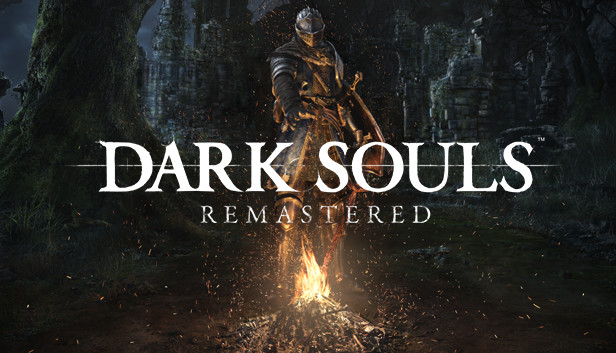
When FromSoftware sent the original Dark Souls onto PS3 and Xbox 360 in September 2011, almost nobody outside Japan expected it to redraw the map of an entire genre. Yet that is exactly what happened. Seven years later, in May 2018, the Polish studio QLOC partnered with the original team to ship Dark Souls Remastered, finally letting every modern platform experience this founding text of the Souls series at a stable 60 frames per second. With roughly 97,000 Steam reviews holding a 92% positive rating, it has quietly become one of the studio's most dependable products, and a fixture on the "evergreen classics" lists that players keep returning to.
The single most celebrated rescue in the Remastered is Blighttown. On the original consoles this poison-soaked swamp regularly collapsed to 15 frames and earned the cruel nickname "slideshow"; here it runs at a locked 60, and a once-dreaded zone is finally playable as intended. Pair that with the decision to fold the entire Artorias of the Abyss expansion into the base package, and you get something rare: a complete edition with no fine print about which add-ons you still need to buy. That is why, in 2026, this remains the cleanest on-ramp into the Souls series.
Strip the product down and its staying power comes from three things that fifteen years of imitators have not surpassed. First, the interconnected vertical geography of the kingdom of Lordran, where Anor Londo, Blighttown, the Undead Burg, and the Tomb of the Giants knot together through elevators, shortcuts, and hidden passages so tightly that a full loop drops you back where you began. Second, the Ornstein and Smough duel, whose absorption mechanic means the survivor of the pair grows stronger and shifts form, turning your choice of target into a strategic and reward-altering decision. Third, its historical weight as the work that defined the Soulslike, the spark behind dozens of descendants from Bloodborne to Elden Ring.
The six dimension breakdowns that follow keep circling two questions: why this 2011 design still earns a place in any 2026 backlog, and which entry path makes sense if you are coming back to fill in the origin after finishing newer entries. We will be honest about the blunt limitations too, chiefly the absence of any official simplified Chinese localization and the controls that remain frozen at a 2011 standard.
Story | 8.0/10
Story: 8/10The Cursed Undead and the Twilight of Lordran
Dark Souls handled narrative in a way that genuinely unsettled the industry on release. It threw out nearly every convention of the traditional RPG: no chatty companions, almost no cutscenes, no quest log nudging you toward the next marker. Instead it scatters the lore into fragments and trusts you to assemble the world yourself. You play a cursed Undead, one of the Chosen, sealed inside the Undead Asylum and left to wait out eternity until a passing crow lifts you free. From that small, mute beginning the prophecy splits two ways: you will either rekindle the First Flame or usher in an Age of Dark.

Underneath that quiet opening sits the entire mythology of Lordran. The god-king Gwyn used the First Flame to defeat the ancient dragons and impose order, but a thousand years on, that flame is guttering, and every Undead is doomed to drift toward the empty Hollow state. The central idea is a cycle of fire and dark: the flame was never eternal, and each age demands a new sacrifice to keep it lit. The four knights of Gwyn — Artorias the Abysswalker, Ornstein the dragonslayer, Ciaran, and Gough — are the relics of the kingdom's golden age, and their stories live almost entirely inside item descriptions, wall carvings, and a handful of hidden conversations. You assemble the legend by reading, not by watching.
This self-taught structure is the reason story lands at 8.0 rather than higher. The game will never volunteer why the sun over Anor Londo is a fabrication, or why Gwyn's daughter is locked away in a concealed chapel. For the patient player who reads every description, it is a feast; for someone who only wants a main plot delivered straight, it can feel like there is almost no story at all. That double edge is the honest core of the dimension.
Gwyn's Final Arc and the Artorias Expansion
The main line's closing duel is where the storytelling truly peaks. You finally reach the kiln of the First Flame expecting a climactic confrontation, and what waits is Gwyn himself, the founding god-king and dragon-felling hero, reduced to a Hollow shell who only knows how to swing his blade. The fight itself is mechanically simple — combos and a grab — but the emotional impact is enormous, carried by a lone piano and mourning strings rather than the triumphant brass of a typical final boss. You walk away feeling grief rather than victory, then choose to link the fire through self-sacrifice or leave as the Dark Lord. Either ending makes you a direct participant in the mythological cycle instead of a spectator to it.
The Artorias of the Abyss expansion supplies the other high point. Artorias, one of Gwyn's four knights, was foretold as the warrior who would stand against the Abyss, but in that struggle the dark consumed him and his arm was ruined. He left his shield behind as a barrier of magic to protect his loyal companion Sif from the same corruption. By the time you meet him in the DLC he is already lost to the Abyss, a maddened figure who must be put down. Defeating him lets you choose to save Sif, who then reappears later in the main game — a cross-chapter arc that has you live through the tragedy of saving someone before you are forced to face them.
Fragmented Lore Versus the Open World
Set the approach beside its open-world peers and the contrast sharpens. Where Elden Ring takes that same fragmented method and stretches it across a vast open landscape, Dark Souls keeps everything compressed and vertical, and the tighter geography actually raises the narrative density per hour. There is less ground between revelations, so the lore feels packed rather than diffused. For Chinese players this gap has been filled by a remarkable grassroots culture of "lore scholars" who produce hours of interpretation videos; top channels on Bilibili have accumulated hundreds of millions of views, turning self-taught narrative archaeology into a genuine community ritual.
That community excavation is what makes the dimension so distinctive. The complete absence of hand-holding would be a flaw in isolation, but it created the very conditions for an entire interpretive subculture to grow around the game. The standard onboarding path for newer Chinese fans is now to absorb the world through those Bilibili breakdowns first, then take on the challenge themselves — a two-step entry that softens the wall the original threw up, without diluting the sense that the story was something you earned rather than something you were told.
Audio | 7.5/10
Audio: 7.5/10Gothic Orchestration and the Art of Silence
The Dark Souls soundtrack, scored by Motoi Sakuraba, carries forward the "gothic orchestra plus choral chant" signature the studio had been refining since the Demon's Souls era. What defines it, though, is not what it plays but what it withholds. The core strategy is restraint, not saturation. Across exploration, the game is very nearly silent: you hear your own heavy footsteps, the clatter of gear, the low call of a distant beast, the drip of water echoing through a cavern. Music only swells when you rest at a bonfire or trigger a boss encounter. That deliberate emptiness gives the atmosphere a coiled tension — exploration is quiet enough to make you uneasy, so when a boss theme finally erupts it drives the pressure straight to its peak.

The signature pieces live in the landmark fights. Gwyn's theme is a solo piano against weeping strings, slow and drawn-out, with none of the heroic brass a final boss usually earns; it plays instead like an elegy. Many players consider it one of the most emotionally devastating compositions in game music history, and a career highlight for Sakuraba. The Ornstein and Smough theme answers with urgent orchestration and metallic percussion, two melodic lines braided together to mirror the two combatants' opposing styles. The Sif theme leans on mourning strings and chant, and paired with the wolf's wounded animation it has left countless players in tears at the end of the fight. The Artorias DLC battle theme — fast, nimble, and tragic at once — is widely held up as the expansion's finest.
Localization Gaps and Platform Differences
Environmental audio is the other standout. Impacts have real feedback: the bright ring of metal, the cutting note of a clean hit, the dull clang of a blocked guard, each rendered as its own distinct sound. The soft rustle of a roll's invincibility window lets you judge by ear whether you are still protected, and the crackle of a bonfire becomes a player's safety signal. The heavy thud of the "YOU DIED" screen is one of the most recognizable failure cues in all of game culture.
The biggest deduction on this dimension is localization. The Remastered still ships with no official simplified Chinese support, offering only English, Japanese, and a handful of European languages. Chinese players lean on community translation patches maintained by groups like 3DM and Jianjia, and compared with later entries such as Dark Souls III and Elden Ring — both of which carry official simplified Chinese — the gap raises the barrier for newcomers considerably. A player who cannot read the item descriptions is locked out of the fragmented storytelling almost entirely, and this remains the single largest complaint in the domestic community.
Platform differences shade the experience as well. The PC build can be pushed further with mods that improve fidelity and add custom soundtracks; PS4 and Xbox One run a clean 60 frames with standard audio; the Switch handheld build holds 30 frames with slightly compressed sound, still a high-spec showing for a portable Soulslike. The series carries almost no traditional voiced narration — a few NPCs murmur briefly, but information arrives through ambient sound, visual cues, and text. You are not listening to a story; you are piecing one together out of your own footsteps.
Visuals | 7.5/10
Graphics: 7.5/10Gothic Fantasy Aesthetics and the Scale of Dread
The original Dark Souls ran on FromSoftware's in-house engine, and for the Remastered the Polish port studio QLOC rebuilt the rendering pipeline. Resolution climbs from the original 720p to 1080p on both PC and consoles, frame rate jumps from 30 to 60 on PC, PS4, and Xbox One, while the Switch handheld build holds a steady 30. High-resolution textures replace the originals, sharpening detail on equipment, character faces, and environmental surfaces. The lighting and shadow systems were both reworked, so the nights of Lordran fall darker, the days read brighter, and the firelight behaves more convincingly. The headline upgrade, as ever, is Blighttown: where the original buckled to 15 frames, the Remastered locks it to 60 and lets the landmark zone finally play the way it was always meant to.

The art direction commits fully to a "gothic fantasy meets medieval apocalypse" register. The palette runs deep brown-grey shot through with yellow firelight and pools of profound dark. Lordran's architecture borrows from European Gothic cathedrals; Anor Londo nods to Byzantine golden domes; the Undead Burg evokes a fortified medieval village; the Tomb of the Giants recalls a Nordic underworld; and Lost Izalith descends into an apocalyptic volcano. The visual force of all this comes mostly from scale and the dread it manufactures. Anor Londo's arcades soar dozens of meters and make you feel small; the Tomb of the Giants drops away into bottomless dark to manufacture fear; the flooded ruins of New Londo press the waterline above an entire city until the air itself feels scarce. The relentless sense of being tiny and overmatched is the visual scaffolding for the game's signature despair.
Enemy design is just as deliberate. The early ranks include hollow soldiers, skeletons, undead hounds, and ghostly flames; the mid-tier brings black knights, silver knights, giant scorpions, and the fire-witch spiders; and the boss roster runs from the twin guardians to Artorias the Abysswalker, Manus the Father of the Abyss, the great wolf Sif, and Gwyn himself. Every type carries its own attack pattern, its own vulnerability, and its own defeat animation. You make progress by failing repeatedly and learning those patterns — the core loop the entire Soulslike subgenre would inherit.
Platform Coverage and the Value of a Remaster
On distribution, the Remastered runs a "mainstream everywhere" play. The Steam PC build is the most complete experience, and mods can push it to 4K with custom visual enhancements. PS4 and Xbox One hold a clean 1080p at 60; PS5 and Xbox Series run it in backward compatibility but with no next-gen patch, so they too cap at 60. The Switch version offers 720p/30 in handheld and 1080p/30 docked, a notably high-spec showing for a portable Soulslike. There is no macOS, Linux, VR, or mobile support. That spread of mainstream consoles plus PC plus Switch keeps the game fully playable in 2026 on whatever hardware you own.
Measured against the 2011 original, the improvements stack up cleanly: 720p to 1080p, 30 to 60 frames, Blighttown rescued from 15 to a locked 60, high-resolution texture replacement, reworked lighting and shadows, upgraded fire-particle effects, optimized shaders, an online server bump to six players on screen, and a pass of original bug fixes. Crucially, the underlying design is left untouched — combat unchanged, map layout unchanged, story unchanged, boss behavior unchanged, drop rates unchanged. For veterans the value is "Blighttown is finally playable" plus the 60-frame feel; for newcomers it is simply the best place to start the series.
The interface keeps the series' minimalism. The HUD shows only five core readouts — health, stamina, equipment, soul count, and status effects — and combat offers no lock-on marker, no quest prompt, no minimap. You navigate by memory and environmental reading alone, and the absence of waypoints forces you to actually look at the architecture instead of chasing an arrow across the screen. That austerity is a net positive for immersion and a comfort for veterans, but the first ten hours still demand that newcomers adapt to the unguided rhythm of open exploration, where a single missed ladder or unopened shortcut can leave you wandering a zone you have technically already cleared. The item-description system deserves special mention: every piece of gear, ring, and consumable carries a fragment of Lordran's lore, so digging through your inventory is itself an act of exploration — a layer of design depth other action RPGs simply do not attempt.
Combat | 9.0/10
Gameplay: 9/10Bonfires and the Stamina-Driven Rhythm of Combat
Dark Souls builds its combat around three pillars: stamina management, the invincibility frames of the roll, and learning each opponent's tells. The bonfire system is the foundation that holds the whole architecture together — it is your save point, your level-up station, your respawn anchor, and your healing top-up all at once. Die, and you return to the nearest bonfire and drop every unbanked soul, the currency and experience fused into a single resource. You can sprint back to recover the pile, but die a second time before you reach it and it is gone for good. That cost is the engine of the series' tension: backtracking through unknown ground while carrying a fat stack of unbanked souls turns every single step into a gamble.

Stamina is the metronome. The green bar governs how often you can attack, roll, and guard, and draining it to zero leaves you exposed at exactly the wrong moment. The skill ceiling here is not button speed but rhythm control — an expert chains "one swing, immediate roll, punish on the recovery," while a newcomer reliably triggers "three swings, empty bar, free counter from the enemy." The invincibility-frame roll is the signature mechanic on top of that: the roll grants a few frames of true invulnerability, and with precise timing you can pass clean through any attack. Load matters too. Below 25% encumbrance you get the fast roll with its 13 invincible frames; 25 to 50% is the mid roll; above 50% is the dreaded fat roll; and over 100% you cannot roll at all. "Fast roll plus light armor" against "heavy armor and tank the hits" is the eternal trade every build negotiates.
Landmark Boss Fights and the Expert Ceiling
The arsenal spans fourteen broad categories of gear — straight swords, greatswords, katanas, hammers, great hammers, axes, greataxes, spears, bows, greatbows, sorcery catalysts, talismans, pyromancy flames, and fists-and-claws. Each carries its own moveset of light, heavy, jumping, rolling, and guard-break attacks, and across dozens of distinct models every piece has its own feel in the hand. This is the heart of the series' depth: you can commit to wildly different paths — straight-sword, katana, sorcery, pyromancy, or pure fists — and each style supports its own player community.
The Ornstein and Smough encounter is one of the most revered fights the series ever produced. You face two opposite combatants attacking at once: Ornstein is fast, a lightning-spear specialist who darts and dodges, while Smough is slow, a great-hammer brute who sweeps wide. The special mechanic is the absorption — defeat one and the survivor drains his power, refilling health, gaining damage, and unlocking new moves. Which one you choose to drop first changes the reward you walk away with. The design stunned the industry in 2011 and still stands as a benchmark for boss encounters. Artorias, the centerpiece of the Abyss expansion, is the other reference point: fast, nimble, with a leaping strike that can end a run instantly, yet every move carries a clear, readable wind-up. Experts can dodge the entire fight untouched, which is why it gets cited again and again as the model of "perfect boss design."
Lordran's interconnected vertical map is the other gameplay signature. The Bell of Awakening's two-bell door-opening structure gradually moves you from the early Undead Burg and Parish into the mid-game of Blighttown and Anor Londo, then on to the late stretch of Lost Izalith and the New Londo ruins, with regions laced together by shortcuts, elevators, and hidden passages. Multiplayer broadens the loop further: summon signs bring in cooperative allies for a tough boss, invasion stones let you drop into another world for PVP, and the ground-message system lets players leave hints — or pranks. The Remastered raises the cap to six players on screen, up from the original's four.
The expert ceiling is towering. Community challenges include SL1 (level-one clears), hit-less runs, fist-only runs, no-bonfire runs, no-level runs, no-guard runs, and speedruns that have driven the world record down toward eighteen minutes. Set against the sequels, the contrasts clarify why this dimension earns a 9.0: Dark Souls II fragments its map and slows the pace, Dark Souls III speeds up the fights but linearizes the world, Bloodborne sharpens aggression behind a PS4 exclusivity wall, Sekiro swaps in a wholly different parry system, and Elden Ring's open world and summons flatten the difficulty curve. Dark Souls remains the purest specimen of the subgenre it created.
Content | 6.0/10
Content: 6/10The Length Curve and the Artorias Expansion
The Remastered hands you a three-tier length curve. A rushed main-line clear runs roughly 45 hours on a newcomer's first run; adding the Artorias of the Abyss expansion and the major side content pushes it toward 60; and a completionist pass with every boss, every item, and every ending lands around 100. Chase the community's expert challenges — an SL1 run, a serious speedrun — and a single player sinking 200 to 500 hours is no surprise at all. Compared with Elden Ring's 60-hour main line and 200-hour completion, the curve here runs shorter, but the density of despair per hour is markedly higher. There is simply less padding between the moments that matter.

The Artorias of the Abyss expansion is the core of the content dimension, and a major reason to favor this edition. It is already bundled into the Remastered at no extra cost, bringing four new regions across the royal ruins of Oolacile and the Abyss, four new bosses — the black dragon Kalameet, Manus the Father of the Abyss, a DLC-tuned Moonlight Butterfly, and Artorias the Abysswalker — and roughly ten hours of new material. It is widely regarded as one of the finest expansions the series ever produced, with Artorias in particular held up as the best-designed encounter in the whole game. The "already included" approach lifts the package's value sharply: there is none of the later-entry anxiety about how many add-ons you still need before the experience is whole.
But the reason the dimension settles at 6.0 is the visible rush in the back half. Lost Izalith was originally planned as a far larger demon kingdom, and when development time ran short, large stretches were simplified — the infamous "Demon Ruins legs" sequence, where dozens of demon-relic lower halves shuffle across the map, is routinely mocked as the laziest design in the series. The Tomb of the Giants is a pure pitch-black cavern requiring a lit torch to see the path; the intent is sound but the execution is monotone. And the Bed of Chaos is the consensus pick for the series' worst boss, mechanical to defeat and demanding nothing of the player's skill. These uneven late-game stretches are precisely what keep the dimension from climbing higher.
New Game Plus and the Mod Ecosystem
The New Game Plus loop lets you carry your equipment into a second run, with enemy health and damage rising about 30% on NG+, climbing again on NG++, all the way to NG+7. Each cycle lets you steer toward a different ending or farm the items you missed the first time through, and the small shifts in drop rates and enemy placement keep the higher cycles from feeling identical. This is a meaningful pillar of replay value; serious players commonly push to NG+3 before stopping.
The mod scene is the other long tail. Steam Workshop does not support the Remastered, but Nexus Mods has accumulated a deep catalog: ReShade and ENB visual-enhancement suites, 4K high-resolution texture replacements, custom character looks, balance overhauls, speedrun-assist tools, and unofficial Chinese translation patches. Domestic 3DM forums host integrated bundles mixing visual mods, gameplay tweaks, and unofficial localizations, with "an Elden-Ring-style Dark Souls" a popular target for the community's modders. The studio engine's structure means you cannot add new regions or new bosses, but the visual and quality-of-life tuning still gives the PC build a far longer tail than the console versions.
On the practical side, this remains the complete edition. Because the expansion is bundled and the New Game Plus loop is generous, the content problem is never "is there enough here" — it is "is the back third as polished as the rest," and the honest answer is no. The first two-thirds of Lordran are among the best-paced level design in the medium; the final stretch shows the seams of a 2011 production schedule that ran out of runway. Weigh those together and you get a content offering that is rich and replayable up front, uneven at the finish, and still comfortably worth the time of anyone willing to push through the rough patch. It also helps that the bundled expansion sits structurally near that weak stretch, so the back third's strongest material — the Artorias and Manus encounters — arrives precisely when the base game's pacing is at its shakiest, partially offsetting the rushed feel of Lost Izalith and the Bed of Chaos with a genuine high point.


Comments 0
We'd love to hear from you
Welcome! Share your take on this game — being first might come with a surprise.
No comments yet — share your thoughts on this review!