





















Opening
Here is the strange thing about The Veilguard: it is a very good game, and it might not be the Dragon Age you wanted. It hits a series high in plenty of places, and in a few of the most important ones it says a clean goodbye to its own past.
Rewind to 2009. Origins won over a generation of CRPG players with the pause button — with the slow, chess-like pleasure of stopping time and barking orders at a whole party. Fifteen years later, BioWare has quietly removed that pause button and bolted on a new body. You steer one hero, Rook, and you dodge, parry, and chain combos at speed. The combat is the slickest the series has produced. The visuals belong in any conversation about 2024's best-looking games. Hans Zimmer wrote the score. None of that is marketing fluff; all of it is real.
And yet the critics landed on 84 while players on Steam settled at 68 percent. That gap is the whole story, and it is what this review intends to pull apart. What it gets right, and why a slice of its oldest fans walked away cold — that takes thirty-odd hours to see clearly. Let's go dimension by dimension.
Story | 6.0/10
Story: 6/10A clean line through the apocalypse, with the surprises sanded off

The premise is tidy. As Rook, you weld seven companions into a squad and set out to stop two corrupted elven gods, Elgar'nan and Ghilan'nain, from tearing the Veil open and loosing ruin on Thedas — and, eventually, to face the series' lurking nemesis, the self-styled Dread Wolf, Solas. Every chapter knows where it is going. You always understand your stakes and your destination, and the pacing never stalls.
The price of that clarity is predictability. The main thread carries almost no reversal that makes your skin prickle. Villains are villains; you can guess the shape of the ending well before it arrives. Set that against Origins, where a single "save who, abandon whom" decision could keep you awake all night, and Veilguard reads more like a polished, bright, four-quadrant fantasy film — handsome and well-cut, but rarely something that lingers in your head a week later. It loads its thrills into spectacle and swordplay, not into the bones of the script. That is a deliberate trade, and you can feel the missing weight.
The other recurring complaint cuts at the series' signature promise — that your choices rewrite the world. Reviewers and players keep reaching for the same phrase: false choice. Decisions dressed up as life-and-death tend to shuffle a line of cutscene dialogue rather than send the world down a genuinely different fork. That guts the replay loop. Dragon Age used to hold people for hundreds of hours on the strength of "this run I chose mercy, next run I burn it down," and when the choices read as decorative, a second playthrough loses most of its pull. One community line stings because it's fair: the game gives no reason to return, because returning teaches you nothing new about this world or these people.
The companions carry the whole thing on their backs

If the spine is the weakness, the companions are where the writing finally breathes — and where the game's reputation holds steady. Emmrich, the necromancer, is a gentle old gentleman obsessed with the study of death, and his arc with Manfred, his talking skeleton assistant, finds something rare in fantasy: a story about ageing and farewell told with a soft hand. Davrin, a Grey Warden raising a young griffon named Assan, gives you a plain, disarming bond between man and beast. Taash, the dragon hunter, anchors a coming-of-age thread about gender identity — the single most representative, and most argued-over, stroke of the game's modern voice; sincere to some, preachy to others.
Take any of these characters on their own and the backstory, the wound, the change all land with real texture. The problem is chemistry. Put them in a room together and the friction the old games thrived on — the rivalries, the squabbles, the party drama that snags on whoever you romanced — is conspicuously thinner. Romances draw the loudest sighs: shallow, players say; short on the little moments and the pull and heat that the older entries traded in. Veilguard owns a cabinet of good characters and never quite assembles them into a good ensemble. It is a strange kind of failure — one made entirely of strong parts.
Audio | 8.5/10
Audio: 8.5/10A Hollywood scoring bench, and you can hear every dollar of it
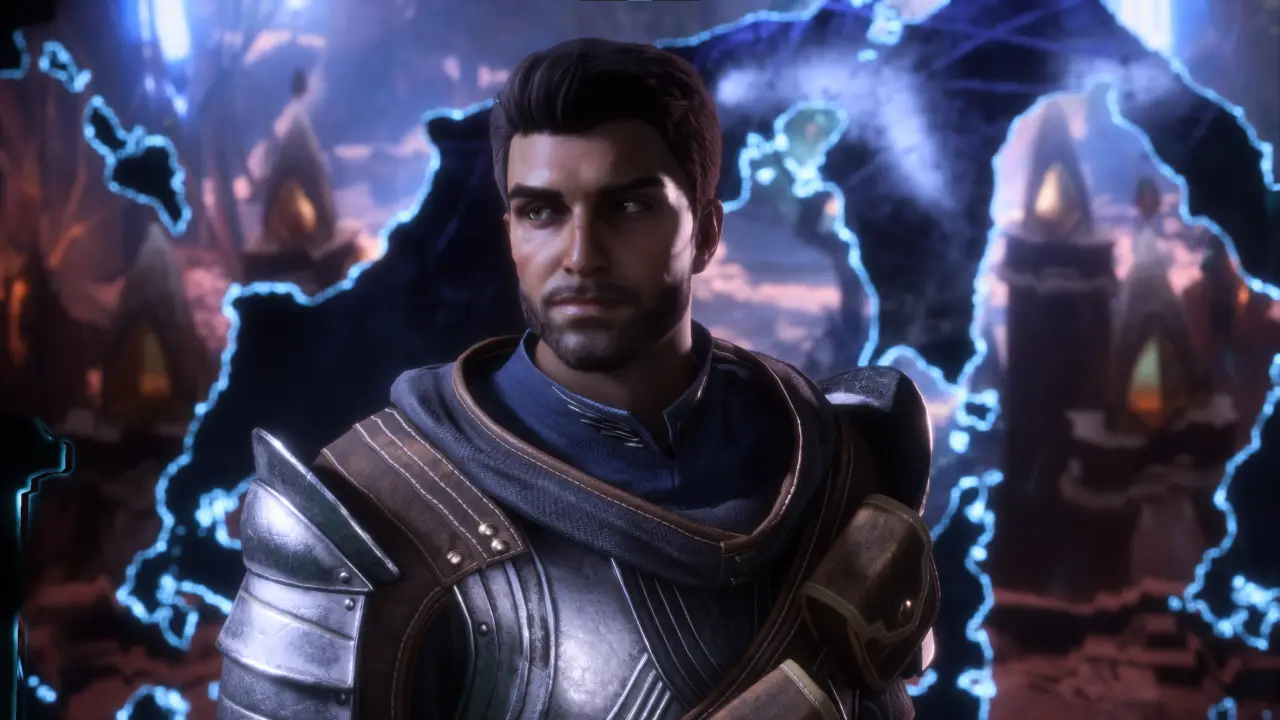
BioWare emptied the budget into the music this time, and hired the right people to spend it. The score comes from Hans Zimmer and Lorne Balfe — the names behind Inception and Dune, behind the Modern Warfare theme. Put two A-list film composers on the podium and you have set a very high floor before a single note plays.
The finished work earns the pedigree. Strings underneath, choir on top, that swelling fantasy-epic surge runs the length of the game, and it shows up loudest exactly where it counts: the major story turns, the big boss encounters. The music is not wallpaper here; it actively shoves the feeling uphill. When the choir detonates as you charge a High Dragon, half the adrenaline in your chest is coming straight out of the speakers. "Cinematic" is usually a press word. Here it is just a description.
What also stands out is how the score knows when to shut up. The quiet stretches — a companion confiding something in a candlelit room, a long walk between objectives — are scored sparsely, sometimes barely at all, so that when the full arrangement does roll back in it actually means something. That restraint is the mark of composers who understand pacing, and it keeps the big swells from going numb through overuse. By the end you start to recognize individual motifs threading back through key scenes, the kind of musical bookkeeping that rewards paying attention.
Voices that hold, ambience that keeps pace with the light

The performances mostly land. Every major companion gets a full, textured read, and Emmrich in particular — that composed, faintly melancholy timbre — does a lot of the lifting to make the character stand up off the page. The banter density is healthy too; the road rarely goes quiet, with companions chiming in mid-fight and ribbing each other while you explore.
On ambience, the footsteps, the clash of steel, the hiss and crack of spellwork all sit convincingly inside those ray-traced spaces — walk the corruption-shadowed streets of Minrathous and a low environmental hum quietly does the mood work for you. Each region carries its own sonic signature, too: the wet, echoing canals of Treviso sound nothing like the wind-scoured silence outside Weisshaupt, and that variety keeps the soundscape from flattening over a long campaign.
The one nagging miss isn't the audio at all but the words it carries: a lot of dialogue is written too breezy, too quick to reach for a joke, and no amount of good acting smooths over the tonal scrape between that lightness and an end-of-the-world fantasy. Stacked against Inquisition, though, the sheer production tier of the music is an audible step up, and it is the cleanest win the game's audio can claim.
Combat sound and dynamic mixing — you can hear the weight of every hit
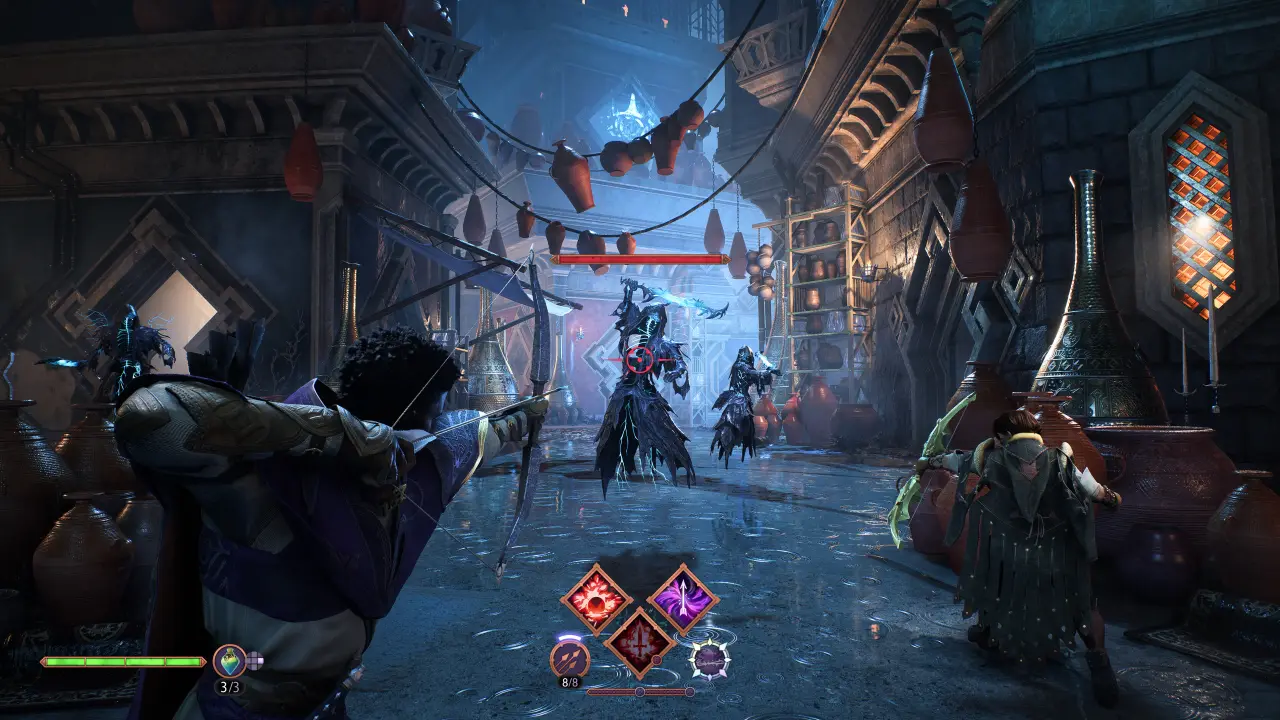
If the score handles the mood, the combat sound handles the heft. The hit effects are genuinely well built: the crisp snap of a light strike, the muffled thud of a heavy, the bright metallic ring of a clean parry — each piece of feedback is distinct enough that you can tell by ear alone whether a blow connected solid or whether you caught the parry window, without ever glancing at the screen. For a game selling itself on action, that audible feel is an invisible but crucial point in its favor.
The dynamic mixing earns a mention as well. Out exploring, music and ambience lead; the moment a fight starts, drums and brass surge up to tighten the rhythm, then ease back out once it's over. That combat-reactive mix gives every encounter an arc you can hear, rather than one flat volume bludgeoned from start to finish. Wedded to the Zimmer-bench main themes, the overall sound design is the part of the "film-grade production" claim with the least water in it.
Visuals | 9.0/10
Graphics: 9/10Frostbite, finally tamed — and Minrathous is one of 2024's most beautiful maps
Start with a fact that will give long-time fans complicated feelings: the Frostbite engine, which tormented BioWare for an entire generation, has finally been broken in. Frostbite was built for shooters like Battlefield, and it fought every RPG inventory, save system, and dialogue tree thrown at it — Anthem and Inquisition both bled for it. In The Veilguard, the latest iteration paired with ray-traced lighting runs stable, and runs gorgeous.
How gorgeous? Outlets like DSOGaming slot it straight into the front rank of 2024's best-looking games. Spell particles drift through candlelight indoors; water pins a building's reflection crisp on its surface; Minrathous, the corruption-threatened city of mages, looks both opulent and uneasy under the new lighting. What deserves its own line of praise is the variety. From the shifting Crossroads to the ancient elven ruins of the Arlathan Forest, from the coastal exotica of Treviso to the killing-cold snowfields outside Weisshaupt, every new map swaps in a fresh palette and a fresh architectural vocabulary, so you never lose the feeling of traveling a genuinely wide world. The ray tracing here isn't a showroom trick; it gives candlelight, magic, and mist actual weight. Screenshot any frame and it works as a wallpaper. This is the least contested point in the game's favor.
Every upscaler under the sun, and a cartoon filter that split the base

On pure tech, there is almost nothing to flag. The game supports DLSS 3 frame generation, AMD's FSR 3.0, and Intel's XeSS — the full slate of mainstream upscalers — which deliberately drops the hardware bar for high fidelity by a wide margin. The PC optimization is, by BioWare's own grim history, rare in its stability: playable on day one, no repeat of the Anthem faceplant.
What actually divides players isn't the technology; it's the artistic direction. Character faces lean cartoonish, the lighting doesn't chase realism, and a bloom filter sits over everything, pushing the whole palette brighter, cleaner, more saturated. Some find it crisp and lovely. But to anyone who came up through Origins, that bright sheen simply will not square with the series' early register — that gritty, gloomy, blood-streaked grimdark fantasy.
The friction is sharpest on the characters themselves. A rougher, more weathered art pass would have matched the stakes of a story about gods and corruption; instead the cast often looks a little too polished, a little too ready for a poster, and that mismatch is the first thing skeptics screenshot. It is not that the models are bad — they are technically excellent — it is that the styling pulls in a different direction from the writing's darker ambitions.
Whether the picture is good is a technical question, and here the answer is full marks. Whether the look fits the series is an aesthetic question, and on that one it shoved half its veteran audience to the opposite side of the room. Against Inquisition the leap is plain to the eye; so, just as plainly, is the argument.
UI, accessibility, and platform performance — the small stuff done right
Pull the lens in close and the interaction layer shows real care. The interface is clean and legible; the ability wheel, gear management, and map markers all read at a glance, so you rarely find yourself digging through menus. That readability matters more than it sounds for an action RPG with this much systemic depth — it keeps the build complexity from curdling into a barrier that scares newcomers off.
The accessibility suite is broad, too: subtitle sizing, colorblind modes, combat assists, control simplifications — BioWare cast a wide net for who gets to play comfortably. On platforms, the PS5 version toggles between a fidelity and a performance mode, so console players can pick a steady 60 frames or a sharper picture to taste, while PC leans on the full upscaler stack to push the framerate up. None of these touches is flashy on its own, but stacked together they genuinely raise the comfort floor. This may not be a game with sharp edges, but it is unmistakably a game that has been sanded smooth.
Combat | 8.5/10
Gameplay: 8.5/10From chessboard to drawn blade — the slickest combat the series has had
This is the boldest change Veilguard makes, and the one that pays off most. Combat drops the old pause-and-command strategy layer entirely and goes pure real-time action. You drive Rook alone — light and heavy strings, dodges timed to the frame, parries that crack an enemy open, charged hits that dump damage. The rhythm is brisk and the impact reads on every blow. Drop it into the lineage of God of War and Final Fantasy XVI, both of which traded command menus for direct action, and the feel holds its own.
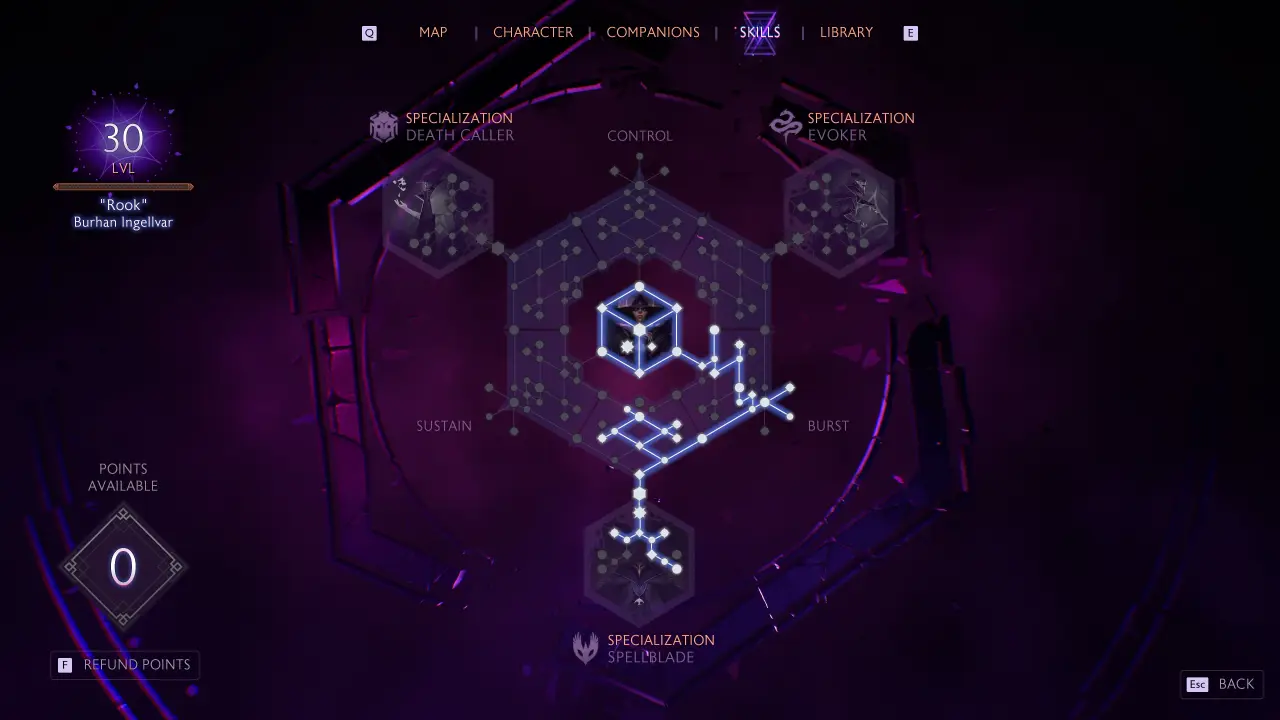
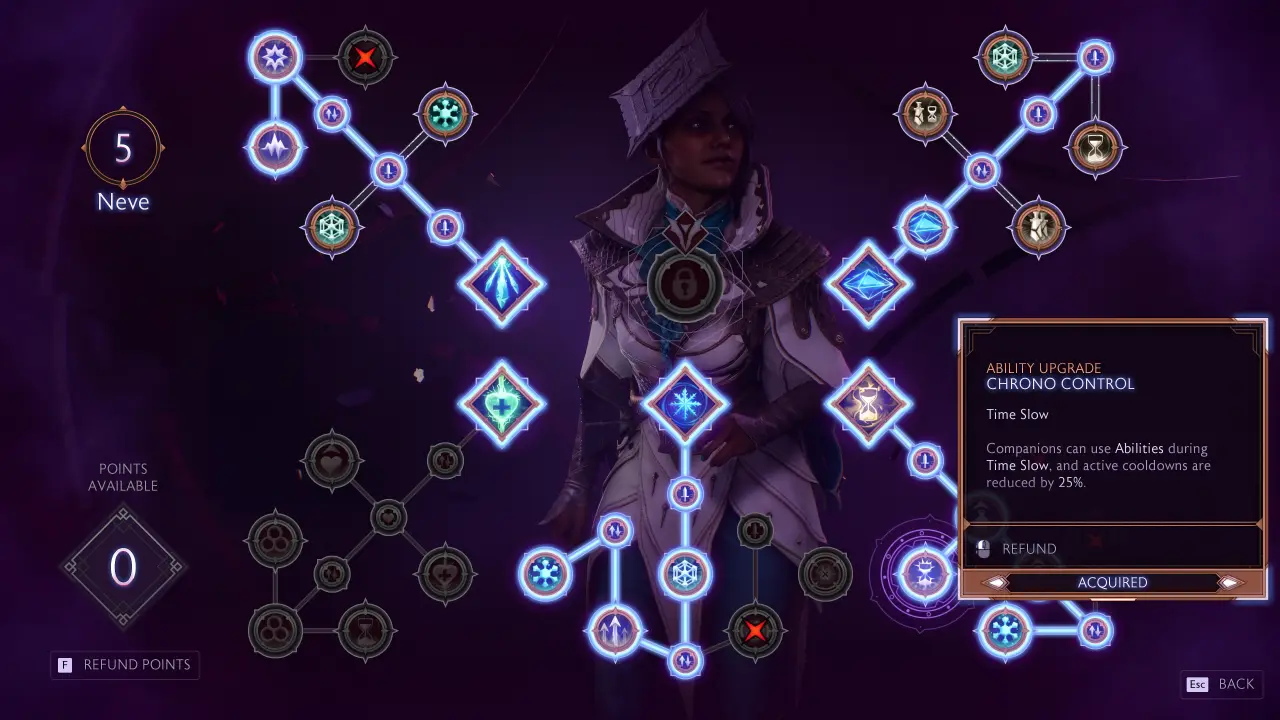
The ability wheel is the soul of the system. Tap it and time slows; you pull a companion's skill off the wheel and braid it into your own attacks as a combo chain — one ally lands a control effect, another detonates it, and the damage multiplies. It inherits the series' old spell-combination tradition but reworks it to be faster and far more reactive. Three classes each branch into multiple specializations; the mage's Spellblade path, for instance, is a melee caster who hacks and casts in the same breath and can string out genuinely flashy chains by the late game.
Just as importantly, the action isn't reserved for the hardcore. The difficulty options are granular: coast it as a relaxed story-first adventure, or crank the sliders and actually study each class's spec tree, cooldowns, and combo timing until it becomes a system worth grinding on. The on-ramp is gentle; the ceiling is high, and that span is part of why the combat reads as the most confident thing the game does.
Boss fights soar, companions sink — and the chessboard is gone

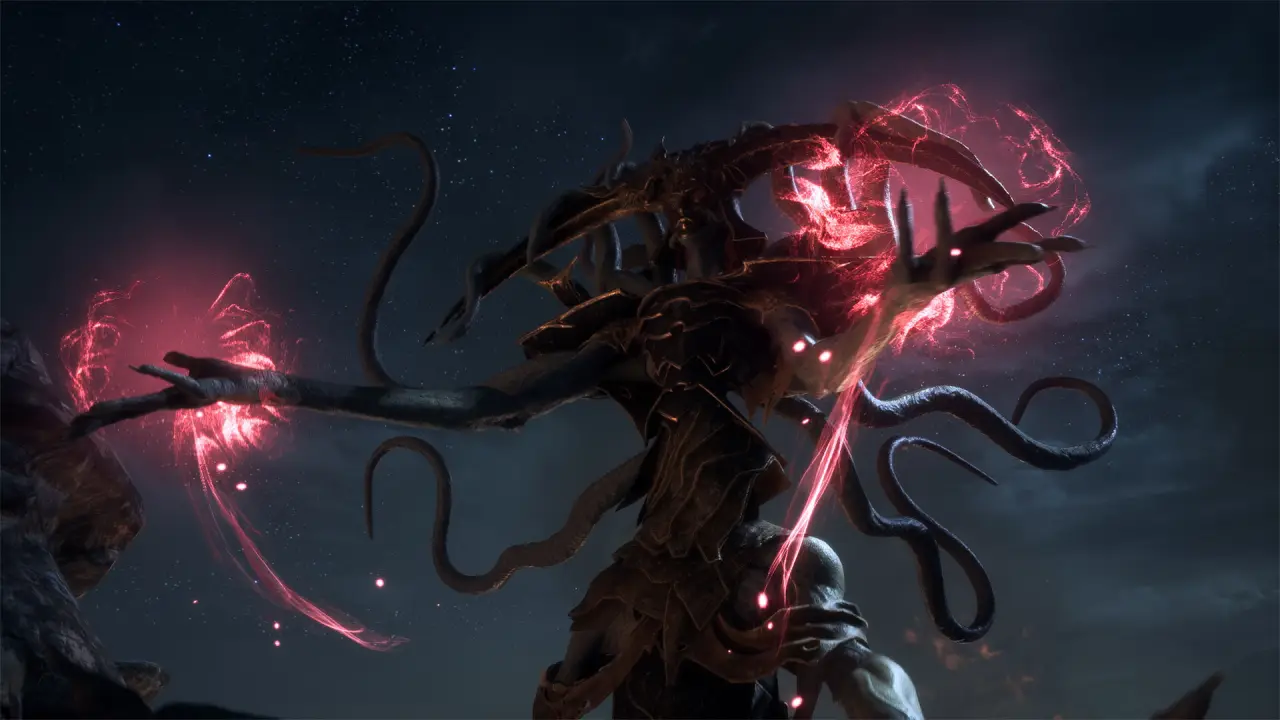
The boss fights are where this combat peaks. Squaring off against a High Dragon means reading the wind-up on every attack, memorizing the move set, and hunting the counter window after a clean dodge — a real, earned difficulty that is the most satisfying thing the action layer offers. IGN's reviewer spent around 100 hours with it and rated those duels the highlight, and you can see why.
But the slickness has a cost, and it is the cost the faithful find hardest to swallow: the companions got demoted. In Origins and Inquisition you could pause at will, snap to any party member, and conduct the whole squad like pieces on a board. Here, allies can't be driven directly at all — they shrink to a function that fires a skill roughly every thirty seconds, a button bolted to your character rather than an independent tactical unit. To keep exploration flowing, the game even lets you use any companion's abilities whether or not they're in your active party.
Convenient, genuinely — and that convenience is the whole philosophy of the redesign. Veilguard wants every encounter to keep moving, to never make you stop and stare at a paused tableau working out positioning. For a newcomer that is liberating; the friction is gone and the spectacle is constant. But the strategic board that made Dragon Age feel like Dragon Age has been quietly cleared away, and with it the particular pleasure of solving a fight like a puzzle instead of reflexing through it. The action is a thrill. Something is also missing. Both are true, and which one weighs more depends entirely on what you walked in expecting.
Don't be fooled by the action shell — there's a build system worth digging into

Underneath the real-time veneer sits a surprisingly deep progression layer. Beyond the three specialization trees, each class juggles a full slate of skill upgrades, passive talents, and gear affixes. Weapons and armor carry different stat bonuses and procs, and paired with your chosen spec they let you assemble wildly different builds — the same mage played as a Spellblade brawler versus a pure ranged caster are two entirely different games in the hand.
Better still, the combo-chain mechanic folds party composition into the build math: which two companions you field, who applies the control effect and who detonates it, directly decides whether your chains hit peak value. Optimizers can iterate inside that system for hours, treating each encounter like a build puzzle to crack. That "slick on the surface, chewy underneath" design gives the hardcore something to keep gnawing on long after the credits, and it quietly offsets some of what the story's thin replay value leaves on the table.
Content | 8.0/10
Content: 8/10Thirty-odd hours of main story, seven character threads — a trip you can size to taste

The package is generous. BioWare pegs the average main-story run at roughly 30 to 40 hours depending on how much side content you sweep up, and completionists chasing every trophy will sink 60 to 80. That elasticity is the point — rush the credits if you want, or wander and find plenty to do, and the game rarely punishes either instinct.
The side content breaks into three buckets: faction quests tied to the world's major powers, the seven companions' personal loyalty quests, and the secrets and collectibles scattered across Thedas. As noted earlier, those loyalty quests are the best-written material in the whole game, so this isn't fetch-quest filler; it is time genuinely worth spending, and skipping it would mean skipping the parts most people end up remembering.
The faction work deserves a mention of its own. You deal with several powers across the campaign, run errands, build standing, and those threads stitch the regions of Thedas into a web that makes the world feel lived-in rather than a backdrop to be jogged through. Pair that with each companion's dedicated loyalty line and you realize the "things to do" extend well past clearing rooms — a good chunk of your time is spent listening to stories, untangling someone's hangups, watching a character slowly open up. For players who like a slow, immersive RPG, that density — full without ever padding the clock — is where the game is most comfortable.
No paid DLC, but the patches kept coming — and a friendlier map

Be straight about one thing: there is no paid story DLC. EA cancelled the planned post-launch narrative expansion, so what you buy is a complete game that will never gain a major new chapter. The upside is that support didn't simply vanish — a run of free patches followed launch, from the first big one in December 2024 through Patch 4 and Patch 5 in 2025, steadily fixing bugs, tuning balance, and patching details. The maintenance has been earnest.
The map design takes a "high-density, low-intensity" line: regions are tighter and more linear, packed with explorable content, chests, and puzzles, but no single point bites hard, the signposting is smooth, and you almost never get stuck. Set against Inquisition's open-world sprawl — empty enough that the traversal alone wore you down — Veilguard is plainly more comfortable and far less wasteful of your time.
There is a craft argument hiding in that choice. A handcrafted, semi-linear region can be denser and more deliberately paced than an open field, and Veilguard uses the constraint well: secrets are tucked where curiosity leads rather than scattered to pad a map count, and most areas can be peeled back over repeat visits as you unlock traversal options. The trade is a few degrees of epic, roam-anywhere openness — the sense that you could just point at a distant mountain and walk. Call it a choice rather than a fault; which rhythm you prefer is the only real question, and plenty of players will quietly prefer this one.
Replay pull and the long tail: the systems hold, the story drags

Any talk of content eventually hits the question of what's left after the credits, and here Veilguard splits clean down the middle: the systems invite a return, the story does not. As covered earlier, the main-story choices are mostly decorative false choices, so you won't reload to "see the other ending" — and that traditional RPG hook, the single strongest driver of a long tail, is all but severed here.
What does pull you back is the mechanical layer. A fresh class, a new build, the bosses re-fought on a cranked difficulty — for anyone who likes chewing on an action system, there's real mileage there, and the companion threads or specialization paths you skipped on the first run are worth a dedicated second pass. Add the steady drip of free patches and the shelf life isn't short. But for players who came for narrative and consequence, "fun to play again, same story to watch" only stretches so far. It's a game built to be played many times over rather than savored many times over — and which of those you wanted decides how much the long tail is worth to you.





Comments 0
Share your game review
Join the discussion and share your review of this game.
No comments yet. Share your thoughts on this review.