






















Opening
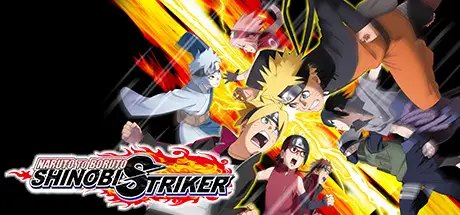
Here is a contradiction worth sitting with. A game scores 64 with the critics, gets an 84% thumbs-up from more than forty thousand Steam players, and is still shipping its tenth season of content six years on. Naruto to Boruto: Shinobi Striker lives exactly on that fault line — reviewers glanced at its thin content slate and walked away, while its players stuck around for half a decade.
It is not a Naruto game about story, and you should not come to it for one. What it actually hands you is a wire kunai and a wardrobe of jutsu you can mix however you like: you swing between walls, rooftops and water surfaces, four of you against four of them, and the simple fantasy of being a ninja who fights by running up walls gets done better here than in any other game wearing this license.
So this review will not dock it points for the campaign or the solo grind it never meant to nail. It swaps in the right ruler instead — judging it as the team-based online fighter it really is — and works through where the play is sharp, where it is thin, who it is for, who should steer clear, and whether that critic-cold, player-warm contradiction is worth your money.
Story | 5.5/10
Story: 5.5/10The campaign is a runway, not a destination — treat it that way
Kill the most common misunderstanding first: Shinobi Striker is not a Naruto game built to tell you a story. There is no single-player arc to follow start to finish, no rising-and-falling drama, no character fates to ache over. The solo campaign is busywork. You make an original ninja, drop into the Hidden Leaf, run errands, grind currency, and learn moves from famous shinobi — all to feed yourself up to a level where you can actually go online.

That framing decides which ruler you measure it with, so it matters. Push Square spelled out the misery of the solo stretch: cutscenes and dialogue you can't skip, which becomes a slog when you're farming ryo; quests handed out by NPCs scattered across the hub; and, worse, a quest-giver bug that fired off "pretty frequently," leaving you stranded because the next one simply wouldn't spawn. Drop those flaws into a narrative game and they're fatal. Drop them into Shinobi Striker and they tell you one thing only — the solo content is sloppy because the game never cared about it. The faster you clear this runway, the sooner you reach where it actually wants you. Blaming it for a thin story is like blaming a rally car for not handling a racetrack. Wrong yardstick.
Its narrative value is pure fan service — Rasengan, Chidori and kekkei genkai land like the anime
So where does the "Naruto" of it live? In the fidelity. GCORES spent real ink on this in its Steam write-up: the popular faces from Naruto and Boruto are rendered well, both in their portraits and their models, and the moves are animated to hug the source material. Naruto's Rasengan winds up, Sasuke's Chidori comes down, the clan kekkei genkai go off — and they carry the punch of the show.

For anyone who grew up on this anime, that fidelity is the emotional payoff by itself. GCORES gave a green light to players who are starved for something to play and happen to be Naruto fans — it offers a nostalgia-tinted way to pass the time when nothing new is out. You pilot an original ninja of your own making, but everything you learn, everything you throw, everything thrown back at you, is the jutsu vocabulary you already know by heart. It serves the most basic wish first — "I just want to be a ninja for an afternoon" — and that is why its standing in the Chinese community holds steady. But say it fully: this is reproduction, not authorship. It won't write you a new Naruto story; it just turns a world you already loved into a toy you can throw hand-signs in. Fans with deep affection will call it worth it. Anyone hungry for plot will call it hollow.
It splits the work with Storm 4 — one finishes the tale, one keeps you brawling
The clearest way to place Shinobi Striker in the Naruto lineup is against its same-IP sibling, Naruto Shippuden: Ultimate Ninja Storm 4, which runs the opposite road: single-player narrative and 1v1 fighting, the manga's story carved into playable chapters so you can relive the set pieces from the great war to the ending. Storm 4's job is to finish telling the tale. Shinobi Striker takes the other half. It pulls the act of fighting out on its own and turns it into endlessly repeatable team competition. No story — just an arena, a ruleset, and friends to run the walls with until the sun comes up.

Inside Bandai Namco's Naruto matrix the two are complementary. Want the narrative? Go to the Storm series. Want long-term multiplayer and a character to raise over months? That is when you come to Shinobi Striker. Understand the division of labor and you won't buy the wrong one — a lot of the harshest reviews came from people who walked in carrying Storm expectations, found a game with no interest in telling them a story, and felt cheated. That's not the game's fault. It's a mismatch of premise.
It's worth lingering on how unusual that is. Most licensed games chase the story because the story is the brand's center of gravity, and they end up retelling beats you already know by heart. Shinobi Striker did the opposite: it threw out the retelling and kept only the verbs — running, hooking, casting, fighting. That gamble is exactly why it reads as thin to a critic clocking narrative boxes and as alive to a player who just wants to throw hand-signs with friends. The license here isn't a story to sit through; it's a vocabulary to play in.
Audio | 7.0/10
Audio: 7/10The score and combat sound do the one job that matters — they make it sound like Naruto
Shinobi Striker's audio isn't here to win awards, but it nails the thing it had to: it makes the fighting sound like Naruto. The soundtrack tracks the anime's register, tightening the moment a clash kicks off. The real standout, though, is the combat sound design — and that's no accident, because it's an extension of how the game plays. Hook a wall with the wire kunai and swing out, land a jutsu, drop an ultimate that blows a radius open, and every hit answers back with a clean, weighty cue.

That feedback isn't decoration. It's half of why the three-dimensional scrum reads as satisfying to land: in a teamfight weaving across walls and rooftops at speed, you're often reading "someone just cast behind me" by ear before you ever see it. Impact is half feel, half sound, and Shinobi Striker catches the back half cleanly.
Get more specific and the classes and jutsu separate out by timbre. The whistle of a ranged technique cutting the air, the dull thud of a defender raising a wall, the soft chime of a heal going off — they all sound distinct. In a four-on-four melee where the screen is drowning in information, that audio separation hands you a shortcut: you don't have to keep your eyes glued to every teammate's health bar and position, because your ears alone tell you roughly what's unfolding on the field. For a game that lives on coordination, that's sound design wired straight into the play rather than laid on top of it as ambience.
Flat voice work is the soft spot — move callouts claw some of it back
The audio has an obvious weakness too, and it sits in the voice acting. Push Square called the performances flat — undersold, short on conviction, and that chips at the immersion. In a game that leans on neither plot nor heavy dialogue the damage is contained, but it's an audible demerit: the cutscenes and NPC lines are read without much life in them.

What claws some of it back is the fidelity of the move callouts and character lines. When a familiar jutsu is shouted by its familiar name, when you catch the signature cadence of a line from the show, a Naruto fan's ear recognizes it. That reproduction runs on the same logic as the character models on the visual side — it knows exactly whose ears it most needs to please. Set against Bandai Namco's own anime fighters — the Jump Force tier — Shinobi Striker's audio sits at competent-but-unremarkable: no theme you'll hum for life, but nothing that breaks the spell either. It just serves its one goal, sounding like Naruto, and serves it steadily.
Which, honestly, is of a piece with the whole game's temperament. It doesn't waste effort where effort would be wasted — a voiced cutscene you'll never rewatch — and pours it instead into the spot that amplifies the core: the hit feedback of combat and the legibility of every technique. It isn't a dazzling trade-off, but it's a pragmatic one, and it shows a game that knows exactly what it is. For what this game is, that's enough.
Visuals | 7.5/10
Graphics: 7.5/10A cel-shaded look rebuilt from scratch, and a steady 60fps that shows real care
The studio said something honest about the visuals: the look was rebuilt from the ground up. Soleil didn't chase realism. It made a clean cel-shaded style that hugs the anime's framing — flat tidy colors, sharp silhouettes, technique effects exaggerated to just the right degree, the show set in motion. That choice is correct: for a Naruto game, looking like the anime matters far more than pixel count.

What earns more praise is how smoothly it runs. COGconnected singled out a consistent 60fps paired with impressive animation — foundational stuff in a game built around fast three-dimensional scrums. Picture yourself swinging the wire kunai between rooftops at speed, trading blows in midair: if the frame rate stutters, the whole conceit collapses. A locked frame rate isn't a flourish here, it's the precondition for "fighting by running up walls" to play without making you queasy or blurred out.
The stage is the battlefield — walls, water and ledges are all usable ground
Shinobi Striker's stage design starts from a premise most games don't share: the map isn't scenery for you to admire, it's terrain for you to fight on. Every wall, every stretch of water, every raised ledge is space you can run, vault off, and scrap across. That feeds the core loop directly.

In other competitive games the terrain is the boundary that hems you in; in Shinobi Striker it's a tool that extends your repertoire — you wall-run to flank, you drop off a ledge to dive-bomb, you cross a water surface for movement the ground would never allow.
Playability got pushed forward into the art itself, and that's the smartest thing about its visual package. The maps aren't dressed to be looked at and then ignored; they're authored as climbing surfaces and sightlines, which means the level artists and the combat designers were clearly working off the same page. You read a stage the way a fighter reads it, not the way a tourist does — where can I get above them, which wall puts me at their back, which water surface lets me reposition for free.
Character creation runs deep — your ninja is a shape that never stops shifting
The other heavyweight on the visual side is customization. COGconnected put it vividly: your character is a constantly morphing entity. From sculpting the face and build to unlocking hundreds of outfits, accessories and weapon skins as you progress, the look of your original ninja keeps changing. For plenty of players, half the reason to keep grinding matches is to get stronger and the other half is to look the part, to assemble exactly the outfit they've been chasing. And these aren't skins you swap wholesale — gear, clothing and color palette all tune individually, so the ninja most people end up with bears no real resemblance to a canon character. It's purely their own avatar. That sense of "I built this character with my own hands" is a second retention line running alongside raw stat growth, and it's a big part of why people stay long after the novelty of the license wears off.

Across platforms — PC, PS4, Xbox One — the visual gap is slim; it's the same cel-shaded package, so which one you pick mostly comes down to who you want to squad up with. Held against its Bandai Namco contemporaries in anime fighting, the Jump Force bracket, Shinobi Striker's graphics land at competent. It doesn't dazzle you with horsepower. It wins on a unified style and on stage design built to serve the way it plays.
Combat | 8.5/10
Gameplay: 8.5/10The wire kunai pulls combat into three dimensions — wall-runs, midair scuffles, rooftop trades
If Shinobi Striker earns one thing to remember it by, it's movement. It hands you a wire kunai, and that single tool turns the whole fight from flat to vertical. You sprint along walls, hook a distant ledge and swing yourself across, stall in midair, pivot, and catch a counter. Push Square called the experience a Naruto dream come true — running up walls, trading blows in the air, an area ultimate crashing down, the screen reading exactly like the show's own panels.

Why does that matter so much? Because it rewrites the space of the fight at the root. In nearly every 4v4 game your battlefield is a floor and the skirmish plays out across a two-dimensional plane. In Shinobi Striker a teamfight is vertical — one second you're trading on the ground, the next you've been yanked to a rooftop by an enemy's kunai, or you've used a wall to slip behind theirs for a backstab. Position, height and angle all become tactical variables. That three-dimensional feel is the soul of the whole system, and it's the one thing no other Naruto game offers.
Four classes set the floor, an open jutsu pool sets the ceiling — you build your own style
Movement alone wouldn't carry it. The real depth hides in a "framework plus loadout" design. The framework is four classes. Attack is the close-range damage king with the second-highest health pool at 700. Range is soft in melee and defense but throws strong ranged jutsu, there to deal and support from a distance. Defense leans into turtling — walls, area slows — while still trading up close. Heal supports allies, goes down hard, but has the lowest health ceiling at 600 and little offense. The four feel dramatically different, and they hand you a broad direction to start from.

The ceiling lives in the jutsu pool, and that's the cleverest stroke. You don't pick a fixed hero with fixed moves. Through the VR Masters system — 20 named ninja in the base game — every match feeds XP to the master you've selected, and leveling them up teaches you their moves to slot into your own loadout. What you learn, you mix freely. GCORES put it well: you can stack Fire Style after Water Style, or chain a Rasengan off a Flying Raijin — combine it however you want.
So two players on the same class can end up with completely different combos and rhythm. What you grind for isn't just bigger numbers; it's tuning a fighting style that belongs to you. The floor is set, the ceiling is yours — and that's the core reason players keep grinding even when the content runs thin. It also means the meta is something you author rather than copy: a loadout that counters the squad you keep losing to, a tech that nobody else on the ladder is expecting to see. The depth isn't poured in by the developers as fixed kits; it's discovered by the player base over hundreds of hours, which is exactly why a game this lean on modes still has experts arguing about builds years after release.
It's a pure team game — get caught alone and you're picked apart
But there's a gate to flag up front: Shinobi Striker is a team game through and through, and it leans on coordination hard. GCORES said it plainly — without good cooperative play with your squad, a well-drilled enemy team will pick you off one by one. The heart of 4v4 isn't a solo highlight reel; it's class synergy and focus fire — heal keeps the frontline alive, defense holds space, attack dives the backline, range pulls and zones. Once that machine starts turning, a team with no comms simply can't hold.
Which leaves a real problem: solo-queuing with randoms takes a hit. Add the long-running balance debate — high-level players widely feel defense and heal run weak while attack and range eat well — and if you queue alone and draw a shaky class, getting cracked open by a coordinated set play is routine. The real joy belongs to people with a regular squad and a mic. What sustains all this repetition is an earn-by-playing economy. COGconnected prized exactly this: unlocks ride on scrolls you win through play, not real-money gacha. Every match feeds your character's growth directly, and that loop is the root of the "addictive" verdict. Set against its most direct rival — Bandai's Dragon Ball Xenoverse 2 — that game runs thicker content and a more durable solo mode, but its combat is flat. Shinobi Striker builds its fight vertical and purely team-based, more aggressive and more novel on the design front. Two different trades.
Content | 5.5/10
Content: 5.5/10The launch plate was thin — four modes, five maps, and the publisher even pulled some
Spread Shinobi Striker's content out and the launch plate is genuinely lean. Online play shipped with four modes — Flag Battle, Barrier Battle, Base Battle, Combat — across five maps. That's the lot. For a $60 game pitched on long-term online competition, that opening spread doesn't hold up.
What makes it worse: during COGconnected's review window the publisher had actively switched off Flag Battle and Barrier Battle for adjustments, halving an already small slate on the spot. The reviewer's own words — for a game with such limited modes to begin with, it's baffling the developers would intentionally restrict access. That criticism is near-unanimous across the English press: combat feel is an A, content volume is a C, and the gap between them is the most direct reason its critic average got pinned to 64.
Six years of support — and from Season 8, the season pass turned into a monthly free drop
The interesting turn on the content line is that it didn't stay on that thin launch plate. As of 2024, Shinobi Striker is still updating — already deep into Seasons 7 and 8, with 10 season passes and 88 content items logged on Steam. Season 8, "Awakened Tailed Beast," did something worth recording: it changed the operating model, dropping the regular season pass in favor of free monthly drops — Special Ninjutsu Training, Special Ninjutsu, summoned animals.
Which means the content you boot into today is not remotely the same magnitude as the 2018 launch. Six years of steady updates fed a thin plate into a fairly full table. It's also why "scored at launch" and "judged by what's actually in there now" land on two different verdicts — the press measured the launch, the players have been eating the long tail.
That gap is worth holding onto as a buyer, because it flips the usual logic of a low review score. Normally a 64 tells you to wait for a sequel or skip entirely. Here it tells you to ignore the launch verdict and look at the live game: more masters to learn from, more jutsu in the pool, more cosmetics to chase, and a backlog of seasonal material that the recent free-drop model has quietly folded in. The number on the box describes a 2018 that no longer exists.
The buy-once-then-charge-for-seasons mess, and the players who turned a mediocre launch into a marathon
Content here can't dodge its awkward business math. GCORES' jab is sharp and speaks for a lot of Chinese players: the game is buy-to-play, yet the later season passes cost extra — it wants the online money and won't let the single-player money go either. It also keeps the live-service scaffolding, daily-login rewards and fetch-quest hubs that keep yanking you out of the pure "be a ninja" experience. Solo players resented the online shell; online players resented the thin content; at launch it pleased neither.
And yet that very, much-mocked operation is what kept it alive. Steady seasonal updates fed the core fans and dragged a mediocre-scoring launch into a six-year marathon: an 84% positive rating across 42,436 Steam reviews, a player peak still touching 1,138 on August 25, 2024, and a roughly 90% player rebound over the last 30 days.
Against the thicker, more durable Dragon Ball Xenoverse 2, Shinobi Striker has always been losing on raw content depth — but it patched that weakness with six years of updates and a small, active community into an online ecosystem that's still spinning, still has someone there to fight you. That's the ballot players cast with their feet.




Comments 0
Share your game review
Join the discussion and share your review of this game.
No comments yet. Share your thoughts on this review.