DLCOutlast: Whistleblower DLCView prices →
Prices cover Steam and 39 authorized stores; only legitimate offers are counted. The chart shows weekly market-wide lows and Steam's official price across the past 36 months.
“The first-person run-and-hide horror benchmark that swaps weapons for a night-vision camcorder and makes helplessness the core mechanic”
Set every dimension side by side and Outlast reveals itself as a game with razor-clear intent: it never reaches for completeness, it pushes pure survival horror to the ceiling of its generation. Grasp that and you understand why it still resists replacement, and whether it is for you.
The objective scores stack up cleanly. Metacritic lists the PC version at 80, the OpenCritic top-critic average at 77, and Steam player sentiment at a 96% positive rate built on well over a hundred thousand reviews. Press reception is steady, player reception nearly overwhelming, and that pairing of professional approval and grassroots fervour is the footnote to its phenomenon status.
What matters more is its place in the timeline. Outlast all but single-handedly fixed the template for first-person pure run-and-hide horror — no combat, only hiding and sprinting, lit and recorded by a single handheld device. That design vocabulary shaped a great many later works, to the point that you can spot its shadow across countless successors, from corridor-bound indies to the streaming-era boom of camcorder horror. It took home multiple honours at E3 2013 and an ID@Xbox Mega Sales Award in 2015, and those concrete accolades underline the weight it carried in its moment. It is not merely a good game; it is a milestone you cannot route around when you map how modern horror got here.
So who is it actually for? If what you want is pure atmospheric pressure — the tension of being wrapped in helplessness and surviving on instinct alone — and you are willing to face horror at the psychological register, then Outlast is close to an unmissable peak. It will hand you a memorable, high-concentration experience.

The flip side is just as definite. If you need combat to vent your tension, if you are used to the satisfaction of fighting back and putting threats down, then a game that denies you any means of resistance from start to finish may simply grind you down. And if you are sensitive to dense scares and oppressive subject matter, its unrelenting pressure may be more than you want to sit with. There is no difficulty slider that softens the core of it, no way to play it on your own terms; you take the experience whole or not at all. None of that is the game falling short — it is the directness of its design. Outlast never set out to please everyone, and frankly has no interest in trying, which is precisely the conviction that makes it land so hard for the players it does fit.
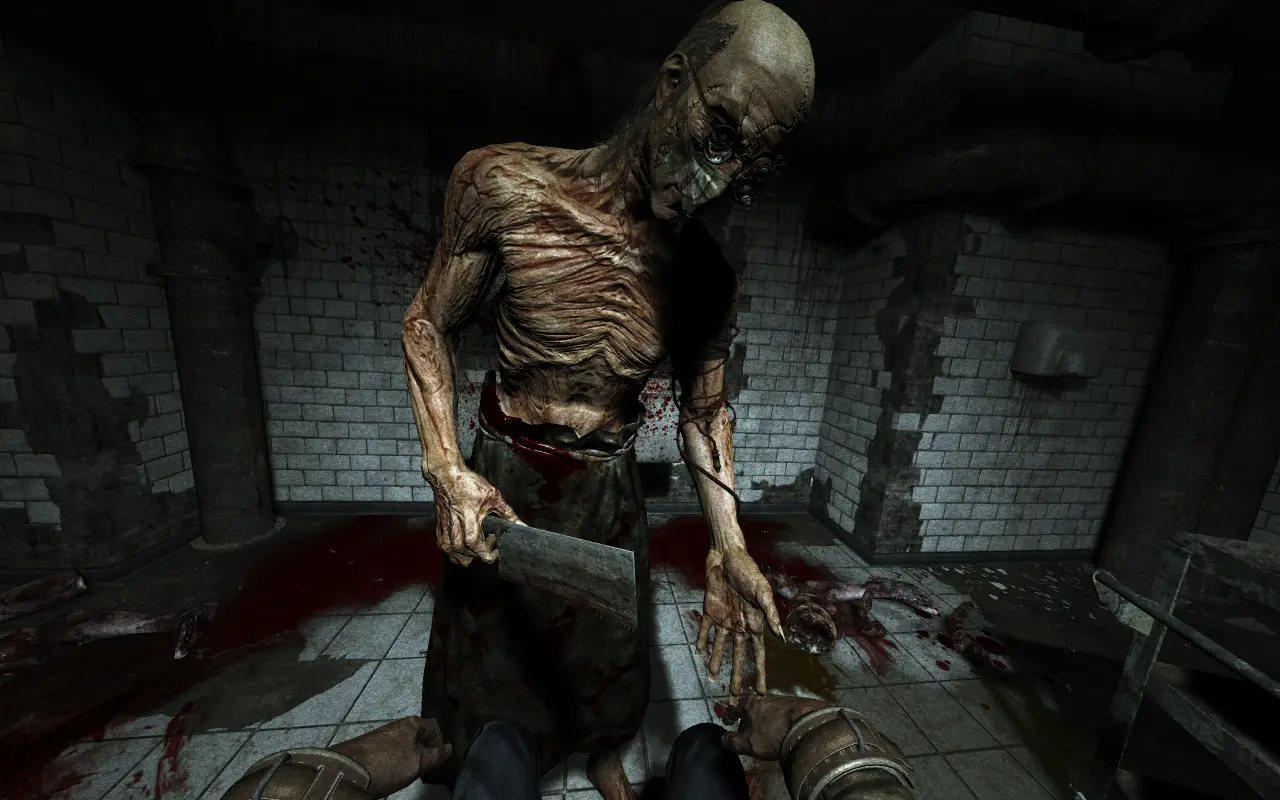
Back to the core question: what is hardest to replace about Outlast? It is the way it stitches a deceptively simple subtraction — take away every means of resistance, leave only a night-vision camcorder — flush against the immersion of an investigative frame and the pressure of sensory deprivation. Successors can imitate the no-combat mechanic, and plenty have, but the whole-cloth restraint, mechanic married to narrative married to art direction, is far harder to reproduce. Copy one pillar and you get a knock-off; copy the discipline that holds all of them in tension and you have essentially rebuilt the game.
A ten-person indie team, in fourteen months, raised a tower built on fear that more than a decade of weather has failed to topple — a near-legendary high-water mark for independent horror.
Its visuals may be dated and its run short, real and admitted limitations, but treated as a specimen of pure terror, Outlast remains, to this day, the answer hardest to copy and hardest to surpass. When the conversation turns once more to what horror games can be, its name is still the one you cannot get past.
Player Reviews 0
Share your game review
Join the discussion and share your review of this game.
No player reviews yet. Share your review.