

Casual games have never been only about unwinding. The standout Steam favorites in this space usually fuse three things at once: easy inputs, immediate feedback, and enough systemic depth to support real mastery over time. Some turn automation into a bottomless production obsession. Some refine idle loops into precision addiction machines. Others use photography, cleaning, or puzzle placement to push pacing and emotional payoff to the limit. Ranked here by overall influence, these Overwhelmingly Positive standouts show how different subgenres became benchmarks, and why players keep saying, "just ten more minutes."
1. Joker Card #

 Eneba¥964Steam ¥964Vedi il prezzo →
What makes Balatro special is how cleanly it fuses poker scoring, Roguelike deckbuilding, and runaway multiplier scaling into an almost perfect positive-feedback engine. You can grasp the rules in minutes, but the real pull comes from the constant tradeoffs between Jokers, Tarot cards, and shop economy. Do you stabilize your current damage threshold, or gamble on a bigger late-game spike? That tension drives every run. Rather than leaning on dense card text like more traditional card games, it achieves huge chain reactions through exceptional readability. It is one of the most ruthless "one more run" machines in recent years.
2. Vampire Survivors - Vampire Survivors #

 PlayStation Store¥389-20%Steam ¥389Vedi il prezzo →
What makes Vampire Survivors work is not just the basic pleasure of mowing down crowds. Its real strength is how it compresses movement, upgrade picks, and evolution timing into dense decision-making with almost no barrier to entry. Characters, weapons, passives, and super-weapon combinations form a build web that is easy to read but surprisingly deep to mine. The rhythm escalates in clear phases: early survival, mid-game screen clearing, late-game crowd control. It feels like a hybrid of bullet-heaven survival and idle-style progression, with explosive in-run feedback and metaprogression that constantly tempts you into another round.
3. Factorio #
 GOG¥3,054Steam ¥3,054Vedi il prezzo →
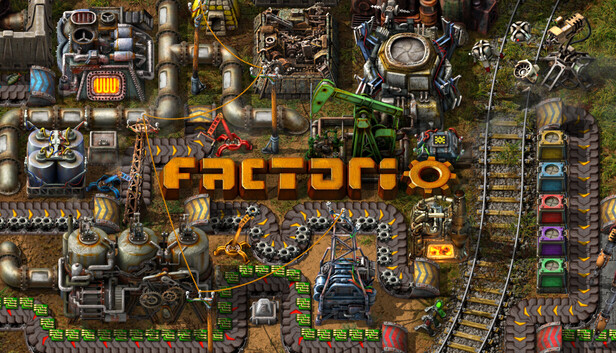
If many casual games keep players through positive feedback, Factorio traps them through an industrial loop of problem, breakdown, and expansion. Its brilliance is not just in making things, but in how every conveyor belt, inserter, and recipe ratio becomes part of a system language you can test and read: jams, shortages, pollution, defense, all interlocked. The entry point is simply placing production lines. The deeper layer is logistics optimization, blueprint planning, and throughput calculation. That sense of turning chaos into order remains a high-water mark for automation builders.
4. Dave the Diver DAVE THE DIVER #
 Eneba¥881Steam ¥881Vedi il prezzo →
DAVE THE DIVER does not succeed merely because "diving plus restaurant management" is a good pitch. It works because its dual loops mesh unusually well. By day, diving, hunting, gathering, and oxygen management create light-risk decision-making. By night, the sushi restaurant converts ingredient value, menu choices, and staff assignments directly into management feedback. The Blue Hole's shifting ecology, boss fights, and constant stream of new systems keep the pacing from sagging. It is content-heavy without often feeling out of control, the kind of game that looks breezy on the surface but keeps feeding you fresh objectives.
5. Cookie Clicker #

 Steam¥580Vedi il prezzo →
Cookie Clicker is both the most representative idle game and one of the easiest to break down analytically. It starts with a single click for a single cookie, then rapidly swells into long-term planning built around building synergies, stacked bonuses, and prestige resets. Its numbers curve is tuned with remarkable precision, always dangling short-term rewards in front of you while turning the mid- and late-game into a resource-allocation problem. Watching cookie production explode from a handmade setup into absurd astronomical output is itself the appeal.
6. Garry's Mod #
 Steam¥490¥980-50%Vedi il prezzo →
Garry's Mod is powerful not because it gives you content, but because it gives you rules and tools. Its physics sandbox, map editing, script mods, and Workshop support combine into an almost limitless play space. You can build contraptions, make short films, run experiments, or keep finding new rabbit holes in strange community-made modes. The core pleasure is not beating a campaign, but taking systems apart and assembling them again. That player-driven longevity still has very few real rivals.
7. Just Go for It Simulator #
 Microsoft Store¥2,970Steam ¥2,970Vedi il prezzo →
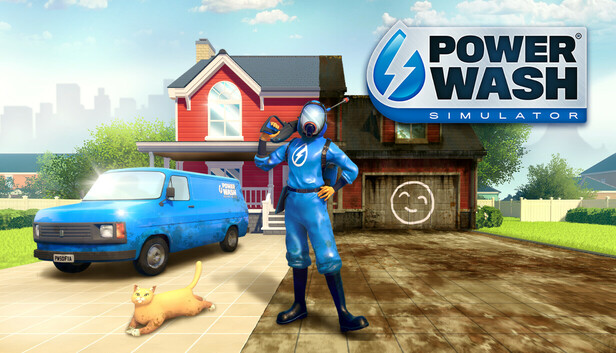
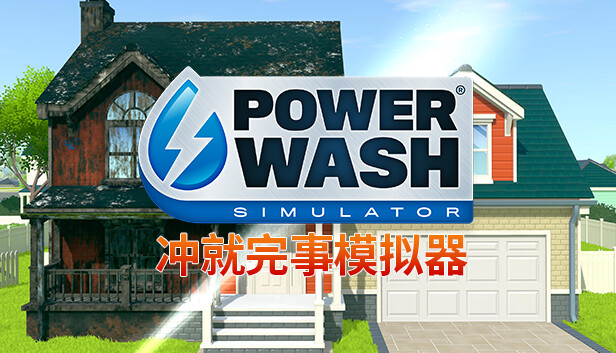
What makes PowerWash Simulator so effective is not how novel the idea of cleaning things is. It is how instinctively addictive its progress feedback becomes. Dirt boundaries are clear, area-completion rewards are immediate, and nozzle choice and spray angle all create obvious efficiency differences. It has almost none of the usual pressure of failure, yet quietly builds a stable loop through visual scanning, route planning, and local cleaning order. This is a game that polishes repetitive labor into an unusually pure decompression structure.
8. Daughter of the Volcano #
 Steam¥845¥1,300-35%Vedi il prezzo →
Volcano Princess stands out not because "the daughter is cute," but because its raising structure is solid enough to support everything around it. Classes, part-time work, socializing, combat, and stat growth all interconnect, and each turn's tradeoffs shape her personality, abilities, and future path. It feels like a reworking of the planning pressure found in Princess Maker-style games through the character writing sensibilities of a modern visual novel. The barrier to entry is low, but the branching is dense, the feedback is fast, and the multi-run motivation is strong.
9. TOEM: A Photo Adventure #

 Kinguin¥179-94%Steam ¥179Vedi il prezzo →
What makes TOEM: A Photo Adventure memorable is that it fully replaces the usual "hidden object plus puzzle" structure with a photographic point of view. You are not just scanning scenes against a checklist. You move tasks forward through framing, observation angle, and interactions with NPCs. The levels are not large, but they are packed with details that answer back layer by layer. Its black-and-white hand-drawn style is restrained, and its feedback is wonderfully clean: snap, discover, solve. It does not rely on stat systems or content overload. It makes exploration durable through steady observational pleasure.
10. There Is No Game: Wrong Dimension #
 GOG¥1,010Steam ¥1,010Vedi il prezzo →
On the surface, There Is No Game: Wrong Dimension looks like an anti-game joke. In practice, it finds inventive uses for clicking, dragging, word manipulation, and even stepping outside the apparent boundaries of the interface. The heart of each stage is not brutal puzzle difficulty, but the constant disruption of what the player expects from rules, menus, and even narrative layers. You think you are clearing a game, but really you are bickering with a stubborn, wisecracking narrator while the whole structure keeps shifting under you. Compared with more conventional casual games, its greatest strengths are creative density and pacing control. It wastes almost nothing.
11. Dvořák Romances #
 GOG¥752-32%Steam ¥752Vedi il prezzo →
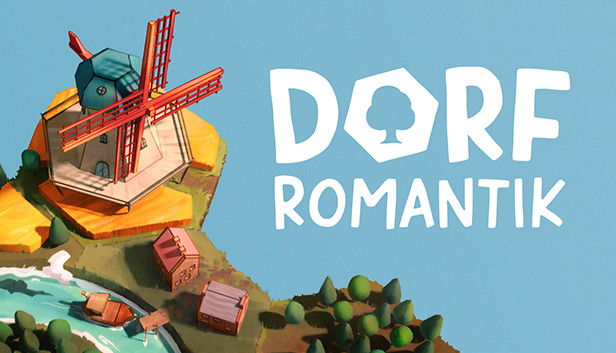
What makes Dorfromantik so good is that it turns tile placement into a layered system balancing aesthetics, calculation, and tempo management. The hexagonal tiles look gentle, but every move asks you to weigh mission rewards, terrain connections, and future expansion space. Mistakes do not punish you immediately, yet the board slowly tightens. That low-pressure design without any real loss of depth makes it especially replayable among casual games, and especially suited to repeated fresh runs built around refining your thinking.
12. Mini Highway #
 Steam¥1,010Vedi il prezzo →
Mini Motorways turns the simple act of drawing a few roads into a traffic-routing problem under constant rising pressure. The rules are minimal: homes connect to destinations of the same color, and each week gives you roads or traffic lights. But once the city grows, car paths, bottleneck locations, and resource allocation spiral toward disorder very quickly. It does not win through complex production chains the way Factorio does. Instead, it compresses the tradeoffs of road-network restructuring into shorter sessions with clearer feedback and much sharper decisions.
These 12 games represent 12 different answers to what casual design can be. Some hold players through mechanical depth, some through feedback density, and some by delivering high-quality companionship with very little pressure. If you want to understand why casual games can occupy players' time for years, this list is difficult to avoid.





Commenti 0
Ci interessa la tua opinione
Partecipa alla discussione e condividi la tua opinione su questo gioco.
Ancora nessun commento. Scrivi il primo.