



















Opening
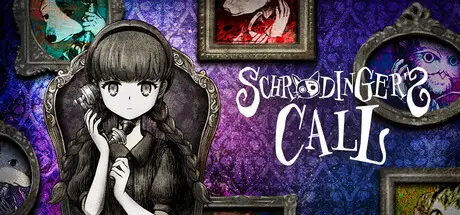
The moon is falling, and the world has twenty-one nanoseconds left. Then time stops. You are Mary, alone in a room that holds nothing but a phone, a chair, and a talking black cat — and the phone is ringing.

Pick it up and you learn the job. You are not here to stop the apocalypse. You are here to listen to the dying finish the sentence they never got to say. Schrödinger's Call is the debut from a three-person Japanese studio, Acrobatic Chirimenjako, published by Shueisha Games, out on PC and Switch on May 27, 2026. It arrives carrying a 92 'Mighty' on OpenCritic and a 97% Overwhelmingly Positive on Steam, and it never once tries to flatter you. It takes the quietest act there is — listening — and makes it the only thing you can do. Over the next ten hours this review will lay out exactly what that room is worth, where it soars, and why, for all its praise, it isn't for everyone. The short version up front: it's one of the most distinctive narrative experiences of the year, but what it asks of you isn't skill — it's patience, and a willingness to sit still and listen. Go in expecting a game to conquer and you'll bounce off it within the hour; go in ready to be quietly devastated, and it may be the most affecting thing you play in 2026.
Story | 9.5/10
ストーリー: 9.5/10An amnesiac girl answers the last phone call the world will ever make
The premise reads like a physics problem and lands like a punch to the chest. In the twenty-one nanoseconds before the moon strikes the Earth, time freezes and every soul hangs suspended between life and death — Schrödinger's cat, dragged out of the thought experiment and seated by a telephone. Mary wakes in this room with no memory of who she is. The only thing she knows is her title: the world's last Confidant, the one who answers when souls trapped by regret refuse to let go.

What makes the opening work is how much it shows and how little it explains. In its 10/10 review, Niche Gamer notes that everything is laid out in the first chapter, leaving you to "wonder and speculate: what the hell is going on?" You won't be told why the moon is falling, why Mary forgot herself, or who installed that phone. The game is in no hurry. It sits you down and lets the first call come in. That rhythm — mystery first, answers much later — is a bet on your patience: it wagers you'll stay seated in the fog a little longer, and it pays you back with the slow, accumulating click of understanding that arrives one call at a time. Plenty of stories front-load their hooks and then coast; this one trusts you to wait for the payoff, and the wait is the point.
Hamlet the cat, and the work of letting strangers say goodbye
Your guide is a talking black cat named Toby Notoby Hamlet — a nod to Shakespeare's "to be or not to be" that quietly states the theme before the game does: when death is certain, what is living for? Hamlet cheerfully explains that everyone is still alive, and everyone dies in twenty-one nanoseconds. It's a darkly funny way to frame the stakes, and the cat's dry, deadpan wit becomes a crucial pressure valve — without it, the relentless sadness would be airless. Hamlet is the rare comic-relief character that actually earns its place in the story, lightening the room just enough to let the heavy moments land harder.
Every caller is a soul pinned in place by unfinished business, each carrying a wound and a truth they never spoke aloud. Your job is to walk them to the end of that sentence. The site indiegame.com calls this "a quieter kind of agency, and a more emotionally resonant one." You save no one — the moon still falls — but you can make a single person feel heard in their last instant.

Across five chapters and one ending, Mary's own past unspools alongside the calls. Gamer Social Club spots the throughline: she is "the only person capable of helping those fully cross over." You think you are fixing other people. You are reassembling her, and yourself, one ring at a time. The structure is quietly clever: each stranger's confession is also a shard of Mary's mirror, so the more you help them cross over, the closer you come to the truth she's been carrying without knowing it. This isn't a game that runs a "help others" plot beside a separate "find yourself" plot; it braids the two into a single thread, so that every ounce of empathy you spend on a stranger circles back and lands on you. That return gives a single, branchless route a surprising sense of depth — the story doesn't widen, it deepens, peeling back one layer with each call until the last one lands somewhere you didn't expect.
It moves you hard, but it doesn't stay long
The themes need their context to land fully. According to indiegame.com, the game grew out of the collective trauma of the pandemic — that 2020-2021 sense of people forced apart. Three developers took the months they spent severed from each other and distilled them into a game about being heard. Regret, loss, disconnection, the hunger for contact: none of it floats in the abstract. It all lands on one specific caller at a time. And yet, in fairness, the impact is sharp rather than lingering. Awarding 8.3, GamerSky argues the nine-to-ten-hour frame keeps the treatment of mortality skin-deep, satisfying at the finish but thin on aftertaste. Where To the Moon leaves a dull ache that resurfaces months later, this is a clean, hard hit — devastating on contact, but the fist pulls back fast. It is the difference between a wound that scars and a bruise that fades by morning; both hurt, but only one stays with you. For a game this committed to feeling, that fade is the one place its ambition outruns its reach.
Audio | 9.0/10
サウンド: 9/10Wear headphones — the whole story lives in the sound
If this game gives one instruction, it is this: put on headphones. Nearly every review repeats it, and not as a courtesy. The storytelling genuinely rests its weight on sound. As indiegame.com puts it, you read emotion "through voice and ambient sound alone — no facial expressions, no body language." The callers are unseen. Everything you understand about them, you fish out of the audio.

That turns score and effect into information rather than backdrop. GamerSky describes a deliberate swing — from a swelling musical peak into dead silence, then a sudden burst back out — that, paired with the visuals, can feel close to a small revelation.
Silence becomes a sound of its own. When the music vanishes and only the hum of the line is left, the pressure is worse than any cue could manage. The game understands that what you don't hear can be louder than what you do, and it spends that silence carefully, holding it just long enough to make you lean in toward the phone.
Mumbled voices and a soundtrack that changes faces
There is voice acting, and it deliberately withholds clarity. DualShockers describes mostly incoherent Japanese murmuring that suits the limbo setting, voices that carry warmth, withdrawal and pain in the manner of Undertale's typing blips — you can't catch the words, but the feeling comes through clean. It's a bold trade: surrender legible dialogue for a rawer, more direct line into empathy.
When you can't parse the exact words, you fixate instead on how they're spoken — the catch in a voice, the half-second hesitation before a confession — and that turns out to grip you harder than any line of subtitled text could.

The score itself behaves like a character that keeps changing faces. Dissonant, atonal lines crank the anxiety up; calm synths pull you down into the limbo, and the music tracks each caller's exact state of mind. As a soul moves from resistance to release, the sound slides from grating distortion into something tender, so that the score is effectively narrating the emotional arc you can't see on anyone's face. You always know where a caller stands not because the writing tells you, but because the music already has. The integration is seamless enough that reviewers finished it begging for one thing: put the soundtrack on streaming. For now it's a separate $8.99 album — which is its own quiet endorsement of how good it is. Across every outlet that scored it, the audio is the one column nobody argues with; even the reviews that dock the writing or the runtime reach for the same word about the sound, and that word is essential. It is the rare case where turning the volume up isn't an option but a requirement, where the difference between speakers across a room and headphones over your ears is the difference between watching a story and being inside one. Play it on a tinny laptop speaker and you'll get the plot but miss the point; the whole experience is calibrated for that close, enveloping intimacy, and stripped of it, the game loses the very channel it does its best work through.
Visuals | 8.5/10
グラフィック: 8.5/10A picture book drawn by three people, warm enough to be a trap
The first thing you notice about the art is how soft it is. Hand-drawn, picture-book illustration; warm, gentle color; character design that is simple but expressive. The site indiegame.com finds the precise word for the effect: the softness sits in deliberate tension with the apocalypse, until comfort becomes "a deliberate trap." You think you're paging through something cozy, and every page is a goodbye.

For the debut of a three-person team, that level of unified, mature visual identity is rare. DualShockers catches a telling detail: the game leaves deliberate gaps between animations, so transitions carry the nostalgic rhythm of "flipping through the pages of a picture book." It doesn't chase fluid full motion. It uses those frame-by-frame pauses to amplify the act of reading that defines the form — you turn the page yourself, and each pause gives the emotion room to breathe.
The same restraint shows in what it refuses to show. Instead of flooding the screen with effects, it often holds a single line of dialogue against empty space or a flat color field. When the frame is that bare, the one bit of color that arrives, the one small shift of expression, carries maximum weight.
Three people can't out-budget a 3A art department, and they don't try. What they do instead is choose — what to draw, what to leave blank, when to hold a frame and when to cut. That editorial discipline gives the game a visual voice that a far bigger production, busy filling every pixel, often loses. It is the difference between a studio that can afford everything and a studio that has to mean every line it draws, and that necessity reads as intention on the screen. Nothing here is decorative; every panel is doing emotional work, because a team this size simply can't spare a frame that isn't. The result is an art direction with a stronger point of view than many games with fifty times the budget, precisely because it had to decide what mattered.
Shinbo-style montage, and a face that won't sit still
But soft is only half of it. What reviewers return to is the ambition of the staging. GamerSky lines its visual language up directly against Akiyuki Shinbo: a refusal of spatial continuity, high-frequency visual shocks, montage that strings calls together through the phone, the moon, the rotary dial. The frame leaps from realism to a close-up of the dial or a silhouette of the moon, then snaps back to the room — a sweep you almost never get in a category built on static portraits.

Better still, it refuses to let you settle. LadiesGamers notes the art occasionally resembles a traditional manga visual novel but "never stays visually comfortable for long. Faces distort. Shadows blend," and that instability does the thematic work. Color speaks for the plot, too: Gamer Social Club observes that Mary's room is stark black-and-white, and color floods in only when a caller arrives and memory pours back. Even the cat's animation set is richer than the deliberately blank protagonist's, promoting Hamlet from narrator to a figure with real presence — and that contrast is intentional. The flatter Mary's face stays, the more sharply the souls she answers and the wisecracking cat read by comparison; her stillness is the neutral ground the emotion plays against.
One caution: DualShockers flags the rapid flashing and distortion as a potential photosensitivity and motion-sickness trigger, so sensitive players should go in forewarned. It's the unavoidable price of treating the image as an emotional weapon rather than a comfort: a game willing to hit you with its visuals instead of merely pleasing you was never going to be gentle on everyone.
Combat | 7.0/10
ゲーム性: 7/10A notebook, a phone, and choices you can't really fail
Strip the systems down and there is almost nothing here: answer the phone, jot the details a caller lets slip into a sketchbook, pick one reply from two or three options, move the conversation forward. Anyone who has touched Ace Attorney or Danganronpa picks it up instantly, because the surface is nearly identical — a notebook threading clues, choices nudging the story.

The choice system, though, hides a design that will make hardcore players wince. GamerSky bluntly notes that "everything but the right answer is laughably wrong," and there is no fail state: pick wrong and the game steers you back, with — as Gamer Social Club puts it — "Hamlet nudging you in the next direction or Mary questioning the choice." As pure mechanical play, it's closer to a ritual of progression than a puzzle that asks anything of your head. That is the main reason gameplay sits at a 7: judged purely as a system to beat, there isn't much system and there isn't much to beat. If you measure a game by the depth of its mechanics, this will read as one of the thinnest "games" you've played all year. There is no contradiction-spotting, no evidence-juggling intellectual sparring of the Ace Attorney kind, and getting it wrong costs you nothing. GamerSky also mourns one absence: you get no dialogue options with Hamlet, the only character besides Mary with any real presence, so a relationship that could have had texture stays stuck at narration.
What you're solving isn't a case — it's why someone can't let go
Flip the angle, though, and that simplicity is the most distinctive thing about it. Same notebook, same options, but where Ace Attorney has you solving a case, Schrödinger's Call has you solving why a person can't let go. Niche Gamer nails it in its perfect score: this needs "actual social skills and empathy," and a few key choices are genuinely hard, because you're reading a person's situation rather than chasing a logic chain. The hard part isn't deduction, it's restraint — knowing when to push a grieving stranger and when to simply let the silence sit. Get that wrong and you can feel the conversation cool, which is a stranger and more affecting kind of failure than any "wrong answer" buzzer.

The cost of a wrong answer isn't a game over — it's a caller pulling away, and that "I didn't catch them" deflation pushes you to listen harder. The site indiegame.com calls it "a quieter kind of agency." You don't control the ending. The moon falls regardless, and a single route gives you no branches to chase. But the restraint is the point: it doesn't want you to win, it wants you to hear. The choices aren't there to test your reflexes or your deductive skill — they're there to make you commit to a way of listening, to decide whether you'll meet a frightened stranger with patience or with the easy, wrong line. That's a different muscle than most games exercise, and the game knows it.
For newcomers the zero-friction interaction is a gift; the game never punishes you for not knowing visual-novel conventions, and it carries you gently through its rhythms. But for anyone who craves strong agency, who wants their inputs to bend the story and their failures to sting, it will feel far too passive — a guided tour through someone else's grief rather than a system you can master. Go in expecting the latter and the friction will never come; go in expecting the former and the lack of friction is exactly the point. The honest framing is that "gameplay" is almost the wrong lens here: this is interactive fiction that uses the grammar of a deduction game to make you slow down and pay attention, not to test you. Score it as a puzzle and it's a 7; experience it as a guided act of listening and the number stops mattering.
Content | 6.5/10
ボリューム: 6.5/10Nine to ten hours, five calls, no wasted minute
This is a small, polished thing, and its size is the number you most need up front. The main story runs nine to ten hours — HowLongToBeat puts the main route near nine — across five chapters, one route, one ending. Game8 does the math for you: eight to ten hours of consistently high-level storytelling clears any doubt about paying $17.99 for a single-route visual novel. It doesn't pad replay value with dead-end branches; every minute goes into telling one story well.

The small frame has a cost, though. GamerSky argues that those same nine to ten hours cap how deep the themes can go, leaving its take on mortality skin-deep and short on aftertaste — the most concrete weakness here, and why content sits at 6.5.
Some players also flag a saggy back stretch: once you've guessed the destination, replaying the same call surfaces little new, and the ending drags. The substance can't sustain ten straight hours of peak; the best of it clusters in the middle, where the calls still have the power to surprise you and the central mystery hasn't yet shown its hand. By the final chapter, the emotional logic is mostly settled, and the game spends a little too long confirming what you already feel.
A second run, a soundtrack, and whether the eighteen dollars holds up
If the first pass lands, the game quietly earns a second. DualShockers stresses that the opening run is too emotionally heavy to catch everything, and that depending on what details you notice, a replay reaches an "entirely different perspective." That keeps those nine to ten hours from being strictly disposable; for anyone willing to sit with it, the replay value is real, and it's the good kind — not a hunt for missed collectibles but a genuine shift in how the whole story reads once you know where it's going. The first pass, you're carried by emotion; the second, you finally notice the foreshadowing seeded early on, and realize that lines you took as throwaway were load-bearing all along. It's the kind of structure that rewards attention rather than completionism, which is rarer than it sounds.

Extras are spare: the only DLC is an $8.99 soundtrack, no season pass, no roadmap of big updates. There are five Steam achievements, cloud saves and Family Sharing, plus an Episode 1 demo to try before you buy — the demo sat at 96% positive, which is as honest a sales pitch as a developer can offer: play the first chapter for free, and if it doesn't get its hooks in, you've lost nothing but an evening. Given how sharply this game divides on temperament rather than quality, that demo is the single best way to find out which side of the line you fall on before you spend a cent. As for whether the $17.99 is earned, the critical consensus is yes: it doesn't justify its price with bloat, it justifies it with density that never slips. You're not buying hours, you're buying an experience that doesn't slacken for a second — the exact opposite of the games that fill a progress bar with collectibles and side errands.
Because it refuses to overstay, every one of those calls has a reason to exist. Nothing is filler, nothing is grind, and nothing is there to inflate a number on a store page. For a story built entirely on emotion, that economy isn't a shortcoming so much as a thesis: say what you need to say, then hang up. It is a rare thing to finish a game wishing it had been longer for the right reasons — not because it left content on the table, but because you weren't ready to leave its company. That is the kind of brevity most games never earn. Compare it to the open-world giants that pad a hundred hours with towers to climb and chests to crack: this is the opposite philosophy, and for a story whose only currency is feeling, the discipline is not a flaw but a thesis. Say what you came to say, then put the receiver down.





コメント 0
ご意見をお聞かせください
このゲームについての感想や評価をお寄せください。
まだコメントはありません。このレビューへの感想をぜひどうぞ。