ニュース
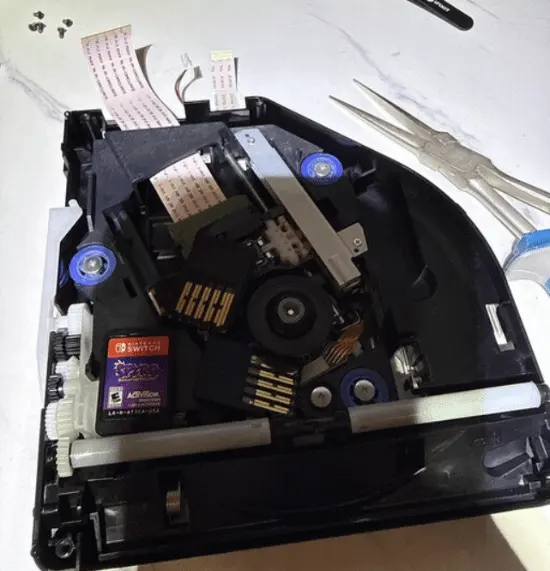
Luigi's Mansion 3 Somehow “Killed” a PS5 Disc Drive in a Switch Cartridge Stunt
A father opened a PS5 to find the disc drive jammed with Nintendo Switch game cards, turning a baffl
















When a family handles educational issues by “smashing devices outright,” the game has already been badly played. Recently, a ninth-grade boy in Japan posted on social media that after his secretly hidden Switch was discovered by his parents, they smashed it on the spot, quickly sparking heated discussion online. Looking at the timeline, he had posted on April 6 saying that it was his first day of school after moving up to the ninth grade, and then updated again on April 7, saying that his parents had finally found the Switch and that he would never be able to play games again. Even more troubling, he later added that this was not the first time his parents had destroyed his game console.
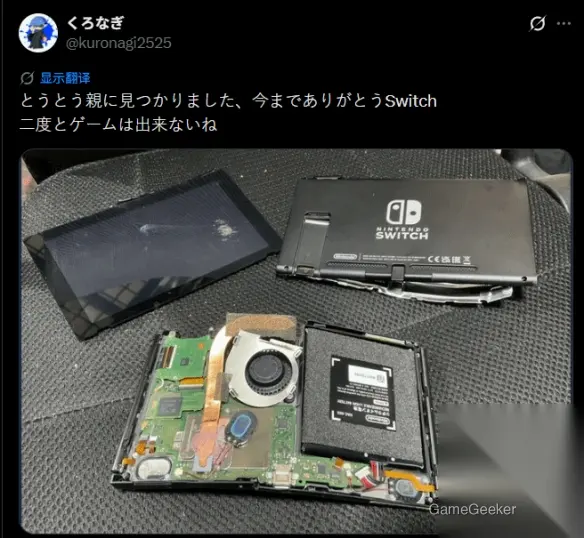
From a systems-design perspective, setting rules for children is of course not inherently wrong, but “confiscating” and “smashing” are two completely different levels of decision-making. The former is at least still a form of resource control—like limiting action points in a turn-based game—with the goal of pulling someone back on track; the latter is flipping the board entirely, which only wipes out any room for communication as well. Precisely for that reason, after the incident spread, many netizens directed their criticism at the parents, believing this approach was clearly excessive—not ordinary punishment, but a crude response that could cause both psychological and physical harm.
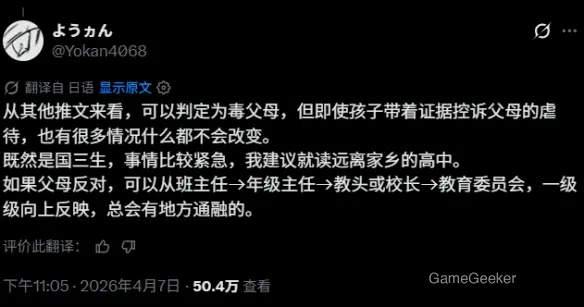
In terms of strategic depth, a small number of voices also brought up another real issue: whether the child’s studies had been affected by game addiction, which is indeed worth reflecting on. After all, the academic pressure of the ninth grade is there for everyone to see, and parents’ anxiety is not hard to understand—especially when the child chose to “hide it secretly,” which suggests that trust between the two sides had already developed cracks. But the problem is that academic performance and the parent-child relationship are not a zero-sum game. If parents rely on destroying belongings every time to establish authority, what they gain will not be obedience, but something more like the long-term accumulation of resentment.
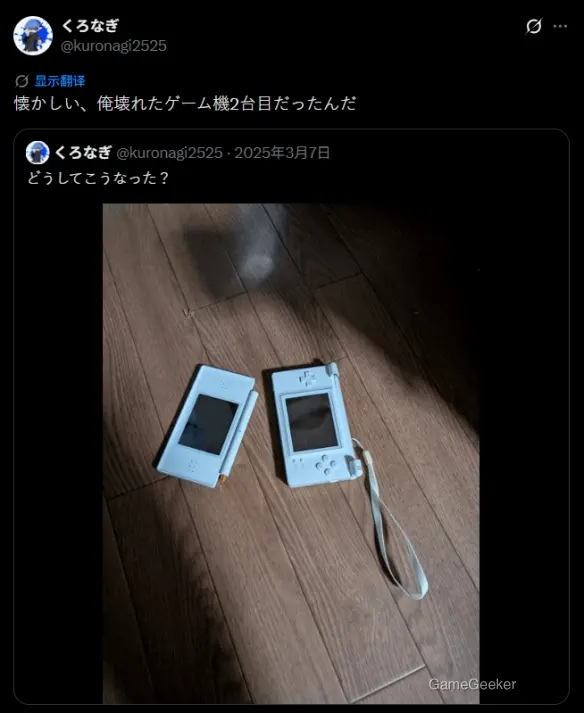
There was also another category of advice in this wave of public opinion that was very realistic. Some netizens reminded the student to think about becoming independent in the future, and even suggested preserving relevant evidence. That advice may sound cold, but behind it is actually a broad consensus about boundaries: parents have the responsibility to educate, but that does not mean they can dispose of their child’s personal belongings however they please. Especially after the student explicitly said, “This is not the first time my game console has been destroyed,” the matter no longer looks like a single emotional outburst, but more like a recurring pattern of high-pressure behavior.

As a veteran gamer, I have always felt that truly effective management is not about smashing a console into parts, but about turning rules into a turn schedule that both sides can follow. For example, setting fixed playtime periods, unlocking entertainment time after learning goals are completed, or even writing out a clear weekly plan—these are all far more sophisticated than simply destroying the device. Because when a Switch is smashed, what is lost is not just the machine itself, but also the trust points that are already scarce within the family; and once that trust is reduced to zero, rebuilding it later is often harder than solving even the most difficult endgame.

コメント 0
ご意見をお聞かせください
コメント欄へようこそ。このゲームの感想を聞かせてください。一番乗りにはうれしいことがあるかも。
コメントはまだありません。最初の一件をどうぞ。