News
A Viral Old PlayStation Store Photo Asks if the 1999 Dream Still Lives
A 1999 PlayStation Store photo has sparked a wave of nostalgia on Reddit, drawing gamers back into a
















A 1999 photo of a PlayStation retail store is what’s driving discussion this time, not a new digital storefront, subscription perk, or online feature.
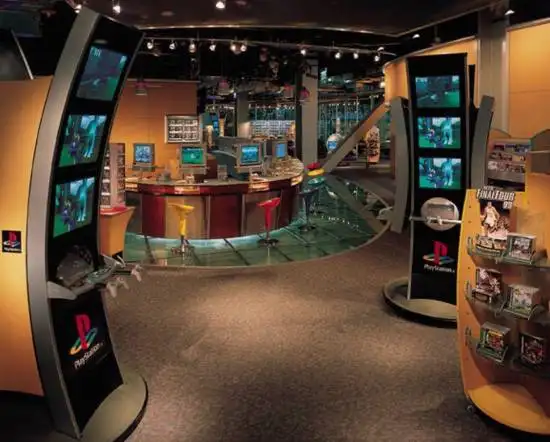
Recently, a user in Reddit’s PlayStation community shared an old photo showing the PlayStation brick-and-mortar store inside San Francisco’s Metreon shopping center. On its own, that is not major news. What makes it interesting is why a single image of an old store can still strike such a nerve with players today.

The photo shows a store design that feels unmistakably of its time: bright decor, dense rows of screens, and a futuristic visual language with a strong Y2K identity. It is the opposite of the minimalist, standardized retail spaces common today. Instead, it looks like a hardware company’s concentrated attempt to present itself as the gateway to future entertainment. In a sense, it resembles an early second-generation product test: maybe not the most complete in function, but instantly recognizable.
More importantly, the real point is not just the decor, but how the space was built around player behavior. The store had multiple demo stations, along with shelves packed with PlayStation game discs, accessories, and merchandise. That meant visitors were not simply there to buy something. They could look, try, compare, and then decide whether to spend. For the platform holder, stores like this handled three jobs at once: brand display, content distribution, and user education. For players, they offered a kind of immersion that today’s digital storefronts still struggle to fully replace.
Some commenters recalled playing demos there and taking part in launch events. One user remembered the launch-day lines being so large that “half of us had to line up at the side entrance, while the other half lined up at the front.” Memories like that last not because the store itself was exceptionally luxurious, but because it turned buying a game into an offline event people kept talking about. Other comments focused more on the look of the place, with some saying outright that they missed this style of store design.

From a design standpoint, the value of physical retail back then was that it made the PlayStation platform feel concrete. In the digital era, platforms are more efficient, reach more people, and reduce the friction of buying. On pure value and convenience, there is barely any argument. But the weakness is just as obvious: the experience has been broken down into accounts, pages, buttons, and notifications. Efficiency went up, yet the memories became thinner. What older players miss is not only the old environment, but the certainty that the platform had a real, physical presence.
Placed in the context of broader industry trends, the response is easy to understand. Game consumption today works more like a standardized service. Accessing content is easy, while launch-day atmosphere increasingly depends on community posts and clipped livestreams. The former is more efficient; the latter carries more emotional weight. It is hard to maximize both at once. This 1999 PlayStation store represents a specific moment, one where companies were willing to pay the spatial cost of staging an experience, and players were willing to spend time just to be there.
That is why the spread of this old photo feels like more than ordinary nostalgia. It is also a look back at a different model of games retail. It is a reminder that platform competition has never been only about content and price. It is also about how the experience is packaged, remembered, and shared. Today’s digital ecosystem clearly leads on convenience, but in terms of emotional residue and brand warmth, the physical-store era still holds an advantage that has not been fully replaced.


Comments 0
We'd love to hear from you
Welcome! Share your take on this game — being first might come with a surprise.
No comments yet. Be the first!