News
Bunny Garden 2 Remake Debuts at CJ2026 With No Release Date Yet
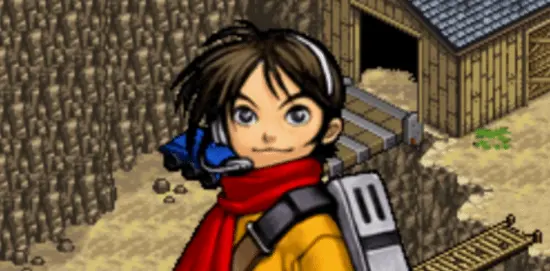
Metal Max: Steel Season Remake made its playable debut at ChinaJoy 2026, nearly 20 years after the divisive 2006 NDS ori
















Open the door with a quick horizontal comparison: in the console camp, PS5’s backward compatibility with PS4 is already quite mature, while the PS3 library has always felt like it’s been locked away in a separate room. On PC, the community has been nibbling away at the legacy library through emulators bit by bit, and with the current progress of RPCS3, it’s starting to vaguely resemble an “official compatibility team.”

Compared with a few years ago when I first tinkered with RPCS3, the biggest change now is that the performance bottleneck has been pried open in a big way. The devs have announced a breakthrough in emulating the Cell architecture; put simply, the CPU wall that used to block everything has been lowered quite a bit. Action games with heavy performance demands like Twisted Metal now have more stable framerates in the latest version and no longer suffer frequent slowdowns like in early builds. More importantly, this optimization isn’t just “feeding the top-tier rigs steak” — almost all CPUs get a share of the benefits.

If I compare it across a few devices I have on hand, the change is even more intuitive: in the past, if you wanted to run GT5 on PC, you basically needed at least a mid-to-high-end processor, otherwise it felt like trying to cram the PS3 version into an old laptop. Now, as the team’s example shows, even a dual-core Athlon 3000G runs GT5 better in the new version. That’s essentially lowering the “PS3-grade racing experience” from high-end gaming platforms down to entry-level PCs. Compared with brand-new AAA titles that routinely demand top GPU configs, RPCS3 feels more like it’s lowering the barrier to old games, rather than building you another expensive console.
Looking at compatibility, the numbers are starting to feel a bit “era-defining.” According to The Gamer, the RPCS3 team says that around 73.94% of PS3 games are now fully playable from start to finish. In the category of “can boot but only reaches the intro,” there are only about 60 titles left, over forty of which are PlayStation Move motion-control games. Compared with the early days when “getting to the menu” was enough to pop the champagne, it has now upgraded from “novelty emulation” to something that can act as a “main gaming machine.” Especially for players who don’t care about motion-control games, the playable library is already quite substantial.

If you compare it to how other platforms are filling out their back catalogs, the differences are pretty obvious. Nintendo leans on official ports and NS Online to slowly punch tickets; Xbox uses backward compatibility and FPS Boost to revitalize old discs; but PS3-era titles have never really had a unified home within Sony’s own ecosystem. That leaves a big value gap for RPCS3 to fill. For players who already own a PC and want to revisit Twisted Metal or similar classics, there’s no need to hunt down an old PS3 in unknown condition — you can just complete the whole experience right at your desktop. That level of convenience is something no amount of original-hardware nostalgia can truly make up for.
Of course, a horizontal comparison also highlights the emulator’s shortcomings. Versus a PS3 where you just insert the disc and play, RPCS3 still requires you to tweak settings and tune configs; for some tricky games you even have to look up the community’s best parameters. And the fact that PlayStation Move remains difficult to fully replicate means that for motion-control fans, the original console is still irreplaceable. It’s like Dark Souls: the PS5 version is plug-and-play with stable latency, while the PC version gives you the freedom of mods and high framerate — each has its trade-offs. RPCS3 and original PS3 hardware will very likely end up in a similar relationship: one focuses on “pure original flavor,” the other on “high resolution and cross-platform convenience.”
If I really had to offer buying advice, I’d draw the line like this: if you already have a mid-range PC and mainly want to catch up on traditional PS3 titles like single-player, racing, and action games, then you can prioritize RPCS3 now — both completeness and smoothness of the experience have reached a “worth the effort to tinker” stage. But if you have a rigid need for motion-control party games, or you value the “just insert the disc and enjoy brainless smoothness” experience more, then the original PS3 still has its place. As compatibility continues to improve, the PS3 library on PC is likely to gradually approach “full-library playable.” When that day comes, choosing a platform will really just be a single-choice question between whether you lean more toward nostalgic authenticity, or you prefer the convenience of multi-platform integration.




Comments 0
Share your game review
Join the discussion and share your review of this game.
No comments yet. Share your review.