News
With The Shadow Syndicate Hearts of Two halted, why do new stealth games keep falling through?
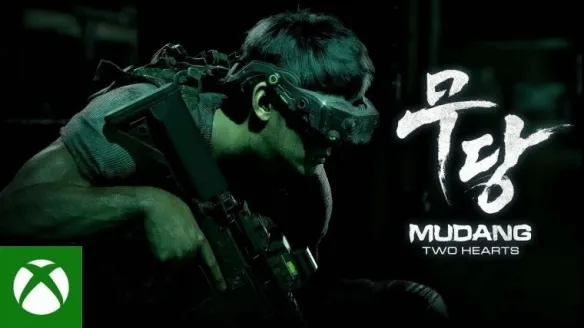
WUCHANG: Fallen Feathers? No. Wutang: Double Hearts has halted development after Seoul’s bankruptcy
















On June 26, 2026, Epic Games CEO Tim Sweeney used an interview on PC platform competition to criticize Steam’s closed approach. He argued that Valve still dominates PC, but by not carrying Fortnite, Genshin Impact, and Riot’s full lineup, it has missed both their players and the growth that comes with them. Asked whether Epic and Valve could build a Team Open alliance around shared interoperability standards, Sweeney said Epic is willing to push platform connectivity further.
That argument rests on a straightforward point. Fortnite is not on Steam. Riot’s ecosystem is not on Steam. Genshin Impact is not on Steam either. Sweeney’s broader claim is that Steam remains the strongest platform on PC, yet it has left obvious demand outside its own walls, which in turn limits how much further it can expand.

The bigger question in the interview was Team Open itself. When the host asked whether Epic and Valve could work together on a shared standard, Sweeney said Epic is willing to connect platform services with any company. The goal, as he framed it, is to break down barriers and connect players across the global games market. If platforms, accounts, and services really did become more interoperable, players would face less friction moving between devices, stores, and ecosystems, while developers would have a more direct route to their audiences.
Even so, Sweeney did not pretend that Valve is about to change overnight. He said it remains to be seen whether Steam will move in a more open direction. That caution matters, because Steam’s strength is not just its storefront reach. It also comes from years of accumulated advantages in community features, libraries, wishlists, and Workshop support. You can argue that Valve left growth on the table, but it is harder to argue with how deeply Steam is embedded in player habits and purchasing behavior.

Sweeney also pointed to Microsoft Store and Google as examples of the upside of a more open model. The interview notes that Microsoft Store takes only 12%, while Google has introduced more developer-friendly policies and is preparing multiple new game-related features. For publishers, that kind of shift matters. If platform fees, distribution terms, and service support become more attractive, developers will reconsider where and how they launch.
Epic, however, cannot make that argument without facing questions of its own. Sweeney openly admitted that the Epic Games Store client’s sluggish performance has been a major headache. He said the team is fully rebuilding the client’s underlying program, and after testing it himself, he believes the new version already feels significantly improved. That is the practical limit of Epic’s argument right now: calls for openness and interoperability are easy to endorse, but if the client experience is still rough, players will remember the ambition and still walk away from the product.




Comments 0
We'd love to hear from you
Welcome! Share your take on this game — being first might come with a surprise.
No comments yet. Be the first!