Seleção de Delta 赵 · ·listDetail.views: 3,138 Comentários
Co-op simulations are most vulnerable to ending up neither here nor there: either the systems are too shallow and the excitement fades after one lively night, or the barrier to entry is so high that teammates get discouraged before they even figure things out. This list is ranked by “the games most worth playing together over the long term,” focusing on three core factors: whether the gameplay systems can support meaningful multiplayer role division, whether the objectives and progression are clear and increasingly rewarding over time, and whether the game’s reputation and overall polish can stand the test of time. Categories like farming management, off-road transport, submarine teamwork, and base building are all included, but the ranking prioritizes overall quality rather than simply how new a game is or how popular its theme may be.
Co-op sims are most likely to fail in one of two ways: either the systems are too shallow and the fun burns out after one lively night, or the barrier to entry is so high that teammates get discouraged before they even figure things out. This ranking is based on “the most worthwhile games to play together long-term,” focusing on three core factors: whether the gameplay systems can sustain multiplayer role division, whether the progression goals are clear and continue to feel rewarding over time, and whether the game’s reputation and overall completeness hold up under the test of time. Farm management, off-road hauling, submarine cooperation, and base building all count here, but the ranking prioritizes overall quality rather than simply a game’s age or the popularity of its theme.
Image: Farming Simulator 22
Tags: Simulation, 2, 1, 9, 38
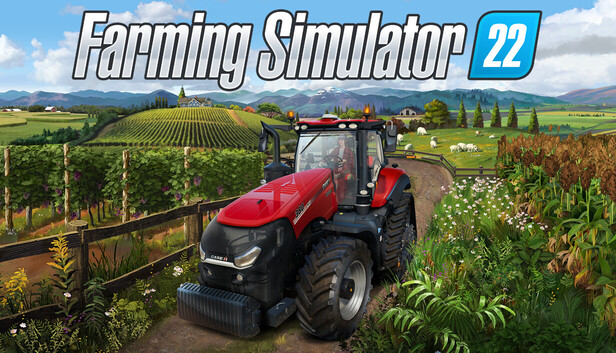
Farming Simulator 22 stands out for being “steady” and “detailed.” It doesn’t rely on sudden chaotic moments to carry the experience; instead, it builds multiplayer cooperation on a fully realized agricultural chain: one player handles sowing and harvesting, another manages livestock and greenhouses, while others focus on transport and production processing, making role division feel natural. The seasonal system, equipment differences, and economic loop ensure that every round of effort brings a clear return. The learning curve isn’t low, but the rules are transparent and the content is mature, making it ideal for a regular group to run one map over the long term.
Image: SnowRunner
Tags: Adventure, Simulation, 2, 1, 9
SnowRunner excels because “route planning” is gameplay in itself: mud, snow, rivers, and slopes all realistically affect traction and load judgment, while winches, differential locks, tires, and trailer combinations directly determine whether cargo can be delivered. Multiplayer isn’t just about driving together—it naturally splits into scouting, towing, resupplying, and crane work. The pace is slow, but every repaired road segment and every newly unlocked truck delivers a very solid sense of progress, especially for a regular team willing to refine their coordination over time.
Image: Barotrauma
Tags: Action, Indie, Simulation, Strategy, 2
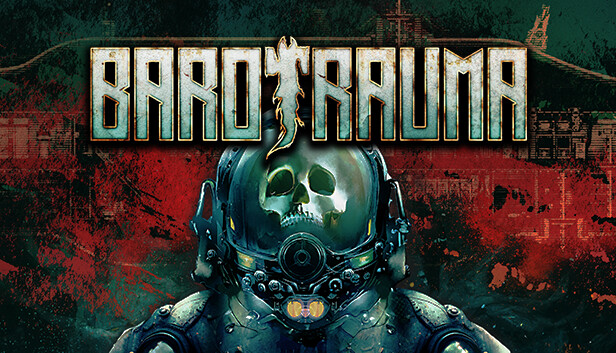
Barotrauma shines through its extremely hardcore “role-based cooperation”: piloting, repairs, medicine, electrical work, and gunnery each have their own responsibilities, and a mistake in any one link can trigger a chain-reaction disaster. It doesn’t just pile on tasks; it tightly weaves submarine structure, resource management, crew growth, and random crises into one high-pressure system that rewards increasing familiarity with stronger team synergy. Unlike more common farming or building sims, the fun here comes from real-time coordination and crisis management. It creates plenty of memorable moments and stays fresh even over long-term group sessions.
Image: Farm Simulator 25
Tags: Simulation, 2, 1, 9, 38
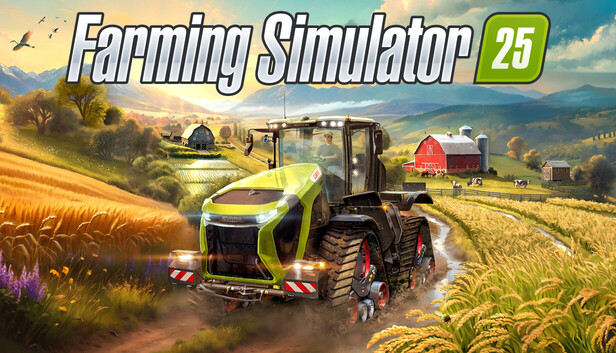
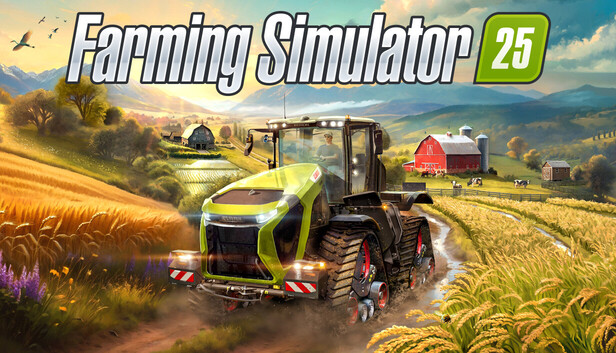
Farming Simulator 25 is strong because it is “stable, detailed, and built for long-term division of labor.” Farming, livestock, and forestry all run in parallel, and everything from sowing and fertilizing to harvesting, logistics, and selling follows a clear rhythm. In multiplayer, it works especially well when one person manages machinery, another handles transport, and a third oversees the production chain. It doesn’t depend on sudden spectacle; instead, it turns co-op into genuinely planned management through its huge lineup of licensed machinery, solid economic loop, and continuous expansion goals.
Image: Abiotic factors
Tags: Action, Adventure, RPG, Simulation, 2
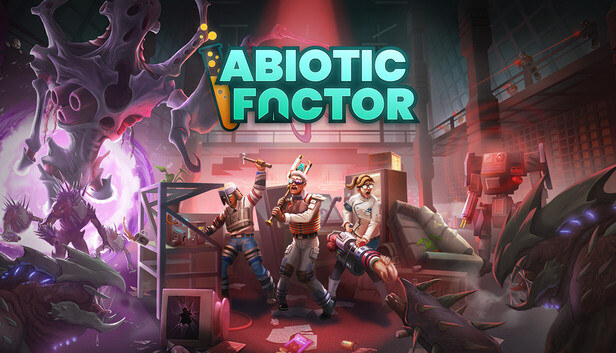
Abiotic Factor stands out by giving “research facility survival” a very clear division of labor: some players head out to gather resources, some build and fortify the base with traps, while others focus on research to unlock gear and recipes. It isn’t just another reskinned wilderness survival game—the setting revolves around experimental zones, dimensional rifts, and containment failures, with combat, exploration, and crafting tightly interlocked. In multiplayer, cooperation feels highly valuable, progression goals are clear, and it combines a strong paranormal atmosphere with a reliable mid- to long-term growth loop.
Image: Fast Food Restaurant Simulator
Tags: Indie, Simulation, Early Access, 2, 1
It nails the most important thing in a co-op sim: being busy, but busy in a structured way. Taking orders, working the grill, assembling meals, packing, restocking, and managing kitchen flow are all naturally suited to multiplayer role division, and 6-player co-op turns kitchen chaos into something closer to executable process optimization. Compared with more construction- or long-term management-focused games, its feedback loop is shorter and denser—you can feel your teamwork improve in a single session. With a 90% positive rating and ongoing updates, it’s a very reliable regular pick for friend groups.
Image: Kingdoms Reborn Kingdoms Reborn
Tags: Indie, Simulation, Strategy, Early Access, 2
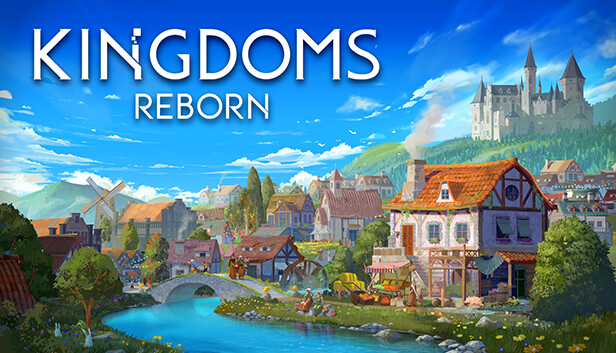
Kingdoms Reborn is especially good at blending city-building, resource chains, and multiplayer interaction into a smooth whole. It isn’t about everyone building isolated villages; instead, players compete for land, trade with each other, and fight over key resource points on the same open map. Even in cooperation, there’s naturally a bit of strategic tension, which makes it highly discussion-driven. Its card-based unlock system allows for more flexible development paths, while technology, happiness, pollution, and era progression all create long-term goals. Compared with pure farming or survival-building games, it leans more toward systemic planning, making it a great fit for groups who like to figure out division of labor and production chains together.
Image: Age of Core Protection
Tags: Action, Adventure, Indie, RPG, Simulation
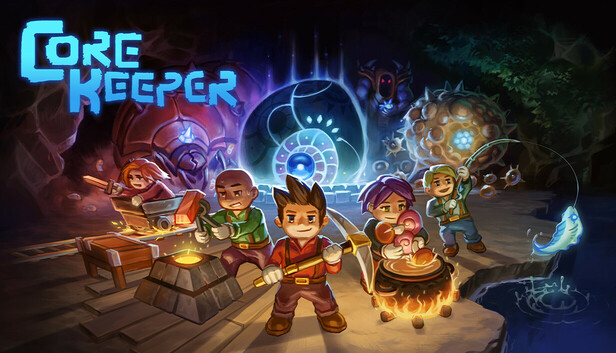
Core Keeper is strong because it creates a very smooth multiplayer loop: mining and uncovering the map, laying power and rails, splitting duties for farming and cooking, then running dungeons and fighting bosses—almost every step naturally breaks down into cooperative roles. The top-down perspective keeps the controls approachable, while gear, skills, automation, and base expansion add enough depth in the mid and late game that it doesn’t run out of steam after just a few nights like more party-oriented games often do. Its cavern exploration offers clear growth rewards, the pacing is tighter than most survival builders, and it’s easier than management-heavy games to get teammates fully engaged.
Image: The Riftbreaker Galactic Riftbreaker
Tags: Action, Adventure, Indie, RPG, Simulation
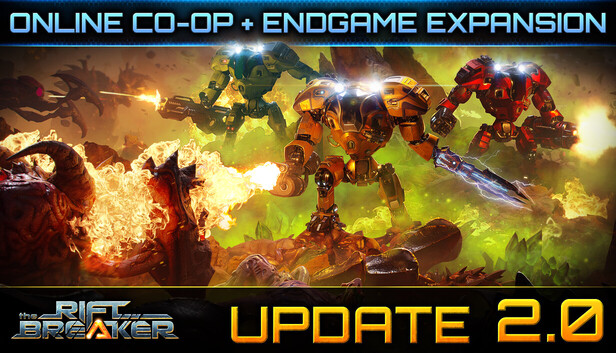
The Riftbreaker is at its best when it fuses twin-stick horde-clearing, tower defense, and resource-chain management into a single closed loop: clear swarms on the front line to make space, then build out power grids, mining, refining, and turret networks in the rear, creating a very smooth rhythm of advancement. It has more hands-on action than pure builders, but also more base planning and tech-tree decision-making than pure action games. In co-op, some players can hold the line, some expand, and others maintain logistics, so role division feels natural. Even in the mid and late game, it still delivers clear growth feedback, making it less likely to devolve into a one-night novelty.
Image: Conan: Exiles
Tags: Action, Adventure, Massively Multiplayer, RPG, Simulation
Conan Exiles is strong because its “survival building + stronghold offense and defense” loop is solidly executed. In the early game, gathering, thrall taming, and gearing up all offer clear role division; in the mid and late game, cooperation becomes more and more valuable as everything starts revolving around base location, thrall profession combinations, and Purge attacks. It isn’t a lightweight party game—the learning curve and travel time are both on the high side—but in terms of content depth, building freedom, and long-term progression payoff, it genuinely does a better job of keeping regular groups invested than many of its peers.
Image: Crime Scene Cleaner
Tags: Action, Simulation, 2, 22, 23
Its strength isn’t “multiplayer chaos for chaos’s sake,” but the way it breaks dirty work into a collaborative process: finding evidence, moving bodies, cleaning blood, repairing the scene, and handling sudden complications, with every step putting pressure on both time and mistakes. The theme is dark, but the mechanics are very clear, teammates naturally fall into different roles, and communication has real value. Compared with more construction- or long-term management-focused co-op sims, its per-session feedback is denser and the pace is tighter, making it especially good for quickly getting a group of friends into the flow.
Image: Goat Simulator 3
Tags: Adventure, Casual, Simulation, 2, 1
It doesn’t win through detailed management; its strength is turning “multiplayer mischief” into a complete gameplay loop. The open map is packed with puzzles, collectibles, minigames, and absurd physics interactions, so in four-player co-op everyone can split up to cause trouble and then regroup for even more chaos. Unlike building or survival games that emphasize role division and coordination, Goat Simulator 3 has virtually no barrier to entry, yet its feedback density is astonishingly high. In a friends’ session, it works both as a party game and as something with enough map content to support several nights in a row.
If you only want one co-op sim that can reliably support regular group sessions without the team drifting away, start with the top of the list. They share the same clear strengths: role division matters, progression feels rewarding, and repeated play still keeps uncovering new fun.

 Eneba$7.26Steam $7.26Ver preço →

 GAMIVO$11.54Steam $11.54Ver preço →

 Steam$19.99Ver preço →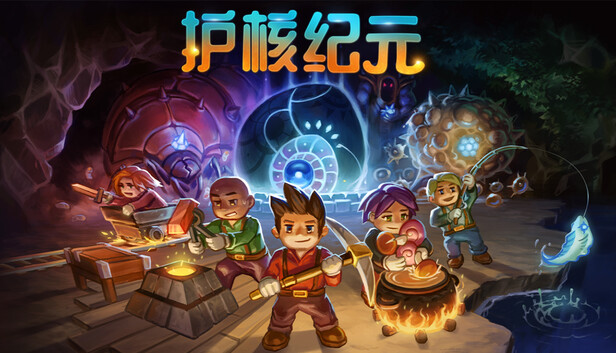










Comentários 0
Queremos saber sua opinião
Participe da discussão e compartilhe sua opinião sobre este jogo.
Ainda não há comentários. Seja o primeiro.