























Opening
Three people. A box of crayon-simple polygons. And 254 players crammed onto a single map they can blast open and rebuild on the fly. That is BattleBit Remastered, and on paper it has no business working at all.
There are no realistic textures here, no cinematic cutscenes, not even a face on the soldiers you fight beside — just a few blocks of colour stacked into a silhouette. And yet, in the summer of 2023, this was the loudest breakout on Steam: 1.8 million copies in two weeks, a peak of 87,323 players online at once, and a sales chart it briefly sat on top of.
The trick reveals itself the moment you load in. You brace for a game too plain to carry a spectacle, and instead two hundred-odd players are pushing, breaching, raising sandbags and calling in vehicles all at once, your headset thick with the shouts of strangers crouched on the far side of a wall. That is when it clicks: fidelity was never the point. Presence was.
This review is not about whether the visuals earn a five. It is about what this deceptively plain shell is hiding, where it stumbles, and whether — after a meteoric rise, a long silence, and a comeback teased in 2026 — it is still a battlefield worth joining today.
Story | 6.0/10
劇情: 6/10Open BattleBit Remastered hoping for a narrative and you will come up empty. No campaign, no cutscenes, not a single scripted line. But empty is the wrong word, because the stories are there — they simply grow out of each match instead of arriving pre-written. That is the whole reason story lands at 6.0: measured with the old ruler it scores near zero, yet swap in a ruler built for emergent fiction and it turns out to be quietly moving.
The script is the players, and it writes itself every round
Every story this game tells is one the players generated on the spot. In a single round you might hold a bridgehead with a handful of strangers you have never spoken to before, then bump into them again two maps later in a pile of rubble. You might watch an engineer throw up cover at the last possible second and save the whole squad, or curse a stray shell that collapsed your own protective wall. None of it is scripted, and yet it sticks in the memory far harder than most linear set pieces do.
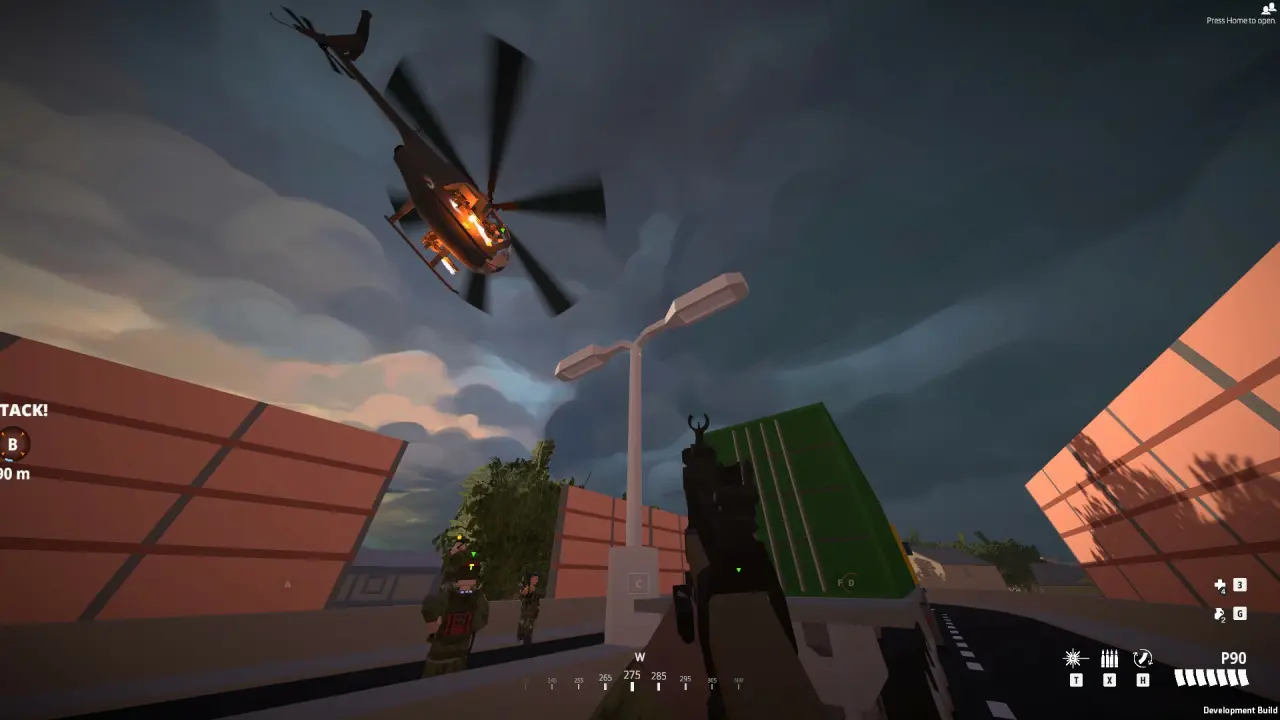
The vehicle that carries all this is the proximity voice system — the same one that makes the battlefield audible. You read footsteps and shouts to tell friend from foe behind a wall, you trade jokes with a random teammate at a resupply point, and you overhear the enemy barking orders inside a contested building. What lingers is rarely a name. It is the bridge, the wall that fell and rose again, the call that came through at exactly the right second. Those fragments are not designed nodes; they are the collisions of two hundred real people on the same patch of dirt, and their unrepeatability is precisely what makes the fiction precious.
There is a generosity buried in that design, too. By handing the narrative pen to the players, the game lets every reunion carry a flicker of accident. You may never learn the name of the engineer who pulled you off the ground, but you will remember the bridgehead, the breach, the second the cover went back up. The authored campaigns you forget; the one your own squad improvised on a Tuesday night, you keep. That is the strange arithmetic of emergent storytelling — the less the developer writes, the more the player remembers.
The three-dev legend and a lifecycle no writer could plot
The truest piece of drama sits behind the game. Lead programmer SgtOkiDoki, Vilaskis on design and levels, and TheLiquidHorse — three people with no publisher marketing budget — shipped a pure buy-once product that moved 1.8 million copies in a fortnight and topped the Steam charts. SgtOkiDoki's blunt follow-up advice, telling other developers that if this is their first game they should make a single-player one and brace to be slammed by a hammer, has been quoted in indie circles ever since.

Then comes the arc itself. From the 2023 frenzy, through a long content drought, the creators going quiet and the player count cratering from 87,000 to barely four figures, to a comeback teased years later — that curve is a piece of shared public memory, witnessed by millions.
A game tumbles from its peak, is presumed dead, then stirs again just as everyone has filed it away. No screenwriter plots a thing that real. The veterans who lived through the boom and the silence carry a loyalty no marketing campaign could manufacture, because they were not sold on it — they were there for it, start to finish, and that shared history is its own kind of story.
A different road from the atmosphere-driven shooters
Set it beside something like Hell Let Loose, which leans hard on heavy atmosphere and a sense of historical weight, and the divergence is plain. That kind of game manufactures immersion through painstaking ambience. BattleBit refuses scripted narrative outright and bets everything on what happens between the players in real time. Neither road is wrong; this one simply knows what it is. It does not want to tell you a story — it wants you and two hundred strangers to build one on the spot. Seen that way, a 6.0 stops reading as a flaw and starts reading as an honest trade.
In the end, narrative was never a box this game needed to fill; it was a power it chose to give away. It puts the pen in every player's hand and lets millions of people write their own version across millions of matches. That philosophy will not suit everyone, least of all players who like being led through a carefully staged plot. But its candour is hard to fault — it never pretends to hold a great story, it simply tells you, plainly, that the story is yours to fight for. There is something disarming about a shooter that is this honest about what it is not.
Audio | 8.0/10
音效: 8/10In a game that went out of its way to keep the visuals plain, sound is the part people will not shut up about. The 8.0 here rests almost entirely on the proximity voice system — not a garnish bolted on the side, but the very thing that gives this battlefield its presence.
Proximity voice turns the battlefield audible
Distance-based voice is the heart of it. The system scales what you hear in real time: a teammate beside you comes through crisp, while an opponent one wall over is reduced to a muffled human smear. For the first time in a game of this scale, your ears carry tactical weight. You judge whether the figure behind the wall is friend or foe by the sound of them, you catch which direction the enemy is massing, and you cut a quick assault deal with a stranger at a resupply point without ever typing a word.

The clever part is that the channel is open to everyone, with no friend-or-foe filter. You hear the enemy shouting inside their own position, and a careless call of your own can give your location away. Sound becomes intelligence, and every engagement picks up a layer of social and psychological sparring that rival large-scale games rarely manage. Plenty of players will tell you the reason they stayed was not any single stat — it was this light, voice-driven camaraderie.
Solid effects, plain music — where the points slip away
Strip the voice out and the raw sound design still punches well above what the visuals would suggest. Beneath that low-poly shell, the ballistics, the engines and the demolitions all sit in clearly separated layers; a vehicle grinding over terrain or an emplacement coming down gives back a chunky, readable thud. The ear is fed far more information than the crayon-block eye, proof once again that minimalist art never meant a cut-rate job — the team simply spent its budget where it counts.
The music is the soft spot. The score is restrained to the point of being forgettable, short on any theme you would hum afterwards, serving mood rather than building toward a crescendo. Hold it up against Squad, another game that lives on voice coordination, and BattleBit's edge is the lower barrier: its open, everyone-can-talk design hands the social layer to ordinary players who never touch a command chain. But on memorable music it has nothing to offer, and that is exactly why proximity voice can haul the audio mark up to an 8.0 while the flat soundtrack keeps it from climbing any higher.
Look at it sideways and even that choice fits the game's whole logic: pour the limited budget into whatever bends the experience most. For a large-scale team game, letting players read the battlefield by ear and letting strangers strike a deal mid-shout is worth far more than a pleasant backing track ever could be. The team did not spend on an orchestra; it spent on making every ear a tactical instrument, and that runs straight in line with trading polygons for scale. Once again, the game knows exactly where its advantage lives.
And it refuses to waste a single resource chasing the kind of polish that would not move the needle. A forgettable score is a price worth paying for an audio layer that does genuine tactical work, and most players make that trade gladly without ever consciously noticing they have.
Visuals | 6.5/10
畫面: 6.5/10Visuals are the easiest thing here to misread. A 6.5 looks unkind until you settle one fact first: the low-poly look is not a thing the team could not do, it is a thing they chose to do — and arguably a shrewd one. Get that trade straight and the score finds its fair footing.
Low-poly is a tool, not a surrender
Reduce the world to crayon-block silhouettes and you buy something nobody else can offer: 254 players brawling on one map at once, and holding a steady frame while they do it. Chase photoreal textures and high-poly soldiers and that headcount simply collapses — the servers cannot take it and neither can the players' machines. So the game does the opposite on purpose, handing every spare cycle to scale and smoothness.
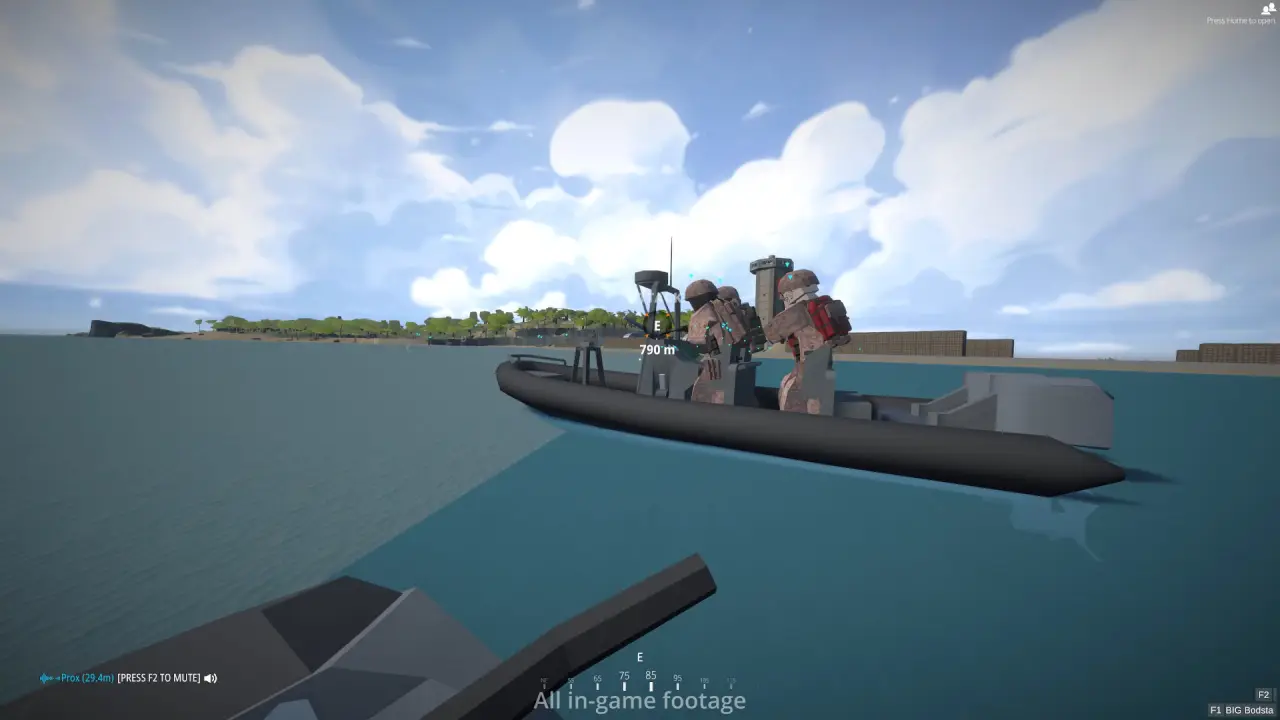
The immediate payoff is an almost nonexistent hardware barrier. A mid-range machine from a few years back will hold a full 254-player server at a high, stable frame rate. The optimization for high frame rates is meticulous, and it drags the price of entry for large-scale team combat down to the lowest rung in the genre. For anyone bounced off the photoreal blockbusters by their graphics-card demands, that accessibility is its own kind of liberation. It should not be undersold either — this is a category that punishes weak hardware brutally, and the game throws its doors open to nearly everyone instead.
A battlefield you can rewrite beats a static texture
What matters more is that the picture is not a frozen photoreal still but a canvas you can rewrite in real time. Destructible and buildable terrain means cover is never fixed: blow a hole through a wall to open a fresh line of attack, or throw up an emplacement in open ground to anchor a point. Push a round deep enough and the whole map can end up reshaped by repeated demolition. That kind of living terrain hands you tactical variety no static texture, however gorgeous, can match.
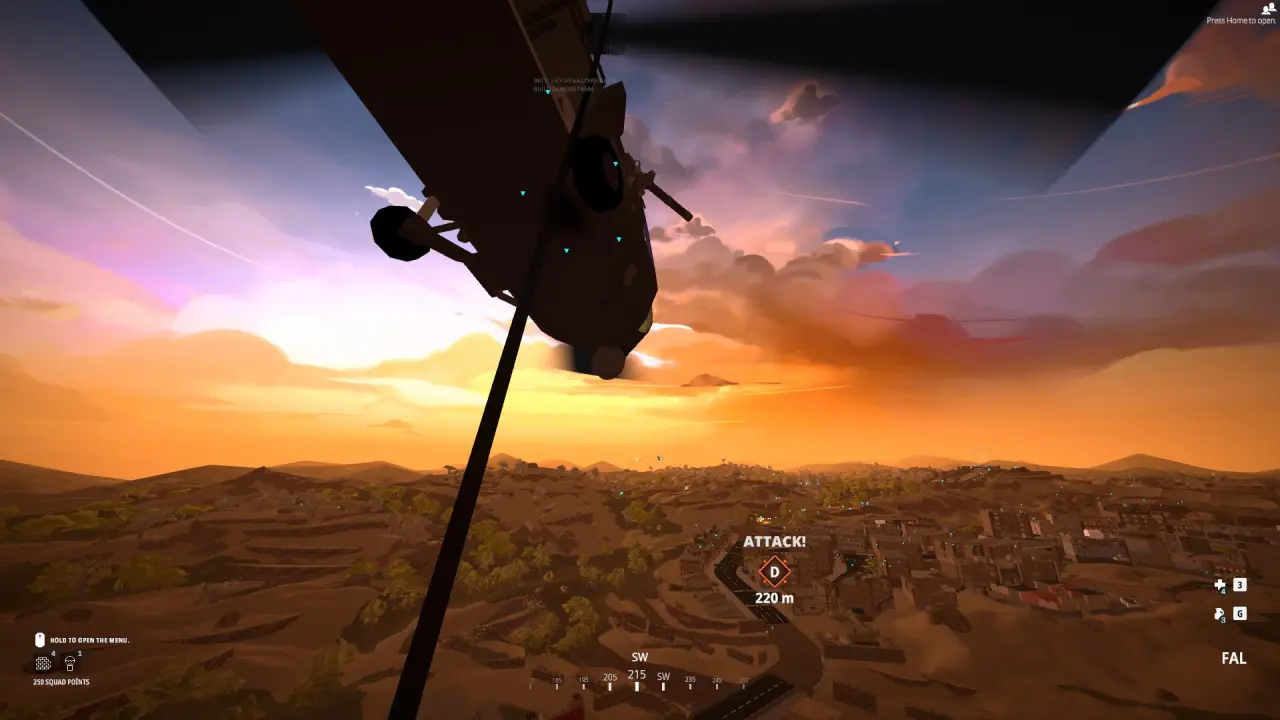
Even inside the low-poly frame the level design refuses to coast. Kodiak — the Alaska-inspired, infantry-focused map — still carries clean landmarks and legible tactical ground; you read the silhouette and instantly know the high points, the chokes, the routes begging for an ambush. Pared-back art and sharp level design are not at odds. And because the visual information is stripped to the essentials, you actually parse the chaos of a 200-player scrap more easily — enemy shapes, vehicle outlines and demolition smoke all stay readable, something photoreal titles struggle to preserve when the screen fills up.
Against the blockbusters, it wins on visuals in service of play
Set it next to an industrially funded photoreal title like Battlefield 2042 and the contrast gets interesting. That game stacks up gorgeous visuals and still gets accused of a battlefield that feels soulless — pretty, but missing the live tension a game of this scale should carry. BattleBit runs the other way, carrying the most solid combat on the plainest possible picture. It proves its own quiet thesis: fidelity was never the prerequisite for scale. Whether two hundred people can genuinely cooperate, clash and rewrite the ground beneath them is. The 6.5 docks raw image quality, but on the question of visuals serving the experience, it is clearer-headed than plenty of higher-scoring giants.
That clarity deserves to be taken seriously. While the whole industry races up the ladder of higher resolutions and fancier lighting, BattleBit swims the other way and reminds everyone that visuals are a tool in service of the experience, not the experience itself. Once a game has decided exactly what it wants to give the player, it earns the nerve to subtract in the places that do not matter and pour everything into the ones that do. In that light the low-poly look stops being a technical shortfall and starts reading as a kind of design maturity — the confidence to know which battle is worth fighting and which is worth conceding. Plenty of studios with vastly larger budgets never learn that lesson, and their games suffer for trying to be everything at once. BattleBit picked its hill, planted its flag, and let the rest go. The result is a game that looks humble and plays enormous, which is a far better trade than the reverse.
Combat | 9.0/10
玩法: 9/10Gameplay is the spine of this whole thing, and the 9.0 is earned outright. If the low-poly look is the shell, this layered, low-floor-high-ceiling battlefield system is the reason a three-person side project grew into a phenomenon. It took a simple world of colour blocks and built a stage of startling tactical depth on top of it.
254 players redraw what team combat means
The shock is immediate and it comes from sheer scale. With 254 players on one map, a single match runs at more than twice the size of the classic 64-player skirmish. The number is not just for show — it changes the very grain of tactics. A dozen local firefights can rage along one front at once, and a collapse in one sector cascades across the whole map like falling dominoes. You will rarely turn a match alone, yet you and the handful of people beside you can absolutely force the decisive break at a single point.
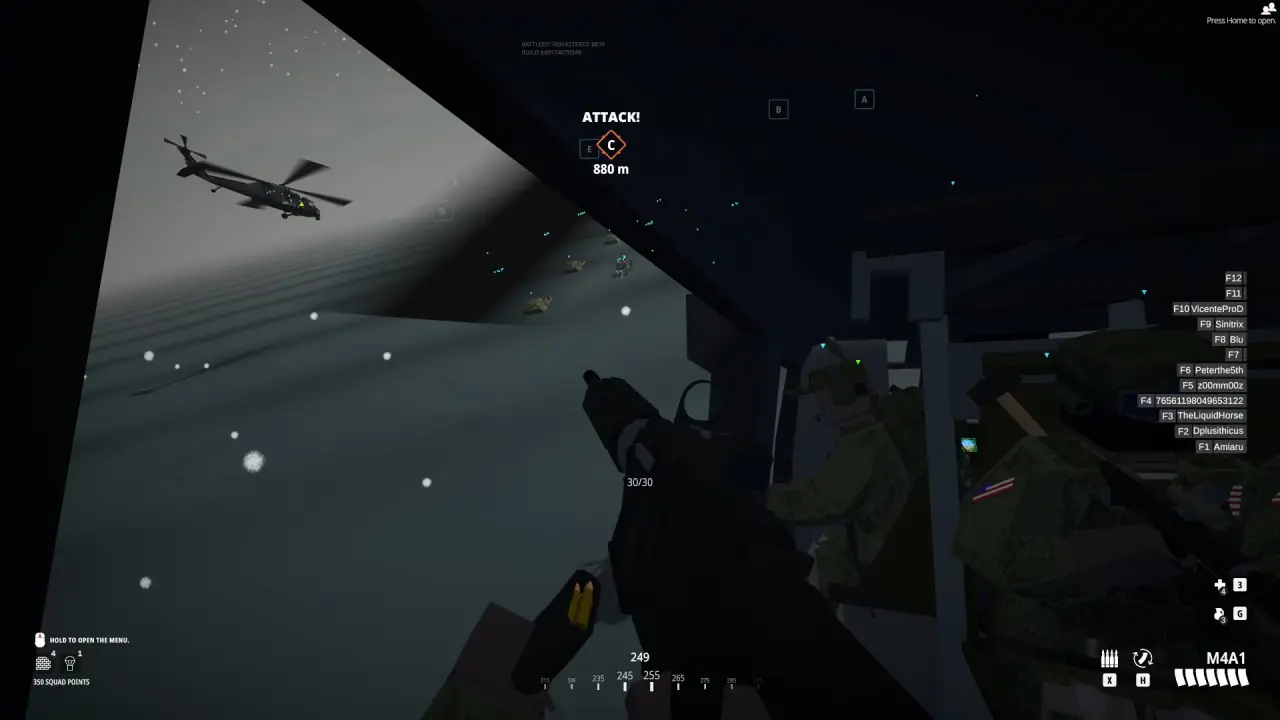
That scale gives the word "team" real weight for once. You stop being a lone hero and become one cog in an enormous war machine — exactly the thing that made classic large-map combat so magnetic, only pushed to a far larger order of magnitude.
Watching a front line surge and recede like a tide, watching your own vehicle column wheel around a flank, you feel genuinely small inside something vast. That humbling, indispensable sensation is one a small arena shooter can never hand you. It reframes what victory even means: you are not topping a scoreboard so much as contributing a single, decisive shove to a machine far larger than yourself, and somehow that is more satisfying than any solo highlight reel.
Classes, demolition, building, vehicles: four systems that interlock
Holding that scale together are four systems that mesh. The class structure splits players into assault, medic, engineer, recon and support, and each role is irreplaceable: a medic drags a downed teammate back into the fight, an engineer repairs vehicles and raises fortifications, recon paints targets for the whole squad. Cooperation is not a slogan here, it is something the mechanics demand of you outright.

Destructible and buildable terrain is the second pillar. Cover refuses to stay put — punch through a wall to carve a new approach, or stack an emplacement on bare ground to dig in. A position that felt impregnable five minutes ago can be a smoking gap by the time the assault wave crests, and a barren stretch of field can become a fortified strongpoint if your engineers work fast enough.
The third pillar is layered vehicles: tanks, helicopters, transports and watercraft let infantry, armour and air power actually combine, and the full charm of a three-dimensional battlefield only lands the moment a transport chopper dumps an entire squad onto an enemy flank. The fourth is fully customizable weapon loadouts, letting every player tune a kit to the way they like to play. None of these four systems is remarkable in isolation; the magic is in how they grind against one another, so that a single demolition charge can rewrite where the vehicles want to push and which class the situation suddenly demands.
A low floor and a high ceiling keep two crowds at once
The system's smartest move is its curve. A newcomer feels the thrill of two hundred-plus players on the field in their very first round, with almost no learning wall; a veteran spends hundreds of hours sharpening class swaps, fortification layouts and vehicle timing, and the ceiling stays dizzyingly high. That low-floor, high-ceiling shape is how it holds both the casual player chasing a good time and the hardcore one chasing tactical depth.
Hold it up against the classic Battlefield 4, a benchmark for large-map cooperation that countless players still revere, and BattleBit clears it on scale and presence alike — the same cooperative core, a bigger stage, a more immediate voice-driven intimacy. There is a cost, of course: the larger the scale, the heavier the strain on server stability and anti-cheat, and that remains an ongoing investment for the team. But on the strength of the gameplay skeleton itself, it has almost no peer at this price, and the 9.0 is its firmest ground. Strip away the budget, the marketing and the polish, and what is left is a combat system so well-engineered that it carried a three-person studio to the top of the charts on its own merits. That is the rarest kind of compliment a game can earn.
Content | 8.0/10
內容: 8/10Content lands at 8.0, but the number hides a wrinkle worth spelling out: a large slice of its value comes from the cleanliness of the business model, not from sheer volume. It has also lived through a real wobble in staying power, and both sides deserve airtime.
Buy once, get everything, no paywall in sight
The most comfortable thing about it is how clean the model is. A flat $14.99, bought once, with the base game being the whole game — no microtransactions, no season pass, no shortcut that lets real money skip the grind. Every weapon and attachment is earned in-game, and everyone lines up at the same start. For players worn down by the loot boxes and battle passes that fracture so many rivals, that purity is a comfort that has grown rare.
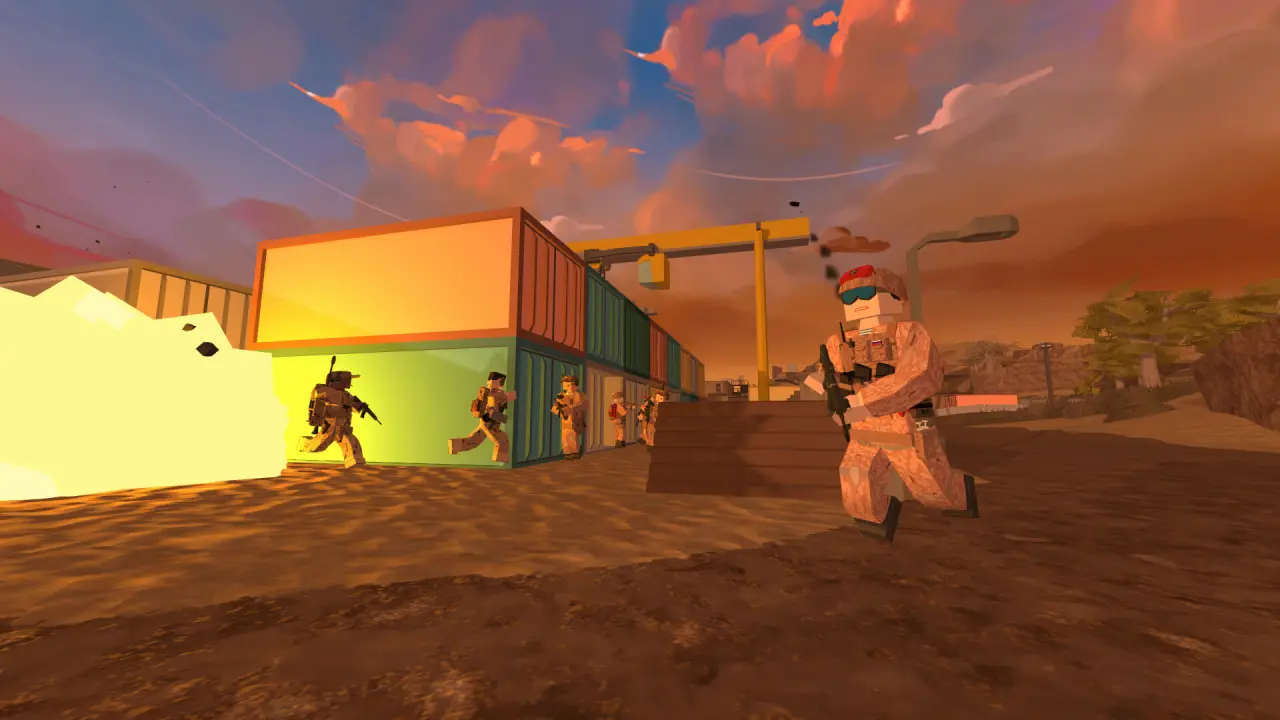
The model lifts the felt value of the content directly: the money buys a complete large-scale team-combat experience, not a half-finished frame you keep paying to unlock the rest of. It restores "content" to its most honest form — everyone plays the same complete thing, and the only variable is how much time you sink into unlocking and mastering it, not how much extra cash you fronted. With no microtransaction revenue to chase, the design is also free to serve play for its own sake rather than stretching the grind to nudge a purchase. There is no engineered frustration here, no artificially slow unlock dangled to sell you a shortcut — only a progression curve tuned to feel earned, because the team has nothing to gain from making it feel otherwise.
Modes, maps and updates: depth over a long checklist
The playable bulk comes mainly from modes and a map rotation. Conquest and Domination supply the core point-capture tug-of-war, and a spread of distinctly flavoured rotation maps backs them up well enough to soak up hundreds of hours. The depth is not in how long a task list runs; it is in how many ways one system bends across different maps and class mixes.
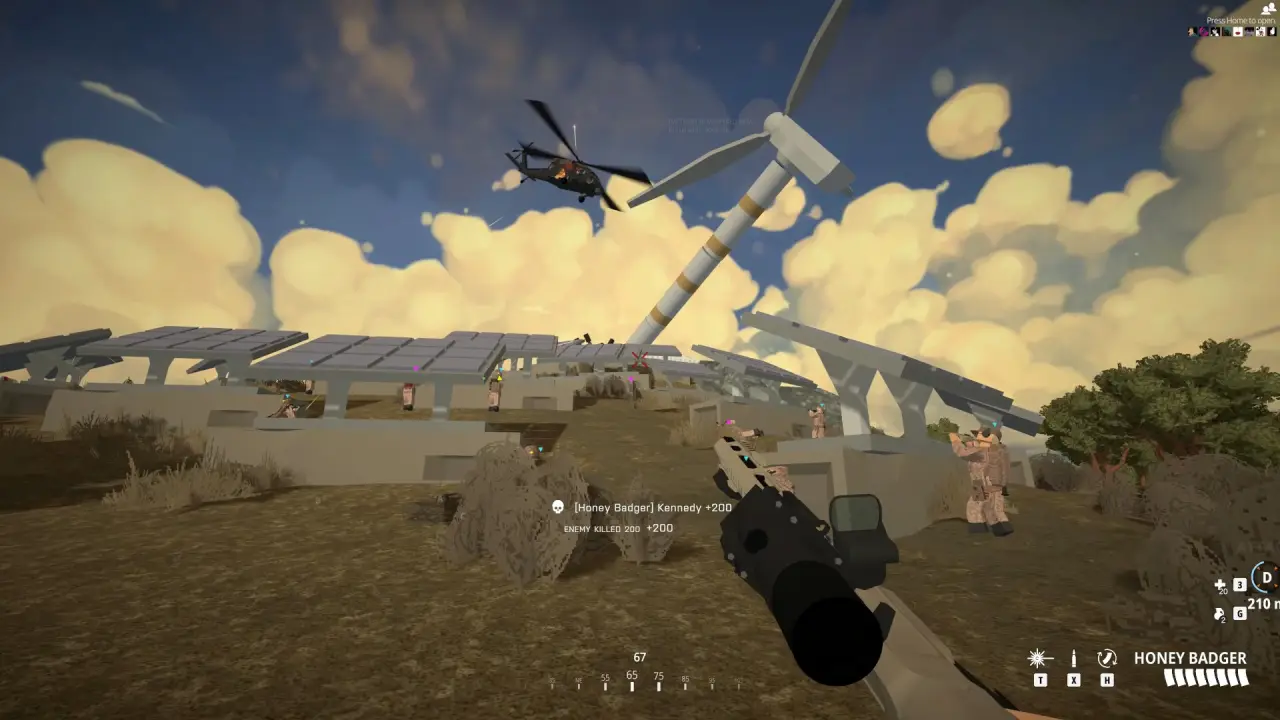
On updates, the team has kept expanding to a roadmap: version 2.1.9 added the infantry-focused Kodiak, and the later Operation Overhaul reworked nearly the entire rotation, folded in fresh ground like Mesa and Aftermath, and pulled the scale in from a chaotic 64v64 to a more governable 127v127. Reworking maps is itself a kind of deep cultivation — rather than faking abundance by dumping new files, it circles back to rebalance what already exists so every map holds up to repeat play. That is harder, and more telling, than a bigger map count. It signals a team that would rather you replay ten maps you love than churn through thirty you tolerate, and in a live multiplayer game that distinction is the difference between a rotation that wears out in a week and one that holds for a year.
The catch: no solo content, and a drought that cost it
The content side carries a flaw it cannot dodge. There is no single-player campaign and almost no PvE, so offline players and anyone after a story have nothing to grab. Its entire worth is pinned to the premise that other people are there to play with you.
The sharper risk is durability. That long mid-life update drought sent the player count tumbling from its 87,000 peak to barely a thousand, which hits the experience straight where it hurts — whether a newcomer can even find a full server. Against a small-team peer like Unturned and its slow, steady, evergreen cadence, BattleBit's operating rhythm swings far harder. For a game leaning on its population, that volatility is doubly cruel: a single-player title sits there waiting, but a large-scale team game with thin numbers cannot deploy its systems at all. So "content" is never a static figure here — it is a value bound tightly to how alive the community stays, and Operation Overhaul's return is the attempt to settle that debt. Its ceiling is high, but whether it cashes that ceiling in depends entirely on enough people choosing to stay on the field together, which is the one variable a small team can never fully control. That is the quiet asterisk on every recommendation: the systems are there, the value is there, but the crowd has to be there too.




留言 0
歡迎發表遊戲評價
歡迎參與討論,分享對這款遊戲的評價。
暫無留言,歡迎分享對本篇評測的看法。