
























Opening
Most rhythm games ask you to keep time. Dead as Disco asks you to throw a punch on it.
It's a beat-'em-up where every hit is trying to lock into the song, and when it clicks the whole thing is worth watching — even if the current package is undeniably lean. The pitch sounds cute until you see what it's actually doing underneath.
A boss fight here isn't a health bar with music playing over it. Beating the boss means performing the track from intro to final chorus. The revenge story, the choreography, the lights, the combo timing — all of it folds into one full-song showdown, and that fusion is what makes the game feel unlike anything else on the storefront right now.
Loved the pressure of Sifu? The rhythm-punch of Hi-Fi Rush? That simple hit of landing a blow exactly on the beat? This is aimed squarely at you. Hi-Fi Rush still wears the cleaner, more finished shape, but Dead as Disco has one nasty trick up its sleeve: import your own MP3, WAV, or OGG and the game spins your playlist into brand-new fights. That's a replay ceiling most rhythm-action games never reach.
The catch is real, and worth saying plainly. The main story runs about three hours, the Early Access content is thin, a few handcrafted levels start repeating themselves, co-op isn't in yet, and slight input latency can sting on the harder sections. But the core idea is loud, strange, and quietly addictive: keep punching your way through a song until the entire room starts moving with you.
Story | 6.0/10
劇情: 6/10Charlie Disco Gets One Night, One Grudge, And Not Much Room For Subtlety

The story setup in Dead as Disco is clean. Maybe too clean. Charlie Disco is a drummer back from the dead, and he’s got one night to get revenge on his old bandmates. That’s the spine of the whole thing. The anniversary concert being held for him, by the people he’s coming after, becomes the stage for the payback tour. It’s a great hook because it’s instantly readable. You don’t need a codex. You don’t need six flashbacks and a corkboard. You get it in ten seconds: dead musician, bad blood, one night, go.
And that works for this game. Dead as Disco is not trying to be a slow-burn mystery. It’s a beat ’em up where martial arts and music video staging are smashed together, and the story knows its place. It gives every fight a reason to exist, then gets out of the way so the rhythm can take over. That’s the right call for the kind of game this is.
But here’s the catch: as a story, it’s thin. Like, very thin. The revenge motive is sharp, but it’s also basically the whole meal. If you’re coming in hoping the mystery of Charlie’s past keeps unfolding in clever ways, or that the game starts digging hard into grief, fame, broken trust, and band politics, that’s not really where the weight is. The emotion is there to juice the performance. It’s not there to carry a full narrative drama.
That’s why I land around a 6 out of 10 on the story side. The concept is punchy. The framing is stylish. The premise fits the combat beautifully. But the writing doesn’t have much density once you step outside the main revenge line.
Every Idol Boss Is A Former Bandmate, And That’s The Smartest Story Move Here

The best storytelling choice in Dead as Disco is turning each boss into a former band member. The Idols aren’t just random villains waiting at the end of a level. They’re the people tied directly to Charlie’s past, which means every big fight has a personal edge before anyone throws a punch. That matters, because in a game this rhythmic, boss fights are the real chapters. You don’t just beat a boss. You perform the song to the end.
That’s the thing Dead as Disco gets right: revenge, boss design, and music all become the same event. When a boss fight is choreographed to a full track, the act of winning feels like completing a performance. It’s not “story scene, then gameplay.” It’s “the fight is the scene.” That’s where the game feels most alive. The 27 to 30 track soundtrack isn’t just background noise either. It defines the shape of the encounters, so the story beat and the rhythm beat are pulling in the same direction.
This is also where the comparison to Hi-Fi Rush matters. Hi-Fi Rush is the obvious benchmark for beat-driven action, and it has fixed tracks that are staged with incredible confidence. Dead as Disco’s edge is different. Its custom music import supports MP3, WAV, and OGG, and it can auto-generate rhythm combat from your own songs. That doesn’t make the written story deeper, but it does make the “perform the fight” idea way more replayable.
Still, character writing is doing broad strokes here. The Idols work as boss identities. They work as visual and musical targets. But they don’t become rich characters just because they used to be in the band. The game gives you the shape of a rivalry, not the full emotional archaeology.
Don’t Come Here For Branching Choices, Come Here For Revenge As A Setlist

If you’re asking about side content, choices, or branching story paths, this is where Dead as Disco starts to look pretty limited. The main story is roughly three hours, and the Early Access launch content is clearly thin. That short length isn’t automatically a disaster, because plenty of action games are better when they stay lean. But for story specifically, it means there just isn’t much space for side arcs, optional character texture, or big narrative detours.
There’s also no meaningful choice-driven structure here. This is not a game about picking sides, changing Charlie’s fate, or steering the band’s history through branching decisions. The revenge tour has a direction, and you follow it. That actually helps the pacing, because Dead as Disco wants you in that loop: move, fight, hit the beat, chase the next boss. But if your version of story value is “I want my decisions to matter,” this probably won’t scratch that itch.
The handcrafted levels can also start to feel repetitive once the novelty of a mechanic fades, and that affects the story more than you’d think. When the environments and structure start feeling familiar, the revenge trip loses some bite. You’re still getting the neon disco-punk style, the pulsing floors, the light rigs kicking with the beat, all that good stuff. But spectacle can only cover so much when the narrative isn’t adding new layers.
So the honest read is this: Dead as Disco has a killer story premise for a rhythm-action game, and it uses that premise exactly where it counts, in the boss fights. But as a narrative package, it’s more mood than meat. Great setup. Strong framing. Cool character-as-boss structure. Not enough depth to make the story itself the reason you keep playing.
Audio | 9.0/10
音效: 9/10The Best Fights Here Don’t Have Songs Behind Them — They Are the Song

Dead as Disco gets one big thing absolutely right: the music isn’t wallpaper. It’s the fight. That sounds like a small distinction, but it changes everything. Every encounter is built around a track, so when you’re punching, dodging, dragging enemies around, and slipping into a combo, you’re not just clearing a room while a beat plays in the background. You’re performing the song with your hands.
And the boss fights are where the whole idea snaps into focus. Beating a boss basically means surviving and completing a full musical performance. The rhythm tells you when to move, when to attack, when the fight opens up, and when it clamps down. That revenge-story setup — Charlie Disco going after the villainous Idols and trying to reunite the band — works because the game ties the drama to the track. You don’t just “win the boss fight.” You finish the number.
The soundtrack helps a lot here. We’re talking roughly 27 to 30 tracks, with a mix of original music, licensed stuff, and covers, and it’s already something you can listen to outside the game on streaming. But in-game, it matters more because each track shapes the choreography. Dead as Disco has that neon disco-punk punch visually, with floors and lighting rigs pulsing like rhythm feedback, and when the beat, the movement, and the lighting all lock together, it feels slick in a way most beat ’em ups don’t even try to be.
Hi-Fi Rush Has Fixed Tracks; Dead as Disco Lets You Bring Your Own Trouble

The obvious comparison is Hi-Fi Rush, and that’s not unfair. Hi-Fi Rush is still the clean benchmark for rhythm-driven action. But Dead as Disco makes a different bet, and it’s the reason I’d come back to this one more often: custom music. You can import MP3, WAV, or OGG files, and the game turns those songs into rhythm combat. That’s huge.
With Hi-Fi Rush, the soundtrack is fixed. Great, polished, memorable — but fixed. Dead as Disco is messier, sure, but its replay ceiling is way higher because a new song can mean a new combat feel. A different tempo changes how you approach the fight. A different structure changes when things heat up. And Infinite Disco leans straight into that, giving the game a near-endless “okay, one more track” pull if you’re the kind of player who likes chasing flow.
The catch is, this doesn’t magically fix the content problem. The main story is roughly three hours, and for an Early Access launch, the handcrafted level count feels thin. Once a mechanic’s novelty wears off, some areas start to repeat. But the custom music system is the escape hatch. If you’re only here to play through once and be done, that thinness is going to sting. If you’re here to style on your own playlist, the game opens up fast.
The Sound Design Sells the Hit, Even When the Game Isn’t Perfectly Tight

The moment-to-moment audio feel is strong because the hits don’t just sound punchy — they sound timed. That matters in a game like this. The punches, kicks, combo impacts, and rhythm cues all need to tell you whether you’re flowing or fumbling, and most of the time, Dead as Disco makes that feedback clean enough to play by ear. Miss the beat and you can still fight. Nail it, and the whole thing sings. That’s the sweet spot.
The environmental audio does real work too. The club-like spaces, pulsing lights, and beat-reactive floors aren’t just visual style points. They help you feel the tempo without staring at a meter the whole time. That’s why the neon disco-punk identity lands: it’s not just “cool lighting.” It’s rhythm information dressed up as attitude. When the room is moving with the music, your brain starts moving with it too.
Voice performance is not the star attraction here, and I don’t think it needs to be. The game’s personality comes more from Charlie Disco’s setup, the Idols as a target, and the way each fight plays like a staged music-video brawl. The weakness is precision. There’s occasional slight input latency on drags and certain moves, and in harder sections, that tiny delay feels way bigger because the whole game trains you to care about timing. Still, for this specific audio-and-music dimension, Dead as Disco is firing high. I’m at a 9 out of 10 here.
Visuals | 8.5/10
畫面: 8.5/10The Dance Floor Is Basically Your Combo Meter

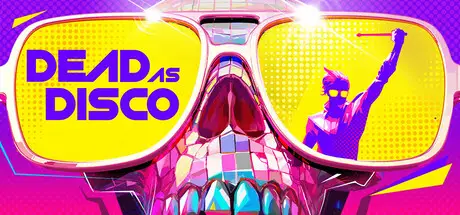
Dead as Disco knows exactly what it wants to look like. It’s all seventies disco flash — mirror-ball sparkle, hot neon, big color washes — smashed into this darker cyberpunk contrast where the shadows are deep and the lights hit like stage strobes. And that’s the right call. This game isn’t trying to look natural. It’s trying to look like a revenge story got trapped inside a music video, and when it works, it really works.
The best part is that the stage isn’t just sitting there behind you. The floor lights up with the beat. The light rigs jump with the drums. Hit effects don’t just say “you punched a guy,” they pulse like part of the track. That matters because Dead as Disco is built around this idea that beating a boss means performing the whole song. So the visuals have to keep time too. When the room is flashing, the enemy is moving, and Charlie Disco is chaining strikes on rhythm, the screen starts giving you feedback before your brain even fully processes it.
That’s why I’m pretty high on the graphics here — I’d put this side of the game at an 8.5 out of 10. Not because it’s some insane tech showcase, because it isn’t. I’m not looking at this and thinking, “wow, ray tracing saved the day,” or “DLSS is the headline.” The headline is art direction. The game understands that rhythm combat needs readable rhythm visuals, and it builds the whole look around that.
Boss Fights Get Their Own Color, Their Own Mood, Their Own Stage

Here’s where it gets good: the bosses don’t blur together visually. Each one gets its own color identity, its own stage setup, and its own personality baked into the lighting. That’s huge in a game where the boss fight is basically the full performance of a track. You’re not just walking into another arena with a health bar. You’re walking into that character’s set.
And that gives Dead as Disco a lot more flavor than the usual beat ’em up room-to-room grind. The setup makes every major fight feel choreographed, because the music, the camera-side readability, the animation, and the lighting are all pulling in the same direction. You can tell the game wants the boss to feel like the lead performer for a few minutes, not just a bigger enemy with more armor. That’s the difference between “cool fight” and “I remember that fight.”
The character models help a lot too. They’re highly stylized, not realistic, and that’s a strength. The poses have swagger. The attacks read cleanly. The animation has enough smoothness that combos feel like movement, not just inputs firing off. When Charlie throws hands, there’s a performative edge to it, like every strike is halfway between martial arts and stage choreography. That fits the pitch perfectly: martial arts meets music video, every punch and kick synced to the track.
It’s Not A Tech Monster, But It Reads Beautifully In Motion

If you’re the kind of player who judges graphics by feature boxes — ray tracing, upscalers, ultra settings, platform comparison charts — Dead as Disco probably isn’t the game you use to flex your setup. The visual win here is much more practical. Can you read the beat? Can you read the enemy? Can you tell when the stage is giving you rhythm feedback without burying the fight under effects? Most of the time, yes.
That’s also why the UI deserves credit. It’s restrained. It doesn’t scream over the action. In a game this bright, that’s important, because a messy interface would turn the whole thing into neon soup. Instead, the screen stays readable, and the combat effects get to do their job. You can miss the beat and still fight, but when you nail it, the whole screen feels like it locks in with you. That’s the addictive part.
On Steam Deck, the look actually benefits from the format. The high contrast pops hard on a handheld screen, and the clean UI helps keep the action legible. I wouldn’t frame this as a game where platform differences define the experience. The bigger point is that the art style scales well because it’s bold, clear, and built on shape, color, and timing more than raw detail. Compared with Hi-Fi Rush, Dead as Disco doesn’t have that same polished, fixed-track presentation, but its custom music angle means the visuals have to keep selling brand-new rhythm battles. For an Early Access game with thin launch content, that visual identity is doing a lot of heavy lifting.
Combat | 9.0/10
玩法: 9/10Every Boss Fight Plays Like a Song You Have to Survive

Dead as Disco gets one big thing dead right: a boss fight doesn't feel like a health bar with music behind it. It feels like the song is the fight. You're not just beating an enemy. You're trying to finish the performance without dropping the thread, and that changes the whole texture of combat.
The basic idea is simple enough to understand in five seconds. Punch, kick, dodge, block, counter, finish. But the game keeps asking, "Can you do that on the beat?" Landing hits in time pushes your damage and style higher. Missing the rhythm doesn't make the controller stop working, which is the smart call, but it does snap the combo flow and makes you feel the mistake instantly. That's why the combat feels welcoming without going soft. Action players can still scrap their way through. Rhythm players get to chase the cleaner, flashier version of the same fight.
The best comparison is Hi-Fi Rush, obviously, because that game is still the cleanest modern reference point for beat-driven action. But Dead as Disco is chasing a different high. Hi-Fi Rush has fixed tracks and tightly authored encounters. This game ties revenge drama, boss design, and one full song into the same event. Win the boss fight, and you've basically performed the track from start to finish with your fists. That's a killer hook, and when the choreography clicks, it absolutely earns the 9.0 feeling for gameplay.
The Freeflow Combat Has Sifu Tension With Disco Timing

The combat works because it doesn't treat rhythm as a gimmick slapped onto a brawler. It takes the familiar freeflow language from games like Batman Arkham, then adds the pressure and body-reading mindset you get from Sifu. You're watching enemy tells, choosing when to attack, when to dodge, when to guard, and when to cash out with a finisher. The catch is, you're also listening.
That extra layer matters. In a normal beat 'em up, a sloppy combo can still look fine if the enemies fall over. Here, sloppy play sounds wrong and feels wrong. You can feel a hit arrive half a step late. You can feel a counter miss the pulse. And when you lock in, the game gets silky. The floor lights, the neon, the whole disco-punk stage language pulses with the music, so the visuals are feeding you timing information instead of just showing off. That's not decoration. That's rhythm feedback.
It also means the skill ceiling is higher than the first hour lets on. Dead as Disco is not asking you to pass a rhythm test before you get to play the action game. The rhythm is the ceiling, not the entry fee. That makes a huge difference. If you're coming from Sifu, you can treat it like a stylish side-view action game and slowly learn the beat. If you're coming from rhythm games, you can chase perfect timing and style routes right away. The game gives both groups a way in, then quietly dares both of them to get cleaner.
Custom Tracks Turn Thin Early Access Content Into a Stunt Arena

Here's where Dead as Disco separates itself from the obvious Hi-Fi Rush comparison: custom music. The official soundtrack, sitting around 27 to 30 tracks, already does real work because each song shapes the choreography instead of just filling silence. But importing MP3, WAV, or OGG files and letting the game generate rhythm combat from them is the feature that changes the replay math.
That matters because the Early Access content is thin. The main story is roughly 3 hours, and the hand-crafted levels can start repeating themselves once the surprise of a mechanic wears off. If you only care about buying a fully stuffed package, playing through once, and moving on, this is where Dead as Disco will probably annoy you. It doesn't have the volume yet. It doesn't have launch co-op either, even though multiplayer, split screen, and co-operative play are part of the broader pitch and roadmap. Right now, that absence is noticeable.
But Infinite Disco gives the game a second life that a lot of short action games don't get. When your own playlist becomes new combat material, the limited level set turns into more of a training floor, a score-chasing lab, and a showoff arena. That's the pitch for the right player. If you like high-tempo action, if you loved the rhythm snap of Hi-Fi Rush, or if you're the kind of person who wants to import a song and see whether you can style through it cleanly, this is the part that could keep you around long after the story credits.
The Weak Spots Show Up When the Beat Gets Mean

Dead as Disco feels great when it's flowing, but the tighter the timing gets, the more its rough edges matter. The biggest issue is occasional slight input latency on drags and certain moves. In a looser brawler, that would be annoying but manageable. In a game built around beat precision, it gets amplified fast.
You feel it most in harder sections, where the game asks you to read the move, hear the beat, commit to the input, and keep the combo alive all at once. When a drag or a specific action lands a hair later than your hands expected, the mistake feels personal even when it might be the game. That's dangerous for this kind of combat system, because trust is everything. If I miss the beat, I want to know I missed it. I don't want to spend the next five seconds wondering if the input window betrayed me.
Even with that caveat, the foundation is strong. The single-player action already has a real identity, the side-view and third-person presentation gives fights a music-video punch, and the best bosses understand the assignment better than most rhythm-action hybrids do. Dead as Disco is not the complete package yet. It's short, repetitive in spots, and missing co-op at launch. But as a gameplay idea, it has teeth. When the beat, the boss, and your combo all line up, this thing sings.
Content | 6.5/10
內容: 6.5/10Three hours in, the main set is already over

Here’s the blunt version: Dead as Disco is electric while it lasts, but the main story does not last long. You’re looking at roughly three hours for the core campaign, and for a beat ‘em up built around big musical showdowns, that’s both fitting and frustrating. Fitting, because the game is structured like a tight album. Frustrating, because once you’re locked into the rhythm and your hands are finally speaking its language, the credits are already waving from across the room.
The best idea here is still fantastic. Dead as Disco doesn’t just put boss fights on top of songs. It fuses the revenge story, the boss fight, and the track into one performance. Beating a boss feels like finishing the song clean. You’re not just draining a health bar. You’re surviving the verses, hitting the chorus, riding the bridge, and trying not to fall apart when the screen starts pulsing like a nightclub with a vendetta. That’s where the game absolutely has a voice of its own.
But the handcrafted content is thin right now. The levels are stylish, sure. Neon floors, light rigs, disco-punk attitude, all of it pulsing as rhythm feedback. It looks loud in the right way. The catch is, there just aren’t that many bespoke spaces to chew through, and once the novelty of a level’s trick wears off, you start feeling the repeat. Not enough to kill the vibe, but enough to make the 6.5 make sense.
And because this is Early Access, you can feel the scaffolding. What’s playable right now is the single-player campaign. Multiplayer co-op is listed for later, but it’s not there at launch. That matters. The Steam tags include Single player, Multiplayer, Co-operative, and Split screen, but if you’re buying today because you want the couch chaos version with a friend, pump the brakes: that part is promise, not product.
Infinite Disco is where the real legs are

Now, here’s where Dead as Disco gets a lot more interesting. If you judge it only as a campaign, it’s slight. If you judge it as a rhythm-combat machine, it has way more mileage. Infinite Disco and custom music import are the real long-tail engine here. You can bring in MP3, WAV, or OGG files, and the game auto-generates rhythm combat around them. That changes the whole value conversation.
This is the big difference from Hi-Fi Rush. Hi-Fi Rush is still the obvious comparison, because it’s the cleanest modern example of beat-driven action done with confidence. But Hi-Fi Rush works from a fixed track list. Dead as Disco is chasing something messier and potentially more replayable: every song you import can become a new fight. That means the ceiling is less about how many levels Brain Jar Games shipped on day one, and more about how much you enjoy testing your own playlist against the combat system.
And the combat does justify that loop. It’s a freeflow beat ‘em up where missing the beat doesn’t make you useless, but landing on it makes everything snap into place. That’s smart design. Action players can still brawl. Rhythm players get rewarded for precision. When it clicks, it’s silky. Punches, kicks, drags, combos, lights, floors, and music all start talking to each other. That’s the pull.
There are rough edges, though. Some drag inputs and specific moves can feel slightly late, and in a game this timing-focused, “slightly” becomes huge on harder sections. You can forgive a little latency in a loose brawler. In a game asking you to flex on the beat, every mushy input gets louder.
The soundtrack carries the campaign, but your playlist carries the future

The official soundtrack is doing real work here. Those 27 to 30 tracks aren’t just background noise. They define the choreography of each fight. That’s why the boss battles are the highlight. They feel authored. They feel staged. The music tells the fight when to breathe, when to explode, and when to throw the next pattern at you. That’s the stuff Dead as Disco should be selling hardest.
But again, the built-in content is not the full answer yet. There isn’t some huge pile of side missions, optional challenge branches, or DLC-sized extras waiting after the campaign. For this section, the honest read is simple: if you want a finished, chunky package where one purchase gives you a fat campaign, loads of side content, and a full co-op feature set, this isn’t that version yet. Not today.
What it does have is a community-shaped future, and that’s already showing. The mod scene is moving, with Nexus mods already offering playable character swaps like Steve and Gohan. Are character swaps the same thing as new official stages? No. Let’s not pretend they are. But they do matter, because they show people are poking at the game, bending it, and treating it like a platform instead of a disposable three-hour run.
The sales momentum points the same way. Dead as Disco reportedly hit 100,000 sales in two days, passed 200,000 in a week, and pushed into the Top 10. That doesn’t magically add content. Popularity isn’t a patch. But it does suggest the hook is sticky. People aren’t just curious about the pitch. They’re showing up for the feel.
So who should actually buy it right now?

If you loved Sifu’s pressure, Hi-Fi Rush’s musical combat, or you’re the kind of player who hears a beat and immediately wants to style on it, Dead as Disco is speaking your language. Especially if importing your own songs sounds like the main event. That’s the version of the player I’d point toward this right now: someone who wants a responsive rhythm-action toybox, not just a boxed campaign.
If you’re the opposite kind of player, wait. If you need content volume, polish, and every listed feature already live, Early Access Dead as Disco will probably annoy you. The main story is short. The handcrafted levels are limited. Co-op isn’t playable yet. And the slight input latency in some moves can sting when the game gets demanding. Those are not tiny footnotes. They’re the reason this lands at a 6.5 for content instead of something higher.
But I don’t want to undersell the good part. The best moments in Dead as Disco are genuinely sharp. When Charlie Disco is tearing through enemies, the lights are hitting, the floor is pulsing, and the boss fight feels like you’re completing a track by force, the game has that “one more run” pull. It just needs more official meat around the bones.
So right now, Dead as Disco is a strong idea in a lean package. The campaign is the opening act. Infinite Disco, custom songs, mods, and future co-op are the reason it might keep living on people’s drives. Just know what you’re buying: not the complete festival, not yet. More like a killer set with a very promising afterparty.





留言 3
歡迎發表遊戲評價
歡迎參與討論,分享對這款遊戲的評價。
Curious about this one, but I want to hear how that single-song boss structure holds up across the whole game before I jump in.
That’s my question too, but if each boss really plays like completing a full track, that structure at least sounds built to stay memorable longer than most brawlers.
I usually bounce off brawlers fast, but tying a revenge story, a boss fight, and one full song into the same flow sounds like the kind of hook that could make this worth waiting on a sale for.
已顯示全部留言