























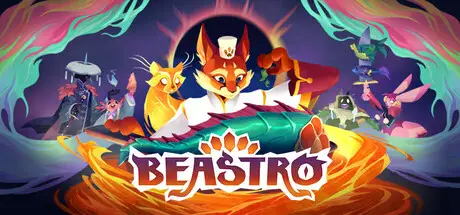
Opening
Beastro is a cozy cooking-and-card-battling adventure from Timberline Studio, and it nails the one thing it absolutely had to nail: making dinner feel like strategy, not busywork — so yeah, if you like Stardew-style routines but you can handle some Slay the Spire-ish brain food, this is worth a look.
Here’s the hook: you don’t win fights to get better cards. You cook the cards. You spend the day gathering ingredients, running the diner, building recipes, and then those meals fuel your Caretakers in nighttime deckbuilding battles. Salty, Sweet, Umami — that stuff actually matters. It’s not just cute flavor text. It decides how fights play out.
And honestly, that’s what makes Beastro stand out from something like Dave the Diver. Dave splits your day into two fun halves. Beastro ties the whole day into one chain of cause and effect. Morning foraging feeds afternoon cooking, afternoon cooking shapes the deck, and the deck decides whether your night goes smoothly or turns into a bad-draw headache.
The catch is, this isn’t just a farming game with a little card game taped on. If you only want to plant crops, serve food, and vibe, the combat may push harder than you expect.
Still, with a 91% Very Positive rating on Steam from 423 reviews, there’s clearly a crowd that has fallen for this weird little recipe.
Story | 6.0/10
ストーリー: 6/10Dinner is the plot engine, and Palo Pori gives it a reason to matter

The best story idea in Beastro is also the simplest one: you’re not just cooking because a cozy game needs a kitchen. You’re feeding the Caretakers, the warriors protecting Palo Pori, and that makes dinner feel weirdly important. The fate of the world is tied to what ends up on the plate, which is exactly the kind of goofy premise that could fall apart fast. But honestly, it works better than it should.
Here’s the thing: Beastro flips the usual deckbuilding logic in a way that helps the story. In most card battlers, you win fights, get cards, and then get stronger. Here, the cause-and-effect runs through your day job. You forage in the morning, manage the diner in the afternoon, and then those meals fuel the nighttime battles. So the story isn’t just sitting off to the side saying, “Please care about the village.” The routine itself is the argument. You cook because people are counting on you. Then you fight because the food gave your defenders the tools to survive.
That gives Palo Pori a warm, lived-in feeling, even if the actual plot is pretty light. This is not a dense narrative indie game. If you’re coming in expecting something like Spiritfarer, where the emotional weight comes from long character arcs, heavy conversations, and a steady drip of sadness, Beastro is doing something much smaller. Its warmth comes from the loop. The little workday rhythm. The idea that feeding people is its own form of protection. I like that. I just don’t think the writing itself hits hard enough to carry the game on story alone.
So yeah, for story, I’m at a 6 out of 10. Not bad. Not empty. But definitely background-level storytelling. It gives the cooking stakes, gives the village charm, and gives your daily chores a reason to exist. It does not give you a plot you’ll be quoting a year from now.
The puppet-stage presentation has more personality than the actual plot

The strongest “story” element in Beastro is not the script. It’s the way the game performs itself. The puppet-theatre combat staging, mixed with that warm storybook look, is easily one of the most distinctive parts of the whole thing. When the game leans into that handmade stage-show energy, it has real identity. It feels cozy without becoming mushy, and theatrical without becoming loud.
But the narrative is told in fragments. You get bits of story between the daily routine, the diner work, and the night battles. It’s light by design. Beastro is not stopping every twenty minutes to unload lore, trauma, or massive dramatic twists. Most of the time, it’s more like: here’s another piece of the village, here’s another reason the Caretakers need support, now get back to cooking. And for this kind of game, that mostly makes sense. If the writing got too heavy, it would probably fight against the gentle pacing.
The downside is that the side content doesn’t feel like a big narrative feast either. The village characters are cute, readable, and full of personality, and they do a lot of the heavy lifting for the atmosphere. But the game isn’t built around deep side quest chains or big optional character stories. The charm is broad and immediate. You meet people, you get their vibe, you enjoy having them around. That’s nice. It’s also limited.
And that’s where I think Beastro lands in a very specific lane. If you want Stardew-style daily comfort with some Slay the Spire-ish flavor math layered in, the story does enough to keep things friendly and human. If you want a story-driven cozy game where every side character slowly breaks your heart, this is not that game. The characters make Palo Pori feel welcoming. They don’t turn it into a narrative powerhouse.
Don’t expect big choices; the real branching happens in the kitchen

Beastro is not really about moral choices, branching paths, or choosing who lives and who dies. The story structure is pretty straightforward. You support the Caretakers, protect Palo Pori, and move through the campaign. That campaign is also not huge. Players are looking at roughly 8 to 15 hours for the main run, and that length tells you a lot about what kind of story this is. It’s a compact framework for the systems, not a giant narrative web.
The choices that actually matter are mechanical. What ingredients did you gather? What did you cook? Did you balance Salty, Sweet, and Umami in a way that gives your Caretaker a deck that can handle the fight? That’s where Beastro gets clever. The “branching” is less about dialogue trees and more about how your day turns into your night. Your food choices shape your battle options. Your battle options shape how safe the village feels. That’s a stronger connection than most cozy hybrids manage, and it makes the story premise feel practical instead of decorative.
But it also means the game can surprise the wrong audience. If you came purely to farm, cook, and run a cute diner, the flavor-matching card combat may feel more demanding than the storybook presentation suggests. And because night battles can lean on luck, a bad draw can leave you sitting there with no good mitigation and not much to do except push through. That can undercut the heroic fantasy a bit. It’s hard to feel like Palo Pori’s great hope when your hand just refuses to cooperate. There are also some rough edges around the journey. The game is welcoming and almost never punishes you hard, which fits the tone, but the lack of time-savers like running and fast travel can make the mid-game gathering feel repetitive. And if you’ve heard about players being locked out of their save after the final quest, yeah, that’s the kind of thing that can sour the ending fast. Story-wise, Beastro wants to be a gentle bedtime tale about food, care, and protection. Most of the time, it gets there. It just doesn’t have the narrative depth, polish, or payoff to be more than a pleasant backdrop.
Audio | 7.5/10
サウンド: 7.5/10The daytime music knows when to stay out of your way

Beastro’s soundtrack is doing the right job most of the time, and I mean that as a compliment. This is a cozy culinary adventure from Timberline Studio, and the daytime music gets that immediately. When you’re foraging in the morning, cooking in the afternoon, and keeping the diner moving, the music doesn’t elbow you in the ribs going, “Please feel cozy now.” It just sits underneath the routine and lets the loop breathe.
That matters, because Beastro is already juggling a lot. You’re farming and gathering ingredients, turning those ingredients into recipes, and those recipes feed the Caretakers for the nightly deckbuilding battles. So the audio can’t be too busy. If the village music was constantly trying to be adorable, it would get tiring fast. Instead, it goes for that Stardew Valley kind of relaxed daily rhythm. Not the same music, obviously, but the same design idea: make the player feel like doing one more small chore won’t be annoying.
And honestly, that’s one of the cleaner wins here. The soundtrack rarely steals the scene. It supports the mood, it keeps the day feeling soft, and it makes the routine feel less like a checklist. For a game that’s sitting at 91% positive on Steam across 423 reviews, I get why this part lands with people. It’s not flashy, but it’s confident.
Night battles sound bigger, but they don’t pretend this is a hardcore epic

The shift into night is where the music starts pushing a little harder. Beastro’s combat is staged like a puppet-theatre adventure, and when the game moves into those deckbuilding battles, the soundtrack follows. It gets more adventurous, more dramatic, and just tense enough to tell your brain, “Okay, we’re not just chopping vegetables anymore.”
That’s important because the best trick Beastro has is the way it flips the usual deckbuilder logic. You’re not winning fights and then getting cards as a prize. You’re building your combat options during the day by making food. Salty, Sweet, and Umami matching becomes part of the fight plan. So when the music changes at night, it’s not just a scene transition. It’s the audio underlining the consequence of what you cooked earlier.
But I wouldn’t say the combat music suddenly turns Beastro into Slay the Spire with soup. It still keeps one foot in the storybook tone. That’s the sweet spot. The battles can be more demanding than pure farming-and-diner players might expect, especially when a bad draw leaves you with basically no clean answer, but the music doesn’t overhype it. It gives the fight some lift without making the whole game feel harsher than it is.
The sound design is warm overall, even if a few UI bits poke through

On the sound-effects side, Beastro is mostly clean and cozy, but it’s not spotless. The environmental audio and little action sounds help sell the daily routine: gathering, cooking, serving, moving through the village rhythm. It’s the kind of sound design that you don’t really notice until it’s gone, which is usually a good sign for this type of game.
The weaker bits are the occasional UI sounds and animations that feel a little abrupt. Not game-breaking, not “turn the volume down” bad, but enough that you notice the audio-visual polish isn’t perfectly even. In a game built around comfort and flow, a sharp little interface noise or stiff transition can feel louder than it should. That’s the sort of flaw that keeps this from being a higher-scoring audio package for me.
As for voice performance, this isn’t the part of Beastro that carries the experience. The game’s personality comes more from its warm storybook presentation, its puppet-theatre battle staging, and the way the music frames your day. If you’re coming in expecting a big voiced ensemble to sell every emotional beat, that’s not really the draw. The audio works best as atmosphere, not performance showcase.
So yeah, for this slice of the game, I’m around a 7.5 out of 10. The music supports the loop beautifully, the battle themes give the night phase real shape, and the soundscape fits the cozy pacing. But the smaller UI rough edges, plus the fact that the audio never really becomes a standout feature on its own, keep it in “good and fitting” territory rather than “you have to hear this” territory.
Visuals | 9.0/10
グラフィック: 9/10Palo Pori looks like a storybook you can actually live in

Beastro’s graphics get a 9 out of 10 from me, and honestly, this is the part of the game that sells the whole thing the fastest. Palo Pori just looks inviting. It’s bright, warm, colorful, and soft in that hand-painted storybook way where the village feels safe before the game has even explained the rules. You get that cozy farming-life comfort, but it doesn’t look like another Stardew-style clone wearing a different hat. Timberline Studio gives it its own face.
The big win is texture. Not “4K ultra texture pack” texture. I mean the handmade kind. The kind where a building, a food stall, a forest path, or a little character animation feels like somebody actually cared about the shape of it. The colors are rich without turning into visual noise, and the environments have that friendly, rounded look that makes you want to slow down and poke around. For a game built around foraging in the morning, running a diner in the afternoon, and fighting at night, that matters. You’re looking at these spaces over and over, so they need to feel good, not just functional.
And the character designs are doing a lot of heavy lifting. They’re readable right away. Big expressions, clear silhouettes, tiny bits of animation that make everyone feel more alive than they technically need to be. That’s the sweet spot for a small studio. Beastro isn’t trying to beat giant-budget games at expensive spectacle. It’s picking a visual lane and committing hard. Nostalgic, but not dusty. Cute, but not bland. Cozy, but not generic.
What I like most is that the art direction actually matches the structure of the game. This is a game where dinner decides the fate of the world, which is a ridiculous sentence, but the visuals make it work. The food looks important. The village feels worth protecting. The Caretakers feel like characters you’re fueling, not just stat blocks you’re pushing through a card system. That’s why the style lands. It’s not decoration slapped on top of mechanics. It’s part of why the loop makes sense.
The puppet-stage battles are what make Beastro pop next to other card games

Here’s where Beastro really separates itself from the usual deckbuilder crowd: the combat presentation. The nightly battles are staged like a little handmade puppet theatre, and that choice is killer. Instead of dumping you into another flat card table with enemies bobbing in place, the game makes fights feel like a performance. Monsters have sharp designs, attacks snap cleanly, and the whole thing has this handcrafted wooden-stage energy that feels both playful and weirdly dramatic.
That matters because Beastro’s card system is already unusual. You’re not just winning fights to get cards. You’re building your deck during the day by cooking. Ingredients, recipes, and flavor traits feed into what your Caretaker can do at night. Salty, Sweet, and Umami aren’t just cute labels. They affect the fights. So the game needs the battle screen to make that connection feel exciting, and the puppet-show presentation does exactly that. It turns what could’ve been a dry numbers layer into something you actually want to watch.
Compared to something like Dave the Diver, where the day and night halves can feel like two different games stitched together, Beastro’s visuals help tie the whole routine into one chain. You gather, you cook, you serve, then the food-powered deck hits the stage. The presentation keeps reminding you that these pieces are connected. That’s a huge part of why the game doesn’t just feel like “cozy life sim plus card battles.” It feels like one strange little machine where dinner becomes strategy.
Now, it’s not flawless. Night battles can lean on luck, and when a bad draw leaves you with no mitigation, the prettiest puppet theatre in the world won’t save that moment. But visually? The combat is easily one of the most praised parts of the whole game, and I get why. It gives Beastro an instant identity. You can glance at it and go, “Oh, that’s Beastro.” A lot of card games would kill for that.
Don’t expect ray tracing fireworks, but the UI mostly knows what this game is about

If you’re coming in looking for a graphics tech showcase, look, that’s not what Beastro is. This isn’t the game where I’m going to sit here breaking down ray tracing, DLSS, frame-generation modes, or hyper-detailed material rendering. The appeal is not expensive tech. The appeal is art direction. Timberline Studio is using a strong handmade look to cover way more ground than raw rendering muscle ever could, and for this type of game, that’s the smarter choice.
The UI has a lot to communicate because Beastro is juggling more than it first lets on. It’s cozy on the surface, but it’s also tracking ingredients, recipes, diner flow, Caretaker decks, and flavor-matching card combat. The best thing I can say is that the interface generally supports the fantasy instead of fighting it. The cards, food logic, and flavor identities feel like part of the world, not a spreadsheet that wandered in from another game. That’s important because some players who came purely for farming and diner management are going to find the card combat more demanding than expected. The UI needs to help them cross that bridge.
And for the most part, the game onboards you gently. Systems come in layer by layer, so the screen usually isn’t screaming at you all at once. That fits the visual tone. Beastro wants to be welcoming, and it mostly is. It almost never feels like it’s punishing you for not min-maxing from minute one. But the catch is, once the mid-game repetition kicks in, the lack of time-savers starts to show. Players have called out the need for stuff like running, fast travel, and better quality-of-life options, and yeah, that bleeds into presentation. If getting around starts to feel slow, the prettiest village path becomes a commute.
So no, this is not a cutting-edge engine flex. It’s a small-team art-direction win. And I’ll take that. Plenty of games have more tech and less personality.
The look travels well, but the controls and console polish still need work
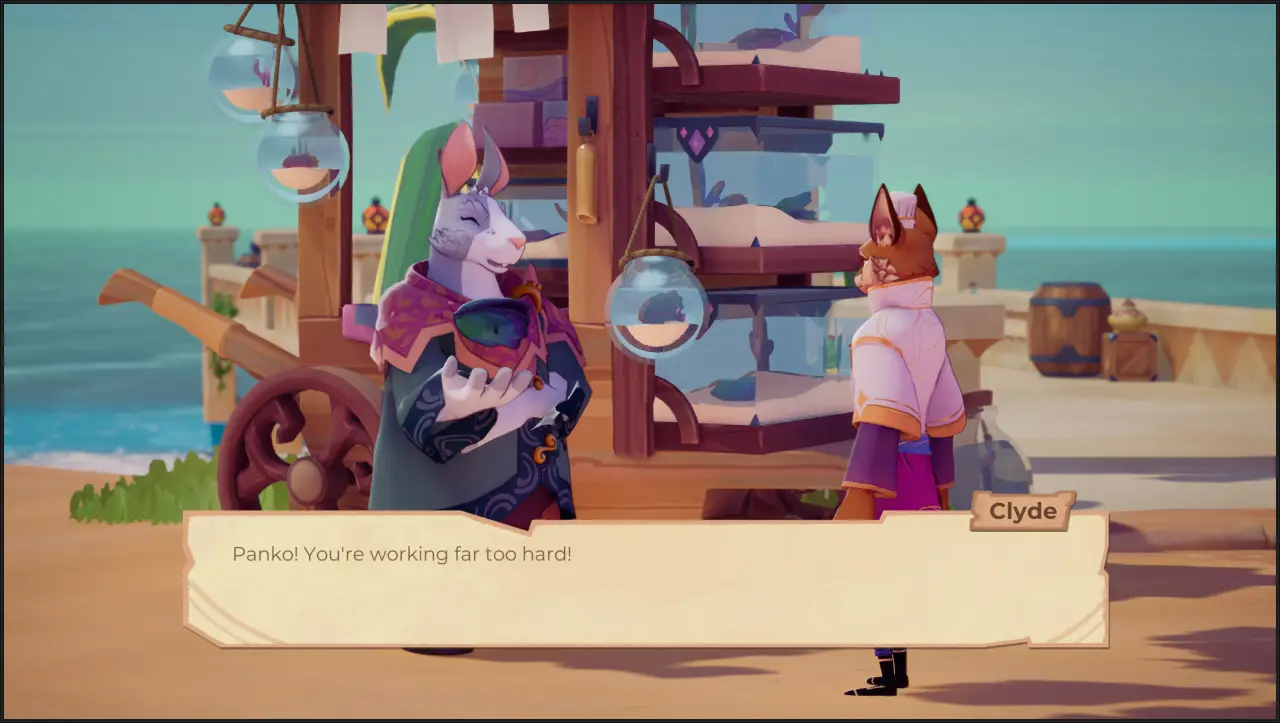
Beastro launched on June 11, 2026, and it’s also a day-one Xbox Game Pass title, which means way more people are going to see it than the Steam review count alone suggests. On Steam, it’s sitting at 91% positive from 423 reviews, tagged Very Positive, but Game Pass gives it that extra reach where people will try it just because there’s no friction. That’s great for a game with such an instantly appealing look. You see the warm village, the expressive characters, the puppet battles, and it’s an easy download.
But the platform side isn’t totally clean. Some players have pointed out that controller handling and console performance could use more optimization. That matters for a third-person, single-player game built around daily routines. If you’re gathering in the morning, managing the diner in the afternoon, and battling at night, the basic feel has to stay smooth. Any hitch in controls or performance stands out more because the game’s visual presentation is so polished in style. When the art is this charming, rough edges in input or console feel are more annoying, not less.
There’s also a broader quality-of-life issue around presentation. Missing options like full key rebinding are not just “settings menu complaints.” They affect how comfortably people can live in this game. Same with the lack of faster movement or fast travel. Beastro has a beautiful world, but beauty doesn’t cancel out repetition. If the mid-game gathering loop starts dragging, the visuals can’t fully carry it.
Still, I don’t want to overstate the problem. The identity is there. The style is memorable. The battle staging is fantastic. The characters have charm. Palo Pori feels like a place, not just a backdrop. For a small studio, that’s a huge achievement. Beastro doesn’t look impressive because it has the most expensive tech in the room. It looks impressive because it knows exactly what it wants to be, and most of the time, it hits that mark dead on.
Combat | 8.5/10
ゲーム性: 8.5/10Dinner Is Your Deck, and That One Flip Makes Beastro Work
Here’s the thing Beastro gets right almost immediately: the cards don’t feel like loot you picked up after a fight. They feel like dinner. You spend the day farming, gathering, cooking, and running the diner, and that food is what turns into the tools your Caretakers take into battle at night. That sounds cute on paper, but in play, it’s the whole reason this thing clicks.
Most deckbuilders train you to think backwards from combat. Win a fight, get a card, patch the deck, keep moving. Beastro flips that loop. You’re not waiting for the game to hand you a build. You’re building it in the kitchen. Ingredients have traits, recipes matter, and what you serve directly shapes what your Caretaker can do later. So when you’re out in the morning gathering, you’re not just hoovering up random berries because the cozy game told you to. You’re already thinking, “Okay, what does this become tonight?”
That’s a big deal, because it gives the quieter parts of the day actual weight. The three-part rhythm is clean: morning foraging, afternoon diner work and recipe tinkering, then nighttime card battles. A lot of hybrid games say their systems connect, but really they’re just taking turns. Beastro’s loop is more locked in than that. If you half-pay attention while gathering, your deck suffers. If you cook with a plan, your Caretaker walks into battle with a real identity.
And yes, the Caretaker choice matters too. You’re not just picking a cute hero and hoping the cards behave. The ingredient traits you feed into the system decide what kind of deck that Caretaker ends up using. That pulls some power away from pure draw luck and gives it back to you, which I really appreciate. It doesn’t make the combat perfectly deterministic, not even close, but it does make preparation feel like strategy instead of busywork.
That’s why, for gameplay, I’m landing high on this. An 8.5 out of 10 feels right to me. Not because every piece is flawless, but because the central idea is strong enough to carry the whole structure: cooking isn’t decoration. Cooking is the build.
Salty, Sweet, and Umami Turn Fights Into a Weird Little Card Dinner Duel
The battles themselves are where Beastro gets more demanding than the art style might lead you to expect. This is a warm, storybook-looking game with puppet-theatre staging, and honestly, the presentation is one of its best features. It’s charming without feeling sleepy. But once the cards come out, the game is not just asking you to vibe. It wants you to understand flavor pressure.
Combat revolves around matching and balancing flavor groups like Salty, Sweet, and Umami against enemy flavor cards. The easiest way to explain the feel is: it’s kind of like trying to make sets, or win tricks, while also managing what your dish-based deck can actually produce. You’re not just slamming the biggest number in your hand. You’re reading what flavor the enemy is pushing, then trying to answer it with the right dish, the right timing, and the right Caretaker setup.
When it works, it’s great. You get that little “oh, I cooked this for a reason” moment, where the dish you planned hours earlier suddenly saves the turn. That’s the magic. The food has memory. Your choices from the morning and afternoon follow you into the night. It’s a much tighter connection than something like Dave the Diver, where the daytime and nighttime halves are fun, but often feel like two strong games stitched together. Beastro is more fragile in some ways, but the cause-and-effect chain is cleaner: gather this, cook that, build these cards, survive tonight.
The catch is that night battles can still be too luck-heavy. A bad draw can leave you staring at your hand with no real mitigation, no clean answer, and not much to do except eat the damage and grind through it. That’s the weakest part of the combat. The game gives you planning tools, but it doesn’t always give you enough emergency brakes when the deck coughs up garbage.
So if you love Slay the Spire-style number chewing, but you also want a softer daily routine wrapped around it, this can really hit. If you came in wanting pure farming and diner management, though, the flavor-matching card stuff may feel way more hardcore than advertised.
Cozy Onboarding, Repetitive Gathering, and the Missing Time-Savers
Beastro is friendly. Almost aggressively friendly. It onboards systems layer by layer, it rarely punishes you hard, and it does a solid job easing newcomers into a game that could’ve been way messier. For a cozy culinary deckbuilder, that matters. You’re juggling gathering, cooking, recipe planning, diner management, Caretakers, and combat flavor logic, and the game mostly knows not to dump the whole pantry on your head at once.
But friendly doesn’t mean frictionless. The mid-game gathering loop starts to wear thin, and this is where the missing quality-of-life stuff hurts. No running, no fast travel, and no full key rebinding are the kinds of omissions that sound small until you’re doing the same resource routes again and again. Reviewers saying it badly needs time-savers are not being dramatic. They’re right. The structure is smart, but the pacing can drag when the game asks you to repeat the least interesting steps without enough shortcuts.
The campaign length also cuts both ways. At around 8 to 15 hours, Beastro doesn’t overstay its welcome, and for a lot of players, that’s honestly refreshing. You can see the arc, enjoy the systems, and not spend 60 hours waiting for the good part. But if you’re looking for a long-tail, high-difficulty deckbuilder you can grind forever, this probably isn’t that. And there’s a serious blemish here: some players have reported being locked out of their save after the final quest, forcing a restart. That’s not a little nitpick. That’s the kind of bug that can sour the last bite.
Still, the accessibility is a real strength. With a 91% Steam rating across 423 reviews, players are clearly responding to the loop, and as a day-one Xbox Game Pass title, it’s going to reach way beyond that Steam review count. That matters for a game this specific. It’s weird in a good way, and Game Pass removes a lot of the “am I really buying a cozy cooking deckbuilder?” hesitation.
So the audience is pretty clear. If you like Stardew Valley-style daily routines but you’re also willing to think about deck balance, flavor counters, and turn-by-turn problem solving, Beastro has a strong hook. If you just want to farm, decorate, serve food, and never touch card math, be careful. The cute exterior is real, but so is the strategy layer.
Content | 7.0/10
ボリューム: 7/10The 8-to-15-hour loop works because every dinner changes your deck
Beastro is not a giant forever game, and honestly, that’s part of why it works. The main campaign lands in that roughly 8-to-15-hour range, depending on how much you poke around, how much you experiment with recipes, and how quickly you click with the combat. That’s short for anyone looking for a huge farming life sim, but for this kind of hybrid game, I think the size mostly makes sense.
The daily structure is the real hook. You’re not just waking up, watering crops, selling soup, and calling it a day. Your day breaks into this three-part rhythm: morning gathering, farming, fishing, and ingredient hunting; afternoon diner work; then night battles where the Caretakers use the food you made to power their decks. That’s the clever bit. The cards aren’t just prizes you earn after winning. You’re basically cooking your build before the fight even starts.
That gives Beastro a really nice “one more day” pull. You find a new ingredient, you wonder what traits it has, you test it in a recipe, and suddenly your next battle plays differently. Salty, Sweet, and Umami matching isn’t just flavor text. It decides how your card strategy works. So the cooking doesn’t feel like a cute side activity stapled onto a deckbuilder. It’s the reason your deck exists.
For me, that’s the best argument for Beastro’s length. It’s made for playing a couple of cycles after work. Do a little gathering, serve a few meals, push one night battle, maybe unlock a recipe, then stop. It’s not trying to swallow your month. It’s more like a cozy routine with a tactical bite at the end of the day. And when that loop is clicking, it’s really easy to see why the Steam rating is sitting at 91% Very Positive from 423 reviews.
The optional fun is recipe chasing, not endless town-life grinding
If you’re coming in expecting the optional content to be pure Stardew-style life-sim wandering, you may need to adjust that expectation. Beastro’s side appeal is less about building a massive alternate life and more about messing with ingredients until you find a meal that makes your next fight smoother. The optional pull is recipe discovery. That’s the stuff that kept me curious.
And I like that, because it gives the cozy chores a point. Fishing, farming, gathering, and running the diner aren’t just separate boxes to tick. They feed into the same chain. The ingredient traits shape what kind of deck a Caretaker brings into battle, so even a small change in what you cook can matter. That’s where Beastro separates itself from something like Dave the Diver. Dave has that day-night split where the two halves are fun, but they often feel like two different games stitched together. Beastro is more tightly connected. The daytime food work and the nighttime card fights are one cause-and-effect system.
But here’s the catch: if you only want the cozy half, Beastro can push back harder than you might expect. The flavor-matching card combat has real numbers behind it. You do need to think. You can’t just vibe through every fight while treating the deckbuilding like a decoration. Some players who came purely for farming and diner management are probably going to bounce off the night battles, because the card side is more demanding than the art style suggests.
And the other catch is repetition. Around the middle, the gathering starts to wear thin. The game is welcoming, and it onboards its systems gently, which I appreciate. But it also lacks some basic quality-of-life stuff that would’ve helped a lot: running, fast travel, full key rebinding. Reviewers have been pretty blunt that it badly needs time-savers, and yeah, I get it. When the loop asks you to gather again and again, missing speed tools becomes way more noticeable.
No paid DLC safety net, and the post-game has a nasty save problem
At launch, Beastro is a complete base game. There isn’t paid DLC sitting off to the side adding a second campaign or a huge post-game zone. So the value question is really simple: are you happy with a compact, finished adventure built around its cooking-to-card-battle loop? If yes, it delivers. If you’re looking for a long-tail game you can live in for 80 hours, this probably isn’t that.
The biggest problem for long-term play is not just the length, though. It’s the reported save issue after the final quest. Some players say they were locked out of their save after finishing the main objective and had to restart from scratch. That’s rough. In a game where experimentation is the fun, losing access to your completed file cuts off the natural “okay, now let me test the recipes I missed” phase. Even if the main campaign is satisfying, that kind of bug makes the post-game feel fragile.
Night battles also don’t always help the replay value. The combat looks great, especially with that puppet-theatre staging and warm storybook art style, which is easily one of the game’s strongest parts. But mechanically, the fights can lean on luck. A bad draw can leave you with no mitigation and not much to do except take the hit and grind through it. That’s not a deal-breaker in a gentle, shorter game, but it does matter if you’re judging whether the combat can carry repeated playthroughs.
So for content, I land at a 7 out of 10. Beastro has a smart loop, a cozy pace, and a genuinely neat reason to keep cooking new food. It’s also short, a little repetitive in the middle, missing some time-saving tools, and currently not the strongest game for long post-campaign play.
If you’re on Xbox Game Pass, though, that changes the equation a lot. As a day-one Game Pass title, the barrier is basically gone for subscribers, and that means way more people can try this odd little cooking deckbuilder than the 423 Steam reviews make it look.






コメント 0
ご意見をお聞かせください
このゲームについての感想や評価をお寄せください。
まだコメントはありません。このレビューへの感想をぜひどうぞ。