News
Iron Surge Demo Is Live, but Can Zero-Micro RTS Work?
Armor Tides’ free Steam demo unlocked on June 10 at 22:00 and is available now. It blends low-micro
















In recent years, indie strategy games have grown increasingly fond of hybrid genres, and Legion Tower Defense is another product built on that idea—except it opts for the relatively uncommon combination of RTS, tower defense, and light Roguelite elements. Based on the information currently available, this new title developed by 6side Studio is not aiming to be a purely hardcore real-time strategy game, but rather to compress frontline advancement, rear-base defense, and meta progression into a single-player gameplay loop.

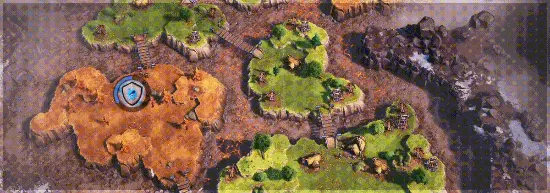
From a design perspective, its core selling point lies in its “dual-front gameplay.” On one hand, players must command tribal warriors to charge forward and capture islands; on the other, they also need to build arrow towers and defensive structures in the rear to intercept the relentless assaults of the shadowy “Eternal Empire.” This structure feels a bit like splitting the expansion and large-scale battles of traditional RTS games into a more intuitive front-and-back division of labor. In terms of pacing, it is more immediate than pure macro-management titles, while offering more room for proactive offense than a pure tower defense game.

Objectively speaking, what truly determines the upper limit of games like this is often not the theme, but whether the economic system can support enough gameplay depth. The solution Legion Tower Defense presents is capturing resource points, constructing production buildings, and continuing to expand towers and troops on conquered islands. In other words, defense is not the end goal—expansion is the fuel for prolonged warfare. If all you know is how to stack towers without understanding how to manage your economy, later-stage advances will most likely become difficult. This design approach will feel familiar to veteran players of Warcraft and StarCraft, though it lowers the barrier to entry somewhat. It feels more like a second-generation product testing the waters: prioritizing clear feedback first, then pursuing complexity.

Another practical advantage is that it does not turn its Roguelite elements into a high-penalty reset system. The ancient rune stones in the game provide both in-run and meta progression, and failure does not wipe out key progress. Instead, players can continue unlocking upgrades in three categories: defense towers, warriors, and economy. For a single-player strategy game, this kind of design clearly lowers the learning cost and is also better suited to retaining player engagement during the demo phase; every run is another chance to experiment and learn, but a single mistake will not erase everything you invested before.
On the story side, it tells of a tribe serving as the last bastion, using the sacred ancestral nexus Spiridon as its stronghold in a war for survival against the shadowy “Eternal Empire.” Hero units possess unique skills, and the Empire’s warlords each bring their own tactical styles, which suggests the game is not relying solely on scaling numbers and wave-stacking. Instead, it wants players to learn enemy patterns through repeated challenges and then adjust their own balance between offense and defense. For players who prefer single-player strategy games, this offers more lasting appeal than simply grinding through stages.
If you are a veteran of Blizzard-style RTS games, this title is worth adding to your wishlist first, then keeping an eye on the amount of content and late-game balance in the full release. If what you value most is pure mechanical depth, it may not replace the classic RTS greats; but if you want a new light-to-midweight strategy game that balances base defense, expansion, and progression feedback, this well-received Steam demo has at least already made its core product positioning clear.


Comments 0
We'd love to hear from you
Welcome! Share your take on this game — being first might come with a surprise.
No comments yet. Be the first!