
The Top 3 in 30 Seconds: Factorio is the genre’s rulebook, and it is still the game every other factory game gets compared to. Satisfactory turns that logic into a huge first-person 3D construction project you can stand inside. Dyson Sphere Program pushes the fantasy to a galactic scale, from messy starter belts to a machine wrapped around a star.
Why These Made the List #
Factory automation games are not all chasing the same feeling. Some are about the clean snap of belts lining up. Some are about debugging logic until a system finally runs without you. Some are about scale, where the factory stops being a base and starts feeling like a planet-spanning organism.
For this list, the baseline was simple: automation had to be the core loop, not a side activity. These games also needed strong long-term Steam reception, enough depth to last, and a clear identity. We deliberately kept pure city-builders and theme park management games out. Those genres can overlap with logistics, but they scratch a different itch.
GameGeeker’s angle here is player feel, not just feature count. We weighed long-term community reputation, editor testing, and how each game changes the shape of the problem. The ranking starts with genre-defining depth, then moves through scale and systems complexity before reaching friendlier or more specialized entries that still earn their place.
Top Picks #
1. Factorio #
 GOG€16.80Steam €16.80Zobacz cenę →
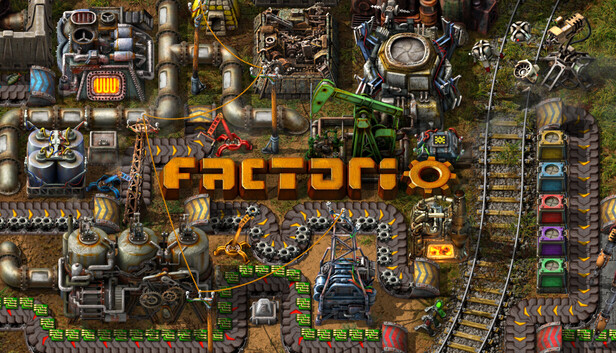
Factorio starts with ore, belts, and a few ugly machines. Then it quietly rewires your brain. One more assembler becomes one more bus lane, then oil, circuits, trains, blueprints, defenses, rockets, and eventually Space Age. It is ruthless, readable, and absurdly hard to put down.
- Why It's Ranked Here: It defines the language of the genre. Belts, inserters, bottlenecks, blueprints, bus design, and scaling problems all feel sharper here than almost anywhere else.
- Who It's For: Players who want the full, demanding factory game first, especially if optimization itself is the fun.
- Key Selling Points: Blueprint mastery, Space Age’s multi-planet expansion, official multiplayer, a huge mod scene, and a price that barely moves because it does not need to.
2. Satisfactory #

Satisfactory asks a different question: what if you had to live inside your own production diagram? Its factories rise vertically, sprawl across alien cliffs, and turn logistics into architecture. When you stand under a three-floor conveyor interchange you built yourself, the genre suddenly feels physical.
- Why It's Ranked Here: It turns Factorio-style planning into a 3D spatial and aesthetic problem. Efficiency matters, but so does how the factory looks and how you move through it.
- Who It's For: Players who want immersion, scale, and beautiful industrial messes they can personally walk around.
- Key Selling Points: Huge first-person factories, open-world exploration, co-op building, polished 1.0 content, and a strong “make it cleaner” perfectionist pull.
3. Dyson Sphere Program #

 GAMIVO€13.93Steam €13.93Zobacz cenę →
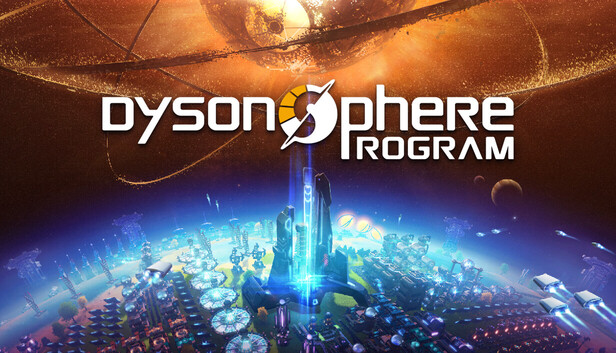
Dyson Sphere Program has the strongest sense of cosmic ambition on this list. You start by scraping together resources on one planet. Before long, logistics towers are moving goods between worlds, solar sails are filling the sky, and your production chain is feeding a machine wrapped around a star.
- Why It's Ranked Here: It takes automation from one base to an entire star system, then keeps pushing outward. The scale is the selling point, and the game delivers on it.
- Who It's For: Players who love grand projects, space logistics, and the fantasy of turning a galaxy into one giant production plan.
- Key Selling Points: Dyson sphere construction, interplanetary logistics, spectacular visuals, strong long-term updates, and world-class execution from a Chinese studio.
4. Oxygen Not Included #
 GAMIVO€19.08Steam €19.08Zobacz cenę →
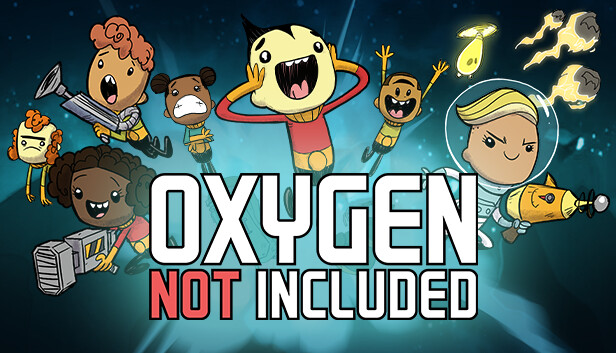
Oxygen Not Included looks cute until your colony cooks itself, floods itself, suffocates, or loses power because one pipe backed up three systems ago. Automation here is not just belts. It is gases, liquids, heat, electricity, sensors, and logic gates all pulling against each other at once.
- Why It's Ranked Here: It has the tightest system coupling here. Every fix creates pressure somewhere else, which makes successful automation feel genuinely engineered.
- Who It's For: Players who enjoy complex simulations and do not mind a steep learning curve.
- Key Selling Points: Deep gas, liquid, heat, and power systems; logic automation; Klei’s sharp art style; dark humor; and years of major free updates.
5. Shapez 2 #

 Eneba€10.95Steam €10.95Zobacz cenę →
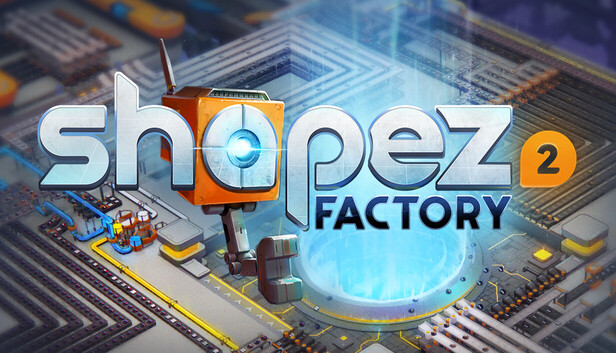
Shapez 2 strips the factory genre down until only the cleanest part remains. There is no survival pressure, no enemies, and no ore patch drama. There is only cutting, rotating, painting, stacking, and routing shapes across a huge canvas until a once-chaotic belt network becomes elegant.
- Why It's Ranked Here: It is the purest automation game on the list. It removes friction and lets conveyor design carry the whole experience.
- Who It's For: Beginners, puzzle-minded players, and anyone who wants belts without combat, mining chores, or colony problems.
- Key Selling Points: Minimalist automation, fast onboarding, high skill ceiling, an enormous workspace, new hex-based mechanics, and zero pressure.
6. Captain of Industry #
 GAMIVO€28.21Steam €28.21Zobacz cenę →
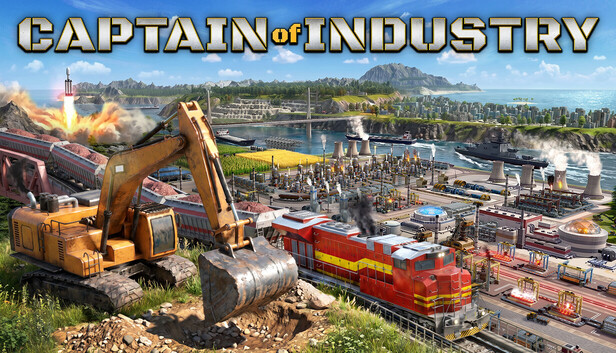
Captain of Industry feels heavier than a belt puzzler. You are not just routing items. You are running an industrial island: mining terrain, refining materials, managing trucks, feeding a population, and trying to keep supply chains from collapsing under their own weight.
- Why It's Ranked Here: It is the most grounded industrial simulation here, with terrain, vehicles, population needs, and production all tied together.
- Who It's For: Players who want to manage an entire industrial ecosystem rather than just build neat conveyor layouts.
- Key Selling Points: Full supply chain simulation, terrain excavation, truck logistics, colony needs, and serious sandbox depth.
7. Techtonica #

 Steam28,99€Zobacz cenę →
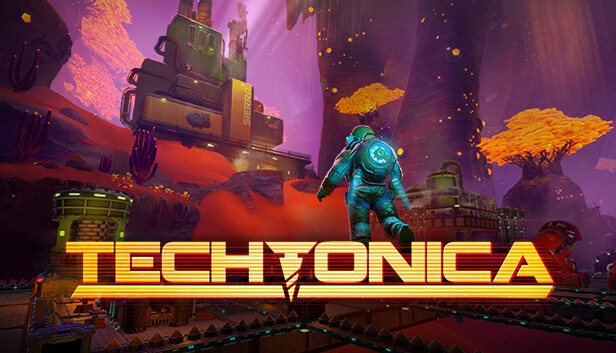
Techtonica takes the first-person factory idea underground. Instead of wide alien horizons, you get dark caverns, glowing machinery, and the slow pleasure of lighting up a strange buried world with your own belts, machines, and research path.
- Why It's Ranked Here: It gives the first-person factory formula a stronger exploration mood, and co-op makes the digging, routing, and rebuilding more social.
- Who It's For: Players who like Satisfactory but want a tighter underground setting and more atmosphere.
- Key Selling Points: Cave-based factory building, first-person exploration, online co-op, tech unlocked through discovery, and a distinct subterranean tone.
8. Mindustry #

Mindustry is fast, cheap to enter, and much deeper than it first appears. You build resource chains to feed defenses, then enemies show up and test whether your elegant supply plan can survive contact. It is automation with constant pressure.
- Why It's Ranked Here: It blends factory logistics with tower defense better than anything else here, while staying lightweight and easy to recommend.
- Who It's For: Players who want to try automation for free, or who prefer defense and tempo alongside production planning.
- Key Selling Points: Free and open source, automation plus tower defense, multiplayer support, quick starts, and surprising long-term depth.
9. Desynced #

 K4G€12.86-51%Steam €12.86Zobacz cenę →
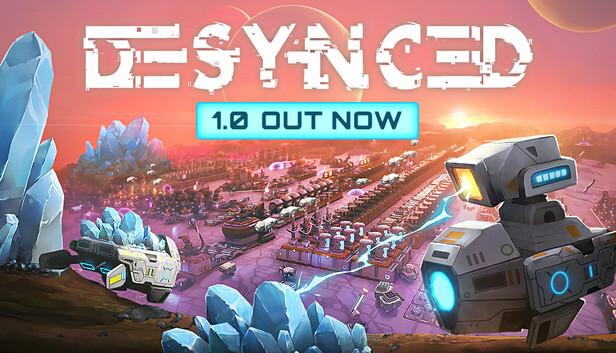
Desynced is for the player who looks at a factory and thinks, “I wish I could program the workers.” Its robots and buildings can be given custom behavior through a visual editor, so the fun shifts from placing a line to designing a small industrial command structure.
- Why It's Ranked Here: It mixes automation, RTS structure, and visual programming in a way that feels genuinely different from belt-first factory games.
- Who It's For: Players who enjoy logic, behavior editing, and mobile units more than fixed conveyor layouts.
- Key Selling Points: Visual programming, customizable robot behavior, automation plus RTS, mobile units, combat, and flexible strategy space.
10. FOUNDRY #
 GAMIVO€24.89Steam €24.89Zobacz cenę →
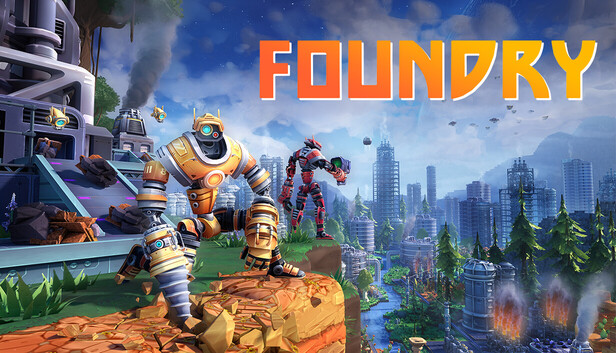
FOUNDRY has a simple pitch: what if the whole world were editable? The voxel terrain can be dug, reshaped, and built through, which makes your production lines feel less like they are sitting on a map and more like they are growing through it.
- Why It's Ranked Here: It earns its place by combining factory automation with voxel sandbox freedom, even if it is still developing in Early Access.
- Who It's For: Players who love Minecraft-style terrain freedom and want that same flexibility inside a factory game.
- Key Selling Points: Fully mineable voxel worlds, first-person building, freeform factory layouts, Paradox publishing, and a strong sandbox identity.
11. Autonauts #

Autonauts is the gentlest way into automation on this list. You teach little robots to chop wood, plant crops, craft items, and repeat routines. Before you notice it, the game has taught you loops, instructions, reuse, and basic programming logic.
- Why It's Ranked Here: It makes automation and programming ideas approachable without flattening them into a tutorial.
- Who It's For: Newcomers, younger players, relaxed builders, and anyone who wants logic without stress.
- Key Selling Points: Robot instruction recording, beginner-friendly programming concepts, soft visual style, calm pacing, and great onboarding for automation thinking.
12. Factory Town #
 Eneba€3.38Steam €3.38Zobacz cenę →
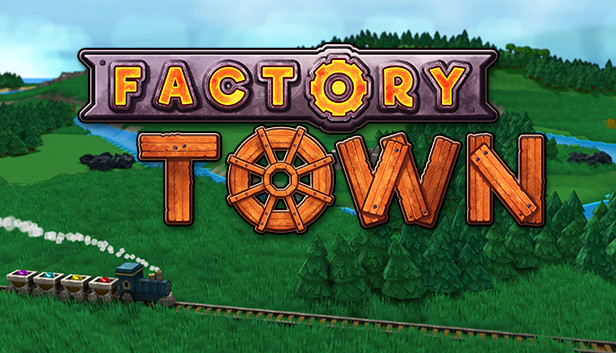
Factory Town is the relaxed closer: a bright medieval logistics game where goods move by belts, minecarts, airships, and portals. It is less about punishing efficiency and more about watching a small village become a cheerful production network.
- Why It's Ranked Here: It keeps the automation joy but softens the pressure, focusing on transport networks and town growth.
- Who It's For: Players who want logistics planning with a calmer pace and a friendlier mood.
- Key Selling Points: Multiple transport systems, town development, bright presentation, approachable logistics, and a much lighter feel than the demanding picks.
Comparison Table #
| Game | Genre | Why It's Ranked | Price (USD) / Hours |
|---|---|---|---|
| Factorio | Automation building / production chains / tower defense | The genre benchmark, with unmatched blueprinting, scaling, and optimization depth. | About $35, rarely discounted / hundreds of hours |
| Satisfactory | First-person / 3D factory building / open world | The best first-person factory game, turning logistics into vertical architecture. | About $40 / 100+ hours |
| Dyson Sphere Program | Space / interstellar automation / strategy | The biggest scale here, from planetary production to star-sized megastructures. | About $25 / 100+ hours |
| Oxygen Not Included | Colony survival / systems automation / simulation | The most tightly coupled simulation, where automation touches air, water, heat, and power. | About $25 / dozens to hundreds of hours per colony |
| Shapez 2 | Pure automation / puzzle / abstract | The cleanest belt-design game, with almost no friction around the core loop. | About $25 / dozens of hours |
| Captain of Industry | Industrial simulation / logistics / colony management | The densest industrial sandbox, built around supply chains, trucks, terrain, and population needs. | About $30 / 100+ hours |
| Techtonica | First-person / underground factory / co-op | A moodier first-person factory game built around cave exploration and co-op construction. | About $30 / dozens of hours |
| Mindustry | Tower defense / automation / free | The best free entry point, combining production chains with defensive pressure. | Free, or about $8.99 to support the developer / up to 100+ hours |
| Desynced | Automation / RTS / programming | The most experimental pick, mixing factory growth with visual programming and mobile units. | About $25 / dozens to hundreds of hours |
| FOUNDRY | First-person / voxel factory / sandbox | The voxel sandbox choice, giving factory building a fully editable world. | About $30 / dozens of hours and up |
| Autonauts | Automation / programming intro / casual | The friendliest programming-flavored automation game, built around teaching robots routines. | About $20 / 10-20+ relaxed hours |
| Factory Town | Logistics automation / medieval management / casual | The most relaxed logistics pick, focused on transport networks and town growth. | About $20 / dozens of relaxed hours |
How to Pick the Right One #
For the easiest start, try Shapez 2, Mindustry, Autonauts, or Factory Town.
For first-person immersion, choose Satisfactory, Techtonica, or FOUNDRY.
For the deepest systems, start with Factorio, Captain of Industry, or Oxygen Not Included.
For grand scale and unusual twists, pick Dyson Sphere Program or Desynced.
FAQ #
How are factory automation games different from city-builders? #
The core loop is different. In a factory automation game, the pleasure comes from designing production chains, routing materials, fixing bottlenecks, and watching a system run without your hands on it. City-builders focus more on population, zoning, budgets, services, and urban layout. There is overlap, especially in games like Oxygen Not Included, but this list ranks games by the strength of their automation loop, not by how good they are as general management sims.
Can beginners and non-math people get into these? #
Yes. These games look mathematical from the outside, but most of the real thinking is spatial planning and basic logic. You do not need to be good at equations to enjoy them. Shapez 2 is probably the cleanest beginner start, Mindustry is free and quick to understand, and Autonauts teaches automation ideas through simple robot instructions. Start with a forgiving game, learn the rhythm, then move toward Factorio or Oxygen Not Included when you want something with sharper teeth.
Which ones support co-op multiplayer? #
Satisfactory, Techtonica, and Mindustry are the easiest co-op recommendations here, because building together feels natural in all three. One person can explore, another can handle production, and someone else can clean up the inevitable belt disaster. Factorio also has official multiplayer, and it is excellent for a coordinated group that enjoys planning. Just know that the harder games get very funny, very fast, when four people all think they understand the factory better than everyone else.
These are notorious time-sinks — any good for short sessions? #
Yes, but choose carefully. Factory Town and Autonauts are much easier to play in short, relaxed bursts. Shapez 2 is also good for stopping after one small improvement, because there is no survival timer punishing you. Factorio and Oxygen Not Included are the dangerous ones. They are brilliant, but they love turning “I’ll just fix this one bottleneck” into a whole evening. Dyson Sphere Program can do the same once interstellar logistics opens up.





Komentarze 2
Chętnie poznamy Twoje zdanie
Dołącz do dyskusji i podziel się opinią o grze.
I’m not sold on ranking by automation purity over onboarding, since clear beginner and co-op picks usually matter more when I’m deciding what to buy.
Factorio still being the yardstick makes sense, but I like that the list separates first-person scale in Satisfactory from Dyson Sphere Program's full star-wrapping obsession.
Nie ma więcej komentarzy