




















Opening
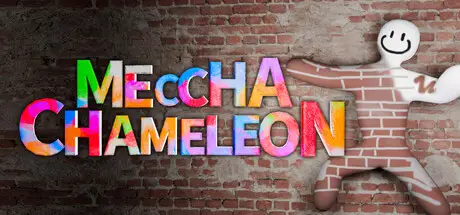
MECCHA CHAMELEON is a multiplayer hide-and-seek party game where you paint your own camouflage, and when it works, it absolutely nails that “don’t breathe, don’t move” panic — yes, for six dollars, with the right friends, it’s worth a look.
Here’s the twist. This isn’t Prop Hunt where you click a chair and hope nobody notices the chair is acting weird. You start as this blank white little freak, you sample colors from the stage, you paint yourself by hand, and then you pose like you belong there. So your disguise isn’t limited by a list of props. It’s limited by your eye, your patience, and, honestly, how cursed your art skills are.
And that’s why this thing pops. When a seeker walks right past you because your terrible wall-colored blob somehow fooled them, it feels incredible. It’s silly. It’s tense. It’s funny in the exact way party games need to be funny. Steam players seem to get it too — it’s sitting at 83% positive from 33,903 reviews. But let’s not pretend it’s polished. The online and friend systems can be a mess, invites don’t always behave, and if you’re coming in solo, there’s barely anything here for you. This is a rough indie party toy with one killer idea. The question is whether that one idea is strong enough to carry the whole thing.
Story | 5.5/10
劇情: 5.5/10The “plot” is just you trying not to look like a person-shaped mistake
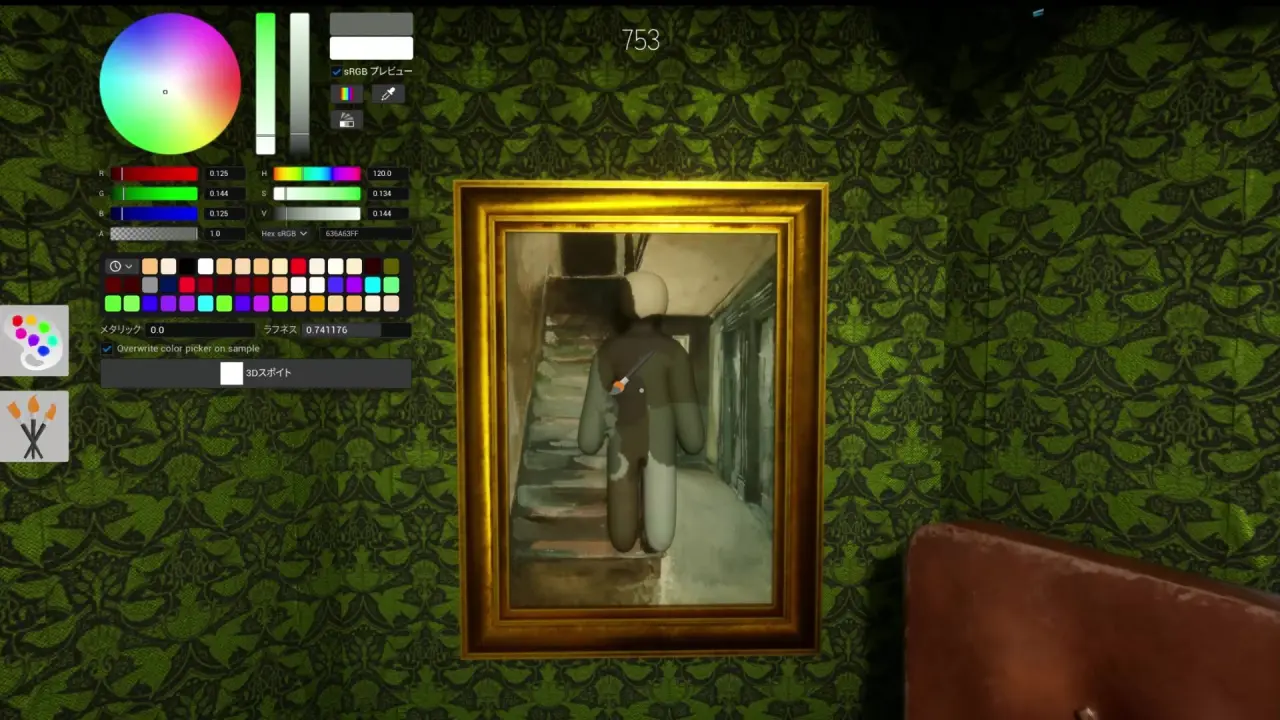
MECCHA CHAMELEON doesn’t have a traditional story. There’s no campaign, no big villain, no emotional cutscene where the chameleon remembers its childhood. And honestly, that’s fine, because this game’s actual story is the panic you create in the match. The whole idea is dead simple: you’re a white, gooey, two-legged little weirdo, and your job is to paint yourself into the environment so well that another player walks right past you without a second look.
That blank white body is doing more character work than you’d think. It’s not a hero with lore. It’s a canvas. That’s the joke, and that’s the hook. In a normal Prop Hunt-style game, you usually become a chair, a bottle, a plant, whatever the map gives you. Here, you’re not picking from a prop menu. You’re looking at a wall, a floor tile, a weird pattern, and going, “Okay, can I fake that with my own terrible hands?” That’s way more personal. Your disguise isn’t limited by what the game lets you transform into. It’s limited by your eye, your brushwork, and how calm you can stay while somebody is checking the corner you’re standing in.
So for story structure, yeah, it’s basically match-based improv. Hide, seek, get found, scream in voice chat, accuse your friend of cheating, run it back. That’s the loop. And that’s why I’d score the story side around a 5.5 out of 10. Not because it secretly has deep writing. It doesn’t. But because the game understands that in a party stealth game, the story is the moment. The best scene is when a seeker stops right next to you, stares for half a second, and somehow moves on. That little silence? That’s the cutscene.
Normal, Increasing Oni, and Double are basically three different match “scripts”

The closest thing MECCHA CHAMELEON has to branching storytelling is its mode structure. Normal, Increasing Oni, and Double don’t give you dialogue choices or quest paths, but they do change the shape of the match. They decide what kind of story your group is about to tell. Normal is the clean hide-and-seek setup. Somebody looks, somebody hides, and the drama comes from whether your hand-painted camouflage can survive a seeker's hard second look.
Increasing Oni is the one with the best built-in escalation. When someone gets caught, they switch sides and join the seekers. That one rule gives the match a real group-narrative curve. It starts with a few people hunting, then the net gets tighter, and suddenly the map feels smaller because your former hiding buddy is now out there snitching with eyes. That’s not written drama, but it absolutely creates drama. You get sudden turncoats, momentum, panic, and that wonderful party-game feeling where everyone’s laughing and yelling because the situation keeps getting worse.
Double changes the rhythm again, pushing the social read and the pressure in a different direction. The important thing is that these modes aren’t “story content” in the usual sense. There are no side quests, no optional character arcs, no hidden NPC scenes to dig through. Side content density is basically not the point here. The quality of the “extra” experience depends almost entirely on who you’re playing with and how much they buy into the bit. With a good group, the same map can produce completely different little stories. With randoms, or worse, if the online systems are giving you trouble, that magic can fall apart fast.
Like Among Us, the best writing is coming from your friends yelling in voice chat

This is one of those games where the script is mostly happening outside the game. Think Among Us, not because the mechanics are the same, but because the memorable stuff comes from player reactions. The accusation. The fake confidence. The person who says, “There’s no way that’s him,” right before smacking the exact wall you’re painted onto. MECCHA CHAMELEON gives you the setup, but your group writes the punchline.
That also means the character writing is weirdly player-driven. The seeker becomes the paranoid detective. The hider becomes the nervous artist. The overconfident friend paints themselves like a garbage mural and somehow survives. The quiet friend turns out to be terrifyingly good at matching colors. None of that is in a character bio, but it’s still character. The game’s pure white mascot body is basically a role you step into every round: a blank little blob trying to pass as scenery. It’s silly, but it’s clear. You instantly understand who you are and what you’re supposed to do.
The catch is, if you’re coming in for authored story content, there’s just not much here. No meaningful single-player story. No real side-quest layer. No big branching decision system beyond the tactical choices you make moment to moment: where do I hide, what color do I steal, how still do I stand, do I risk a bold pose or play it safe? Those choices matter inside the match, but they don’t build into a larger narrative. So the story value lives and dies on the lobby. If you’ve got friends, especially friends who like social bluffing and party chaos, this thing can produce genuinely great anecdotes for six dollars. If you’re solo, or if you need polished presentation and reliable friend invites every time, the whole “make your own story” pitch gets a lot weaker.
Audio | 7.0/10
音效: 7/10The best sound in MECCHA CHAMELEON is your friend panicking in Discord

MECCHA CHAMELEON doesn’t have “big” audio. It’s not trying to blow out your speakers with a cinematic soundtrack or sell you on fancy voice acting. And honestly, that’s fine, because the funniest sound in this game is almost always human. It’s somebody holding their breath while a seeker walks past. It’s the sudden scream when a bad paint job gets spotted. It’s the whole lobby laughing because someone thought they were invisible and they were absolutely not.
That matters because this is a multiplayer hide-and-seek party game first. The Steam pitch is simple: you start as this white body, you paint yourself to match the stage, you pose, and you try to fool the seekers. So the “performance” doesn’t really come from characters talking. It comes from the group. Voice chat is basically half the game. If you’ve got friends ready to jump in, the screaming, lying, blaming, and friendly heckling become the soundtrack.
The downside is obvious, though. If you’re expecting proper voice work, big character barks, or a polished audio presentation that carries the game by itself, no. That’s not what this is. MECCHA CHAMELEON sounds like what it is: a small, scrappy indie party game from lemorion_1224. The audio is functional, light, and goofy enough to not get in the way. It supports the chaos, but it doesn’t elevate the whole package on its own.
And that’s why I land around a 7 out of 10 for this side of the game. The sound design understands the assignment, but it’s not luxurious. It’s there to make the social moments pop. When the lobby is alive, it works. When you’re alone, or when the online side is fighting you, there’s just not much audio magic left to carry the silence.
Footsteps and weird little noises are the seeker’s best clues

Here’s where the audio actually matters mechanically: seekers need to hear when something feels wrong. In a game about blending into the stage, sound can’t just be decoration. Footsteps, movement noise, and ambient details give the seeker tiny little hints. Maybe you hear motion where nothing should be moving. Maybe the room sounds normal, but one corner feels off. That’s the fun part. You’re not just scanning for a bad paint match. You’re listening for the lie.
That fits MECCHA CHAMELEON’s main trick really well. Traditional Prop Hunt is usually about becoming a pre-made object in the level. You turn into a chair, or a box, or whatever the map gives you. Here, the disguise is more personal. You’re painting your own body to match the environment, so your success depends on your eye, your brushwork, and how well you commit to the pose. Audio adds another layer to that. If your colors are good but your movement gives you away, you’re cooked.
The sound effects are plain, sure. Nobody should pretend this is some ultra-detailed stealth sim. But plain doesn’t mean useless. The sound design keeps the hide-and-seek readable. It helps seekers sense when something is off, and it makes hiders feel that awful little spike of panic when somebody gets close. That moment where a seeker walks right past you is already the game’s best high, and the audio helps sell it because you can hear the danger closing in.
Still, this is not a game for people who want pristine online systems and a frictionless party setup. Steam invites can fail, “Join Friend” can just not work, and that hurts a game where the best audio is your friends losing their minds together. The design is good. The infrastructure around getting everyone into the room needs work.
Penguin hotels, candy stages, and a soundtrack that knows not to overstay
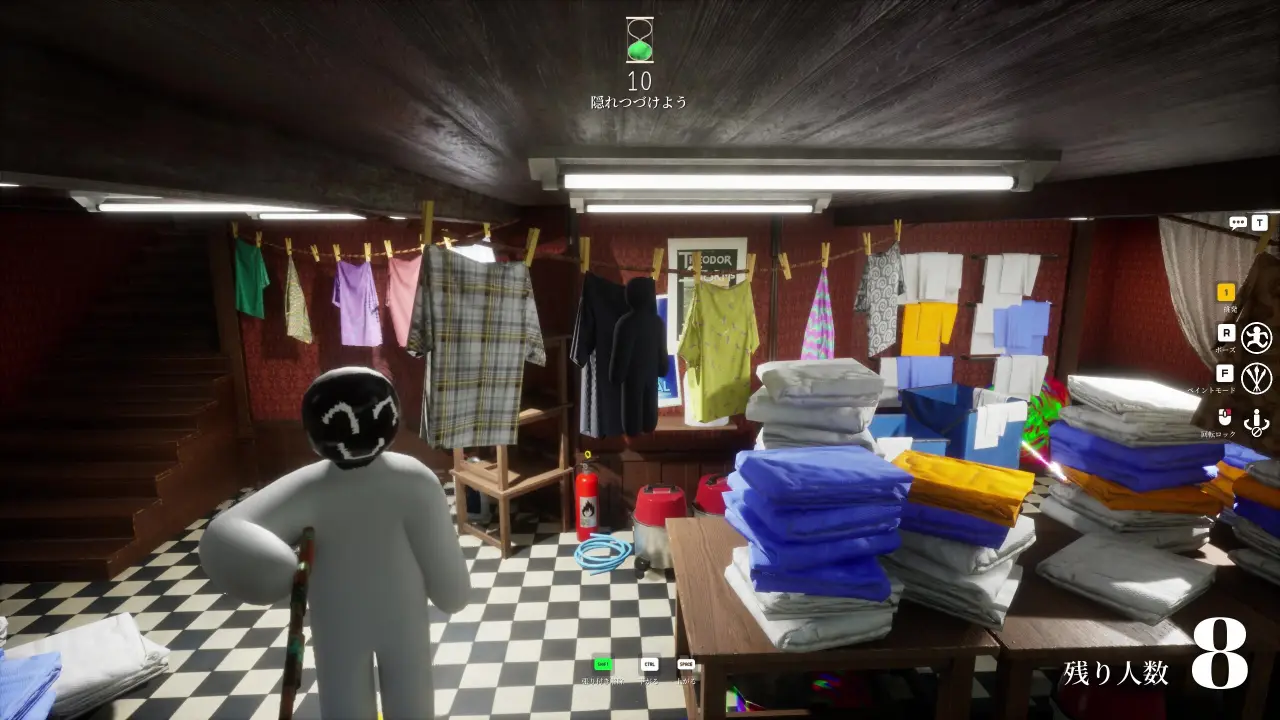
The music and ambience lean into the silly party tone, which is exactly the right call. MECCHA CHAMELEON is not a grim stealth game. It’s a comedy-flavored hide-and-seek game where a badly painted player can look like a walking art crime. So the sound shouldn’t be serious. It needs to keep things loose, quick, and playful, and for the most part, it does.
The different themed maps help here. Stages like the penguin hotel and candy land-style spaces give the game room to change its environmental flavor, even if the production is modest. You’re not getting dense, expensive soundscapes, but you do get enough identity that the maps don’t all feel like the same empty room with different colors. For a game built around spotting, posing, and “artistic skill,” that matters. The stage has to feel like a place worth studying, because the whole disguise system depends on you noticing details.
But let’s be real: the audio package is basic. The onboarding is thin, the visuals and UI are plain, and the whole thing has that early viral indie look. The sound follows that same path. It’s clean enough. It’s funny enough. It doesn’t yank you out of the match. But it also won’t be the thing you tell people about first.
What you will tell them is this: “Grab it, it’s six dollars, and we can all look ridiculous together.” That’s the sell. With an 83% Very Positive rating across 33,903 Steam reviews, clearly a lot of players are getting that same messy fun out of it. The audio works because it supports the joke, the hiding, and the panic. It’s not fancy. It’s not deep. But in the middle of a good lobby, it does exactly what it needs to do.
Visuals | 7.0/10
畫面: 7/10The white little freaks only work because the world is so readable

MECCHA CHAMELEON is not a pretty game in the expensive sense. Don’t come in looking for fancy lighting, movie-grade animation, or some high-end engine showcase. That’s not what this is doing. Visually, it’s simple, cartoony, and honestly kind of plain. But here’s the thing: that plainness is also the point.
The whole game is built around these clean white bodies that you paint over to disappear into the stage. So the art direction has to be readable. You need to clock a wall pattern, grab a color, smear it onto yourself, strike a ridiculous pose, and pray the seeker doesn’t notice that one “piece of furniture” is breathing. If the maps were too noisy or over-rendered, the core joke would fall apart. The clean look gives the disguise game room to breathe.
And compared to classic Prop Hunt, this is where MECCHA CHAMELEON actually has a stronger visual idea. Prop Hunt is basically, “Okay, pick an object and become that object.” Funny, sure, but you’re wearing a template. Here, you’re not swapping into a preset model. You’re sampling colors, brushing them on, and trying to become part of the image by hand. Your camouflage isn’t limited by a prop list. It’s limited by your eyes, your paint job, and how well you understand the scene. That’s a much cooler visual interaction.
The paint tools are the real graphics feature here
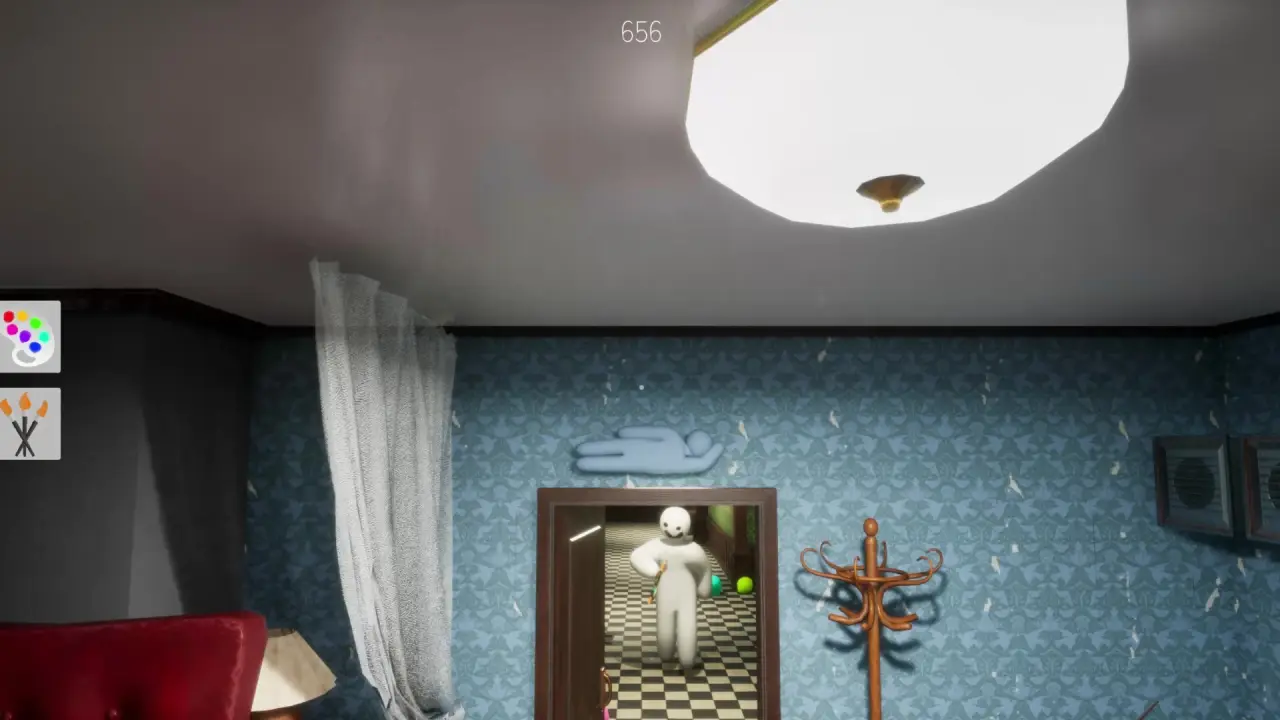
The best-looking moments in this game don’t come from effects. They come from players making goofy, brilliant little disguises. The palette, the eyedropper, the brush — that stuff is the actual graphics tech that matters here. You’re not just looking at the environment. You’re stealing from it. You’re turning the stage into your costume.
That’s why even a bad paint job is funny. You can be wildly off-color, smear the wrong shade across your body, crouch next to a wall, and still get that tense little hit of “wait, did they see me?” And when it works — when a seeker walks right past you — it’s electric. Modern multiplayer games don’t always give you that pure, giddy panic anymore. This one does.
There’s depth here too. A new player can just slap on a color and hide behind a chair. But someone who really gets it starts thinking about edges, shadows, pose, color matching, and how human brains scan a room. That’s why I’m warmer on the graphics than the screenshots alone might suggest. The game doesn’t look technically impressive, but it makes visuals playable in a way most party games don’t. For this segment, that lands around a 7.0 out of 10 for me: rough, yes, but with a genuinely strong visual hook.
Mansions, sewers, Backrooms, Osaka — not rich, but not one-note
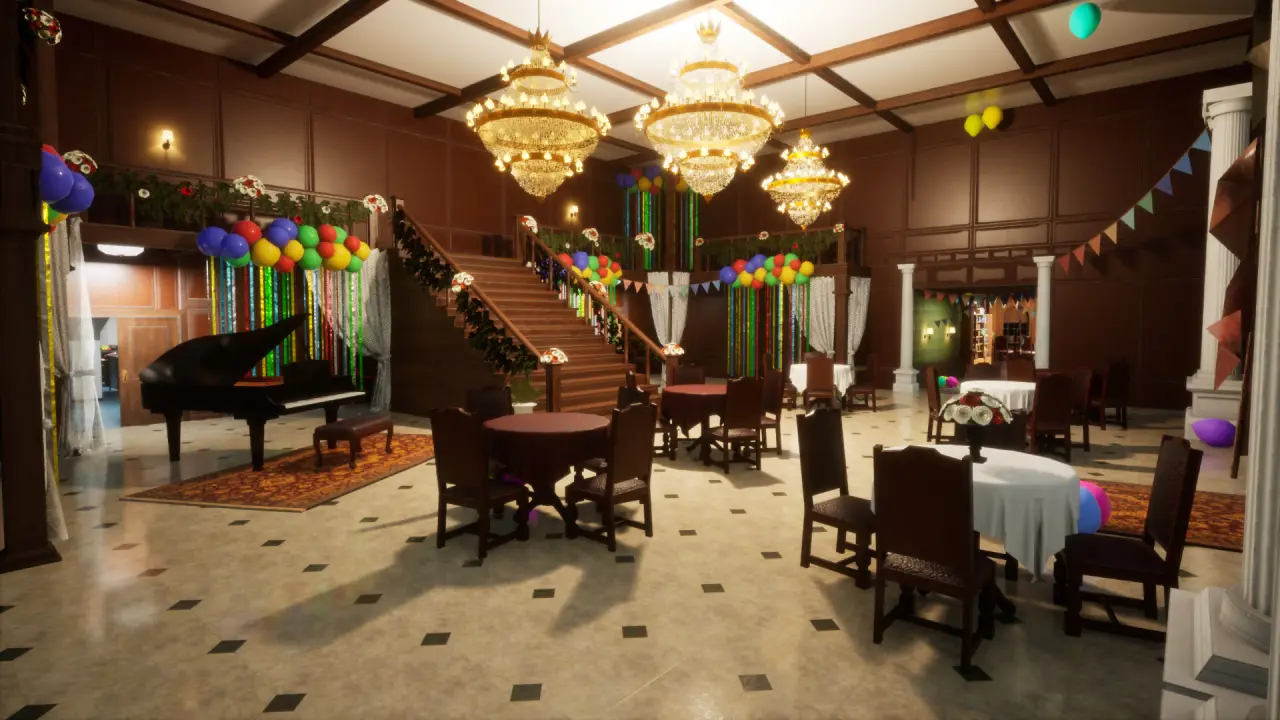
The map variety helps a lot. MECCHA CHAMELEON has a spread of distinct spaces — mansion, sewer, Backrooms-style areas, Penguin Hotel, Candy Land, Osaka — and that matters because every new location changes what “good camouflage” even means. A clean wall in one map, a grimy surface in another, a loud candy-colored prop somewhere else. Same mechanic, different visual read.
Now, let’s be honest: these stages are not lavish. You’re not getting dense environmental storytelling or premium set dressing. This has the look of a small indie game that knows exactly which parts need to function and which parts can be kind of basic. The textures, shapes, and colors are doing a job. They’re giving players enough recognizable surfaces to copy, enough visual contrast to spot mistakes, and enough weirdness to make hiding funny on stream.
That streaming angle is important too. The official description calls out public matches and streaming, and you can see why. The visuals are instantly understandable to an audience. White character paints self. White character hides badly. Seeker misses them anyway. Everyone yells. That’s a good visual gag. It doesn’t need cinematic fidelity. It needs clean setups and readable punchlines, and most of the time, the maps give it that.
Don’t expect ray tracing, slick UI, or polished platform bells and whistles
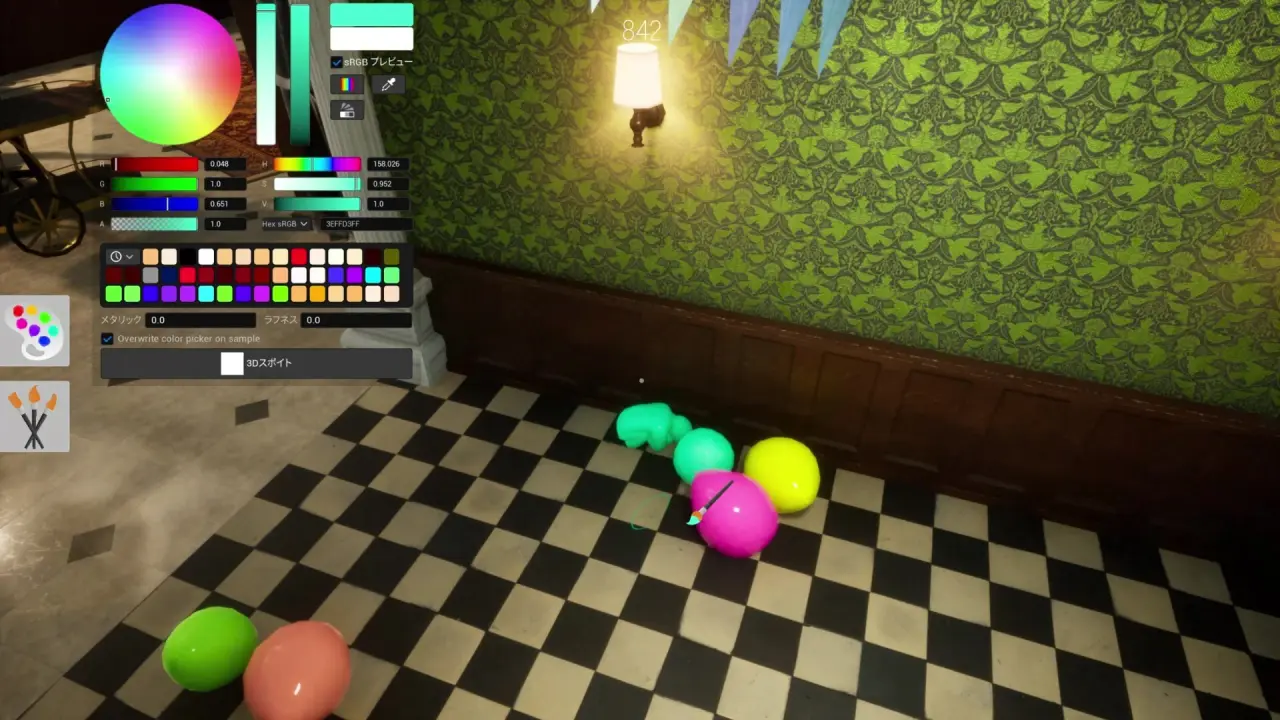
Technically, this is bare-bones. I’m not going to pretend there’s some big ray tracing or DLSS conversation to have here, because there really isn’t one in the way you’d talk about a blockbuster PC release. The game’s visual identity is not built on rendering tricks. It’s built on flat readability, color sampling, and player-made trickery. If you’re the kind of person who judges graphics by reflections, particles, and post-processing, this is going to look cheap. Because, yeah, it does.
The UI is also rough. It has that early viral indie feel: functional, a bit plain, not especially elegant. The onboarding is thin, and the whole package can feel like it got to “the joke works” before it got to “the presentation feels premium.” That’s not a dealbreaker for a six-dollar party game, but it is absolutely part of the graphics conversation. Menus, prompts, and lobby flow are part of how a game presents itself, and here they don’t exactly flatter the experience.
On platform differences, there’s not much to dig into from the facts we have. The game is listed on Steam with an 83% Very Positive rating from 33,903 reviews, and that’s the version this conversation is really centered on. I’m not seeing a meaningful “this version looks better than that version” comparison to make, so I won’t invent one. What I can say is this: the Steam presentation looks like a small, scrappy multiplayer indie. Charming idea, modest execution, rough edges everywhere. And visually, that’s MECCHA CHAMELEON in one sentence.
Combat | 9.0/10
玩法: 9/10The whole joke works because you’re not picking a prop, you’re painting a lie
The best thing about MECCHA CHAMELEON is also the thing that makes it instantly click on video: you start as this blank white little freak, and instead of scrolling through a list of props like a normal hide-and-seek game, you literally steal colors from the stage and paint yourself into the background. That one change sounds tiny, but it completely rewires the game.
You’re using an eyedropper to grab the right color, brushing it onto your body, then locking into a pose and praying nobody notices the weird little human-shaped mistake you’ve made. And honestly, that’s the magic. Your disguise isn’t limited by what the game gives you. It’s limited by your eye, your hand speed, and how well you understand what people ignore when they scan a room.
That’s why the hiding side feels so much better than regular Prop Hunt. In Prop Hunt, you’re usually asking, “Which object should I become?” Here, you’re asking, “What part of this room can I fake well enough that someone’s brain skips over me?” Maybe you copy a patch of wall. Maybe you mimic the edge of a sign. Maybe you match some ugly little floor pattern no sane person would stare at twice. The fun is in making something just convincing enough.
And even a bad paint job is funny. That matters. You don’t need to be some art kid to enjoy this. Your first few attempts are going to look awful, but they’re awful in a way that makes everyone yell. Then, after a few rounds, you start noticing the real skill ceiling. You stop painting “brown wall” and start painting the exact brown, with the darker stripe, at the right angle, while turning your pose so your silhouette doesn’t scream, “Hey, I’m a player.” That’s where MECCHA CHAMELEON goes from party gag to genuinely sharp multiplayer design.
The timer turns every hiding spot into a frantic little panic attack
The round flow is simple, and that’s a big reason it works. Hiders get that precious preparation window where everyone scrambles around trying to find a good patch of stage to copy. Then the seekers come in, and suddenly every sloppy brush stroke feels like evidence at a crime scene. That attack-and-defense rhythm is clean, easy to understand, and way more tense than the visuals suggest.
As a hider, the game becomes this beautiful mix of panic and overconfidence. You’ll find a spot, start painting, realize the color is slightly wrong, grab another shade, repaint half your body, rotate, pose, unpose, panic again, and then the seekers arrive. And if someone walks right past you? That hit of adrenaline is ridiculous. It’s the kind of multiplayer moment that makes the whole room explode, because you know you barely got away with it.
But seekers aren’t just wandering around randomly. Their job is to hunt for “off.” Not a specific prop. Not a known object list. Just anything that feels wrong. A color that’s a little too flat. A pose that doesn’t match the surface. A shape that catches the eye after everything else looks normal. Good seekers learn to read the stage like a spot-the-difference puzzle, and that makes the chase feel fairer than it has any right to.
I also like that the game gives seekers a way to be judged with the Missed Spot scoring system. That’s a smart little touch, because in games like this, it’s easy for the seeker role to feel like the boring job while everyone else gets to be ridiculous. Here, the game is basically telling you, “No, we saw what you missed.” It gives the searching side pressure, feedback, and bragging rights, which is exactly what a party stealth game needs.
Compared to Prop Hunt, this is messier, cheaper, and way more expressive
Look, the obvious comparison is Prop Hunt, and MECCHA CHAMELEON wins that specific fight in the one place that matters most: disguise. Prop Hunt is still fun, but a lot of its comedy comes from template swapping. You become a chair, a bottle, a traffic cone, whatever the map allows. MECCHA CHAMELEON takes that familiar hide-and-seek idea and makes the disguise something you actually create by hand.
That gives it a much higher ceiling, both for skill and for spectators. Watching someone perfectly blend into a wall because they copied the exact color layout and held the right pose is just better than watching someone become another barrel. There’s more personality in the failure, too. A terrible disguise isn’t just “wrong prop in wrong place.” It’s your terrible art, your bad read, your desperate attempt to become wallpaper with three seconds left. That’s funnier, and it gives every round a different story.
It helps that the game is easy to get people into. Steam lists it as Multiplayer, with first-person and third-person perspectives, and the whole pitch is understandable in one sentence: paint yourself to hide. At six dollars, the buy-in is tiny, which matters a lot for this kind of game. If you’ve got a regular group that likes social deduction, party chaos, or yelling at each other over tiny mistakes, this is an easy sell.
The catch is, and it’s a real catch, the rough edges are not imaginary. The online and friend systems are the weak point. Steam invites can fail to show up, and “Join Friend” can quietly break, which is poison for a game that depends on getting a lobby together fast. There’s also basically no single-player reason to be here. If you’re buying this to play alone, don’t. This is a friends-and-connection game, full stop.
Still, for gameplay specifically, I’m high on it. The package looks like an early viral indie: plain UI, thin onboarding, not much polish. But the mechanic is strong enough to carry that roughness. With three modes, distinct maps, and obvious modding potential, there’s room for this thing to grow. Right now, purely on the strength of play, I’d put the gameplay at a 9 out of 10. Not because it’s polished. It isn’t. Because the central idea is that good.
Content | 7.5/10
內容: 7.5/10Three modes, seven-or-eight maps, and a loop that lives or dies by your friends
Content-wise, MECCHA CHAMELEON is small, but it’s not empty. That’s the important distinction. For a six-dollar game that’s only been out for a couple of weeks, three modes and roughly seven or eight distinct maps is honestly fine. You’re not buying a giant progression machine here. You’re buying a party game where the whole point is, “Can I make myself look like that wall before someone rounds the corner?”
The pace is quick because the idea is quick. You spawn in as this blank white little freak, you look around, you steal colors from the stage, and then you start painting yourself like you’re trying to pass an art exam during a police chase.
Then comes the best part: you freeze, pose, and pray. If the seeker walks past you, that hit of adrenaline is ridiculous. It’s way stronger than it has any right to be.
And this is where MECCHA CHAMELEON separates itself from normal Prop Hunt. In Prop Hunt, your disguise is usually, “Okay, I’m a chair now.” Or a box. Or a lamp. You’re picking from the stuff the game already gave you. Here, the disguise is your own eye and your own hands. If you notice the floor has a weird blue-gray tint and a little stripe pattern, and you can actually paint that onto yourself, you’ve earned that hide. If you rush it and look like a melted traffic cone, that’s on you too.
But let’s be real: this thing is built for multiplayer first, second, and third. The Steam tags point straight at it — multiplayer, stealth, comedy, party. That’s the whole meal. If you’ve got a group of friends who can jump in voice chat and clown on each other, the content stretches way further than the raw map count suggests. Every round becomes a story. Somebody thinks they’re invisible because they painted one arm brown. Somebody else hides in the most absurd possible spot and somehow survives. That’s the game.
If you’re coming in alone, though, the package gets thin fast. There’s almost no single-player or PvE content to fall back on. No big campaign. No deep solo challenge ladder. No rich offline structure where you can grind for hours by yourself. Without friends, or at least a working online lobby, MECCHA CHAMELEON loses a lot of its spark. It’s not a game that carries the party. It needs the party to show up.
No DLC yet, so the “extra content” is mostly people being weird together
There’s no DLC right now, and honestly, that’s fine. I don’t think MECCHA CHAMELEON needs paid add-ons this early. What it needs first is more maps, more modes, cleaner lobby tools, and a smoother way to keep groups together. The base idea is strong enough. The container around it just feels rough.
The weak spot is not the concept. It’s the online and friend experience. Steam invites often don’t show up. “Join Friend” can just quietly fail. And for a game that basically requires people to gather in the same place and start messing with each other, that’s a serious problem. If it takes ten minutes to assemble a lobby for a game built around fast laughs, people are going to bounce before the fun even starts.
That roughness bleeds into the rest of the package too. The onboarding is thin. The UI is plain. Visually, it has that early viral indie look, where the idea is doing way more work than the presentation. I don’t hate that. Some of the best party games are ugly little gremlins. But there’s a difference between “charming rough edges” and “why is the friend system fighting me?” MECCHA CHAMELEON has both.
As for optional content, it’s not traditional side content. You’re not clearing bonus stages or unlocking a pile of PvE missions. The optional layer is social. It’s experimenting with better paint jobs. Learning how to match texture, not just color. Figuring out what poses read naturally in each map. Watching other players come up with hiding tricks, then stealing those tricks shamelessly. That’s where the game gets deeper.
So if you ask, “What’s the DLC value?” right now, the answer is basically: none, because there isn’t any. But that’s not the same as saying the game has no room to grow. The obvious update path is more maps, more modes, and eventually proper mod support. And if the developer, lemorion_1224, handles that well, this could turn from a funny burst of chaos into something people keep coming back to.
The long tail depends on mods, but the player base is already doing half the work
The biggest reason I’m not lower on MECCHA CHAMELEON’s content score is simple: active players are content in a game like this. That sounds like a cop-out, but it’s true. A dead party game with a huge feature list is still dead. A messy little hide-and-seek game with tons of people online can stay funny for a long time.
And MECCHA CHAMELEON got a wild start. It reportedly crossed ten million sales in 16 days, hit the top of Steam’s best-seller chart, and pushed into the top five for concurrent players. Pair that with its 83% Very Positive Steam rating across 33,903 reviews, and you’ve got the one thing every multiplayer goofball desperately needs: bodies. People to fool. People to chase. People to laugh at when their “perfect” disguise is just a white elbow sticking out of a wall.
That player base also feeds the learning curve. This is one of those games where the community starts building the meta almost immediately. Not in a sweaty esports way, but in a “wait, you can hide there?” way. Players are already sharing routes, paint techniques, pose ideas, and little scams for specific map layouts. That stuff matters. It makes the same handful of maps feel less solved, because the real variable isn’t just the level design. It’s how creative the people in the lobby are willing to be.
This is also why the modding potential is such a big deal. Multiple outlets have pointed at mods as the key to long-term retention, and yeah, that tracks. Custom maps would be huge. Custom rule sets would be huge. Even simple cosmetic tools could keep the game circulating through friend groups and stream lobbies. The official description already calls out public matches and streaming support, and the whole game feels built to create clips. A good mod scene would pour gasoline on that.
But until that happens, you have to judge the game that exists. Right now, it’s a compact, rough, very funny multiplayer toy. It has enough official content to justify six dollars if you’ve got friends ready to play. It does not have enough solo structure to satisfy somebody looking for a polished, full-featured package. That’s why, for this content side of the review, I land at a 7.5 out of 10. The idea is fresh, the social replay value is real, and the buy-in is tiny. But the long tail still needs better online tools, more official material, and a real mod pipeline before I’d call it safely built for the long run.




留言 0
歡迎發表遊戲評價
歡迎參與討論,分享對這款遊戲的評價。
暫無留言,歡迎分享對本篇評測的看法。