One-Weekend Playthrough: The Best Adventure Saves Worth Starting on Steam Deck
Sélection de Alex 陈 · ·listDetail.views: 2,790 Commentaires
If you’re used to holding your Steam Deck on the couch, in bed, or on your commute to “clear a couple of stages and watch a bit of story,” then ultra-long epics are often unfriendly—once you put them down for a few days, picking them back up means staring at the menu trying to remember who you are and where you were going. In this piece we’re focusing on a single hard metric: adventure-style titles whose main story is roughly kept within 5–20 hours, so you can finish a complete story over one or two weekends or a few nights before bed, instead of falling into a new time sink.
The list below is sorted by “how well it fits typical Steam Deck usage scenarios”: whether the controls work well on a handheld, whether the pacing is clean and efficient, and whether it’s easy to make progress in short bursts—the high review scores are a given, but more importantly, these games won’t devour all your after-work time for an entire month.
If you’re used to holding your Steam Deck on the sofa, in bed, or on your commute to “clear a couple of stages and watch a bit of story,” then ultra-long epics are often unfriendly—once you put them down for a few days, picking them back up means staring at the menus trying to remember who you are and where you were going. This time we’re focusing on a single hard metric: adventure-style titles whose main story is roughly 5–20 hours long, so you can finish a complete story over one or two weekends or a few nights before bed, instead of falling into a new time sink.
The list below is sorted by “how well it fits typical Steam Deck usage scenarios”: whether the controls work well on a handheld, whether the pacing is tight, and whether it’s easy to progress in short bursts—high ratings are a prerequisite, but more importantly, these games won’t consume your entire month of after-work time.
Image: The Return of Dina
Tags: deductive narrative, high information density, fragmented play
With 96% positive reviews from 30,648 reviews, Return of the Obra Dinn is a textbook example of “short playtime, explosive information” in detective design. The average 6–10-hour playthrough is split into discrete death scenes, and every time you log in and solve two or three cases you feel clear progress—perfectly suited for the Deck’s fragmented play rhythm. There’s virtually no pointless running around or grinding; all your energy goes into listening to testimony, inspecting scenes, and filling in the logbook—pausing or powering off at any time doesn’t break your flow. If you want a “pure logic investigation marathon” in a limited window of time, its time-to-reward ratio is the highest on this list.
Image: Portal 2
Tags: puzzle adventure, controller-friendly, short-form brain teaser
A historic 98% positive rating from 380,000 reviews already speaks for itself. More importantly, the 5–10-hour main story feels almost tailor-made for handhelds in terms of pacing: high puzzle density, but each chamber is short, perfect for “clear one test, close the lid” on Deck. Valve’s controller support is as strong as ever, with portal gun, jumping, and device interaction all feeling smooth on handheld—no sense that “the PC version is the only real one.” For office workers, finishing the game over a few evenings in a week is completely realistic—each completed chamber feels like a small brain workout.
Image: Azure
Tags: action platformer, high-intensity challenge, short main line with long replay value
With 97% positive out of 120,000 reviews, Celeste’s core paradox is: the main story is only about 8 hours, but it can keep you playing on Deck for a long time. The reason is simple: ultra-responsive controls + tightly designed stages turn “instant death, instant retry” into a highly addictive loop. On handheld you can jump into a level just to warm up, without the psychological pressure of a “huge stage that requires you to sit upright”; at the same time, if you want to push the main story in one go, you can finish a first run on your commute and before-bed sessions in two or three days. It’s not easy, but every precise jump you land, accompanied by the short haptic feedback and visuals on the handheld, gives you a very tangible sense that your time was well spent.
Image: The Talos Principle 2
Tags: philosophical puzzle, chapter-based structure, mid-length campaign
With 95% positive and a main story in the 12–20-hour range, The Talos Principle 2 feels more like a philosophical novel you finish over a few days on Deck. Puzzles are cleanly divided by area and level; solving one or two “rooms” per session gives you very natural stopping points and avoids that anxiety of “being stuck halfway through a giant maze.” The first-person view combined with solid controller support makes moving, placing blocks, and adjusting devices precise enough on handheld. Compared with the “pure logic” of Return of the Obra Dinn, it constantly tosses philosophical questions at you via dialogue, terminals, and world-building—are you really ready to ponder “what is a human” on your commute?
Image: “Fishing Sails in Hidden Turmoil”
Tags: atmospheric adventure, light horror, exploration-driven
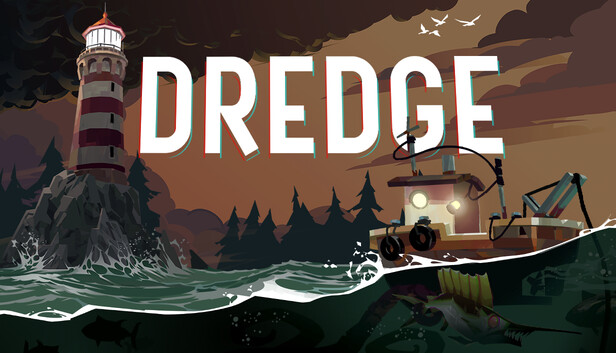
With 95% positive and over 40,000 reviews, DREDGE’s 10–15-hour core experience is very suitable as “bedtime reading” on Deck. Daytime is light management and exploration, while nighttime gradually intensifies into Lovecraftian unease. The overall rhythm is broken into repeated loops of heading out to sea and returning to port, which naturally fits fragmented sessions: you can easily spend one evening on a single route or a small side quest. Controls are mainly sailing and simple QTEs, making controller play relaxed and low-focus. Compared with pure narrative adventures, it also offers clear resource and upgrade goals, so each short login gives you visible progress in stats and map coverage.
Image: A Plague Tale: Innocence
Tags: linear narrative, stealth action, cinematic presentation
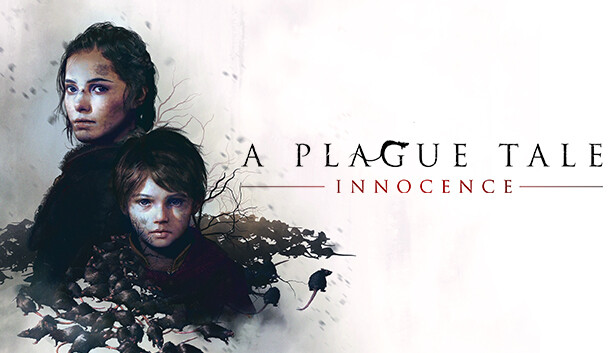
With 93% positive and a main story commonly in the 12–15-hour range, A Plague Tale: Innocence is the definition of “finish a season of TV in a few nights.” Levels are linear with clearly separated chapters, and Deck players can easily push through at a pace of “two chapters per day.” The gameplay is primarily stealth, with some simple throwing and puzzles that don’t require mouse-level precision; together with strong atmosphere, music, and cutscenes, playing with headphones on handheld can feel even more immersive. Crucially, the campaign is clean, with almost none of the collectible fatigue of open worlds—you can accurately estimate that “one more hour really brings you a lot closer to the ending.”
Image: Resident Evil 7
Tags: horror adventure, linear campaign, high-intensity experience
With 95% positive and nearly 80,000 reviews, Resident Evil 7 compresses a high-intensity horror ride into an 8–12-hour linear campaign, making it a “controlled-risk” thrill for Deck players. The level paths are clear, with almost no time inflation from grinding materials or open-world exploration, so the sense of main story progression is strong. In first-person view, controller aiming and movement are stable on handheld; with sensitivity dialed down a bit, playing on the sofa or in bed shouldn’t be too nauseating. Compared with survival horror titles that run for dozens of hours, this one makes a clear promise: a few nights of racing heartbeat, and then you can calmly close your Deck.
Image: The Memories of Edith Finch
Tags: interactive narrative, short story collection, low mechanical demand
With 95% positive and 44,000 reviews, What Remains of Edith Finch is one of the best picks on this list for a “single sitting on Deck” experience. The 3–5-hour total runtime is essentially the length of a feature film, structured as a collection of interactive novellas. Each family member’s story has its own mechanics and narrative style, but the controls are extremely simple. For handhelds, this “watch more than act” style is very friendly, especially as a one-shot emotional journey on a weekend afternoon or before bed. You can even treat it as “a family photo album you leaf through lying down,” whose lingering aftertaste outlasts that of many 50-hour RPGs.
Image: Grace
Tags: artful platformer, minimalist controls, short campaign
With 96% positive from over 80,000 reviews, GRIS doesn’t rely on mechanical complexity, but on the combined aesthetic impact of “art + music + fable.” Its roughly 3-hour linear experience has two obvious perks on Deck: first, the controls are extremely pure and forgiving—D-pad plus two or three buttons covers everything; second, whether during commute or before bed, any short session can take you cleanly through a whole narrative segment thanks to its very clear structure. It feels more like an interactive art exhibition; staring closely at the handheld screen, the emotional punch of its shifting colors can actually hit harder than on a big TV.
Image: Return to Monkey Island
Tags: point-and-click puzzle, humorous story, classic revival
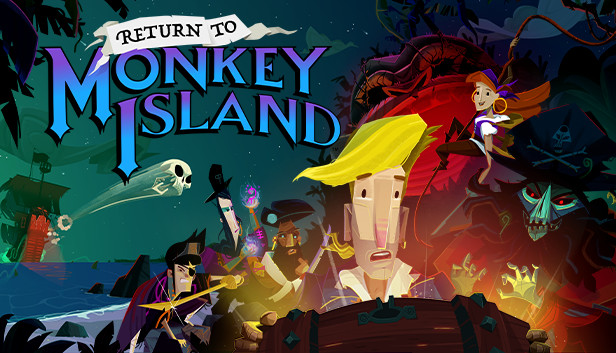
With 91% positive and an 8–12-hour campaign, Return to Monkey Island keeps the classic point-and-click puzzle structure while clearly tightening the pacing, making it ideal for Deck users to “chuckle while chewing through puzzles.” Controls revolve around moving a cursor and menu selections; both joystick and touch support are good, so you can lie down and play slowly, even one-handed. The game progresses by chapters, each with fairly self-contained goals and natural stopping points. Combined with loads of witty dialogue and dry humor, even half-hour sessions don’t feel disjointed. If you want to use your fragmented time to catch up on a piece of classic adventure-game history, this “modernized take on an old IP” is one of the lowest-barrier choices.
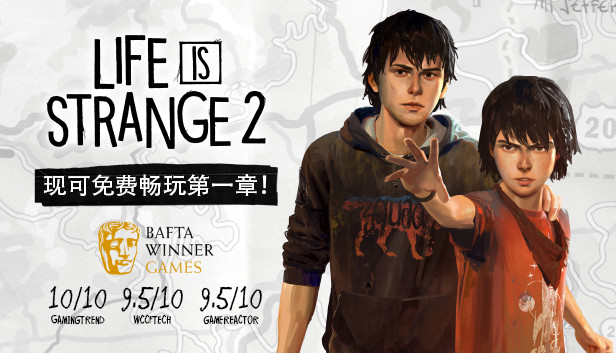
Image: Life Is Strange 2
Tags: episodic narrative, road trip, dialogue choices
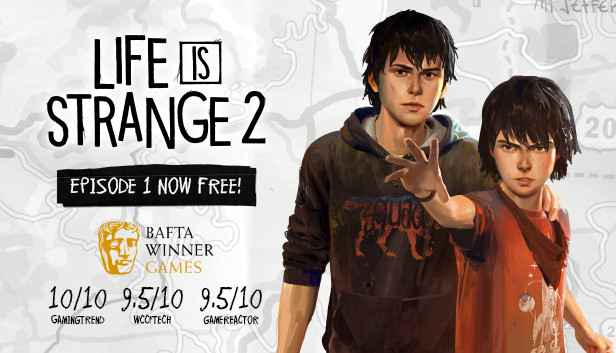
Although its overall positive rating is “only” 87%, at a scale of 39,000 reviews Life is Strange 2 is still very well suited to episodic play on Deck. The 5 episodes total around 10–15 hours, practically designed for a “one episode per night” rhythm: you can take your handheld to bed, travel another stretch of the road, make a few key dialogue choices, and then close the game with the emotional afterglow still there. Mechanical load is minimal; most of the time you’re walking, observing, and choosing dialogue, all of which work fine on a controller. Compared to the first game, this one’s pacing is slightly slower, but for Deck players that slower pace makes it feel even more like a controllable-length TV show.
Image: Life Is Strange: Chapter One
Tags: interactive film, time rewind, entry-level
With 96% positive and over 170,000 reviews, Life is Strange is a particularly friendly “episodic interactive drama 101” on Deck. The full season is about 10–15 hours, with smaller individual episodes; mechanics are mainly movement, observation, and time rewind, with almost no need for precise aiming. For the often-interrupted handheld context, short-to-mid-length episodes are a natural fit—each session you watch a piece of story, make a few choices, and get a clear sense of closure. Compared with its sequel, this game’s campus + mystery atmosphere is tighter and more focused. If you haven’t tried this genre yet, slowly working through from Episode 1 on Deck is the lowest-cost way to catch up.
Image: South Park: The Stick of Truth
Tags: satirical story, turn-based combat, light RPG
With 97% positive and nearly 60,000 reviews, South Park™: The Stick of Truth™ is a classic case of “content-rich but tightly paced”: the main story is roughly 10–12 hours, centered on turn-based battles and narrative. On Deck, the big advantage is that there’s practically no mechanical barrier; it’s perfect for lying down and watching long stretches of dialogue—almost like a feature-length interactive cartoon. The chapters and modest map size make it easy to complete a quest or side mission in a short session, without the “half an hour online just to run around” dead time typical of large RPGs. The caveat, of course, is that you need to accept (and understand) its extremely edgy satire and crude humor.
Image: Mirror's Edge
Tags: parkour action, linear levels, short campaign
An older title with 87% positive, but still very representative in a Deck context: its 6–8-hour main story is highly linear with virtually no side content, making it a pure parkour “test drive” experience. First-person parkour is demanding in terms of frame rate and input stability, which makes it a good way to test your Deck’s handling and battery life with action games; each level is reasonably short and replayable, so it also fits into small time gaps. That said, both the camera and pacing are intense; if you’re not used to high-speed first-person movement, you might want to treat it as a “short, one-off adrenaline shot.”
Looking at the numbers, the common traits on this list are clear: positive ratings generally above 90%, main story lengths concentrated in the 5–20-hour range, and not a single title that will drag you into a multi-dozen-hour open-world quagmire. More importantly, their level structures, mechanical demands, and narrative pacing are all highly compatible with the Steam Deck’s “fragmented, easily interrupted” usage: every session yields steady progress instead of getting lost in a quest log. Next weekend, pick something that fits your tolerance—from laid-back narrative to high-intensity horror—and give your Deck a save file you can actually finish.

 GOG$11.34Steam $11.34Voir le prix →
 GAMIVO$8.89Steam $8.89Voir le prix →
 Kinguin$2.50-89%Steam $2.50Voir le prix →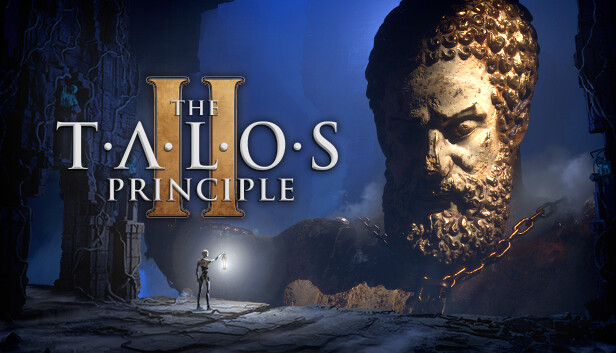



 Eneba$5.98Steam $5.98Voir le prix →


 SteamGratuitVoir le prix →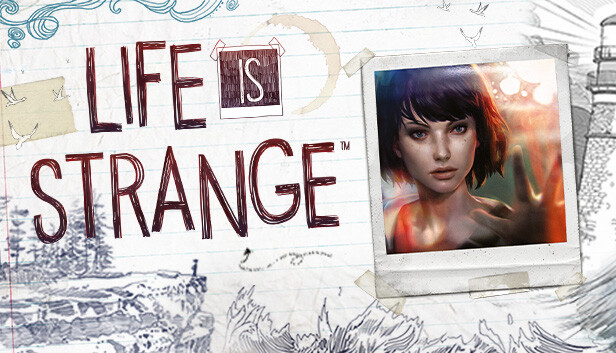
 PlayStation StoreGratuitVoir le prix →







Commentaires 0
Votre avis nous intéresse
Participez à la discussion et partagez votre avis sur ce jeu.
Aucun commentaire pour l’instant. Partagez votre avis.