
If traditional roguelikes are like a storm that constantly starts over, then farm-and-pastoral-style role-playing roguelikes feel more like a different kind of adventure in the morning mist: while sowing, gathering, and managing your life, you also experience the thrill of fate turning its cards again and again through random events, resource recovery, and long-term growth. What makes this kind of game so charming is that it turns “labor” into a loop and “daily life” into a reward, making you want both to live peacefully and to step into the unknown over and over again. The following list, based on overall influence, selects 12 titles that best represent the spirit of this subgenre.
1. Stardew Valley #
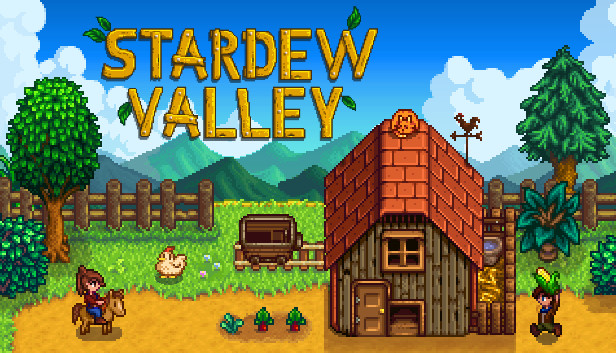
It almost defines the modern cozy fantasy of pastoral RPGs: the turning of the seasons, the growth of crops, and neighborhood relationships all unfold slowly like sunlight spreading across the land. At the same time, mine exploration, random drops, floor-by-floor progression, and gear growth make every descent carry a distinct roguelike sense of anticipation. It may not be the most standard Roguelike, but it is the most successful—and one of the most influential of its era—at embedding “long-term loop-driven progression” into pastoral life.
2. Dave the Diver DAVE THE DIVER #

By day you dive for fish, by night you run a sushi restaurant; this rhythm of tension and release is like waves hitting the shore, gently pulling you into its loop. The randomness of the Blue Hole ecosystem, profit recovery, and equipment upgrades create a powerful roguelike drive, while restaurant management and character interactions transform cold numbers into a life full of warmth and bustle. It proves that a pastoral feeling does not belong only to the land—it can also come from the sea and the glow of lights.
3. Dredge #

It is the darkest lamp on this list. The loop of fishing by day and returning to harbor by night may look like quiet labor, but in truth every voyage feels like wagering a bit of luck in the fog. Selling catches, upgrading your boat, planning routes, and facing unknown threats give it a roguelike-like sense of risk-and-recovery satisfaction. Although it is not a traditional farm game, the feeling of slowly making a living with your own hands and time, then gradually expanding the radius of your life, is still deeply pastoral.
4. Daughter of the Volcano #

 Eneba$6.32Steam $6.32Ver preço →
It writes the pastoral style as the warmth of companionship. Small-town life, course scheduling, social interactions, and growth across multiple endings make players feel as though they are flipping through a family photo album with a human touch. Strictly speaking, it is not a typical roguelike, but its multi-run development, branching paths, and outcome feedback still carry the charm of repeated play. In the context of farm-and-pastoral RPGs, its importance lies in this: “a sense of life” is not just about farming—it can also mean watching over a child as she slowly grows up.
5. Monster Hunter Stories 2: Wings of Ruin #
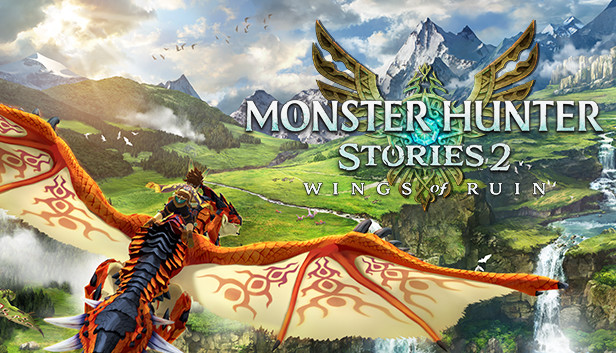
Unlike the sharp-edged hunting of the mainline series, this feels more like a fantasy journey scented with grass. You travel between villages, collect materials, and raise Monsties, while a strong sense of everyday life remains present beyond combat. Nest exploration, gene combinations, and random encounters provide steady and highly replayable motivation. It smooths the rough survival feel of the Monster Hunter world into something more approachable and closer to the shape of a pastoral RPG.
6. Monster Hunter Stories #

As the starting point of the series, it may not be more complete than its sequel, but its foundational significance is unmistakable. Monster raising, material gathering, village atmosphere, and turn-based adventure created a rare direction at the time: transforming the desire for conquest in the Monster Hunter universe into the joys of coexistence, nurturing, and travel. Its contribution to pastoral role-playing lies precisely in this original gentleness, which gave later works the soil in which to keep growing.
7. Minecraft Dungeons #
 GAMIVO$10.56Steam $10.56Ver preço →
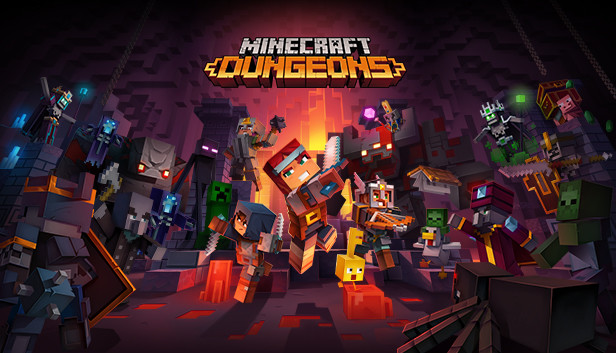
In a lighter way, it wraps roguelike-style stage runs, drop-based builds, and repeated challenges in a bright and approachable shell. Although dungeon progression remains at its core, the blocky art style and colors of Minecraft make the adventure feel less oppressive and more like an easygoing trip through the countryside. Its value on this list is in proving that “pastoral feeling” is not always about the planting system itself, but sometimes about an adventurous atmosphere people are happy to stay in for a long time.
8. Abiotic Factors #

It transports the feeling of pastoral labor into a supernatural research facility: planting, cooking, stockpiling supplies, and modifying your base all become the daily crafts of life. Although it leans more toward cooperative survival crafting, its rhythm of gathering resources, venturing out into danger, and returning safely naturally resonates with roguelike loops. It is like a greenhouse made of steel and concrete, allowing a modern anomalous setting to grow a kind of pastoral character.
9. SpellForce: Conquest of Eo #

This is a more tabletop-like expression of pastoral roguelike design. You expand your power, gather resources, and manage outposts across a fantasy continent, with each run developing differently depending on the map, encounters, and choices. It has no fences or wheat fields of a traditional farm, yet it carries a vivid sense of the pleasure of “breaking new ground”: going from nothing to gradually taking control of the land. For players who enjoy strategy RPGs, it offers another large-scale extension of farm-style management.
10. Age of Wonders 4 #

 GOG$14.76-50%Steam $14.76Ver preço →
It expands the imagination of the pastoral style into an entire kingdom. Terrain shaping, city-state management, race creation, and territorial expansion make “managing life” no longer just about tending a plot of land, but about designing a living, breathing fantasy realm. Repeated starts, civilization combinations, and shifting situations give it clear roguelike-style replay value. Although it leans more toward 4X strategy, in thematic terms it truly pushes pastoral fantasy to a much broader scale.
11. The Witch’s Lament #

It feels like an old legend told beside a woodland campfire—somber, gentle, and carrying the scent of earth and grass. Its forest life, folkloric storytelling, and gathering-and-survival mood give the game an exceptionally strong rural texture, while the repeated deckbuilding in its combat and progression keeps it loosely connected to roguelike pleasures. It is not a mainstream pastoral title, but it fills out this list with a more obscure and more distilled side of the genre.
12. SpellForce 3 Soul Harvest #

 Kinguin$3.21-89%Steam $3.21Ver preço →
It is the farthest from traditional pastoral themes, yet in the rhythm of “manage by day, fight by night,” it unexpectedly shares the same cyclical aesthetic. Building, scavenging, and allocating resources during the day, then holding off waves of the undead at night, feels like turning a farm timetable into an apocalyptic battle report. Its high-intensity repeated challenges and in-run growth give it a strong roguelike flavor. Placed at the end of the list, it is more like a wild weed growing from a crack in stone, reminding us that pastoral feeling can also lie in the order of management itself.
These 12 games collectively point to one thing: pastoral style is not just about farming, and roguelikes do not belong only to dungeons. When labor, management, gathering, and cycles of the unknown meet, life in games becomes especially rich with meaning. Some people till the soil in Stardew Valley’s morning mist, some drift through the depths of the Blue Hole, and some keep breaking new ground along the borders of a kingdom—but the satisfaction of “building a life with your own hands” is, in truth, something they all share.






Comentários 0
Queremos saber sua opinião
Participe da discussão e compartilhe sua opinião sobre este jogo.
Ainda não há comentários. Seja o primeiro.