



















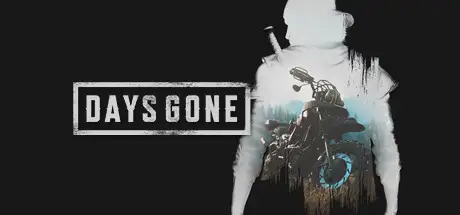


Opening
Rain, pine, a fire that gutters and jumps. You are sprinting forward, half-raised and ready, and behind you the whole forest seems to be moving — five hundred dead things at a dead run, their footfalls and shrieks stacking into a wall that hits the back of your skull. That is the moment Days Gone stops selling you a zombie game and starts selling you the real thing: the sustained, animal pressure of being hunted by an entire world.
Then the rest of it settles in. The fuel gauge. The weapon that degrades. The supply anxiety that never quite lifts. You are not a hero here; you are a man on a bike that could die under you at any second, looking for a reason to keep riding a broken road. That grip — the world holding you by the throat through your own dwindling resources — is the note this game hits dead on.
The trouble is that the note does not hold all the way to the end. The run is long, the map is full, and somewhere past the thirty-hour mark the mission templates start eating the pacing alive while a story with real motive keeps telling itself in scattered pieces. This is not a bad game. It is nowhere near a bad game. It is a slow-stewed dish that tastes best in the first few bites and keeps testing your appetite the longer you sit at the table.
Story | 5.5/10
劇情: 5.5/10Deacon's hunt has a motive that lands and a delivery that does not

Deacon St. John gets on the road for the simplest reason a man can have: his wife Sarah was declared dead, and he is not ready to believe it. One sentence and you are already on his side. You know why he will not stop, and you know why this rotted-out world still gets a flicker of warmth out of him. As a hook, it is about as easy to feel as post-apocalyptic premises get.
The delivery is where it slips. The main line chops that search into too many small pieces, the rhythm sags, and the beats that should land hardest rarely have enough interactive weight under them. You understand Deacon; you do not quite hurt alongside him. The writing gives him real texture — a drifter, a bounty hunter, mouthy on the surface and carrying a lot underneath — but it spreads that texture so thin across forty hours that by the time the full portrait assembles, the emotion that built it has already been ground down by one more camp clear, one more long haul up a muddy road.
The pandemic-and-apocalypse setup is not fresh ground either, and the game plays it traditionally, the tone unrelentingly grim, with none of the sudden tonal swerves that might jolt you back to attention. The upshot is that the plot is not unwatchable so much as low on memorable peaks. You keep pushing forward, but the engine driving you is "I want to finish this trip," not "I cannot wait to see what detonates next." For a story with a premise this immediately sympathetic, that is a quietly disappointing place to land.
Boozer and the human threat carry more than the marriage does

The thing that actually holds the story up is not the marriage. It is the bond between Deacon and his battered friend Boozer. Boozer is hurt, badly, and Deacon is split between chasing a ghost and refusing to leave behind the one man who has kept him alive out here. That thread is smaller than the search, but because it lives in the everyday — in dependence, in two hard men who never say the quiet part out loud — it sits firmer and feels far more human. It is the part of this game you remember long after the credits, and it is telling that the marriage is the official plot while the friendship is the one that actually does the emotional heavy lifting.
Under all of it runs a theme the game commits to without blinking: out here, people are scarier than the dead. Marauders will take your life for your gear; the Rippers turn madness into scripture; Iron Mike's camp stands for the thin, exhausted order survivors manage to hold. The Freakers are the wallpaper. The living are the danger. It is not a new idea, but the conviction behind it never wavers.
Next to its peers, a good story buried by its own structure

Held up against the narrative high-water marks of its generation, the gap is plain. Put it beside the way The Last of Us Part II clamps down on every emotional beat and never lets the tension slacken, and Days Gone reads like a road stretched a few hundred miles too long: the route is right, the scenery is there, but you drift off somewhere in the middle. Both reach for trauma and grief; one compresses it into dense, forward-driving conflict, and the other lets a story that could have been sturdy unspool into a haul you frequently have to push yourself through.
It tells a complete story. It just never tells one you turn over again afterward. The motive holds, the character has bones, the friendship genuinely moves — and two hard faults, slack pacing and emotional beats with no interaction to anchor them, pin it to a middling spot. It is not that there is nothing good here. It is that the good gets buried by the telling, and a tighter cut of the same script — half the runtime, twice the density — could have been remembered as one of the generation's better post-apocalyptic dramas instead of one of its longer ones.
Audio | 7.0/10
音效: 7/10The voice work is the anchor; the score does its job out of sight

The steadiest thing in this whole category is the voice work. Sam Witwer plays Deacon with a gravel-and-restraint warmth that holds the character together — gruff on the outside, still caring underneath, and never once a cardboard cutout. When he opens his mouth, that worn-down, stubborn weariness is just there in the throat, and it does more for the man than half his dialogue does. It is the part of the audio you can lean on, and the main reason this score lands above the middle of the pack rather than below it.
Nathan Whitehead's score works the room quietly. It does not grandstand. It lays the bleak-highway mood down and then steps back, handing you the right amount of pressure when a horde closes in, the right amount of loneliness on a solo ride through the rain. It never reaches the tier where you could lift a single theme out and hum it later. But pull it out entirely and half the wet, cold isolation collapses with it. For a survival-atmosphere game, that kind of restraint is the smart call, not a shortfall.
Weather and the horde are where the sound design turns into a weapon

The part worth dwelling on is how the ambient layer locks into the dynamic weather. Rain hammering the canopy, thunder rolling somewhere over the ridge, wind tearing across a snowfield — none of it is decoration. It is welded to the realistic weather system, and it pours the "the world is huge and you are small" loneliness straight into your ears. One man on a bike crossing an empty road, the engine the only company he has — that silence is its own kind of storytelling.
Then a horde arrives and the soundstage turns on you in an instant. Hundreds of footfalls, ragged breaths and shrieks stack up and rush you from behind and both flanks at once. That is not a sound effect; it is an auditory alarm, and your body reacts before your eyes do — you flinch toward running on pure reflex. Using sound as a pressure source like this is one of the most essential pieces of the game's immersion.
One honest knock to end on: in a handful of scenes the emotional dial gets shoved too far and a shout lands jarringly, like the signal spiking into overload, and it can pull you out for a second. The problem is small but genuinely grating, and it stings most in the quiet stretches that were supposed to win on restraint, where one over-cooked line stands out a mile. So this category reads as strong foundations with the occasional fumble. The voice work is steady, the ambient layer is strong, the horde soundstage is the real weapon — but a conservative score and the odd performance spike keep it from climbing another rung. It is not audio you will single out and remember, yet it does the one thing that matters most for a game living on mood, and does it well above a passing grade.
Visuals | 8.0/10
畫面: 8/10Weather you fight, not weather you photograph

The realistic dynamic-weather system Bend Studio built on Unreal Engine 4 is the most undeniable thing on the screen. Rain, snow, thunderstorms and the day-night cycle are not background flourishes; they are variables that genuinely reshape how you play. A sudden downpour drops visibility and changes how the bike handles. Snow keeps your tire tracks. After dark the Freakers get livelier and meaner. What you are looking at is not a pretty postcard but a world that breathes and changes its face on its own.
That is the line between this and a game that merely looks good: here the weather is something you contend with. A wet night thins your sightline and slicks the road, so you ease off the throttle; a snowstorm leaves your tracks behind you for anything to follow. The visuals are not just handsome, they sit inside every risk calculation you make before you ride out. Few open worlds fuse their look to their play this tightly, and it is the single most creditable thing about this category.
And it ages well precisely because it is not chasing spectacle. The Pacific Northwest palette — forests, snowpack, drizzle, lightning — is rendered with a consistency that holds up years later. That uniform aesthetic is harder to pull off than a pile of high-res textures, and it is the reason a screenshot from this game is instantly recognizable.
There is craft in the small physical truths, too: mud that spatters and clings, headlights that cut a cone through fog, a horizon that goes flat and bruised before a storm. None of it is showing off. All of it is in service of the same thing — making this wilderness feel like a real, heavy, indifferent place rather than a level you happen to be standing in. That is the kind of art direction that does not win the screenshot wars on day one but quietly wins the long argument about which worlds you actually believe in.
A lonely palette that won't flatter you, and the version question

The art direction plants itself, without apology, in Oregon's Pacific Northwest: rolling forest, snow peaks, drizzle and thunderstorms, all of it nailing the wet, lonely chill of the end of the world. Park the bike on a high mountain road and look out, and the mist presses the ridgelines into layered greys and blues until that small-against-the-vast feeling arrives on its own. It does not grab your eye with saturation. The opposite — the whole register leans gloomy, and a lot of the time it pointedly refuses to flatter you. If you came for brighter, flashier, more muscular spectacle, it will read as drab. If you accept the restrained realism, the identity is unmistakable.
The version question is unavoidable, and the answer is clean. It launched a PS4 exclusive, came to PC with clear gains in resolution, frame rate and load times, and the PS5 remaster pushed visuals and frames up another notch to its highest aggregate score yet. If you are starting today: take the remaster if you can, the PC build if you cannot, and either way you sidestep the launch experience. The difference is not cosmetic — a steadier frame rate is the single biggest upgrade a game built on five-hundred-strong hordes could ask for, because the spectacle and the playability are the same thing here.
The honest deduction lives here too. Some launch builds shipped with technical problems and small bugs, and an occasional stutter or hitch breaks the spell, yanking you out of the chase and back into "oh, I'm playing a game." It is worst in the horde sieges, the most frame-hungry scenes the game has, where a single drop can wreck a moment you were meant to hold your breath through. Later patches cleaned up a great deal of it, which is part of why the visual reputation warmed over time. The ceiling is high and the identity is strong; the marks come off the launch-day state, and time has mostly closed that gap. Judge it by what it looks like today, on the right hardware, and this is one of the better-looking open worlds of its cohort — not the flashiest, but among the most convincing.
Combat | 8.5/10
玩法: 8.5/10The bike is a survival timer that spends your next escape

The first ten hours keep you busy — genuinely busy. Hunting fuel, repairing the bike, scrounging ammo, and deciding whether this next stretch is one to skirt or one to barrel straight through. In this game the motorcycle is not transport; it is a survival timer, and every twist of the throttle spends your next chance to escape. A fuel gauge bottoming out with a horde on your tail, a breakdown in the middle of nowhere with no parts on hand — these are real crisis moments, not flavor.
Your relationship with that machine is one of the strongest emotional threads the whole game has. You pour resources into it back at camp — speed, durability, handling — and it gets sweeter to ride and more like a second life the longer you keep it running. The tension of the protagonist leaning into a high-speed turn on a muddy forest track at night, the headlight carving out only a few feet of road ahead, arrives with no delay at all. That is the root the rest of the play grows from. Very few open worlds turn a vehicle into the player's emotional anchor; this one does, and it leans on the trick hard.
The horde: a human-wave siege you ride, run and out-calculate

If one thing in the entire game is inimitable, it is the horde. Fifty to five hundred Freakers congeal into a single mass and come at you, and meeting them head-on is hopeless. The correct answer is a full sheet of real-time arithmetic: use terrain to pinch their path, pre-place Molotovs, tripwire mines and noise lures, then chip the count down with the bike's mobility. Panic and exhilaration land on your face at the same instant, and the first time you actually thin a five-hundred-strong horde down to nothing without going under, it feels less like winning a fight and more like solving a puzzle that was very nearly the end of you.
The tactics have tiers. Newcomers run and pray; veterans read the ground, ration their resources and use survival vision to plan a route ahead of time, turning a siege that looked unwinnable into a problem with a solution. You start sizing up a gas station, a narrow bridge, a lot stacked with fuel drums as a battlefield — working out where to lure them, what to blow, which way to bolt. That blend of human-wave pressure and live planning is a scale of thing the zombie genre of its era almost never attempted; hundreds of enemies on screen that lunge, flank and track you by sound is a technical wall, and the studio later carved the whole idea out into the remaster's centerpiece mode. That tells you how solid this signature is.
Growth, repetition and the company it keeps

What feeds exploration is the camp system: each camp runs a trust meter, and bounties, horde clears and raids buy you weapon and bike unlocks that keep you crisscrossing the map. The loop is at its most addictive mid-game, when "there's always a next stop" is a real pull. The strength of the system is not flashy combos; it is the discipline of having to count every bullet.
The problem shows just as plainly — the open-world activities run on a template. Patrols, ambushes, marauder camps; deep in, you get fluent in the same checklist, the novelty bleeds off, and progress curdles into clerical work. Set against its first-party open-world peers, its core feel — bike plus horde — is genuinely distinctive, but on the sheer variety of activity design it loses to the better-polished competition; it does not have the ritual care Ghost of Tsushima lavishes on every outpost. Is that fatal? No, but it shaves the back-half excitement down for real. It is a high-scoring foundation with a repetitive tail: the bike and the horde are unique and moreish enough to hold its place near the top of this category, while the template side-content quietly loses steam late. It addicts and it tires in equal measure, and those are two faces of the same loop — how good a time you have depends largely on whether you spend your hours on horde fights or let the filler lead you around by the nose.
Content | 6.0/10
內容: 6/10The sheer size is real, and it cuts both ways

Lay the numbers out first. The main story runs about 38 hours; fold in the optional camp work, bounties, horde clears, nest sweeps, ambush points and marauder camps and you are closer to 50; a completionist chasing everything is looking at 60 to 65. This is an enormous open world, and that single fact, more than any other, is both the selling point and the burden.
Hitting the mid-game, the "there's always a next stop" feeling is genuinely strong. You ride and you budget supplies in the same breath, the journey carries a real survival weight, and that shot of Deacon standing on high ground with his back to the camera, looking out over a canyon, sells the "the road is still long" mood with precision. The map is carved into regions with their own climate and terrain, and rolling from a rainy forest up into snowbound peaks, every new zone lands a little hit of "there's this much more out there."
The catch is that size is not density, and the longer you play the harder that is to hide. Once you have the activity patterns of the first few regions memorized, what a new region hands you is usually the same activity wearing a different skin — the map got bigger, the things you do did not. That is the central contradiction of how the content reads: the hours it gives you are real, dozens of them, but the quality across those hours is not even. A region that should feel like a new chapter too often feels like the previous chapter with fresh scenery, and the survival tension that made the early going so gripping gets diluted the wider the map opens up. You are never short of things to do; you are sometimes short of reasons to care about doing them.
The horde nests earn their hours; the filler is where fatigue lives

Pull the content apart and the quality is stratified. Dozens of horde nests are scattered across the whole map, and clearing one usually means planning terrain, laying traps, rationing ammo and stamina — the highest-pressure, highest-payoff content the game has, and the part a lot of players name as the one most worth coming back to. These are the genuine highlights of the long haul, and the gold content is real.
By contrast the patrols, ambushes and marauder camps repeat far harder; fresh for the first few, a chore by the fortieth, and the chief source of late-game fatigue. High repetition breeds accumulated tiredness; accumulated tiredness saps the urge for one more hour. Whether that is fatal turns on your tolerance for checklist open worlds — the players who eat this up keep drawing satisfaction from a generous runtime, and the ones who do not will grind through the back half. The same content total earns flatly opposite verdicts in different hands.
Credit where it is due: the long-tail support held up. The original layered in Survival Mode, New Game Plus and weekly challenges as free additions that stretched the post-launch life. The PS5 remaster then added permadeath, speedrun and a Horde Assault mode through the Broken Road DLC, with Horde Assault alone billed at roughly ten extra hours. Every one of those modes leans on the strongest signature the game owns — permadeath maxes the survival pressure, speedrun hands the hardcore a replay drive, Horde Assault peels the horde out into an arcade loop you can grind for score. Being able to keep reworking one mechanic into new play says the studio knows exactly which card is its most valuable. For returning players that is a concrete reason to come back; for newcomers the remaster plus that DLC is the single best window to pick everything up at once. Sum the category in a line: time is plentiful, density is a matter of taste, the long tail is no loss. The runtime was never the question — the question is always whether you can keep finding, in all that repeated riding, the tension and payoff a good horde fight hands you, because that is the content this game is genuinely rich in.




留言 0
歡迎發表遊戲評價
歡迎參與討論,分享對這款遊戲的評價。
暫無留言,歡迎分享對本篇評測的看法。