





















Opening

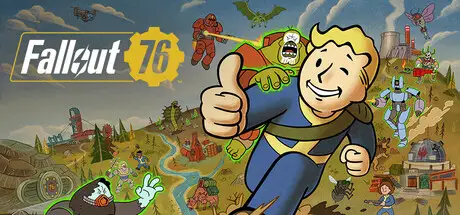
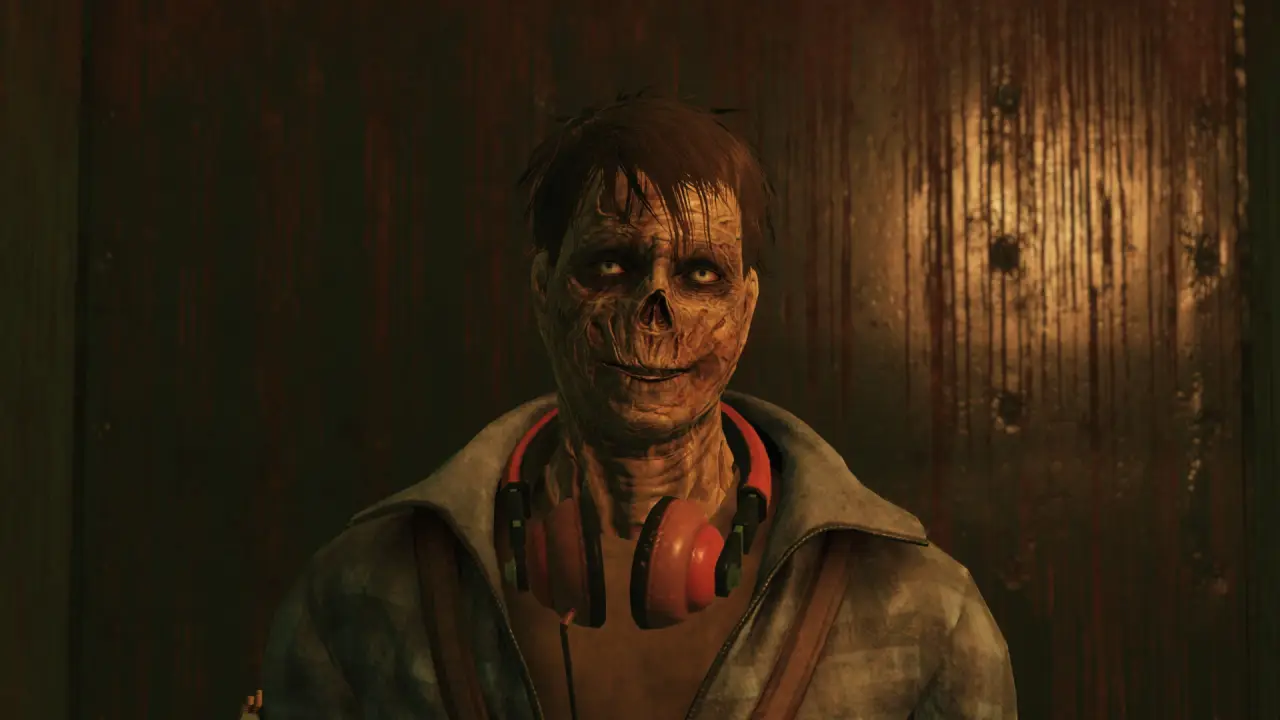
Stand on a ridge in Appalachia at dusk and Fallout 76 looks like a triumph: amber-rusted West Virginia, a Scorched dragging itself along a collapsed overpass, red maples bleeding into a bruised sky. The mood is immaculate. But the player who walked in on launch day in 2018 saw none of that grace. They saw a ghost town with no ghosts to talk to — not a single living human NPC, every quest read aloud by a terminal or a dead man's holotape, the "multiplayer" world so thinly populated you could wander for an hour without meeting a soul. The first thing this game taught its earliest players was disappointment, and the scores said so out loud: a 52 on Metacritic, a 54 top-critic average on OpenCritic, a 9% recommendation rate. IGN handed it a 5. GameSpot a 4. Eurogamer just said "Avoid." This was one of the lowest-rated games Bethesda Game Studios has ever shipped, and the verdict was earned — it tried to rebuild single-player Fallout into a live online world and could not make the foundation hold.
And yet the story refuses to end there. Wastelanders put human beings back into Appalachia, years of free updates kept stacking content on top, and then in 2024 a hit television series dragged the whole franchise back into the spotlight. Fallout 76 grew into a live-service survivor with more than twenty million lifetime players. It is still the only Fallout wasteland you can move into with a friend — build a house, grind for loot, take the long way around just to see what's over the next hill. So my feelings are tangled, and honestly that is the most accurate way to describe it. A past that deserved the beating. A present worth visiting. Maddening. And quietly, stubbornly compelling.
Story | 4.0/10
劇情: 4/10A wasteland with nobody home: why the launch story left players cold
Reclamation Day. You climb out of Vault 76 with a handful of fellow dwellers and set off after the Overseer, who left ahead of you. The premise is genuinely interesting — this is not one hero's revenge but a portrait of ordinary survivors relighting West Virginia twenty-five years after the fallout. Pulling the camera back from the individual to a whole civilization is a properly Fallout idea, and an ambitious one.
The trouble arrived fast and hard. At launch this enormous land contained not one living human.
That single absence is the most fatal thing about the original story, full stop. Every quest reaches you as cold terminal text, a note nailed to a wall, a holotape a dead man recorded before the end. The game is not failing to tell stories — quite the opposite, it buries an enormous volume of writing in its corners. But "nobody can stand in front of you and speak" turns the whole wasteland into a beautifully appointed graveyard. You are forever listening to the dead, reading tragedies already finished, never once negotiating with the living. The moment that makes Fallout sing — standing between two opposed characters, weighing who to help and who to betray — never happens here, not once.
Worse, the shift to online multiplayer quietly amputated the branching dialogue and moral choice that are the series' signature. Most quests decayed into "go to a place, clear the things, bring back the object," and the moral weight that used to sit behind every decision was drained out entirely. Game Informer nailed it at the time: in trying to do everything, the game fails to do any one thing well enough to form an identity, and its multiplayer mindset robs its quests of the very decision-making that makes the series great. That is the root reason this is my lowest-scored dimension of the whole review. Not because the story is badly written, but because it abandoned the method Fallout tells stories best.
Wastelanders gave back more than NPCs — it gave back half the game's life
The real turn came with the Wastelanders update in April 2020.
It restored human NPCs to the world for free, brought in a reputation faction system — Settlers and Raiders, two opposed paths — and returned the long-lost branching conversations. Almost overnight Appalachia stopped being a tomb: you could finally haggle with the living, pick a side for standing, and feel quests grow back the weight of "the choice I make right now actually changes something." For a Fallout, that is simply what it should have been at birth.

But let me be blunt so nobody walks away with an inflated picture. Wastelanders repaired the game from broken to whole; it did not haul it up to the series' ceiling. Steel Dawn and Steel Reign later completed the Brotherhood of Steel thread, and the Expeditions sent you out of Appalachia entirely. Every one of these patches keeps transfusing the narrative, but at bottom they are all repairs bolted onto a foundation that was weak from the start.
Hold it next to Fallout: New Vegas, with its peerless faction writing, or Fallout 3, with its taut central drama, and even today's patched-up Fallout 76 still begins from a noticeably lower floor. Its story went from "cold" to "watchable," but it never became the kind of Fallout you show up for because of the writing. That is the fairest call I can make on this dimension.
There is a structural reason that floor stays low, and it is worth naming plainly. A live online world is built to be shared by strangers, which means the writers can never assume you are the one chosen protagonist standing at the center of a private drama. Every consequential choice has to be either instanced away from other players or watered down so it does not break the shared space — and that constraint is fundamentally hostile to the kind of authored, irreversible storytelling Fallout was built on. Wastelanders and the Expeditions push against it as hard as the design allows, and some individual quest lines genuinely land. But the ceiling on this kind of writing was set on the day the game chose to be an always-online service, and no amount of later patching can lift it past that.
Audio | 6.5/10
音效: 6.5/10Radio oldies over a wasteland score: the series' steadiest sonic signature
If anything in Fallout 76 never let players down from day one, it is the sound. Inon Zur's score carries the series' familiar wasteland register — cold, vast, touched with an end-of-the-world solemnity. When you are crossing the wilds alone it never grandstands, never tugs at your sleeve; it simply holds that stubborn loneliness up from behind. This is craft several Fallout generations have banked, and 76 inherits it cleanly.
What actually makes a veteran grin is Appalachia Radio. Fifties country gold and retro pop stuffed into a post-nuclear ruin: a Geiger counter chattering at a radiation source in one ear while the radio croons something sweet about a better tomorrow in the other. That absurd, almost noir mismatch is the soul of Fallout. Drive across a poison-fogged valley with the dial on and the cheap, bright joy of a dead era slams into the broken present, and the atmosphere clicks into place instantly.
The environmental work is just as solid, and in a survival game it does quiet, constant labor. The metal crash of power armor hitting the ground tells you something heavy just arrived; a Scorched shrieking out of a distant treeline turns your head before your eyes catch the threat; the recoil and crack of each shot, the hiss of a stimpak, the click of a lockpick all carry the weight they should. None of it is showy, but it is the layer that keeps Appalachia feeling like a place with mass and danger rather than a flat set you walk across, and it is doing that job long before you ever notice it.
A silent wasteland: the cost of a launch with no voices
I still cannot rate this dimension very high, and the reason loops straight back to that "nobody alive" launch design. There is almost no face-to-face human dialogue anywhere — nearly every "voice" you hear is a recording a dead person left on a holotape. Voice density this low lands, in the ear, as a strangely silent wasteland: the music is good, the ambience is good, and yet the warmth of a living person speaking beside you is simply missing. For a role-playing game built on narrative, that gap is structural, not cosmetic.

Drop it into a comparison and the shortfall sharpens. Sister title Fallout 4 fully voiced its protagonist; its world had human speech flowing through it constantly. Fallout 76's launch build cut that whole layer out, and anyone who has played both will pick the difference out in a single listen. Only when Wastelanders folded in a mountain of real voice acting — NPCs finally willing to open their mouths — did this dimension fill itself back in. So the audio story runs along the same line as the writing: the bones, the music and the ambience, were strong the entire time, while the part that was missing, the sound of the living, kept players waiting a year and a half before it finally arrived.
Visuals | 7.0/10
畫面: 7/10Appalachia's beauty is won by art direction, not by tech
Whatever goodwill I have for this game's visuals belongs almost entirely to its art direction. The roughly sixteen square miles of Appalachia are carved into six regions whose moods genuinely diverge: red maples and broken bridges in the forest, slag and acid rain across the Ash Heap, a sweep of warped vegetation through the Cranberry Bog, an orange haze of poison settled permanently over the Toxic Valley. Cross from one region into the next and the scenery changes personality, not just palette. That "let me walk five more minutes and see what's there" hook is held up, mostly, by the map art.
Rarer still is the landmark work — a space station crashed halfway up a hillside, a camp welded together from shipping containers and beast-skull metalwork, a lean-to waystation tucked under a red iron bridge. Pull any single asset out and pick at it and it may not survive the scrutiny; set it inside a complete scene and the flavor of a low-budget indie film, the kind where the art crew really knows how to scout a location and aim a light, lands at once. Cold, desolate, shot through with an unplaceable grotesque romance. This is the smartest thing Fallout 76 does on screen, and it is why I am comfortable giving the visuals a 7.
The map's structure helps the art carry that weight, too. Because the six regions are tiered roughly by danger, the world reads as a legible visual gradient: the soft greens of the starting forest give way to the bruised industrial Ash Heap, then to the genuinely unsettling fungal palette of the Cranberry Bog, so that the scenery itself tells you how deep into the wasteland you have wandered. You learn to read the horizon the way you read a difficulty curve, and that marriage of color language to progression is more sophisticated than the dated assets underneath it have any right to support. It is the kind of design intelligence that does not show up in a screenshot comparison but shapes how the whole world feels to move through, and it is a real part of why the place lodges in memory.
Lovely from afar, threadbare up close: an old engine and a rough launch
Stop walking, lean in, and the weak spots stop hiding.
The modified Creation Engine is an old machine, and it shows: object textures and models read dated, and the character animation still has that Fallout stiffness, bodies shoved forward one joint-notch at a time. A gorgeous stretch of wasteland at distance is often just a tidy stack of crude assets once you close in, and that "lovely from afar, threadbare up close" gap recurs constantly, reminding you the tech can't keep pace with the taste.

Launch made it worse: frame drops, clipping geometry, hard quest-locking crashes, with PC optimization singled out for a beating by outlet after outlet. Set beside same-engine Fallout 4, this map runs about four times larger while per-location fidelity simply does not scale up to match — the art budget got smeared across a far bigger canvas. Both first and third-person views are on hand, and the lighting and weather do real atmospheric work, but call this "the benchmark wasteland of its generation" and you are miles off. It wins on taste and loses on execution, and for the launch build that judgment is anything but unfair.
Worth one more note: that "art papering over tech" approach is exactly the visual nerve that let the live-service run survive. Years of updates never gave the engine a ground-up overhaul — resolution and texture fidelity barely moved — but the team kept feeding in new, more deliberately designed landmarks and scenes, from the industrial ruin of the Pitt to the broken neon shoreline of Atlantic City. Open Fallout 76 today and what hits you first is still a wasteland silhouette caught at the right angle, not the sharpness of any one texture. The look was always an atmosphere-first thing; understand that and you will judge it a great deal more fairly. It is a game best photographed at dusk and from a distance, and it knows it — the postcard is real even when the close-up is not, and that single honest strength is what kept the world worth inhabiting through six years of patches that never once touched the underlying fidelity.
Combat | 5.5/10
玩法: 5.5/10A neutered V.A.T.S. and monotonous combat: the online frame took the series' nerve
Fallout combat never ran on aim; it ran on a brain, and that brain has a name — V.A.T.S. In Fallout 4 the system froze time outright and let you pick, at leisure, who to shoot, which limb, whether to gamble on the head. It was a tactical choice made fresh each encounter, the very thing that set Fallout apart from an ordinary shooter. In Fallout 76 the always-online, always-populated world cannot pause, so the system collapsed into a real-time soft aim-assist — nominally present, but stripped of the satisfaction of commanding the board. That cut landed square on the series' nerve.
The combat underneath does not prop it back up. Enemy variety and AI both skew thin, and grinding the same Scorched, super mutants and ghouls in rotation wears out its welcome fast. The shooting feel, inherited from Fallout 4, is not bad, but it is not a source of surprise either. Bullet-sponge scaling at higher levels makes fights longer without making them smarter, so encounters that should feel climactic too often turn into a war of attrition against an inflated health bar. Add it together and that is why this dimension lands at 5.5 — it is far from awful, yet it took the series' cleverest piece of combat logic and dulled the edge clean off, and there is no walking around that.
Building, re-speccing, chasing Legendaries: the other three pillars holding it up
The good news is the fun runs well past combat. The first pillar is C.A.M.P., the portable base-building system that has drawn praise since launch day. You can plant a home almost anywhere on the map, lay out workbenches, raise defenses, and when the mood strikes, pack the whole base up and drop it somewhere new. Plenty of long-haul players stay for exactly that hard-to-name feeling of "this is the house I built with my own hands out here in the wasteland."

The second pillar is progression. Seven S.P.E.C.I.A.L. attributes paired with the card-based Perk Card design let you re-spec and recombine a build whenever you like — more flexible, honestly, than Fallout 4's comparatively fixed skill tree, and one of the few places 76 is widely granted to have improved on a single-player predecessor. The third pillar is the endgame grind: fire a nuke from one of the Alpha, Bravo or Charlie silos to blast a high-level zone and the Scorchbeast Queen onto the map, then chase Legendary gear and its rolled affixes in a loop that runs close to The Division's build-driven loot chase. For players who like to tinker with numbers and pairings, there is real chew here.
Survival weight and awkward multiplayer: there is plenty here to grind you down
The deductions are just as real. The survival layer — carry weight, hunger, thirst, gear durability — was meant to deepen immersion and in practice mostly grinds: your pack is never big enough, crafting junk piles up frighteningly fast, and once the scavenge-craft-clear core loop starts repeating, what felt like a loot box early on turns into warehouse inventory work later.
The multiplayer is just as conflicted. Fallout 76's identity is supposed to be "a wasteland you live in with friends," and co-op genuinely is one of its biggest draws — yet the PvP design is oddly clumsy. To duel someone you both have to fire first to trigger combat, so passing strangers rarely actually fight, and when the server population thins out the whole world goes quiet enough to feel single-player.
That wobble is not a small thing, because it leaves the game without a clear answer to the simplest design question: who am I playing this with, and why does it matter that they are here? At its best, stumbling into a stranger mid-event and beating back a wave together produces exactly the emergent camaraderie the pitch promised. At its worst, other players are scenery — bodies that fast-travel past your camp and never interact. It neither fully delivers the noisy bustle an MMO promises nor preserves the focused purity of solo Fallout, and that unresolved tension between two identities is the root contradiction it never quite worked out on the gameplay side.
Content | 6.5/10
內容: 6.5/10Volume to spare: from a 35-hour main story to a 200-hour grind
On sheer bulk, Fallout 76 never comes up short. The main story runs somewhere around thirty-five hours, but aim for a complete run — map exploration, every flavor of collectible, the endgame grind all folded in — and you sail well past two hundred. The sixteen square miles of Appalachia are a vast content library in their own right, packed with settlements, caves, crash sites and countless beats of environmental storytelling; layer the repeatable activities every live-service game leans on over the top and the hours it can eat are genuinely startling. For anyone who simply wants a big pit to pour time into, it supplies that in abundance.
More important than the static bulk is the relentless update cadence. From launch to now the game has barely stopped feeding itself: Wastelanders restored human NPCs and faction stories in 2020, Steel Dawn picked up the Brotherhood of Steel thread the same year, and the Expeditions — the Pitt in 2022, Atlantic City in 2024 — bodily ship you out of Appalachia onto fresh maps to run fresh quests. This years-long, largely free expansion is the true source of its content mass, and the underlying logic by which a launch-day flop slowly cooked itself into a living service.
The live-service skeleton: Seasons, Expeditions and Daily Ops carry the long haul
What actually strings all that scattered content into a continuous line is a fairly standard live-service skeleton. Seasons and a scoreboard hand you staged long-term goals worth chasing week to week; Daily Ops and the public events that spawn randomly across the map give you a reason to log in and run a couple every day; the Expeditions handle dropping in new maps and stories at scale on a schedule. For someone who actually means to play long-term, the structure works — whatever day you log in, it almost always has a clear answer to "so what do I do today," which is precisely how a live-service game keeps people around.

But two obstacles sit here that nobody gets to walk around. The first is Fallout 1st, the subscription at $12.99 a month whose unlimited-capacity Scrapbox lands squarely on the carry-weight pain point named above — which is exactly why so many players knock it as "taking a convenience that should be a given and building a paywall out of it." The second is mods. Hold it up against Fallout 4's all-but-unbeatable Nexus modding ecosystem and Fallout 76, to protect server integrity and balance, disables traditional client mods, which seals off the most fertile and inexhaustible content source there is — players making their own. So its content ecology reduces to a single line: the official side keeps you fed, the player side stays fenced in. Plenty to go around is true; the near-infinite possibility of community co-creation going missing is also true.
Pull the timeline out, though, and content is the most solid stretch of the whole comeback. The thing it was most slammed for at launch was emptiness — a huge map with the same handful of things to do — and after this many waves of Seasons, Expeditions and major updates packed in, today's game is long past that hollow shell. A newcomer arriving fresh in 2026 meets a wasteland filled to a respectable density, hundreds of playable hours sitting right there in plain sight.
There is a caveat worth keeping in view, which is that density and quality are not the same axis. A great deal of that two-hundred-hour figure is repeatable grind — daily loops, event rotations, the same expeditions run again for better rolls — rather than fresh authored content, and how much that bothers you depends entirely on whether the moment-to-moment loop holds your interest. For the player who enjoys the grind itself, the volume is a gift; for the player who only wants new, handcrafted experiences, a large slice of that runtime will read as padding. Both readings are fair, and a content score has to hold them at once.
Which is exactly the point: judging a live-service game's content carries a time axis by nature — you cannot pronounce a final verdict from its launch-day state, you have to grant that it kept growing, and growing fairly diligently at that, while staying honest about how much of that growth is grind rather than gold.






留言 0
歡迎發表遊戲評價
歡迎參與討論,分享對這款遊戲的評價。
暫無留言,歡迎分享對本篇評測的看法。