












Opening
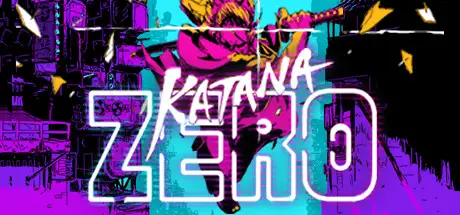
You learn the rules of Katana ZERO by dying to them. Everything here lives for exactly one hit — you, the armed thugs behind the door, the gangster lining up a clean shot across the room. Walk in cold and you will be a corpse before the music finishes its first bar.
The trick is that death costs you nothing but a breath. There is no load screen, no penalty animation, no slow trudge back. You blink, you are at the doorway again, and the room is still waiting. So you stop treating failure as failure and start treating it as reconnaissance: learn where the bodies stand, rewrite the route, run it cleaner. The reward is that moment when a frantic massacre becomes a single fluid sentence of motion — and no amount of polish from a bigger studio quite replicates it.
This is a six-year game from a one-man studio with a budget you could lose in a rounding error. It has no ray tracing to sell you. What it has is a katana, a sliver of slowed time, and a neon coat of VHS grain — and in 2019 that was enough to crash the year-end conversation and stay there.
Story | 7.0/10
劇情: 7/10In most action games the plot is a tax you pay between fights — a cutscene you mash to skip. Katana ZERO refuses that bargain. It makes the story part of the pleasure, and the clever part is that it grows directly out of the death loop you are already living.
A noir told as precognition

You play Zero, an amnesiac war veteran living in a cheap apartment, kept functional by a psychiatrist who doses him on a schedule. The setting is a post-war dystopia where Zero and a class of "NULL" supersoldiers were engineered as weapons, their gift of foresight nothing more than the side effect of an addictive drug called Chronos — and the psychiatrist holds the only supply.
Here is the elegant turn. Every attempt you make in a level, including the botched, bloody ones, is framed in the fiction as Zero narrating a foreseen scenario to his handler. Your trial-and-error, your dozen failed runs, are diegetically explained as "I saw several ways this could go, and I chose this one." The retry loop stops being an awkward seam between mechanics and story and becomes a load-bearing wall of the worldbuilding. It is the kind of idea that sounds obvious once you have seen it and that almost no other action game has had the nerve to commit to — letting the mechanical reality of repeated death double as the literal substance of the protagonist's gift. The whole thing plays like a sullen detective film: information is rationed, you know less than the people you are killing, and the truth arrives in fragments you assemble between jobs. You are never handed an exposition dump; you earn each piece of context by surviving the next contract, which keeps the noir mood taut and the mystery genuinely mysterious rather than merely withheld.
Conversations you can interrupt

What made critics nod in unison is the dialogue system that lives outside the swordplay. Talk to someone and your options surface for a second or two on a quiet countdown. You can hear them out — or cut them off, talk over them, sneer, and on occasion flip the table and draw steel mid-sentence. Each choice bends their reaction and unlocks different lines and staging.
It sounds like a minor flourish. In practice it rewires how cutscenes feel. Where most action games turn dialogue into a skippable chore, here it is a small game of nerve under a ticking clock: do you flatter the answer out of him, or rattle him until he slips? It takes the most reflexively disliked stretch of the genre and makes it the part players lean in for. When a reviewer wrote that an action game's story was "finally worth watching," this is the thing they meant — you are not watching the plot so much as needling it with your own temperament.
The cliffhanger that hangs over everything

But the writing is also where the game draws its sharpest criticism. It stops at the exact peak — the young neighbour girl Zero has slowly come to trust simply vanishes, the true identity of the antagonist known only as the Dragon stays sealed, the whole shape of the NULL program is left dangling. Nearly every real answer is deferred to a promised free expansion that, six-plus years on, has yet to arrive.
The split among critics is honest about this. Some praised the prose and the interruption mechanic as genuine innovation; others found the bones underneath to be stock dystopian fiction stretched over thin, archetypal characters whose arcs never quite close. Both readings are fair, and which one you land on depends a great deal on how much patience you bring to a story that withholds on principle. Held up against the studiomate it is forever compared to — a certain Devolver-published top-down bloodbath that barely bothers with people at all — Katana ZERO is plainly the more ambitious storyteller. Which is exactly why it stings that it staked its best mystery on a cheque it still has not cashed. The framework, the dialogue, the mood are all strong enough that you genuinely want the resolution — and that wanting, left unanswered for the better part of a decade, is the single most frustrating thing about an otherwise confident piece of writing.
Audio | 9.0/10
音效: 9/10If Katana ZERO has a calling card you can recognise in one second, it is not the blade. It is the music. A reviewer at one Switch-focused outlet went so far as to say the soundtrack "overshadows the rest of the game at points" — and meant it as praise.
Synthwave with the dust left on

The score, composed by a pair of musicians, is synthwave at its most period-accurate: analogue eighties textures laced with house, electronica and synth-pop, with a lineage you can trace back through Gary Numan, Yellow Magic Orchestra and Vangelis. Roughly ninety-five percent of one composer's work was tracked on vintage synthesizers and drum machines, and that choice is the point — the graininess of old hardware is kept on purpose, not cleaned out. This is a soundtrack that wants to sound like it bled out of a worn cassette, warm and noisy, rather than the sterile digital cleanliness of a modern score.
The result locks teeth with the game's whole posture. Neon grain, a noir city after dark, the cold arithmetic of one-hit-kill violence — set all of that to a retro analogue pulse and the "eighties cyberpunk" mood goes to eleven. Each track feels tailored to a specific room, a specific slaughter, rather than dropped in as generic ambience. Put the headphones on and the room simply feels correct; the mood arrives before the first enemy does, and it never lets go for the length of a run.
Sound you play, not sound you hear

The genuinely special part is that the music is not wallpaper — it is wired into the mechanics. Each level opens with Zero physically clicking on a Walkman, a small ritual that doubles as the bell before round one. Pull the earbuds for a conversation and the track steps aside so the lines can land. And the moment you swallow Chronos and trigger slow motion, the whole piece drags, bends and detunes in real time, perfectly in step with the bullet-time it scores. In that instant you are not listening to a backing track; you are hearing audible proof that your own sense of time has just been rewritten.
That fusion is why the soundtrack clears the bar of "great to listen to" and reaches the rarer one of "great to play." Plenty of its peers — Hyper Light Drifter, The Messenger — have superb music too, and superb atmosphere; mute any of them and the game survives intact. Mute this one and you have amputated a sense. Its tempo is, in a real and mechanical way, the tempo of your perception, so the act of slowing time is also the act of bending the song. You are not appreciating a tune in the gaps between fights — you are landing a killing blow inside a melody you personally dragged out of shape.
Welding the audio that deep into the core loop is how a small indie ends up with a sound design maxed to the very top of the dial, and an IGN nomination for the year's best video game music to show for it. It is the kind of integration most studios with ten times the budget never even attempt, and it remains one of the single most distinctive things about the whole package.
Visuals | 8.5/10
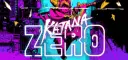
畫面: 8.5/10The visual value of Katana ZERO is not in its resolution and not in a checklist of lighting effects. It is in an identity so specific you can name the game from a single screenshot. This is art that wins on style over silicon, and it pushes that idea about as far as it will go.
A noir on a worn-out videotape

The foundation is sixteen-bit pixel work, but what actually sets the tone is the layer smeared on top: grain, scanlines, the occasional tear and chromatic bleed, all faking the degradation of an old VHS playback. Lay that over slabs of neon and a sullen city skyline and the whole picture reads like a noir film pulled out of an eighties tape deck. The style peaks in combat. Every clean kill bursts into pixel blood, paired with a screen shake and a brief slow-motion freeze that renders one-shot death both cold and exhilarating. It is not chasing gore realism; it abstracts violence into spurts of red pixels, the way an old arcade cabinet exaggerated and stylised carnage. That abstraction is precisely what makes it stay watchable for hours and stamps it with an author's signature.
The strength carries a cost, and the game is honest about it. Some players report that long sessions staring into the high-intensity flicker and grain leave their eyes tired, even dizzy. To some that intensity is part of the immersion; the sensitive may simply need to take breaks, and the option to play in shorter bursts is in many ways the natural fit for a game built around bite-sized rooms anyway. It is not a title engineered for everyone to binge for hours at a stretch — but that exact refusal to soften the visual punch is what gives it a look nothing else in the pixel space can borrow. The grain is not a filter slapped on for fashion; it is the lens the entire game is shot through, and removing it would leave something far blander behind.
Style as the durable bet

It is worth setting the game inside its 2019 surroundings. That year the big productions were trading blows over resolution, ray tracing and hair physics, while Katana ZERO ran the other way and used deliberately distressed two-dimensional pixels to prove that style can wholly outrun technology. It never competes with any blockbuster on photoreal fidelity because it is not on that track at all — it is racing for legibility, for the one-glance certainty that this is Katana ZERO and nothing else. That clarity is also a gameplay asset, not just an aesthetic one: in a game where reading a room in a single beat is the difference between life and death, a visual language this distinct and uncluttered means you always know what is a threat, what is a thrown object and what is just background. The art direction and the design are pulling in the same direction, which is rarer than it sounds and a large part of why the whole thing feels so coherent. Nothing here is style for style's sake; the look earns its keep on the second-to-second level of play.
There is a quieter craft underneath, too. Combat shows you tiny pixel figures; cutscenes and conversations switch to far more detailed hand-drawn portraits that carry emotion in the face. One palette runs cold, the other warm, and the contrast gives those restrained character beats real weight — the violence reads as abstract and stylised, while the faces read as human, and that tension is half the noir.
There is also a practical upside hiding inside the lo-fi look. Because the engine is so light, the game holds a rock-solid frame rate on everything from a modest laptop to a handheld to a phone, and for an action game where a single dropped frame can cost you the deflect window, that stability is not a nicety — it is essential. Six years on, none of it looks dated either, because hardware ages and a maxed-out aesthetic does not. Today's jaw-dropping ray tracing is tomorrow's default checkbox; a look honed to this degree simply refuses to depreciate. That is the whole bet, and it has paid off every year since.
Combat | 9.5/10
玩法: 9.5/10Gameplay is where Katana ZERO graduates from very good to untouchable. Its ruleset fits in a single line — one hit and you die — and out of that brutal constraint it grows a system with no visible floor.
One hit, and every room is a puzzle

The kill rule cuts both ways: you are as fragile as everyone else, a single bullet or blade ends the run, and in return the gunmen drop in one strike too. That zeroes out your margin for error and quietly turns each room into a one-shot riddle. You do not know how many enemies wait behind the door, who is armed with ranged firepower, who is crouched behind cover — so the first charge in is, almost always, a swift death.
And so death becomes recon and the restart becomes a redraft. You run it again, memorising positions and timing windows, choreographing a flawless clear in your head, and finally walk it through in one unbroken take. The first attempt at any room is essentially scouting; the second is a rough draft; by the fifth or tenth you are no longer reacting, you are conducting, executing a plan you authored across a string of quick deaths. Because the restart is effectively free — instant, no load, no penalty reel — frustration never gets a foothold; you only ever feel the itch to try once more. That low-punishment, high-repetition design is the real engine of the addiction. Each death hands you a scrap of new information, each scrap brings the next run closer to perfect, and the feedback chain almost never snaps. You will replay one room dozens of times without noticing, until the optimal route is burned into muscle memory — and when it finally lands clean, the sense of command is something few action games ever hand you. This is the "hard but scrupulously fair" creed the developer borrowed from his influences, made literal.
Slowed time, deflected bullets, and the gap between novice and master

What makes the riddle solvable is the slow-motion the Chronos drug grants. Trigger it and incoming fire fractures into legible, frame-by-frame arcs; bullets that were too fast to read become a clean set of trajectories, and you get a window to breathe and calculate. Then comes the slickest move in the game: the deflect. Swing at the instant a bullet would land and you knock it straight back, killing the shooter who fired it. An empty-handed assassin turning a gunfight into a knife fight.
The slow-motion runs off a meter that refills on its own, which means it is a finite resource you alone decide how to spend — when to open it, how long to hold it. Novices dump the whole bar the second they enter a room and then flail when it runs dry mid-fight; veterans hoard it for the three frames that actually matter and ghost through the rest at full speed. Managing that meter is the most direct dividing line between the two, and it is the skill that quietly separates a clumsy survival from a clean, balletic clear. The genius is that nothing about this is explained to you in a tooltip — you discover the economy of it by burning through it, dying, and learning where the truly decisive moments hide. Around this core, thrown bottles to open a lane, wall-kicks to reposition and dodge-rolls to slip a shot compose into a ceiling that climbs forever — and the game knows to change the menu, threading in motorcycle chases, patient stealth kills and a handful of boss fights so a single mechanic never wears thin. It is most often spoken of in the same breath as a certain Devolver bloodbath, yet the developer himself points instead to a lesser-known instant-death duelling game as the true source of the feel. Wherever the lineage runs, the precision he machined out of it stands alone on the one-hit-kill road. Few games make dying so painless and mastery so hard-won at the same time, and fewer still make the gap between the two feel this satisfying to close. It is, simply, one of the cleanest and most replayable action loops of its generation, and the single strongest reason the game still gets recommended without hesitation years after launch.
Content | 6.0/10
內容: 6/10On the question of how much game you actually get, Katana ZERO asks for honesty. It is small and sharp — sharp in feel and in mood, small in volume — and the size is the one place the score has to come down.
Four or five hours, lean but undeniably short

The base campaign clocks in at roughly four to five hours to the credits. There is no padding and no filler; it moves like an action short film. But the instant it ends you will likely feel that "wait, that's it?" pang — and for a full-price indie, that length is on the short side, especially when the ending leaves its core mystery suspended. That "left wanting more" amplifies, easily, into "left hanging."
The promised free expansion is the touchiest part of all of this. The developer announced a large free add-on early, initially scoped at a third of the base game's size, only to watch it balloon — six times the original plan by 2021, until he was calling it "more like Katana 1.5" than DLC, eventually landing at roughly half the length of the full game. On paper that nearly doubles the package, with new characters, new levels, new mechanics and a story that picks up exactly where Zero's ending trails off. The problem is the calendar: from the 2019 launch to now, that promised continuation has been waited on for close to seven years, and the most recent sign of life was a single teaser at an indie showcase confirming it is "nearing completion," still with no firm date. Promising and still unshipped, it cannot honestly be weighed as content you own today.
How to actually do the math on value

So when you weigh the content, the real task is being clear about what you are buying. If your yardstick is dollars per hour of stuff, Katana ZERO genuinely does not look generous — four or five hours that plenty of people will finish over a single weekend, with none of the side-quest sprawl or open-world checklist that pads out a modern release. But if your yardstick is the concentration of those hours, it flips entirely: almost nothing here is watered down, every room is a deliberately engineered crescendo, and the pacing is so tight that you never once feel the urge to skip ahead or tune out. It is the difference between a sprawling buffet and a tasting menu where every plate is the chef's best work — fewer courses, but not a single wasted bite among them, and a far more memorable meal for it.
And its value compounds with how deep you go. The post-game Speedrun mode reframes the whole campaign as a timed challenge that the one-hit-kill design was practically built for — the community is stacked with no-hit, single-life clears, players dissecting each stage frame by frame to argue whose route is the more elegant. Because the levels are fixed, choreographed puzzles, once you have memorised an enemy layout the goal shifts from "finish it" to "finish it beautifully," and that pursuit of elegance is where a four-hour campaign quietly stretches into dozens of hours for the people who fall for it.
There are hidden rooms and meta-flavoured gags too, the most infamous being a stretch that pretends to delete your save — a bit of gallows humour that startles nearly everyone on first contact before they realise it is a joke the developer planted. None of that changes one rule, though: judge the game on the base product that actually shipped, and do not price in a free promise that has been deferred for nearly seven years. Betting on an uncashed future was never the rational way to buy anything, least of all a cheque that has bounced its own deadline this many times. If the expansion lands, treat it as a generous bonus on a game you already loved; if it never does, you should still feel you got your money's worth from the campaign as it stands. Price the thing in front of you, not the thing on the horizon, and Katana ZERO holds up as a short, dense, expensive-per-minute pleasure that comfortably earns its place in the library.




留言 0
歡迎發表遊戲評價
歡迎參與討論,分享對這款遊戲的評價。
暫無留言,歡迎分享對本篇評測的看法。