












Opening
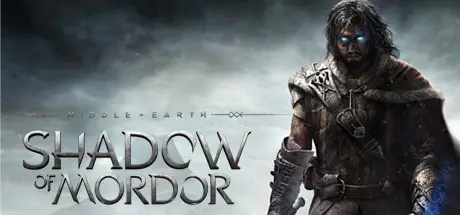
The first orc I ever remembered didn't earn it by being scary. He earned it by killing me.

When we met again he wasn't the roadside grunt I'd brushed past. He'd climbed the ranks, picked up a scar I'd given him last time, and opened with a line aimed squarely at me — he remembered, and he knew exactly who had lost the previous round.
That was the moment it clicked. The clever thing here isn't how bleak Mordor looks, or how cleanly Talion swings a blade. It's that failure echoes. Cut down a captain and the whole power structure shifts beneath you. Let an enemy escape and he might come back one day, hauling fresh muscle, looking to settle the score.
The orcs here aren't walking bags of experience points. They're a tavern full of brawlers fighting over a seat — knock one off his stool and the man beside him lunges for the gap. You don't fight a faction so much as you fight a feud, and the feud has names, faces, and a long memory.
That, more than anything, is why people still talk about a game that's well over a decade old. The sword cuts. The system holds a grudge. And once it has your number, it does not forget it.
Story | 6.0/10
劇情: 6/10The writing here leads a split life. The part scripted into cutscenes is forgettable; the part you generate yourself, blade in hand, is unusually alive.
A revenge cold open: bleak, and fast

The setup is clean and merciless. You play Talion, a ranger of Gondor, and within the opening minutes he and his wife and son are publicly slaughtered at the Black Gate by Sauron's host. No throat-clearing. The motive for revenge lands in two or three minutes flat — bleak, and direct.
But Talion doesn't get to die. A wraith binds itself to him and traps him in a limbo between living and dead. The wraith is no stranger: it is Celebrimbor, the ancient elf who forged the Rings of Power. Two cursed souls now share one body, each chasing the answer that might finally let him rest. The smart move in this premise is how it hands Talion's supernatural abilities a believable home. When you release that blue wraith-light at point-blank range, you're not reading a particle effect — you're watching story and ability fused at the hip. Why can Talion blink across a battlefield, why do orcs scatter at the sight of him? The plot has already answered. That isn't a power handed out by the menu; it's what a man who died-but-didn't gets when an ancient ghost moves in. When an action game bothers to interlock ability and fiction instead of letting them talk past each other, that earns a mark in the ledger.
A Middle-earth flavor, and a little sense of home

For anyone steeped in The Lord of the Rings, the game keeps slipping you small notes of recognition. Gollum turns up. The thread of the Rings of Power slowly unspools. The place-names and the legends of Mordor all line up where you expect them. These aren't cheap cameos — at minimum they thread Talion's growing powers, the ancient elven lore, and his personal revenge arc into something that holds together.
That said: the game plays loose with Tolkien. For the hardcore faithful who treat the source material as scripture, the rigor won't clear the bar. Celebrimbor's part, Talion himself as an invented hero parked inside Mordor — these are things the game stuffs into Middle-earth on its own authority, with only thin connective tissue to the canon. Walk in expecting to relive the books and you may feel the seams. Treat it as an officially licensed side-story tucked into a forgotten corner, and that flicker of recognition flips into a perk: it borrows the world's heavy foundation without being shackled to the original's rules.
The momentum problem, and where the real story lives
The main line falters on stamina. Strip it down and it's the assassination of 20 orc captains; the revenge-hero skeleton is nothing new, and the tension bleeds out the further you go. Much of whatever pulls down that 84 Metacritic average is loaded onto this campaign. It will move you forward, and the motives hold up, but very little of it sticks. The next morning, you won't reach for a line Talion said.
The thing is, the game's best storytelling never lived in the cutscenes at all. It lives in the private feud that improvises itself between you and some orc. The main quest is a paved road — flat, safe, short on surprise. The Nemesis System is the drunk who lurches out of an alley: rude, unscripted, and impossible to forget.
It's a peculiar trick, and worth sitting with. The story the game wrote for you evaporates by morning; the story it didn't write — the one you lived — you'll narrate to a friend for ten minutes straight, complete with the orc's name, his catchphrase, and the exact embarrassing moment he got the better of you. Most games invest their narrative budget in the parts you watch. This one quietly invests it in the parts you cause. The cutscenes are the glossy brochure; the feuds are the actual holiday you took. Years later, it's the feuds you'll still be telling stories about, while the scripted plot has long since blurred into a vague memory of avenging a family at a black gate.
Audio | 7.5/10
音效: 7.5/10The sound here isn't built to loop on your playlist. It's built to make you hit harder and remember longer.
Combat feedback: every input landed solid
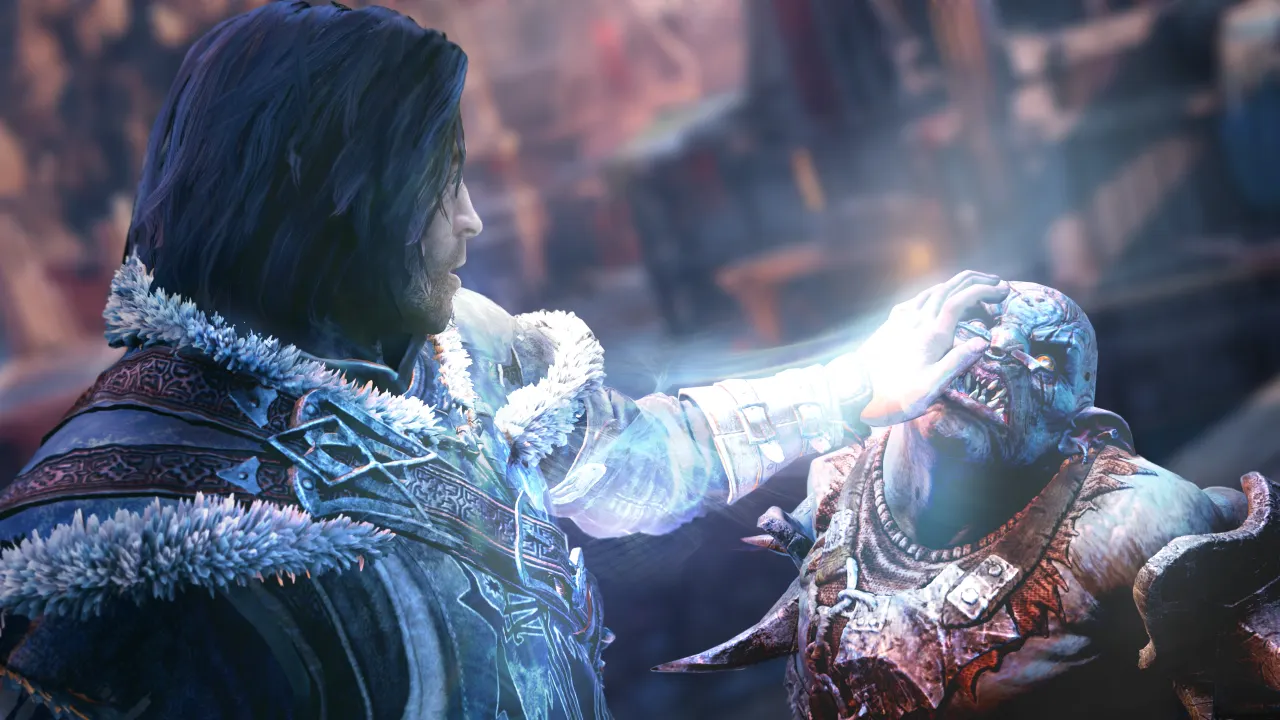
The most useful thing in the audio design is the combat feedback. Steel on steel, the crack of a landed counter, the thud at the end of an execution — these share one virtue: they never steal the scene, yet they confirm every single input. You don't need the prompt in the corner of the screen; the sound alone tells you whether your blade slotted into the rhythm. It's crisp, and it's vicious.
That auditory confirmation is the hidden bedrock of action feel. People call this game "satisfying" to play, and half that satisfaction is sound — it gives a virtual blade real heft. The muffled note of a clean parry, the subtle shift when the combo meter fills, the curt finality of an execution: each one quietly confirms "that one connected." It's done with restraint and precision, never grandstanding, always present. When seven or eight orcs hem you into the middle of a camp and you can't possibly track every icon, it's the sound holding your tempo together, keeping the brawl from collapsing into a blur you can neither see nor hear.
The score: there to push you forward
The music runs an orchestral charge, serving the heat of the killing and the scale of war in Middle-earth. Its brief is clear: don't upstage the swordplay, just lift the adrenaline once a camp raid tips into a full-scale melee. It's a hand hidden in the background that shoves you at the right moment and otherwise keeps quiet.
That's a steady call. In a game built around combat and revenge, a score too precious about itself would only drag the pace and pull attention off the steel. This one knows how to hold back — low-key by default, roaring up only when you trigger the chaos.
The cost is that the melodies don't stick. You finish the game and you won't go hunting for a theme to loop, won't hum a signature line, won't find a single motif lodged in your head a week later. That's the ceiling on this category: fully functional, plenty rousing, but not sharp — short on the kind of standout passage that could stand alone outside the game. It does its job in the room and then politely leaves, which is exactly what the design asked of it, and also exactly why nobody will ever buy the soundtrack.
The real audio highlight: orcs talk back
Here's the funny part. The sound you'll actually remember isn't the score — it's the orcs' mouths.
The Nemesis System gives every captain dynamic voice lines. When some brute you failed to finish off resurfaces, he taunts you with dialogue written around your earlier mess: you ran, you whiffed, you thought you'd killed him and you hadn't. These lines shift in real time with your wins and losses, and they carry a live, breathing streak of provocation. The voice acting and performances also carry the body-sharing conceit between Talion and the wraith — handled flat, it would sound like a tooltip read aloud, but here it gets genuine narrative weight.
So you end up with something perverse: you can't recall a single bar of background music, yet you can recite, word for word, the insult a particular captain spat at you when you crossed paths again. The audio's biggest achievement in this game grows out of the system, not off the sheet music. It's a quiet argument about where sound design should spend its effort — and Mordor spent its on making the enemies feel like people who knew you, rather than on a sweeping theme nobody would have remembered anyway. Given the choice, it picked the right one.
Visuals | 8.0/10
畫面: 8/10Mordor isn't pretty the clean way. It's pretty the filthy way — pressed-down, rust-smelling, grimed-in.
Mordor's grime: atmosphere over acreage
Ash, sulphur, blood, leather. These pull the whole palette low, like a war-cloak nobody has washed in a year. The game doesn't win on map size — by the standards of its day the open world was merely middling — it wins on density of mood. Walk the ash wastes of Udûn and the desolation seeps inward; it gets under the skin rather than just filling the frame.
The clever part is that it doesn't paint everything one shade of grey. Núrn hands the eye a place to breathe: greener wetlands, moisture, a little living color set hard against Udûn's deadness.
That contrast matters more than it looks. A world that stays uniformly grey from the first hour to the last doesn't read as oppressive — it reads as monotonous, and even strong atmosphere dulls into wallpaper without something to push against. So the game leaves a gap to inhale through. You stumble out of Udûn's suffocating waste and find, around the corner, a patch of something alive. One grey region, one green, and suddenly the place has rhythm. Mordor stops being a flat "villain's lair" and becomes somewhere you can actually believe in — a place with weather, with seasons of misery, with corners that are merely bad instead of uniformly hopeless. That little tonal swing is the difference between a backdrop and a world.
Combat animation: the most muscular thing on screen
If you had to name the most forceful element of the visuals, it's the combat animation. Executions, beheadings, stealth takedowns — each carries real weight; the blade has consequence, not just choreography. That heft is what makes the fighting look as cathartic as it feels.
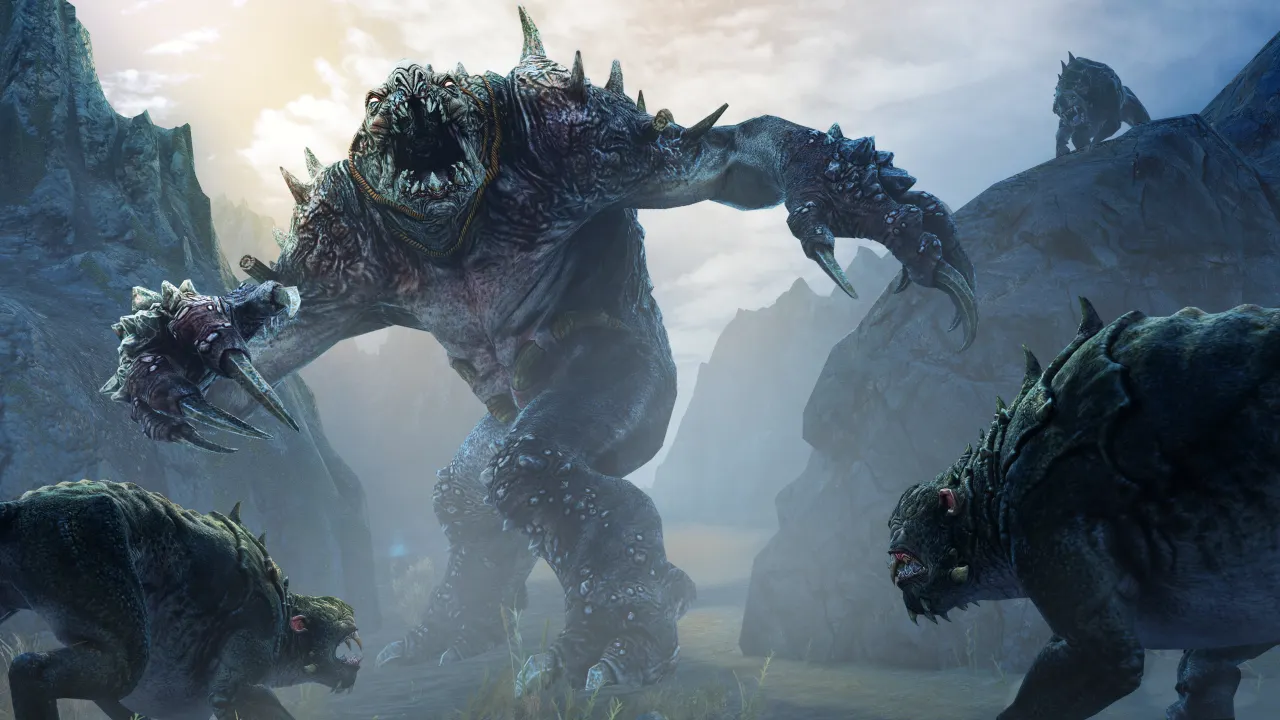
When Talion fuses with the wraith, a cold blue light cuts into the frame and lights the savagery in a different register. The color temperature does the talking: this is a mortal's revenge and a supernatural punishment at once, warm blood and freezing glow trading places inside a single motion. That's high-grade visual storytelling — no UI pop-up, no narrator explaining "the hero is now possessed," just a temperature shift you read instinctively. Then there are the mounts: charging into a war camp on a Caragor or a Graug carries the scale of the thing. A monster several times a man's height tramples the palisade and scatters orcs through the air like kicked-over toys, and the menace lands — "you are now the most dangerous thing in this land" — without a single bright, flashy color to sell it. The game trusts its grime to carry the threat, and the grime delivers.
Looking back today: the tech aged, the temperament didn't
Be honest about it: as an early new-gen title, the rendering has been overtaken. Texture density in places shows its age, and the open world is no longer a lavish sight. If you came for top-shelf fidelity, this won't feed you.
But what grabs you was never "how fine," it was "how filthy, how hard, how much like Mordor." That hasn't expired. A game's visual value sometimes has nothing to do with the polygon count and everything to do with whether one glance makes you believe you're standing in Mordor. Art direction outlasts spec sheets: a game built on brute fidelity gets lapped by the next hardware cycle, while a world founded on a strong, specific mood still pulls you in a decade later. This is the latter kind. The polygons are dated, the textures betray their age, but the caked-on grime of ash and blood and rust is still there, and so is that reflexive "this place is genuinely awful, watch your step." That part it still nails, and it nails it the way a good charcoal sketch outlasts a glossy render — by committing hard to a mood rather than chasing a number. You won't fire it up to show off your monitor. You'll fire it up and forget the monitor entirely, because within a minute you're too busy believing in the place to notice the seams. Conviction, it turns out, ages far better than resolution ever could, and Mordor has conviction to spare.
Combat | 9.0/10
玩法: 9/10The sharpest blade this game owns is buried in the Nemesis System. Not as a menu toggle bolted onto the side — as the spine the rest of the game hangs from.
The Nemesis System: where defeat grows a memory
Start with what it actually does. Mordor's orcs aren't a uniform spawn of identical thugs. A system sorts them into four ranks — grunts at the bottom, then captains, warchiefs, and an overlord at the peak — and hands every captain a randomized look, name, personality, set of strengths, and set of fears. You will not run into the same brute twice.
What turns "fun" into "unforgettable" is that the hierarchy is alive. Lose a fight and you don't just reload. The orc who beat you gets promoted for the win, comes back stronger, climbs a rung, and greets you next time with dialogue built around your last humiliation. He remembers the chase you bungled, the takedown you fumbled, the time you thought he was finished and he wasn't. Inside a few minutes the system has machined a faceless random enemy into your own personal grudge.
This is why Warner Bros. patented the mechanic outright, with protection running to 2036. More than a decade on, no other game has gotten "the enemy remembers, grows, and retaliates" anywhere near this thorough.
These rivalries aren't scripted; they're grown in real time out of your own wins and losses. Two players can describe the same nemesis to each other and find they're talking about completely different villains, because the system authored each one on the fly. That's a rare thing: emergent storytelling that doesn't need a writer in the room, only a player making mistakes worth remembering.
Branding: turning all of Mordor into your chessboard
If the Nemesis System is the skeleton, branding is the hand you reach in to move the bones. Once you unlock it, killing orcs stops being the only verb. You can brainwash them, flip them, send them back to work for you.
The toolbox snaps open. Slip into a stronghold, interrogate a few grunts to learn whether a captain dreads fire or fears execution, then design a kill around that specific weakness. Or skip the killing entirely — recruit the captain, point him at a rival, plant him in an enemy formation, and wait for a public duel where he knifes his own superior in the back. Branded captains stay loyal for good; grunts may eventually drift off. The whole region becomes a board you arrange: who rises, who falls, who loses his head because you willed it.
That kind of freedom is something the Arkham school of action can't hand you. It takes "clear the outpost," normally the most mechanical chore in the genre, and rewrites it as a piece of scheming office politics with knives. You stop thinking like a soldier and start thinking like a spymaster, and the camp stops being a checklist and starts being a problem with a dozen solutions.
Melee feel: solid, but the bones look familiar
The base combat is smooth, and it will instantly remind you of the attack-counter-combo rhythm of Batman: Arkham City — enemies close in, you read the prompt, counter, roll the combo, and once it's stacked you trigger an execution that drops a grunt outright or wounds a captain badly. Talion penned in the middle of a war camp, parrying with one hand while hunting for an execution window with the other, is this game's most dependable source of joy. Hits land with weight; the blade has follow-through, not a pose.
Stealth, open brawling, and the wraith powers stitch together naturally too. Pick off the outer sentries, drop into a straight fight once you're spotted, then use the wraith's lock-on Shadow Strike to blink across the field or run down a fleeing survivor. None of these transitions ask you to swap brains.
The honest caveat: that melee skeleton is familiar. Anyone fluent in Arkham finds the underlying logic fast and clocks the lack of mechanical invention. It isn't fatal, though, because the Nemesis System feeds that skeleton its own flesh. You aren't trading blows with anonymous punching bags. You're settling a score with the specific orc who humiliated you last week.
Content | 8.3/10
內容: 8.3/10On sheer volume, this game doesn't win by being big. Its staying power comes from a system that grows its own events, not a map crammed with icons.
Length and shape: a lean campaign, longevity elsewhere
Start with the hard numbers. By HowLongToBeat, the main campaign runs roughly 15.5 hours, and a completionist pass — every side mission, challenge, and collectible — lands around 35. The story, stripped down, is the assassination of 20 orc captains: lean, and squeezable down further if you tunnel straight through it.
Read only those numbers and you might call the content thin. Chinese outlets at launch did flag "not much content" as a chief weakness, and on paper they had a point.
But the numbers can't capture the thing that actually stretches this game's lifespan: the private grudges the Nemesis System keeps spawning. You set out to clear one stronghold and discover a captain there happens to weaken the warchief above him; you chase that, and crash straight into another reshuffle of the ranks. One thing hooks the next, like reaching for a single spicy bite and never setting the chopsticks down. The 15.5-hour figure measures the corridor; it can't measure the rooms you wander into off the corridor, which is where most of your real hours go and where the count quietly doubles without the campaign growing an inch.
Repeatable goals: every outcome leaves a mark
Outside the scripted campaign, the most durable content is how freely you handle those strongholds, enemies, and power structures. The repeatable goals organized around the orc hierarchy — liberate an outpost, hunt a warlord, install your own mole at the top — make up the bulk of what sits beside the main quest.
Perched high above a Mordor fortress and a burning battlefield, what you see is war, and what's running in the system underneath is also war: who got cut down, who fills the vacancy, who climbed a rung because you failed once. That "every outcome leaves a mark on the world" design keeps the repeat hunting from being a checklist you tick. You aren't grinding mobs; you're rewriting the personnel chart of a province. The same "clear the outpost" verb that every open world owns is a disposable, forget-it-instantly chore elsewhere; here it triggers a chain reaction. The vacuum left by the captain you took down gets filled by some other ambitious brute — and that brute might be the very target of your next revenge run. Content gains a power to self-propagate: it doesn't rely on developers hand-laying endless quests, it relies on the system itself churning out fresh situations. That's the live-wire energy the checklist open world is missing.
DLC and the version to buy
There are two story DLCs, and the quality gap is plain. The Bright Lord is clearly the stronger: it winds the timeline back thousands of years before the campaign and lets you play Celebrimbor, the elf who forged the Rings of Power, going head to head with Sauron himself — effectively slotting a key piece into the world's buried backstory. The Lord of the Hunt is the flatter of the two, its play built around taming new beasts and reuniting Talion with the dwarf hunter Torvin; take it or leave it.
If you're climbing in now, the smartest pick is the Game of the Year Edition. It bundles both story DLCs alongside the various skins, runes, extra missions, and challenge modes into one package.
The content has its honest weakness, too: chasing captains, cracking strongholds, reshuffling the hierarchy — that mission frame can't stay fresh forever. Play long enough and a loop sets in; in the back half you may be dragged forward by old grudges rather than pulled by new goals. The saving grace is that the dynamic relationships between orcs keep manufacturing little incidents, enough to yank the run out of a flat straight line so the repetition never curdles into disaster. In the end its content isn't measured by how long you can play, but by the fact that every hour you play is busy growing a story that's only yours — a quieter, more durable kind of value than a checklist of two hundred icons could ever buy.



留言 0
歡迎發表遊戲評價
歡迎參與討論,分享對這款遊戲的評價。
暫無留言,歡迎分享對本篇評測的看法。