






















Opening
I spent three hours building an automated furnace production line. Copper ore goes in on the conveyor belt, copper ingots come out the other end, and I don't have to lift a finger in between. Standing in the workshop watching the machines roar and run, I suddenly understood why some people can grind hundreds of hours in this game—the sense of accomplishment from building an industrial system from scratch is way more satisfying than beating the main storyline.

Building System | 8.5/10
The most addictive part of this game isn't the combat—it's the workshop. You start with a broken pickaxe, mining scrap, smelting copper ingots, building machines, and every step you can see the efficiency improving. The first time I manually smelted twenty copper bars I nearly fell asleep, but when you build your first automatic furnace, that "finally freed my hands" rush makes you immediately start planning the next production line.
The building logic is straightforward—gather resources, check recipes, place machines, connect conveyor belts. There's no complex circuit system, no need to learn programming, but the combination space is large enough. You can chain furnaces and cutters together, or place them separately to let them do their own thing. I've seen people turn their workshop into an assembly line factory, and I've also seen people randomly pile machines on the ground and still have a great time.
The only problem is the space limitation comes too early. The workshop starts with just a small plot, and once you have more machines you have to start playing Tetris—dismantling this one to move that one, conveyor belts looping three times just to connect. Although you can expand later, for the first twenty hours you'll constantly be wrestling with space. Not fatal, just annoying.

Resource Recycling | 8.0/10
Mining is the daily grind of this game, but it doesn't turn the task into pure repetitive labor. You're digging up stones in the ruins when occasionally a rat pops out—not to bite you, but to deliver goods. Killing it drops rare materials, a design that adds a bit of surprise to mining, at least keeping you from dozing off while digging.
The variety of resources isn't extensive, but it's sufficient. Basic materials like copper, iron, and tin are everywhere, while rare ores require venturing deep into the ruins. Ruin exploration is done reasonably well, with simple puzzles and combat. Though the difficulty isn't high, it at least makes "gathering materials" less tedious.
The problem is that mid-to-late game sees a noticeable material shortage. Certain advanced recipes require materials with yields that are too low, forcing you to either repeatedly farm the same ruin or wait for merchant refreshes. This progress-blocking feeling isn't great, especially when your workshop upgrade plans are already scheduled out to next week.

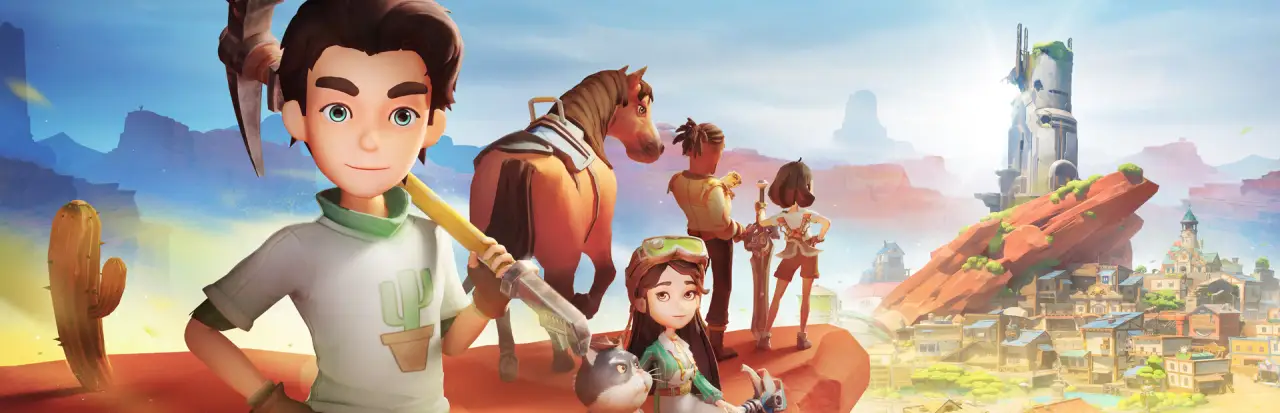
Small Town Atmosphere | 7.5/10
The residents of Sandrock are more welcoming than I expected. Western-themed stories usually subject outsiders to a bunch of cold stares and trials, but the NPCs in this game treat you like one of their own from day one. The mayor directly hands over the workshop to you, neighbors proactively come to help, and even the tavern owner will buy you a drink. This "post-apocalyptic everyone sticking together for warmth" atmosphere is quite heartwarming, though it lacks some dramatic conflict.
The festival activities are thoughtfully done. On the night of the Winter Solstice celebration, the whole town sets off fireworks, residents gather in the square chatting and dancing, and you can feel that the development team really wanted to make this small town "come alive." The street details are also nice—crates piled outside shops, horse lanterns hanging outside the tavern—these little things give the scenes a lived-in feel.
But the town's "aliveness" stops there. The NPCs' daily behavior patterns are quite simple, appearing at fixed locations at fixed times each day, with limited dialogue options. Once you get familiar with them, you'll find these people are more like quest dispensers than actual characters. A friendship system exists, but grinding it has little meaning—give gifts, chat, complete commissions, then unlock some bland storyline.


Combat System | 6.5/10
玩法: 8.5/10Combat is the weakest aspect of this game. You have a sword, dodge, and skills, but fighting boils down to mindless button mashing with the occasional skill press. Enemy AI is pathetically simple—robots charge straight at you, beasts circle around, and that's it.
Boss fights are slightly better, at least they have enough health to make you take them seriously. But the design lacks innovation, still following the tired formula of "dodge attacks-find openings-deal damage." The rewards after defeating them aren't compelling either, usually just a pile of materials and a piece of equipment—stuff you can craft yourself in the workshop.
Fortunately, combat isn't the game's focus. You can completely skip combat content and focus on building and management without significantly diminishing the experience. But if you came for an action game, this will disappoint you.


Sound Performance | 7.0/10
音效: 7/10The voice acting uses a Western accent, which does give it that authentic feel. NPCs speak with a lazy drawl that pairs well with the desert town setting. But there isn't much voice acting overall—many dialogues are pure text, which gets monotonous after a while.
The mining and building sound effects are restrained. The pickaxe hitting stone produces a dull thud, machinery hums at a low frequency—not noisy or jarring, suitable for long grinding sessions. The background music has a weak presence; most of the time you'll forget it's even playing—not necessarily a flaw, at least it doesn't get annoying.
There are no particularly memorable tracks, but no obvious weak spots either. It's that "neither adds nor detracts" level of quality.
Content Depth | 8.0/10
內容: 8/10The main questline pushes you to upgrade your workshop, explore ruins, and unlock new areas—the pacing is decent. There are plenty of side commissions, though most follow the tired "collect XX materials" or "defeat XX enemies" formula, but at least they give you clear short-term goals.
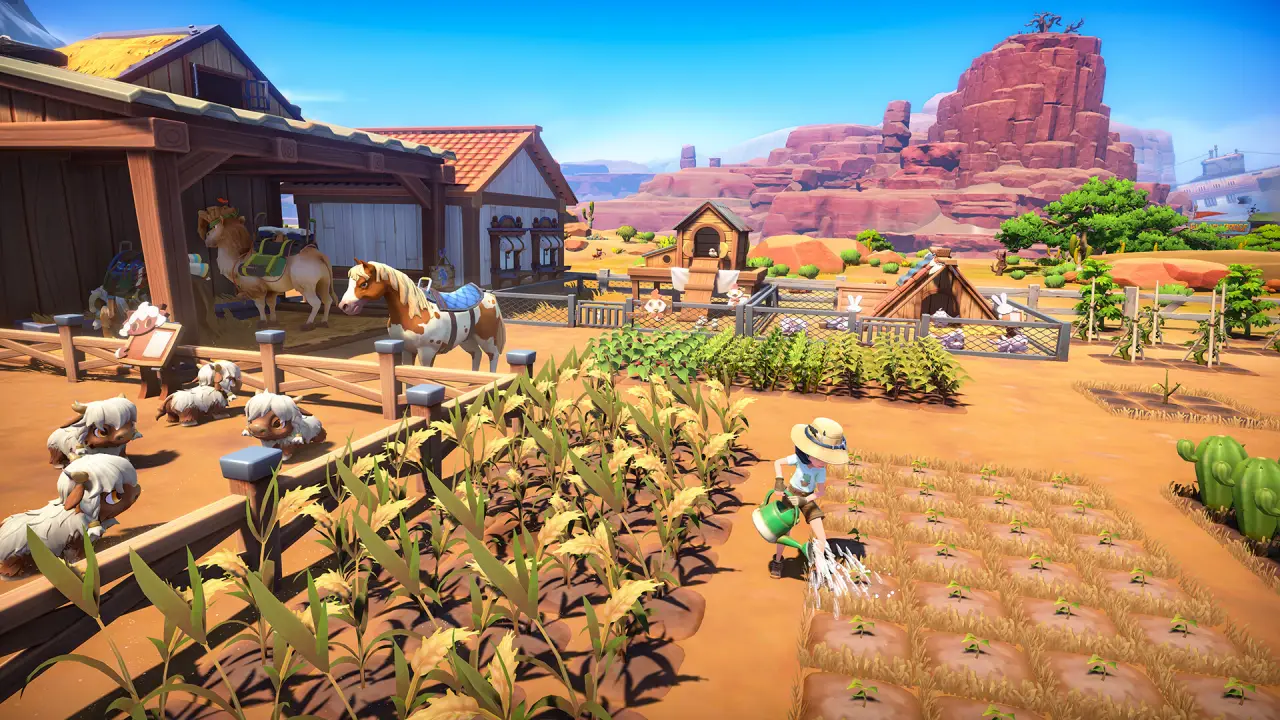
There's no shortage of optional content either. You can run a farm growing crops and raising livestock, modify vehicles to traverse the desert, or dive into the equipment modification system. None of these mechanics run particularly deep, but together they give you plenty to do around town.
The problem is the repetition sets in too quickly. By mid-to-late game, you'll notice quest types starting to loop—back to that ruin again, fighting those same enemies again, collecting those same piles of materials again. It's the open-world curse, and this game doesn't escape it. If you're the type who "must complete every quest," the back half will feel like a slog.






留言 0
歡迎發表遊戲評價
歡迎參與討論,分享對這款遊戲的評價。
暫無留言,歡迎分享對本篇評測的看法。