























Opening
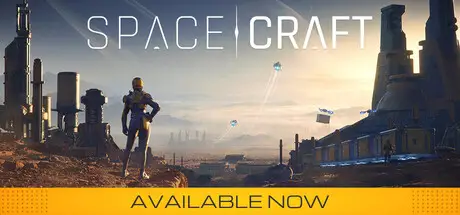
Let's be honest up front: SpaceCraft is an Early Access game. It launched on Steam on June 11, 2026, and what you're buying today is a foundation, not a finished building. So this isn't a verdict on a completed house — it's a walk around some very promising concrete that's only just been poured.
The pedigree is serious. This is Shiro Games, the French studio behind Northgard and Wartales, and they've done something bold here. They took the addictive Factorio loop — mine, build production lines, automate everything until it hums — and dropped the whole thing into space, then handed you real players to do it alongside.
The cleverest part is the seamlessness. You pilot a ship you welded together in orbit, push the throttle, dive through the atmosphere, and land on a planet's surface to keep mining — all with no loading screen, no fade to black. That single uninterrupted plunge is rare in space games, and it's the thing that hooks you on sight. Most space titles slice the experience into discrete rooms — a star map here, a planet level there, a loading bar stitching them together. SpaceCraft refuses that seam, and the result is a galaxy that feels like one continuous place rather than a menu of destinations.
But "Early Access" also means rough edges. The onboarding is steep, the content is thin, and there isn't even Simplified Chinese at launch.
Whether this foundation is worth your money right now comes down to the details, so let's go through them one at a time — the good and the bad, no hedging.
Story | 5.5/10
Story: 5.5/10If you came for narrative, dial your expectations down. SpaceCraft has no traditional story campaign. Its "plot" is a different animal entirely — the kind you author yourself, out in the void, one shift at a time.
A convict with a contract, and not much else scripted

The premise is thin by design: you're a stranded convict, and the only way up is to take contracts, gather materials, and grind your way out from the bottom rung as a miner. That's very nearly the entire script. There are no cutscenes spelling out a hero's arc. The game drops you into the Solar Alpha system, hands you a mining tool, and leaves the rest to you.
There's logic to this restraint. In a sandbox, the story was never in the screenplay — it lives in what you do. The first time you scrape together enough ore by hand, weld a rust-bucket that actually flies, watch a production line finally run on its own — those moments string together into a frontier diary that's yours alone. It isn't sentimental, but it carries a real bootstrapped weight. Nobody handed you a scripted triumph; you earned every step, scraping each one out of the void with your own two hands. And because no two players grind the same way, no two diaries read alike — the climb itself becomes the closest thing to a plot the game gives you.
The real drama is human: Corporations, betrayals, market crashes

The most promising storytelling hides in the multiplayer layer. You can found or join a Corporation and divide labor among real people: someone flies cargo runs, someone mines full-time, someone watches the market for a buy-low, sell-high window. A single interplanetary supply chain grows from a few-person workshop into a crew with roles, friction, and ambition.
This is where games like this earn their best stories — not written by a designer, but grown between players. Who undercut whom, which Corporation cornered a rare ore, how a market crash drove someone to quit — that emergent drama beats any script. Stay up late seizing a mining belt with your crew, or watch a rival's price war flatten everything you'd stockpiled, and those become memories that belong to you. The best space sandboxes have always understood this: the engine doesn't write the legend, the players do, and the designer's job is just to build a stage interesting enough for them to perform on. SpaceCraft has sketched that stage. What it hasn't yet is the cast and the years of history that make the stories worth retelling.
That said, look at EVE Online and it's clear how young SpaceCraft still is here. EVE has spent two decades letting players write headline-grabbing sagas through politics, war, and elaborate cons — the product of hundreds of thousands of people over many years. SpaceCraft's Corporation system is freshly built: the framework is there, but the community scale, the power blocs, the events worth reporting on simply haven't happened yet. The potential is real. Potential isn't the same as delivery, and anyone who wants a story with a beginning, middle, and end will likely walk away cold. That's exactly why the narrative score sits low — not because it fumbled the telling, but because it never intended to tell a story this way, and you should know what you're paying for.
Audio | 6.5/10
Audio: 6.5/10Sound isn't the headline act here. SpaceCraft's audio is doing honest, unglamorous work: hold the mood, keep you from breaking immersion. On that count it passes. It just doesn't dazzle.
Industrial white noise that pulls you into the grind

The audio center of gravity is industrial. The dull crack of a rig biting into an ore vein, the hum of drones shuttling back and forth, the engine note of a freighter setting down — layered together, they form a steady industrial white noise.
Anyone who's played Factorio knows the feeling. Once a full production line clicks into self-sufficiency, that overlapping hum of machinery becomes its own kind of immersion: you hear it and you know your factory is working for you. SpaceCraft speaks that language fluently, and over a long session this layer genuinely eases you into a flow state. It doesn't fight for attention. It props up exactly enough.
The seamless flight asks something of the audio, too. When you dive from the silence of vacuum into a planet's atmosphere with no loading screen, the soundscape has to cross over just as smoothly — near-silence sliding into wind buffet and engine roar. Right now that transition lands naturally, and paired with the loadless visual cut, it sells the sensation of actually stepping onto a world. The layers even shift with distance: high up, the engine is muffled and far; the closer you get to the surface, the sharper the wind and mechanical detail, and that gradient gives "landing" a real auditory weight. The score itself stays functional and low-key, pacing your multi-hour management sessions rather than chasing any dramatic peak — which fits its sandbox-management identity perfectly.
Still missing a theme you'd hum afterward
Honestly, as Early Access, the audio's content is still limited. The clearest shortfall is the lack of a hook: there's no theme you'd hum after you quit, no track welded to a specific high point. Compared to its peers, that "white-noise immersion" of churning factories is shared currency for the genre, and SpaceCraft catches that baseline without yet growing a sonic signature of its own.
I scored this dimension modestly for a simple reason: it's a competent atmospheric bedrock, but it's a stretch away from distinctive, and closing that gap is update work. Space, after all, leaves plenty of room for music — vastness, solitude, the pioneer's pull all beg to be amplified by a score. Here's hoping it finds a few melodies that are truly its own before 1.0, so something lingers in your head after the screen goes dark.
Where the score stays quiet, the effects design carries real informational weight. A lot of what you "know" in SpaceCraft, you actually hear first. The pitch shift of an extractor as a deposit runs dry, the change in a drone's hum when a route gets congested, the satisfying mechanical clunk of a freighter docking — these cues let you monitor a sprawling operation without staring at every readout. In a game where the UI under-explains so much, that audio feedback quietly becomes a second instrument panel.
It isn't flawless — stack enough machines in one place and the soundscape can turn into an indistinct wall of churn, where individual cues get lost in the mass. But the underlying intent is sound: the game wants you to feel your factory through your ears as much as your eyes, and for the most part it succeeds, with refined mixing and a touch more variety this could become one of the more underrated parts of the package, proof that good effects work can do as much for immersion as a memorable theme ever would.
Visuals | 7.5/10
Graphics: 7.5/10SpaceCraft's visuals take a different road. It won't out-shimmer anyone on lighting. It spends its budget on "fluid" and "runs anywhere" instead — and its visual charm lives in motion, not in still frames.
No high-end tax: a GTX 1060 gets you off the ground
The art leans stylized rather than chasing intimidating photoreal materials and lighting, and the spec sheet says it plainly. The floor is a GTX 1060 with 8GB of RAM at 1080p; the recommended target is a GTX 3060 at 1440p and 60 frames. That's a welcoming posture — no wall built against older machines, which means more people get in.
The trade-off is that nothing here will end up as your wallpaper. For a game whose core joy is management and automation, though, that math checks out: you spend most of your time staring at production lines and logistics, not at volumetric clouds. Stylization buys stability, too. Once a scene packs in dozens of machines running at once with drones everywhere, photoreal fidelity tends to buckle, while this cleaner look holds its framerate under heavy factory load. For a game that asks for hours at a stretch, a steady frame beats a pretty one.
There's a clarity argument here as well. Stylized art reads at a glance — you can tell what a machine does, which way a belt flows, whether a deposit is tapped, without squinting through realistic grime and clutter. In an automation game, legibility is a feature, not a compromise, and the clean look serves the brain as much as the GPU. The visuals are in service of the systems, and that's the right call for what this game is trying to be.
The one shot that earns the score: orbit to surface, uncut

What actually carries this dimension is that seamless transition. You hang over a whole planet from orbit, push forward, and watch the atmosphere tint your view inch by inch — the ship punching through cloud, surface structures sharpening from a blur, then a clean touchdown. The entire stretch runs without a single loading screen or fade to black.
It's a small technical miracle when you stop to think about it: rendering a planet from orbit and from ground level are wildly different problems, and most engines hide the handoff behind a loading screen precisely because doing it live is hard. SpaceCraft just does it, and does it smoothly enough that you stop noticing — which is the highest compliment a seamless system can earn. That uncut sense of scale is something a lot of scene-segmented space games simply can't offer. It stops "space" and "planet" from being two severed locations and makes them the far and near ends of one continuous world. There's a psychological payoff, too: when you can watch yourself fly from one planet toward another with nothing breaking the moment, the galaxy reads as a single coherent place in your head rather than a string of disconnected levels. That immersion is the whole point of how it tries to pull away from traditional space games.
Ships you weld, faces you read — and a UI that drags it down

The other visual highlight is shipbuilding. You don't pick a hull from a menu; you weld one out of command, engine, cargo, utility, and defense modules, block by block. What you assemble is what you fly, and balance genuinely matters — a lopsided pile of modules really does handle like a startled ox. That what-you-see-is-what-you-get assembly stamps each ship with a personal mark, and no two vessels you pass in the black are alike. A bloated cargo hauler and a stripped-down speedster read their intent in silhouette alone; appearance becomes a quiet form of self-expression.
The deduction sits on the visual front door — the UI. In Early Access the interface under-explains badly; key information is buried or vague, which compounds the early confusion. Want to know why a line stalled or where a resource went? You'll often dig through nested menus to find out, and newcomers can burn through their patience right there. The 25GB install footprint, modest for something billed as "a whole galaxy," quietly underlines how early the content breadth still is. The foundation and that seamless trick are real strengths; the face just hasn't been washed yet — and mercifully, UI is the easiest thing to patch back in.
Combat | 8.5/10
Gameplay: 8.5/10Gameplay is SpaceCraft's beating heart and its highest mark. One line sums it up: it lifts that addictive Factorio automation loop and plants it, intact, in space.
From hand-mined rock to a self-running web

The core loop is an interlocking chain: mine raw ore, refine it into materials, fabricate components, upgrade those into advanced modules. Every step forward multiplies what you can do — better modules mean higher efficiency, efficiency pushes you toward automation, and automation funds your jump to the next planet.
The magic is in the feedback. You knead a tangled mess into a precision machine by hand, then watch it run and produce on its own, and that sense of control is a high this genre hasn't worn out in decades. Each new tier you unlock nudges you to take one more step, and then another after that. SpaceCraft builds the chain solidly; even the early grind for iron, copper, quartz, and crystal is enough to glue you to the screen for hours before you notice the time.
Automation isn't an elective — it's the dividing line

But at a certain point, automation flips from a bonus to a requirement. The moment you want to scale from one planet to several, doing it by hand falls apart. You have to close the loop on three systems — extractors planted on deposits, power from solar arrays and wind generators, and a logistics network to thread it all together so drones and freighters do the running for you.
The game puts it well: managing the flow matters far more than the extraction itself. And that's precisely where its joy and its bounce-off share a single root. People who love planning, optimizing, and watching a system snowball get hooked; people who just want to cruise around admiring the view get filtered out right here.
It's worth being precise about what that automation actually feels like, because it's the difference between this game and a hundred shallower survival-crafters. Setting up a route isn't a one-click toggle — you're deciding where to place extractors, how to power them, how to thread freighters between sites without bottlenecking, and how to scale all of it when demand triples. A line you build at hour ten will be obsolete by hour thirty, and tearing it down to rebuild it better is half the fun. That iterative, never-quite-finished optimization is the genre's deepest pleasure, and SpaceCraft clearly understands it. The systems are built to be re-engineered, not just completed.
Shipbuilding and flight have real teeth, too. You weld vessels from modules, and balance drives handling — guides have to warn you outright that a small, balanced ship usually flies better than a big, messy one, and asymmetric layouts wreck control. The flight model also respects momentum: there's no air resistance in space, so easing off the throttle doesn't stop you. You cut power early and creep into a station, or you slam into it; heavy ships demand you plan turns seconds ahead and coast through on inertia. That bit of learning cost leaves headroom for veterans — a player who can read weight and exploit inertia builds ships that are both nimble and efficient, a hidden layer of reward.
Solo is fine; the crew is the ambition — and the steep wall is the cost
Multiplayer is the true differentiator. You can grind solo at your own pace, or rally real people into a Corporation, splitting pilot, miner, and trader roles to turn a supply chain into a group project. Line it up against its closest rival, Dyson Sphere Program: that game pushed interstellar automation to a staggering depth, but it's a solitary single-player vigil. SpaceCraft may not go deeper on automation, yet it stacks two things Dyson Sphere doesn't have — seamless orbit-to-surface flight and the give-and-take of real player Corporations. That pairing is its biggest selling point. Its biggest pain point lives in the gameplay too, though: the learning curve is steep and under-explained, and the first few hours leave newcomers genuinely lost — the most concentrated source of negative reviews so far. It assumes you'll bump into walls and figure things out, and that old-school sandbox temperament has to suit you.
Content | 6.5/10
Content: 6.5/10To talk about how much game is here, split "how much now" from "how much later." SpaceCraft's plate isn't large today, but it tells you plainly that more food is coming.
One system now, with the roadmap on the table

Your journey starts in Solar Alpha, the opening system. Resources here are plentiful — the early grind of mining, stockpiling, and laying lines has all the raw material it needs to carry your core loop for dozens of hours.
Be clear-eyed, though: the number of explorable systems is currently limited. What it offers is "go deep on industry inside one rich basin," not "wander between countless worlds." Current-version fun comes from mastering the systems you have, not from sheer breadth of content. That 25GB footprint underlines it — the plate really is still small. It cuts both ways. People who love drilling into one system and optimizing it to the bone will find Solar Alpha keeps them busy for ages; people chasing that No Man's Sky thrill of "the next planet always has something new" will likely run dry on breadth.
It's worth weighing what "limited systems" actually means for longevity here. In a single-player automation game, a small map can still hold hundreds of hours because the depth is yours to mine. In an online sandbox, breadth matters more — players spread out, stake claims, and bump into each other, and a thin galaxy can start to feel crowded or stale faster. SpaceCraft is betting that systemic depth plus the player economy will paper over the current lack of breadth, and for now that bet mostly holds. But it's a bet, and the next few content drops will decide whether it pays off.
There's no DLC, and pre-1.0 expansion all arrives as free updates. What you're buying now is essentially a "participate in development" pass — you grow alongside it, steering it with feedback. That's familiar territory for anyone who rode the long update tails on Shiro's older games, but anyone who just wants one complete experience in a single purchase should think it through. Putting the roadmap out in the open is a point in its favor: it doesn't paint a fantasy in marketing art, it admits where it's thin and what comes next. The six-months-minimum EA window sets a fairly clear expectation, too — you roughly know how long you're waiting for a meaningfully fuller build. That candor is more reassuring than a vague "the future is bright."
The player economy is its long-tail engine

What actually gives it legs is that player-driven economy. Market prices float with how players mine, manufacture, and trade. The ore you hoard today might crater when someone else's line comes online, or double on a sudden demand spike.
That living market is a second kind of long tail beyond raw content — it turns repeat management into a contest, with every run's economic climate slightly different. It also quietly reframes everything you build: a production line isn't just an engineering puzzle, it's a business decision, because what you make only matters if someone wants to buy it. That fusion of factory-building and market-reading is where SpaceCraft's identity starts to feel genuinely its own rather than borrowed. You're not only sparring with the system; you're sparring with a roomful of real people: when to sell, what to stockpile, whether to beat a rival to a line, none of it has a textbook answer — it all rides on the market's current supply and demand. That human layer could, in theory, keep it alive a long time, provided the community stays active enough and there are enough people stirring the market. Set against Factorio and Dyson Sphere Program, whose years of updates settled into staggering systemic depth, SpaceCraft is still young here and needs time to accrue. But the player-economy route gives it a direction to stay compelling without leaning purely on piling up content.




Comments 0
Share your game review
Join the discussion and share your review of this game.
No comments yet. Share your thoughts on this review.