





















Opening
The Mermaid Mask is a point-and-click murder mystery about a dead captain, a weird submarine, and a bunch of shady suspects, and yeah, it’s worth your time if you care more about story, characters, and presentation than brutal detective work.
What really makes it click is how the clues work. You don’t just stare at a list and make guesses. You actually grab these fully rotatable 3D objects and poke around for hidden details. That sounds small, but it changes the whole feel. Evidence here doesn’t feel like paperwork. It feels like you’re handling the case yourself.
And then there’s the presentation. Full English voice acting, a unique musical theme for each character, and that Budapest Art Orchestra score give the whole thing a proper cinematic punch.
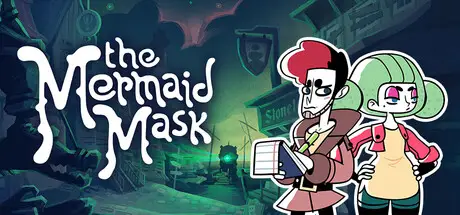
It’s got that polished, hand-painted look too, so the whole submarine murder setup lands with way more style than most games in this space.
But here’s the catch: if you want a hard, messy, do-it-yourself deduction game, this probably won’t scratch that itch. It’s pretty guided, the hint system is eager, and seasoned mystery fans may find it a bit too friendly. If you want a sharp story that plays like a movie and lets you enjoy the ride, though, this one’s an easy sell.
Story | 8.5/10
Story: 8.5/10A locked room, a dead captain, and one very suspicious cauldron

The story setup here is exactly the kind of nonsense I want from SFB Games, and I mean that as a compliment. Captain Mortuga is dead inside a locked room on the world’s strangest submarine, and the only obvious thing sitting near the body is this ancient stone cauldron. That’s your hook. No obvious murder weapon, no tidy crime-scene cliché — just a cauldron. And immediately the game has that “okay, what the hell happened in here?” energy that a good mystery needs.
What I like is that the case doesn’t just sit on the locked-room gimmick. The Mermaid Mask uses that murder to pull apart the whole submarine. You’re not just asking who had access to the room. You’re poking at ambition, inheritance, obsession, and all the weird little private motives that make this crew feel shifty from the second you meet them. The suspects are cartoonish, sure, but not empty. Everybody feels like they’re hiding something, and the game is smart enough to keep changing the temperature. One scene is a gag. The next has that quiet, creepy pressure of being trapped underwater with a killer. Then it snaps back into deduction mode.
That tonal juggling is the big win for me. A lot of mystery games pick one lane and stay there. Grim, quirky, cerebral, whatever. This one bounces between comedy, suspense, and detective work without feeling like it’s losing control. The jokes don’t kill the tension, and the tension doesn’t make the comedy feel out of place. It’s very much written for players who want to be carried by characters and performance, not players who want to sit with a notebook for four hours and brute-force the truth from first principles.
And that matters, because this is not Return of the Obra Dinn. If you want the kind of mystery where the game basically throws you into the deep end and says, “Good luck, genius,” this is softer than that. Much softer. The Mermaid Mask is closer in spirit to something like Pentiment in the way the story flows around you. It’s authored. It’s guided. It wants you moving through scenes, conversations, reveals, and emotional beats. That makes it way more approachable, especially if you’re newer to puzzle adventures. But if your favorite part of detective fiction is outsmarting the writer, you may feel the rails under your feet.
The suspects do the heavy lifting, not the branching choices

Here’s the catch: The Mermaid Mask is dense with character detail, but it’s not a branching mystery box. You’re not choosing a suspect, building your own case, and steering the ending into a wildly different direction. The story is predetermined, and the game is very happy to guide you toward the next important clue, the next conversation, the next deduction. So if you’re coming in expecting free-form detective work, that’s the weak spot. The choice layer is thin because this is really a scripted mystery adventure, not a sandbox investigation.
But the tradeoff is that the writing gets to be tight. The submarine crew all get their own strange corners, their own secrets, their own reasons to make you side-eye them. The side material doesn’t feel like filler for the sake of padding out the runtime. It feeds the mood of the case. You learn who these people are, what they want, what they’re pretending not to want, and how Captain Mortuga’s death exposes all of that. That’s where the side density works: not as optional lore dumped into a journal, but as pressure around the main murder.
The performance helps massively. Full English voice acting gives these characters actual rhythm, and Amber Lee Connors in particular has a really good handle on that swing between sarcasm and empathy. That’s important, because the script asks you to laugh at these people and then, sometimes seconds later, take their damage seriously. If the delivery were flat, this whole thing could turn into Saturday morning detective soup. Instead, it has bite.
And then there’s the presentation, which honestly makes the story feel bigger than its three-to-four-hour length. The original score recorded by the Budapest Art Orchestra gives each character a musical identity, and paired with the hand-painted cartoon art, it makes a point-and-click mystery feel weirdly cinematic. Not “big budget” in the empty marketing sense. More like every clue, every suspect, every reveal has been staged. The 3D clue objects are part of that too. You physically rotate evidence, inspect it, find hidden details, and that turns the story into something you handle instead of just read.
The ending actually lands, which is not nothing after Tangle Tower

The best thing I can say about The Mermaid Mask’s story is that it clearly learned from Tangle Tower. That game had a lot going for it, but the ending was a common complaint for a reason. It felt a bit too quick, a bit too flat, like the ride was better than the destination. This time, SFB Games feels much more deliberate about making the culprit matter. The reveal has more weight, and the climax gets treated like a real payoff, with bespoke art and animation helping sell the moment instead of just dumping an answer in your lap.
Is the ending impossible to guess? No. And that’s where I’d temper expectations. If you’re a hardcore mystery player, you may get ahead of the game. The difficulty is low overall, the hint system is eager, and a lot of the puzzle structure comes down to matching memories and connections from a big bank of more than 50 clues. That can still be satisfying, because the clues are tactile and charming, but it’s not exactly the cold, ruthless deduction gauntlet some detective fans crave.
Still, as a story-first mystery, it works. The six-chapter structure across two acts keeps the pace moving, and even though the main story only runs about three to four hours with no DLC and limited replay pull, I’d rather have a focused mystery that sticks the landing than a bloated one that wastes my time. The heavy dialogue will slow some players down, and since the voice acting is English-only, that’s also worth keeping in mind if you bounce off text-heavy games.
For me, the story lands at an 8.5 out of 10. Not because it gives you unlimited agency, and not because it’s the hardest mystery in the room. It lands because it knows what it is: a stylish, funny, tightly guided locked-room murder with a strange cast, strong performances, beautiful music, and a final act that actually feels like someone cared about the payoff. If you want to be led through a good mystery with charm and momentum, this is absolutely in your lane. If you want to do all the detective work yourself, you’ll probably wish it trusted you more.
Audio | 9.0/10
Audio: 9/10The Budapest Art Orchestra makes this submarine feel way bigger than a point-and-click

Here’s the thing: The Mermaid Mask could’ve gotten away with cute mystery music and a few spooky stings. It doesn’t. The original score was recorded by the Budapest Art Orchestra, and you can hear the difference right away. There’s a real sweep to it. Not in a “look how expensive this sounds” way, but in a way that makes this weird little locked-room murder on a submarine feel theatrical, strange, and kind of grand.
That matters because this is still a point-and-click. You’re looking at rooms, clicking through conversations, turning clues over in your hands, and connecting details from a big pile of evidence. The music is doing a ton of invisible work there. When the script leans funny, it lets the jokes breathe. When the murder mystery tightens up, it knows when to pull the air out of the room. And when the story hits its bigger dramatic moments, the score actually sells the jump from cartoon detective banter to something with real weight.
The best choice, though, is giving each character their own musical identity. Every major suspect on the Mortuga has a flavor attached to them, so when someone opens their mouth, the game doesn’t just give you a voice — it gives you a mood. That’s huge in a cast full of sketchy people, because it helps you remember who they are before you’ve even sorted out whether you trust them. It’s not background wallpaper. It’s part of the characterization.
And honestly, that’s why the audio side is a big reason I’d land this dimension around a 9 out of 10. The Mermaid Mask turns its soundtrack into stage lighting. It tells you where to look, how to feel, and when to start worrying, without grabbing the microphone and shouting over the scene.
Amber Lee Connors gives the script the bite it needs

The voice acting is where the whole thing really clicks. The Mermaid Mask is fully voiced in English, and that’s not a small detail here, because this game talks a lot. Like, a lot a lot. If the performances were flat, this would be a slog. Instead, the cast gives the dialogue enough snap that even the slower stretches feel like you’re watching a sharply edited mystery cartoon rather than reading through a pile of text boxes.
Edwyn Tion is part of the voice cast, and Amber Lee Connors is the standout for me. She has this really controlled way of sliding between sarcasm and empathy, and that’s exactly the tone this game needs. The writing keeps bouncing between jokes, prickly distrust, and emotional reveals, and a weaker performance would make those turns feel fake. Connors makes them feel intentional. One minute there’s a dry little jab, the next there’s actual warmth behind the line, and the shift doesn’t feel like whiplash.
The catch is obvious: it’s English-only voice acting. If you’re relying on subtitles, especially if you’re not comfortable with dense English dialogue, the pace can feel slower than it should. And because the game is so guided, so story-heavy, and so dialogue-driven, you can’t really escape that. This is not the game for someone who wants everyone to shut up so they can do hard deduction in silence.
But for the audience it’s actually chasing — players who care about script, character, and performance — the voice work is a massive win. The acting gives the suspects texture. It keeps the comedy from going limp. It keeps the suspense from feeling dry. And it makes the whole mystery easier to sink into, even when the puzzles themselves aren’t trying to break your brain.
The sound design sells the “hands-on clue” gimmick better than the puzzles do

My favorite audio detail isn’t just the orchestra or the voices. It’s how the sound supports the physicality of the investigation. Every clue in The Mermaid Mask is a fully rotatable 3D object, and that sounds like a visual gimmick until you’re actually doing it. You’re not just clicking on evidence and getting a line of text. You’re handling the thing, turning it around, checking the back, hunting for the little secret it’s hiding.
That tactile feeling needs sound to work. The game understands that. The clicks, the little inspection beats, the sense of handling objects inside this cramped, bizarre submarine — it all helps make evidence-gathering feel more active than it mechanically is.
And that’s important, because if we’re being blunt, the actual puzzle structure is not that hard. A lot of it comes down to matching memories from a bank of more than 50 clues, and the hint system is pretty eager to nudge you along. Hardcore detective players may feel like the game is solving too much for them.
So the sound has to make the process satisfying even when the challenge is light. And it does. The ambient layer keeps the Mortuga from feeling like a flat menu of rooms, while the music and effects keep pushing you through comedy, unease, and payoff. The game’s main story only runs about three to four hours across six chapters in two acts, so it doesn’t have tons of time to build atmosphere slowly. It has to be efficient.
That’s where the audio package earns its keep. It makes the submarine feel alive, it makes the suspects easier to read, and it gives the guided mystery a film-like rhythm. Return of the Obra Dinn is still the tougher, more demanding detective game, no question. But The Mermaid Mask is far easier to step into, and its full voice acting, orchestral score, and punchy presentation make the ride feel richer than the raw puzzle difficulty would suggest.
Visuals | 8.5/10
Graphics: 8.5/10The Mortuga looks cute until the walls start closing in

Visually, The Mermaid Mask has that hand-painted cartoon look that seems friendly at first, and then slowly starts feeling a bit wrong. That’s the sweet spot. The lines have bounce. The characters are expressive. But the submarine setting keeps everything tight, enclosed, and just a little grimy. You’re aboard the Mortuga, this bizarre locked-room murder box under the sea, and the art does a lot of the heavy lifting in making that feel tense without turning the game into full horror.
Each room feels like a small stage that’s been dressed for a scene. That matters in a point-and-click mystery, because you’re staring at these spaces for clues, jokes, and weird little character details. The game doesn’t go for realism. It goes for personality. Pipes, doors, furniture, props, faces — everything is drawn to tell you something about where you are and who’s been living there.
And honestly, that’s why the graphics land for me. This isn’t a tech-flex game. It’s not trying to melt your GPU. It’s trying to make every compartment of this submarine feel handmade, suspicious, and readable. For this kind of mystery, that’s the right call.
The best-looking trick is picking up clues and spinning them in your hands

Here’s where the presentation gets good: the clues aren’t just flat icons in an evidence menu. They’re full 3D objects you can rotate 360 degrees, poke around, and inspect for hidden details. That gives the detective work a really nice tactile feel. You’re not just clicking a hotspot and being handed information. You’re turning the thing over yourself, looking for the bit the game is hiding from you.
That mix of hand-painted 2D backgrounds and rotatable 3D evidence could’ve looked messy, but it works because the game keeps the objects stylized. They don’t look like random plastic models dropped into a cartoon. They feel like props from the same world. And because every clue can hide something on the back, underneath, or inside its shape, the visual design actually feeds into the puzzle design.
Now, the catch is that the puzzles themselves aren’t brutally hard. A lot of the deduction comes down to matching memories and evidence from a pool of 50-plus clues. So if you’re coming in from Return of the Obra Dinn and you want that level of hard, lonely reasoning, this won’t scratch the same itch. But as a visual interface for gathering evidence? It’s way more inviting. It lets newer players feel clever without making them bounce off the case.
No ray tracing fireworks, just clean art that should travel well

If you’re waiting for me to talk about ray tracing, DLSS, frame-generation wizardry, or some giant graphics options menu, that’s not really what The Mermaid Mask is selling. This is a handcrafted point-and-click adventure from SFB Games, and the look is built around drawn backgrounds, animated character work, and those 3D clue inspections. The tech is in service of clarity, not spectacle.
That also means the game should look consistent across platforms. It’s launching on multiple platforms, including Switch 2, and this kind of hand-painted art direction usually travels better than games chasing ultra-real lighting. You’re not looking for different shadow settings to make the mood work. The mood is baked into the drawings, the color choices, the character poses, and the cramped layout of the Mortuga itself.
So the platform difference I’d expect players to care about most is comfort, not visual quality. Do you want to click around on a monitor, play handheld, or sit back on a TV? The art style is low-demand enough that the core look should stay pretty consistent. That’s a win for a mystery game where atmosphere matters more than counting pixels.
The interface stays out of the way, and the finale finally gets the visual punch it needs

The UI does what it needs to do: it keeps the focus on rooms, suspects, dialogue, and evidence. In a game this dialogue-heavy, that’s important. There’s a lot of talking, and the voice acting is English-only, so the presentation has to stay readable and smooth. If the interface were noisy, this thing would feel exhausting fast.
The clue system is the star of the UI because it turns evidence into objects you actually examine. That’s also where the game’s visual identity feels most modern. Old-school point-and-click games can sometimes make clues feel like inventory clutter. Here, the act of inspecting them is part of the show. You’re handling props, not sorting icons.
And I’ll give the game real credit for how it treats the ending. Tangle Tower had a finale that felt too flat, and The Mermaid Mask clearly tries to fix that. The climax gets its own bespoke art and animation to sell the truth coming out, and that matters. A locked-room mystery can’t just explain itself in a text dump and call it a day. You need the reveal to feel staged. Here, the visuals step up when they have to. That’s a big reason I’m comfortable putting the graphics side at an 8.5 out of 10: not because it’s technically flashy, but because the art, clue presentation, and final reveal all understand the job.
Combat | 7.0/10
Gameplay: 7/10The good stuff is in your hands, literally rotating the evidence

The best gameplay idea in The Mermaid Mask is also the simplest one: clues aren’t just icons you click once and forget. A lot of them are proper 3D objects you pick up, spin around, zoom into, and inspect like you’re actually handling evidence. That sounds small, but in a point-and-click mystery, it matters. It makes the act of gathering clues feel physical. You’re not just sweeping a cursor over a room until the game coughs up progress. You’re turning things over, checking backsides, noticing markings, and looking for the little secret the object is hiding.
The basic loop is clean. You explore cabins and rooms aboard Captain Mortuga’s very suspicious submarine, you collect evidence, you examine those 3D objects, and then you bring the right clue to the right suspect in conversation. That’s the rhythm. Walk around, poke at the weird handcrafted scenery, grab anything that looks important, then use it to push people when their story starts to wobble. And because the crew is full of sketchy little freaks, that loop has a nice snap to it. You’re always thinking, “Okay, who’s lying, and what did I just pick up that proves it?”
But let’s be honest about the actual deduction. This is not Return of the Obra Dinn. It’s not asking you to build a murder board in your head and suffer beautifully for three hours. The Mermaid Mask is much more guided than that. A lot of the social deduction comes down to memory-matching from a bank of more than 50 clues. Someone says something weird, and you think, “Wait, didn’t I see an object or note that connects to that?” Then you pick the evidence and present it. When it works, it feels slick. When it doesn’t, you can feel the rails under your feet.
That’s not automatically a bad thing. For newer adventure players, or anyone who mostly wants the characters, the jokes, the performances, and the locked-room mood, this is way easier to get into than Obra Dinn. The catch is, if you’re the kind of player who wants to truly solve the case yourself, with room to be wrong and clever and stubborn, The Mermaid Mask doesn’t give you that much freedom. It’s more of a beautifully performed mystery ride than a full detective sandbox.
The puzzles are charming, but they rarely bite back

Outside of interrogations, the mechanical puzzles are fun in that classic point-and-click way. You’re twisting a pig statue’s expressions to work out numbers. You’re arranging skulls. You’re sorting and cataloguing mushrooms. It’s all very tactile, very odd, and very much in line with SFB Games’ style: a little spooky, a little silly, and always readable enough that you’re not staring at the screen wondering what genre you’re even playing anymore.
Most of these puzzles hit that pleasant middle zone where you feel smart for noticing the pattern, but you’re not going to be stuck there all night. That’s good for pacing. The Mermaid Mask is clearly built to keep the story moving, not to slam the brakes every time you enter a new room. And with a main story that runs about three to four hours across six chapters in two acts, that makes sense. This is a compact mystery. It wants you moving from clue to clue, suspect to suspect, scene to scene.
There are a few fiddly moments, though. Some placement checks can feel pickier than they should, especially in puzzles where you understand the answer but still have to wrestle the interface into accepting it. That’s always annoying, because once the brain work is done, I don’t want the final boss to be object alignment. It doesn’t ruin the game, but it does poke holes in the flow. When a puzzle is easy, the interaction has to be smooth. If it’s easy and slightly awkward, that awkwardness stands out more.
The difficulty curve is gentle. Very gentle. The built-in hint system is also eager to help, maybe too eager if you like sitting with confusion for a bit. Personally, I think that makes The Mermaid Mask a great pick for people who don’t usually play mysteries, or who bounced off harder detective games. But for hardcore sleuths, yeah, this is where the 7.0 out of 10 feeling starts to show. The presentation is doing a lot of heavy lifting. The puzzle design is enjoyable, but it’s not especially sharp or demanding.
It plays less like Obra Dinn and more like a voiced mystery movie you click through

The obvious comparison is Return of the Obra Dinn, because both games orbit death, evidence, and strange spaces full of people with secrets. But they’re chasing very different highs. Obra Dinn is colder, harsher, and much more willing to let you drown in your own assumptions. The Mermaid Mask is friendlier. It gives you full English voice acting, character-specific musical themes, hand-painted cartoon art, and an original score recorded by the Budapest Art Orchestra. So the trade is pretty clear: less freedom, more performance.
That performance does change how the gameplay feels. Presenting evidence isn’t just a menu action. It’s a little dramatic beat. The characters react. The tone swings between comedy and suspense. Amber Lee Connors, especially, gets to move between sarcasm and empathy without it feeling fake. So even when the puzzle underneath is basically “remember the clue and choose the right one,” the scene around it has enough energy to keep you locked in. The game is constantly using voice, music, and animation to make simple interactions feel bigger than they mechanically are.
The built-in notes also help a lot. This is a dialogue-heavy game, and there’s no getting around that. People talk. A lot. If you’re impatient, or if you hate reading along with conversations, the pacing can feel slow. But the notes system does reduce the mental load. You’re not expected to memorize every suspicious line and every weird object off the top of your head. The game keeps track of important information, which makes following the case much easier, especially when the clue count climbs past 50.
So as gameplay, The Mermaid Mask is polished, approachable, and stylish, but not especially bold. It’s fantastic at making evidence feel tactile. It’s good at turning conversations into little confrontations. It’s weaker when it asks you to deduce, because the path is heavily guided and the ending is easier to see coming than it should be. If you want a hard detective game, go play Obra Dinn. If you want a short, funny, fully voiced locked-room mystery where the clicking feels cinematic and the clues are fun to handle, this one knows exactly what it’s doing.
Content | 6.0/10
Content: 6/10Six chapters, two acts, and it’s basically over before you blink
Here’s the blunt truth: The Mermaid Mask is a weekend-sized mystery, not a long-haul obsession. The main story runs about three to four hours, split across six chapters in two acts, and that pace is honestly the point. It doesn’t drag its feet. It gets in, tells its story, and gets out. If you like your puzzle games tight and story-first, that’s a nice change of pace. If you wanted a massive case file you could disappear into for weeks, this isn’t that game.
And look, I don’t say that as a knock. For this kind of short-form detective adventure, the length fits the format. You’re not dealing with a sprawling open investigation or a bunch of wandering dead ends. You’re being carried through a carefully built mystery, and the game clearly wants you to stay locked onto the main thread. That makes it easy to finish in a couple of sittings, maybe one weekend if you’re into it. But it also means there’s not a ton of room for the kind of slow, self-directed theorizing hardcore sleuths usually want.
The whole package is the main case — there’s not much extra padding
What you get at launch is the full single-player story. No DLC, no “come back later for the real ending,” no extra paid chapter dangling after the credits. That matters, because this isn’t the kind of game that needs a live-service plan or an endless content drip. The main mystery is the product. You buy it, you solve it, you’re done.
The trade-off is pretty obvious: there isn’t much side content, and there’s no branchy structure to open up a second run. The story is prewritten and heavily guided, so once you’ve seen the culprit and the big reveal, there’s not a lot left to chase. That’s fine if you just want a clean, complete mystery with no fuss. But if you’re the type who wants alternate outcomes, hidden routes, or a reason to go back in and test different theories, this one doesn’t really give you that playground. It’s complete. It’s tidy. It just isn’t built for long-term replay.
Easy to jump into, but the replay shelf life is short
This is also a pretty friendly buy for players who want accessibility without losing the mystery vibe. The game supports 12 interface languages, including Simplified Chinese and Traditional Chinese, so Chinese players can get the full experience on the text side. The catch is that voice acting is English-only, and this game leans hard on dialogue. So if you don’t like reading a lot, or you’re impatient with voiced banter, the pace can feel slower than you’d expect.
Still, for the audience this is aimed at, that’s not a dealbreaker. It’s the kind of short narrative puzzler you can finish in a weekend and move on from feeling satisfied, not exhausted. That also means the long-tail life is probably going to be modest. There’s no DLC pipeline, no branching endings, and not much replay value once the case is solved. So yeah, it’s easy to recommend if you want a compact mystery with a clean wrap-up. Just don’t expect it to hang around on your backlog as some endlessly revisitable puzzle box.




Comments 2
Share your game review
Join the discussion and share your review of this game.
The fully voiced cast and live orchestral score sound great, but I’m waiting for more player feedback before I jump in.
Honestly, the film-style staging is what sells me here; a submarine locked-room with rotatable 3D clues sounds like a great mood even if the deduction is lighter.
All comments displayed