If we treat “action games” as a single overarching category, this list basically sketches out the most influential works in terms of design discourse from the past fifteen years: some treat levels as mazes, some treat shooting as puzzle-solving, and some simply rewrote the very concept of “melee combat” itself. These may not be the titles you boot up most often, but almost every one of them has set a benchmark within its subgenre—either being relentlessly imitated, or forcing successors to detour around them.
This article is ordered by overall impact, focusing more on “what it changed” rather than on simple visceral excitement. If you consider yourself an action game player but still haven’t beaten several of these, you might want to catch up on them first, and then come back to talk about what “understanding action” really means.
If we treat “action games” as one big category, this list basically sketches out the most influential designs of the past fifteen years: some treat levels as mazes, some treat shooting as puzzle-solving, some simply rewrote what “melee combat” even means. These might not be the games you boot up most often, but almost every one has set a benchmark within its subgenre—either being copied to death, or forcing later entrants to take a detour. The article is ordered by overall impact, emphasizing “what did it change” rather than just how viscerally satisfying it is. If you consider yourself an action-game player yet still haven’t beaten several of these, you might want to fix that before coming back to talk about what “understanding action” really means.
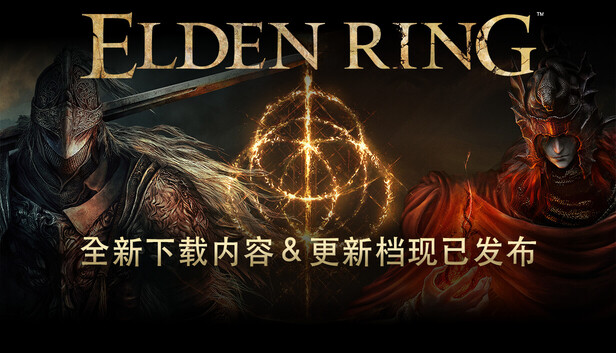
Image: Elden Ring
Tags: Soulslike, Open World, High Freedom
What’s truly “terrifying” about it isn’t the difficulty, but the way it forcibly stretches the Souls formula—high-density combat plus build crafting—across an open world with very little wasted map space. You can go traditional greatshield turtle-roll, or you can run faith artillery, bleed combo strings, or even mounted kiting for completely different tempos. It absolutely has issues: maze-like dungeons, small outdoor encounters, repeated bosses. But at the action-RPG level, it recombines exploration, risk recovery, and character growth from the ground up. Every future game labeled “hardcore action + open world” will be measured against it—this is the treatment reserved for paradigm-setting works.
Image: Dark Souls 3
Tags: Soulslike, Linear Levels, High Difficulty
If Elden Ring is Souls diffused into an open world, then Dark Souls 3 is the “final refinement” of linear-level Souls. It pulls together the mechanical pieces of the first two games into an extremely tight rhythm: the macro map is more linear, but local areas still preserve shortcuts and vertical depth; boss design emphasizes rhythmic spikes and phase-two twists; the PvP/PvE ecosystem is rebuilt around weapon arts, roll i-frames, and poise, influencing almost every later game that calls itself “hardcore action.” You might dislike DS3’s art direction, but in terms of traditional level-based Souls completeness, this entry is basically the finish line.
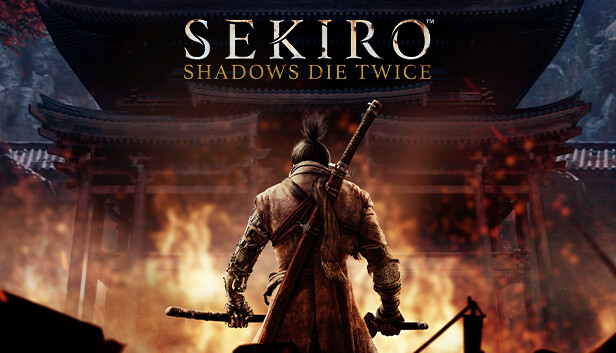
Image: Sekiro: Shadows Die Twice - Game of the Year Edition
Tags: Hardcore, Melee Mindgames, Rhythm & Read
It throws out levels, encumbrance, and build salad in exchange for a melee paradigm built almost entirely around “pressure + deflect + deathblow.” The posture bar turns “defense” into an offensive tool, the deflect window and audio cues extend telegraph reading beyond visuals into pure rhythm, and the deathblow is a payoff for all your correct decisions up to that point. Compared to the lottery-like chip damage of Souls, there’s almost no cheesing here—you must understand the enemy’s sword routes instead of steamrolling with numbers. Its controversy comes from the barrier to entry: unfriendly to newcomers, but to veterans it’s an action skills exam. Whether you like it or not, it has already redefined what “hardcore single-player action” means.
Image: Dark Souls™: Remastered
Tags: Origin of Souls, Level Design, Exploration
Even if you only look at the level structure, Dark Souls 1 is still the textbook on “how to twist a medieval ruin into a three-dimensional labyrinth.” The web of shortcuts leading back to Firelink Shrine is like a crash course in spatial geometry; every risky push forward is a wager: can you find the next bonfire before you mentally collapse? The combat rhythm feels a bit sluggish by today’s standards, and the systems are far from fully formed, but the “risk–reward” line is carved with crystal clarity—from soul loss and shortcut unlocking to that last breath before a boss fog gate. Almost every subsequent action-RPG has copied aspects of this. The remaster is mainly visual and FPS upgrades—it’s essentially inviting you to retake the same masterclass.
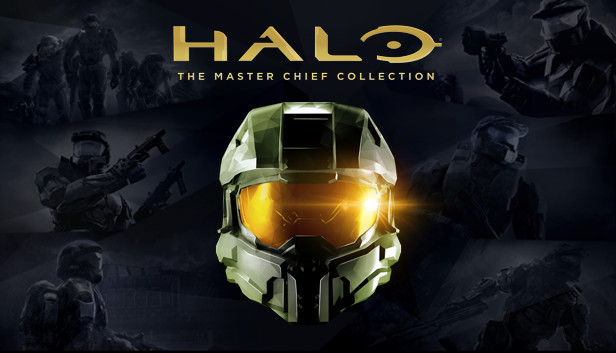
Image: Halo: The Master Chief Collection
Tags: Shooter, Combat Sandbox, AI Opposition
Halo’s influence isn’t about “which gun feels best,” but about “how to build a layered combat sandbox in a constrained playspace.” Enemy AI suppresses, flanks, and retreats; vehicles and terrain amplify each other so every battle leaves room for improvisation. The collection bundles 1–4 (plus ODST and Reach), letting you follow a generation of console FPS design evolution almost in real time—from pacing and gunfeel to how dual-wielding, heavy enemies, and vehicle segments are allocated. Many FPS design tropes we now take for granted—like the “combat bubble” and readable AI behavior—can trace their roots back here.
Image: DOOM: Eternal
Tags: Fast-Paced, Combat Puzzling, Action-Heavy FPS
It pretty much pushes “shooting as multiple choice” to the extreme: different demons demand specific ways to break them, resources are generated through glory kills, flame belch, chainsaw, etc., and every weapon swap and movement decision is an answer to “how do I survive the next 3 seconds.” Late-game, you’re almost in autopilot: your brain is juggling priority lists and cooldowns while your hands are constantly weapon swapping, grappling, dashing, and glory killing. Some say it’s too “calculating” and not raw enough; but from an action standpoint, it turns FPS into a real-time deckbuilder-style compulsion loop while still maintaining intense, physics-based, high-speed pressure. That mix is nearly unmatched among its peers.
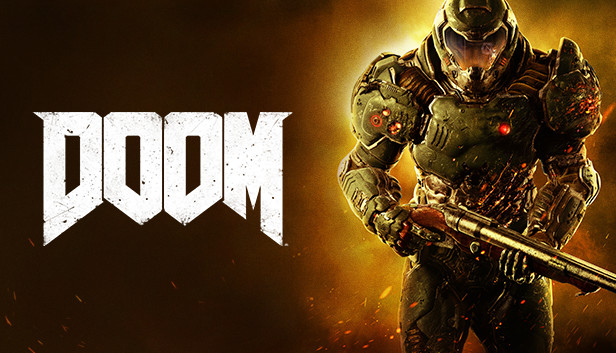
Image: Doomguy
Tags: Retro Reboot, Forward Momentum, Gunfeel
The 2016 DOOM seems simple on the surface: repackage the old-school “charge forward, be violent, never stop” spirit with modern tech and UI. The genius is in its clarity of purpose: no crouching in grass, no ADS to slow you down—just high mobility, ultra-short TTK, and a risk loop that encourages face-to-face glory kills for health. The pacing is “honest”: exploration and combat are clearly separated, and combat arenas are almost all sculpted to serve high-speed movement and vertical jumping. Eternal cranks system complexity to eleven on top of this; 2016 DOOM is more like a distilled sample of “this is how you bottle pure kinetic fun.”
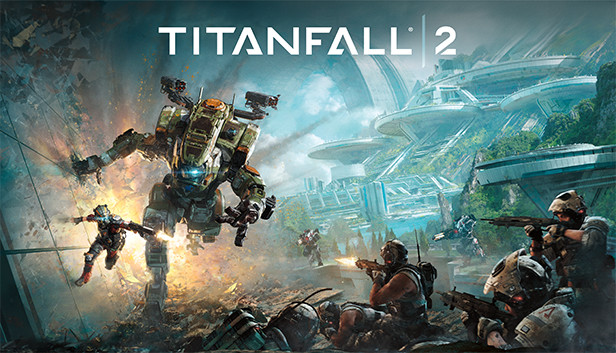
Image: Titanfall 2
Tags: Mechs, Parkour, Linear Levels
Stuffing high-mobility mechanics—wall-running, slides, double jumps—into a traditional linear FPS campaign, then layering on a tanky, differently paced mech combat system is already a very aggressive action experiment. What’s rarer is that it works smoothly: transitions between parkour, gunfights, and mech segments are fluid, like shifting gears between different action subgenres. Add in those now-famous creative levels (time-shift factory, assembly line, etc.), and Titanfall 2 is basically the benchmark for “how wild can a linear FPS get.” Many later shooters that emphasize mobility clearly chase its feel and rhythm.
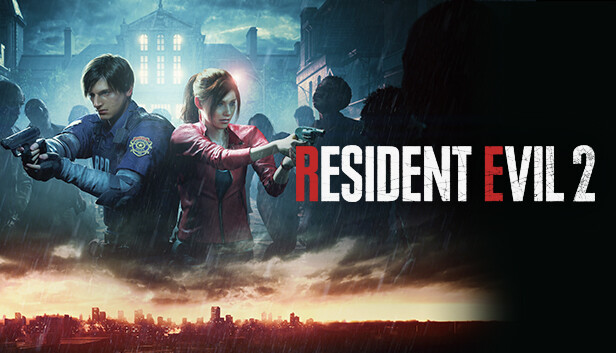
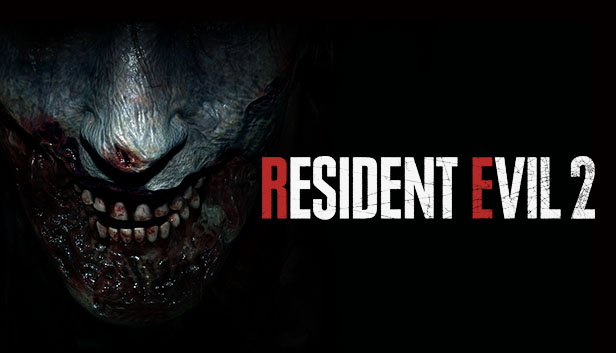
Image: Resident Evil 2
Tags: Survival Horror, Linear Action, Resource Pressure
Its acclaim isn’t just nostalgia; it nails the golden ratio of “tight action + survival horror.” Limited ammo and puzzle-like maps make every direct fight a calculated risk, but once you do pull the trigger, the gunfeel and hit reactions release a ton of tension. The police station, sewers, and lab form a tightly interlinked micro-ecosystem of levels, and Leon vs. Claire routes distribute paths and pressure differently. It proves that an action system doesn’t have to be extremely complex—if you tune the triangle between resources, enemies, and spaces precisely, you can still set a new benchmark for “linear horror action.”
Image: Shame
Tags: Stealth-Action, Immersive Sim, System Interplay
In a sea of games where “stealth = crouch in bushes + backstab,” Dishonored drops you into a toybox of tightly interlocking rules: Blink, time-slowing, possession, rat swarms—these powers intertwine with the physical environment and AI sight/hearing to create astonishing solution space. Levels play like a series of medium-sized sandboxes; every vertical nook and window invites you to find alternate paths. It sets a new standard for stealth action: not just “can you avoid detection,” but “how many different ways can you achieve your goal.” For later immersive sims, this is a milestone they can’t sidestep.
Image: Dishonored 2
Tags: Sandbox Stealth, Dual Protagonists, Level Spectacle
Building on the original’s system core, Dishonored 2 makes two key upgrades: dual protagonists with distinct power sets massively expand the solution space, and the levels themselves become “moving machines.” Places like the Clockwork Mansion and the time-split manor aren’t just stealth environments—they’re action puzzles, where you’re assassinating and sneaking while actively manipulating the architecture. Optimization and story pacing are controversial, but in terms of “systemic stealth action” maturity, this game sits near the top of the food chain. Any successor chasing this direction will inevitably be compared to its level design.
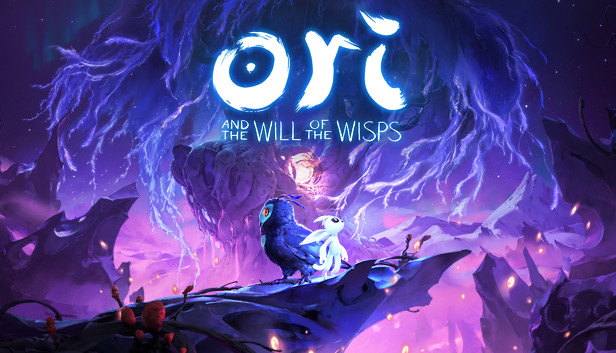
Image: Ori and the Will of the Wisps
Tags: Platformer, Metroidvania, Peak Feel
It proves 2D platformers are nowhere near “finished.” Double jump, dash, grapple, projectile rebound—individually, these moves are common, but Ori 2 weaves them into an extraordinarily fluid score: you can string a dozen actions midair without pausing. The map is a light Metroidvania, with ability-gated areas tightly synced to narrative beats; exploration rarely feels like filler. Paired with exquisitely detailed animation and impact feedback, it sets a generational benchmark for “platformer feel”—not about being hardest, but about how smooth and delightful the play can be.
Image: Portal
Tags: Physics Puzzling, Spatial Action, POV Innovation
Many treat it as a pure puzzle game, but from a design standpoint, Portal is an experiment in making “camera + physical momentum” the core action system. You’re not jumping along predefined routes; you’re reshaping the map’s topology via portals to create impossible paths and speeds. It elevates player expression from “which button to press” to “how to imagine routes in 3D space,” and explains this with a short runtime and razor-clean teaching curve. Many later first-person “puzzle + action” games echo this form of initiation: first teach you space, then challenge your reflexes.
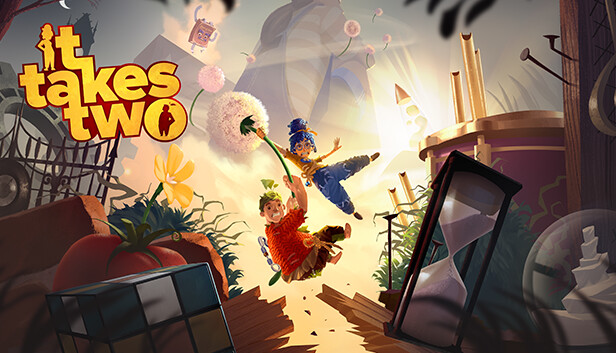
Image: It Takes Two
Tags: Co-op Action, Level Creativity, Set-Piece Storytelling
This game practically exhausts the possibilities of “co-op action” in one go. It constantly shifts mechanics: asymmetrical co-op puzzling, platforming, light shooting, racing—but the core is always that two players must communicate and coordinate. Crucially, these ideas aren’t just piled on; they’re tightly wrapped in level pacing and visual themes, with virtually no obvious filler sections. It shows that action design can serve “relationship storytelling”: all the bickering, trolling, and cooperation between two players becomes the best kind of narrative performance.
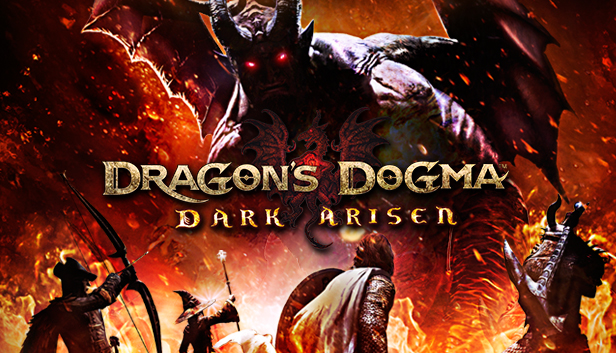
Image: Dragon's Dogma: Dark Arisen
Tags: Action RPG, Open World, AI Companions
Its combat feel is closer to traditional Japanese ARPGs: distinct classes and solid hitboxes. What truly earns it a name in open-world action-RPG history is the “pawn system + flexible class builds.” You’re not just tuning yourself; you’re sculpting an entire party ecosystem of AI behaviors—who controls crowds, who deals damage, who finishes from behind. Climbing dragons and grappling large monsters for “physical wrestling” encounters remains rare even today. The world feels rough by modern standards, but the chemical reactions among its systems made it a “strange little masterpiece” for many action-RPG fans and a foundational stone that deserves re-excavation.
This list isn’t ranking “most fun” games; it’s surfacing the key turning points across action subgenres over the past decade-plus: how Souls got from linear levels to open worlds, how shooters became action-heavy combat puzzles, how platformers polished feel to a mirror sheen, how stealth evolved into systemic immersive sims. Together they form a rough timeline of contemporary action design. For hardcore players, checking these off isn’t just about adding more clear saves—it’s about building a more complete “grammar of action.” Once you have that grammar, new releases become easier to read: you’ll see who they’re paying homage to, and what boundaries they’re trying to push.
 Eneba$36.94Steam $36.94Zobacz cenę →
 GAMIVO$22.23Steam $22.23Zobacz cenę →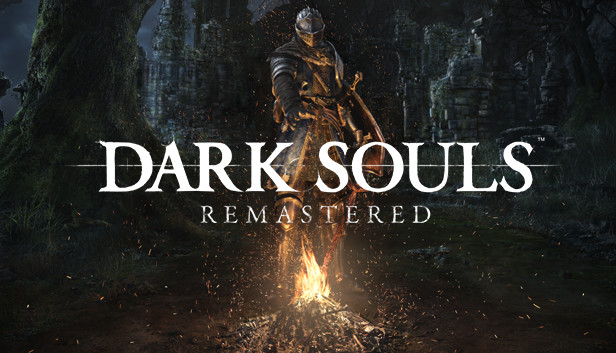
 Newegg$34.99-13%Steam $34.99Zobacz cenę →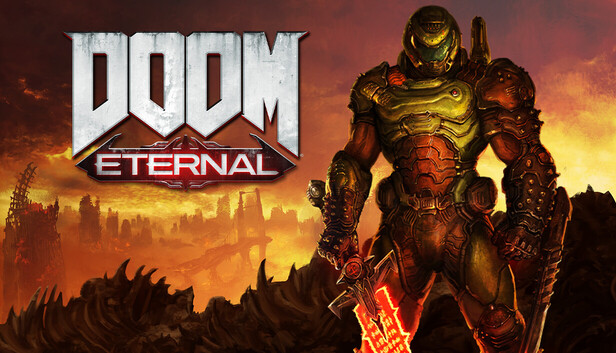
 GameBillet$6.76-83%Steam $6.76Zobacz cenę →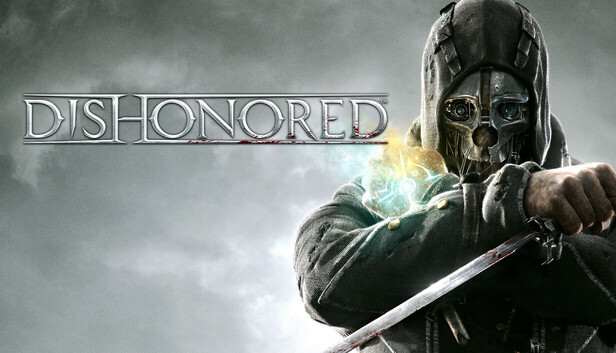
 Fanatical$2.24-78%Steam $2.24Zobacz cenę →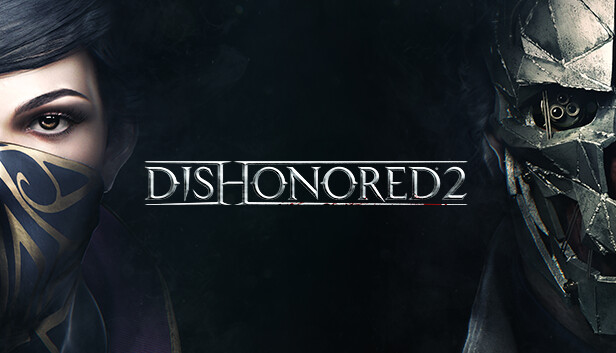
 Kinguin$6.43-81%Steam $6.43Zobacz cenę →





Komentarze 0
Chętnie poznamy Twoje zdanie
Dołącz do dyskusji i podziel się opinią o grze.
Brak komentarzy. Dodaj swoją opinię.